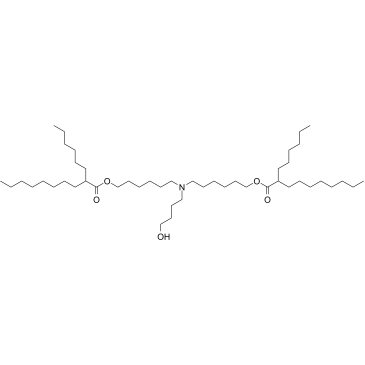
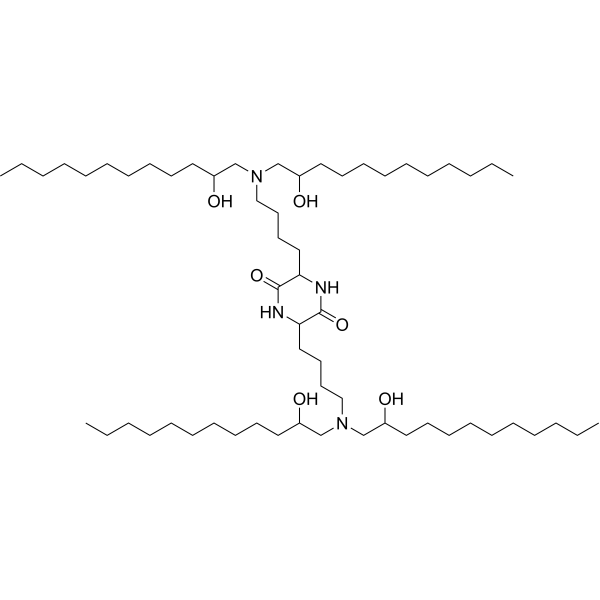
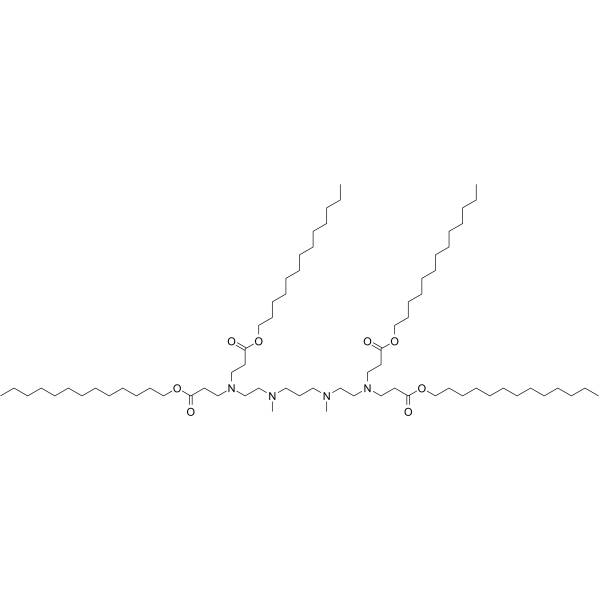
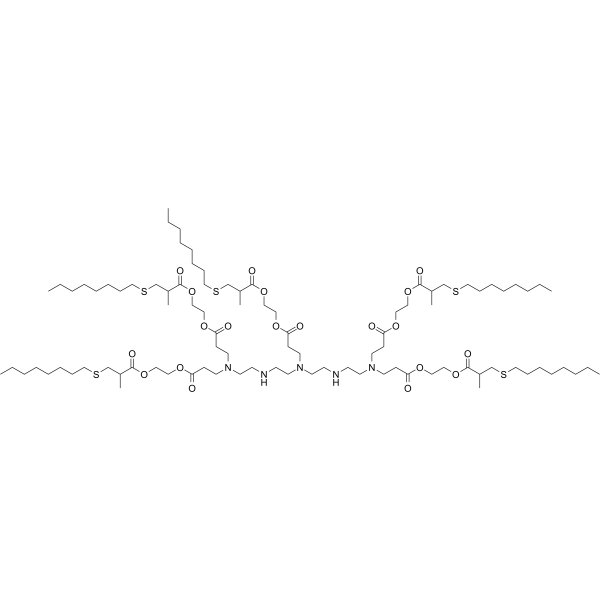
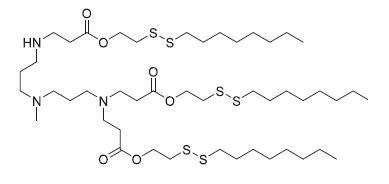
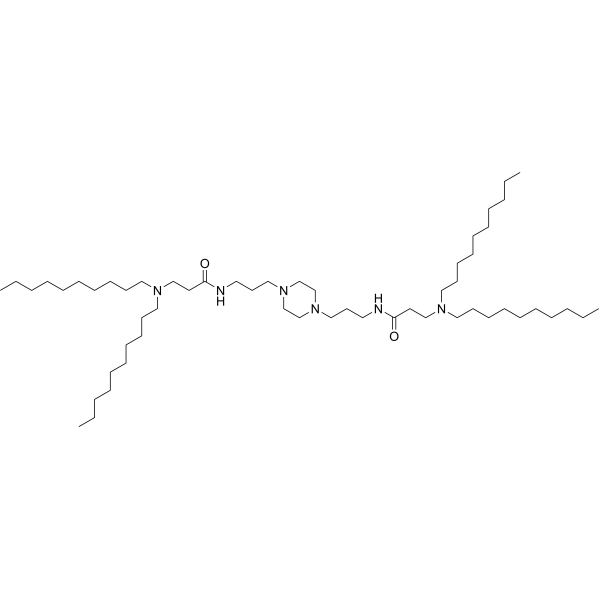
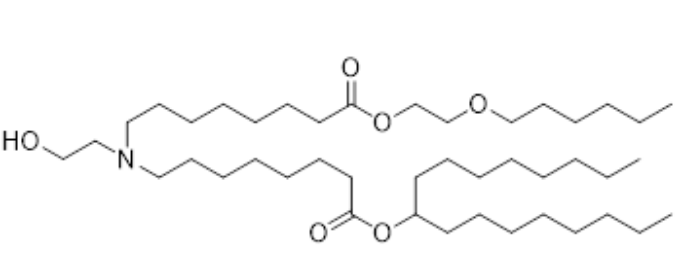
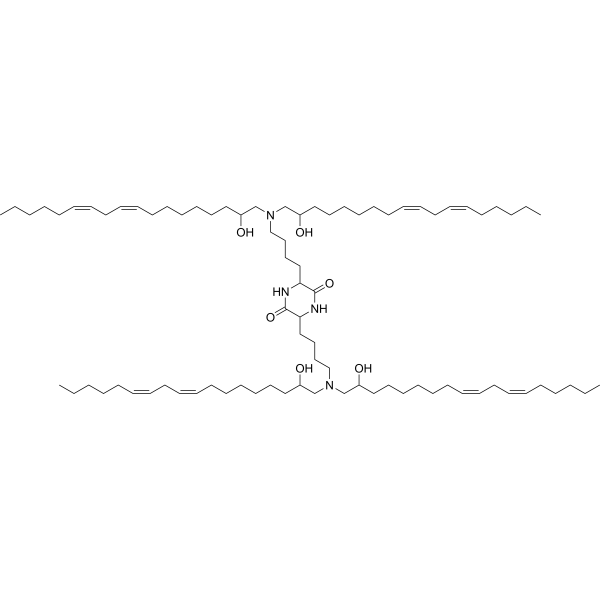
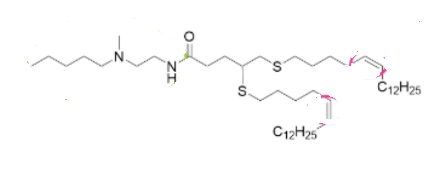
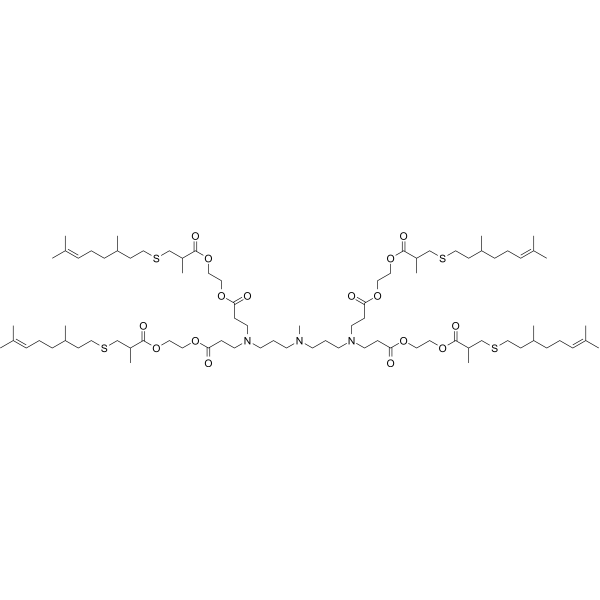
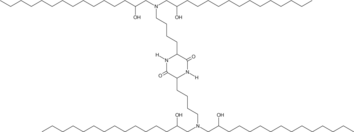
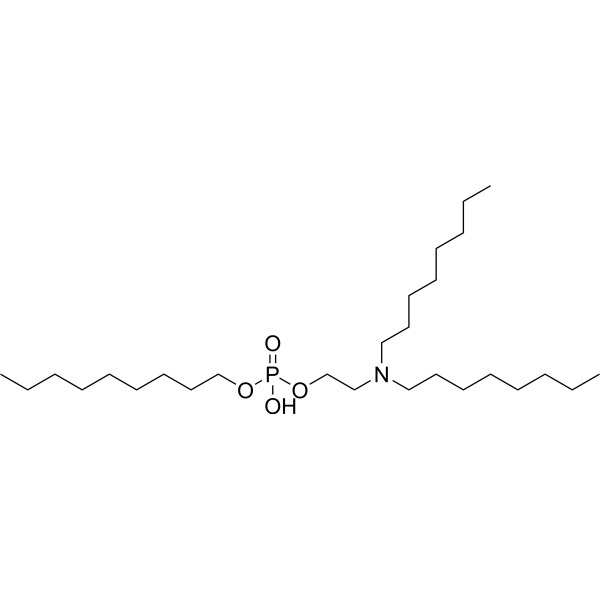
For research use only. We do not sell to patients.
← All classifications
Ionizable lipid categories

Ionizable Lipids for Liver Delivery

Find ionizable lipids with reported hepatic RNA delivery, protein expression, gene silencing or editing. Compare each lipid within its documented formulation, cargo and administration route.

96 products currently listedResearch-use products only
Evidence noteCategory membership indicates research relevance. Organ targeting, cell specificity and performance must be verified from the formulation and study conditions cited for each product.
Lipid nanoparticles and liver RNA delivery research
About this lipid class

Ionizable Lipids for Liver Delivery in LNP research

Ionizable lipids are central components of many lipid nanoparticle systems for nucleic-acid delivery. During formulation they contribute to cargo association and particle assembly. Lipids designed to remain comparatively neutral near physiological pH can become protonated under acidic endosomal conditions, which may support membrane interaction and cytosolic cargo release.

DC Chemicals provides research-use lipids for candidate screening, formulation development and mechanistic studies. Our capabilities include complex lipid synthesis, purification, analytical release and process-development support; product-specific commercial specifications remain separate from any literature-reported formulation or biological performance.

Proprietary innovation · Co-development · GMP

From proprietary lipid design to GMP-grade custom synthesis

DC Chemicals has independently developed ionizable-lipid structures supported by company-owned intellectual property, and selected proprietary lipid programs have advanced to GMP-stage development.

We welcome joint development with customers—from molecular design and lipid synthesis through route and process development. We can also support custom synthesis of GMP-grade ionizable lipids to agreed technical specifications and quality requirements.

Discuss a co-development project →
Proprietary ionizable-lipid structuresCollaborative molecular designCustom lipid synthesisProcess development and scale-upGMP-grade project support
Browse this category

Lipids for liver delivery

96 products · 20 per page
Cat. No.Product NameField of ApplicationChemical Structure
CQ-12Featured
Price on request

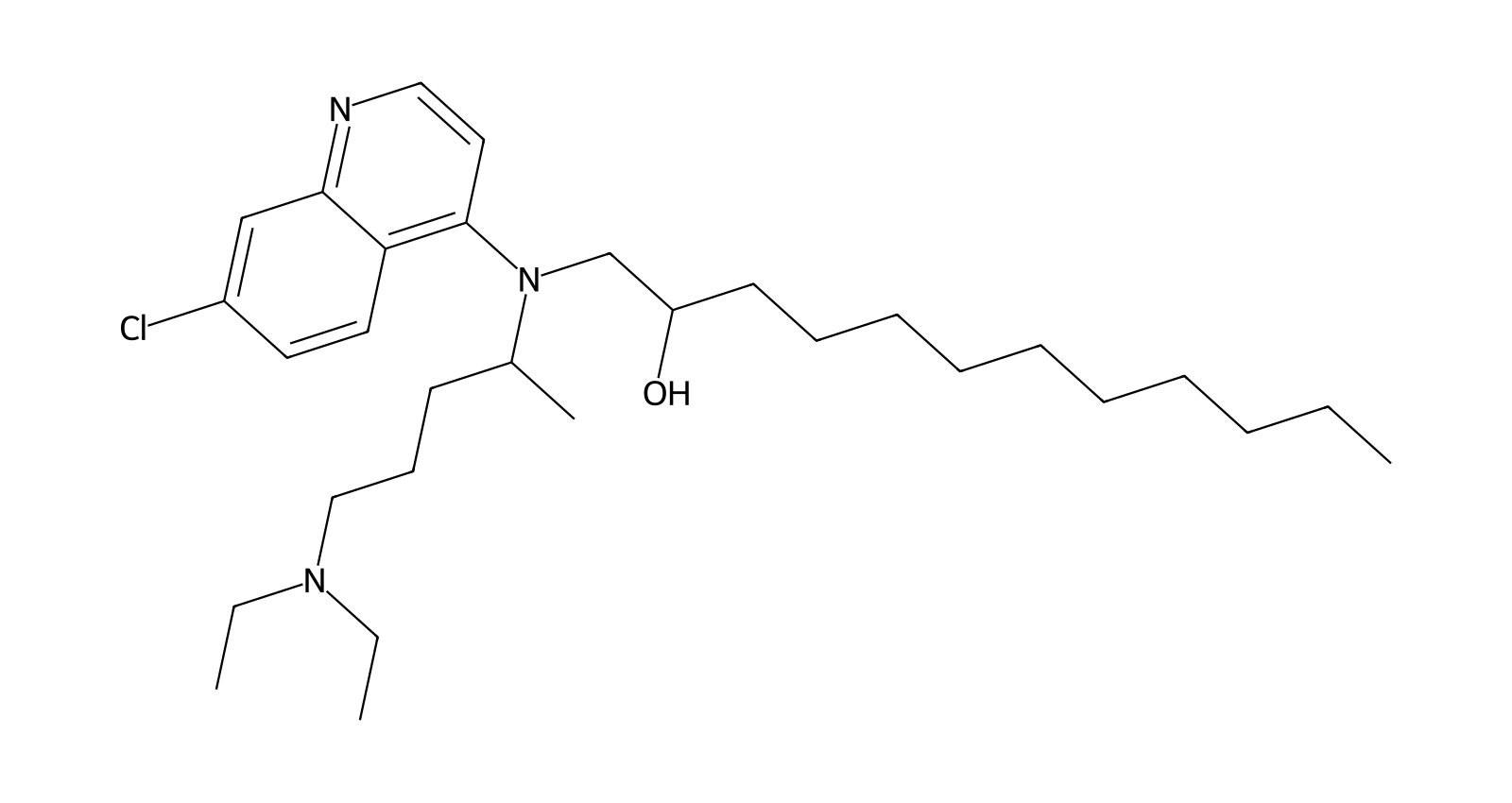
CQ-12 (CQ12) is a chloroquine-derived, autophagy-inhibitory lipidoid containing a 7-chloroquinoline headgroup and a hydroxyl-bearing C12 lipid chain. It was selected from the CQ6–CQ18 series for incorporation into autolysosomal degradation-inhibitory lipid nanoparticles (AUDI-LNPs). Replacing 30% of the SM-102 molar fraction with CQ-12 produced a five-component formulation containing 15 mol% CQ-12 and increased luciferase expression approximately 5.3-fold in HEK293T cells under the reported conditions. The study also evaluated CQ-12-substituted MC3 and ALC-0315 formulations, subcutaneous and intravenous mRNA delivery, and local intratracheal delivery. IL-10 and TGF-β mRNA formulations were investigated in mouse models of psoriasis and acute lung injury, respectively. CQ-12 supports research into autophagy-modulating LNPs and cytokine mRNA delivery.

CQ-12 chemical structure
A18B8C14Featured
Price on request

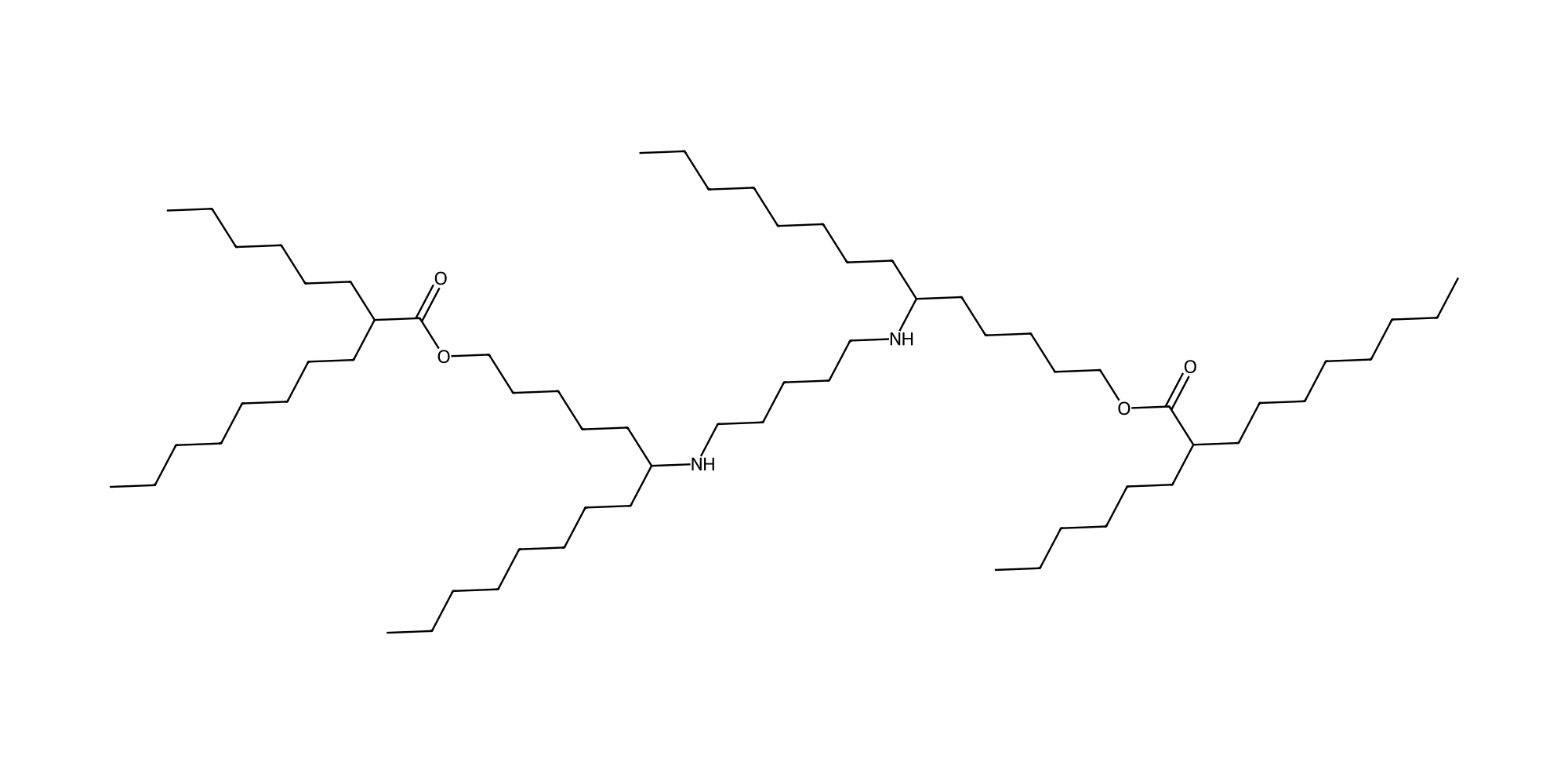
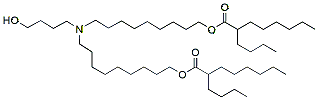
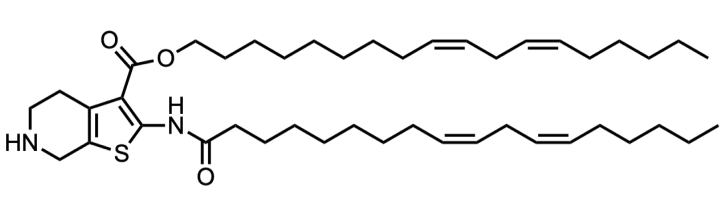
A18B8C14 is an α-branched amine ionizable lipid developed using the photochemistry-based ionizable lipid library (PILL) platform. Its structure contains two secondary amines linked by a pentamethylene spacer and two ester-containing branched hydrophobic arms. A18B8C14 was identified as a lead for mRNA delivery; the publication reports higher in vivo expression with its optimized LNP formulation than with an MC3-based benchmark. The supporting information documents intravenous reporter-mRNA delivery, formulation screening, cellular uptake and endosomal colocalization, particle stability, and dose-dependent blood chemistry. It is intended for research on mRNA-LNP formulation and delivery.

A18B8C14 chemical structure
U-502Featured
Price on request

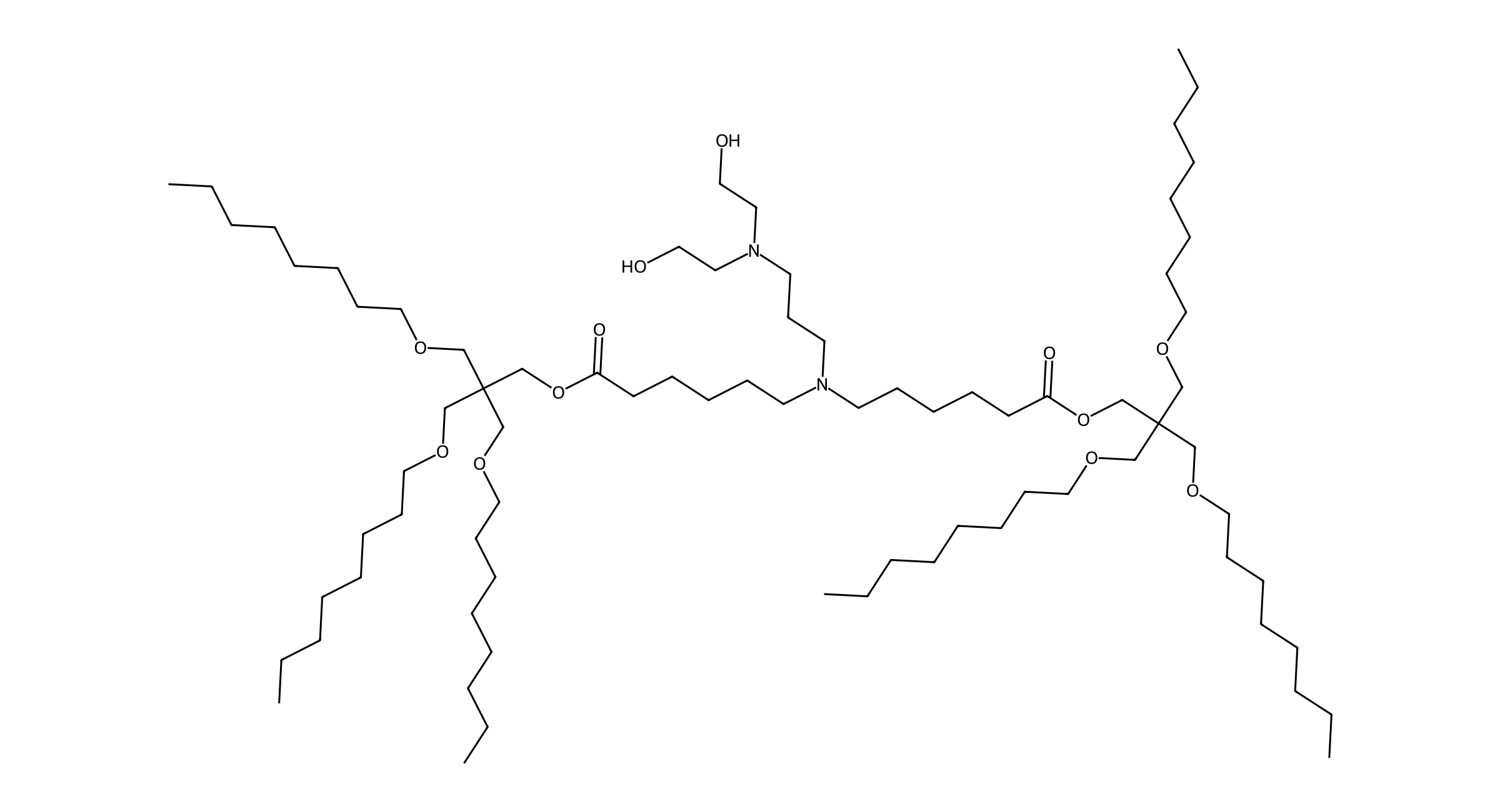
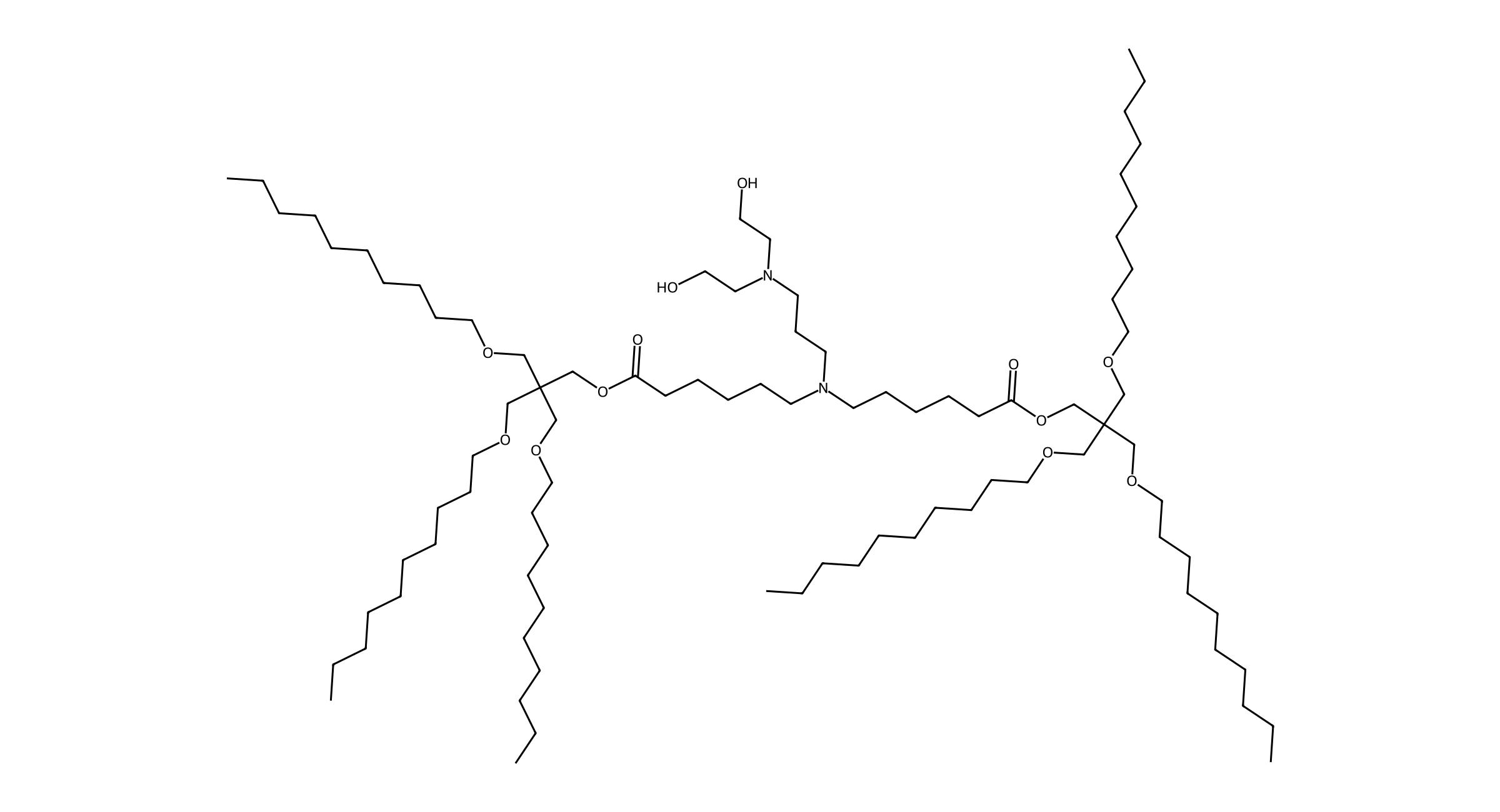
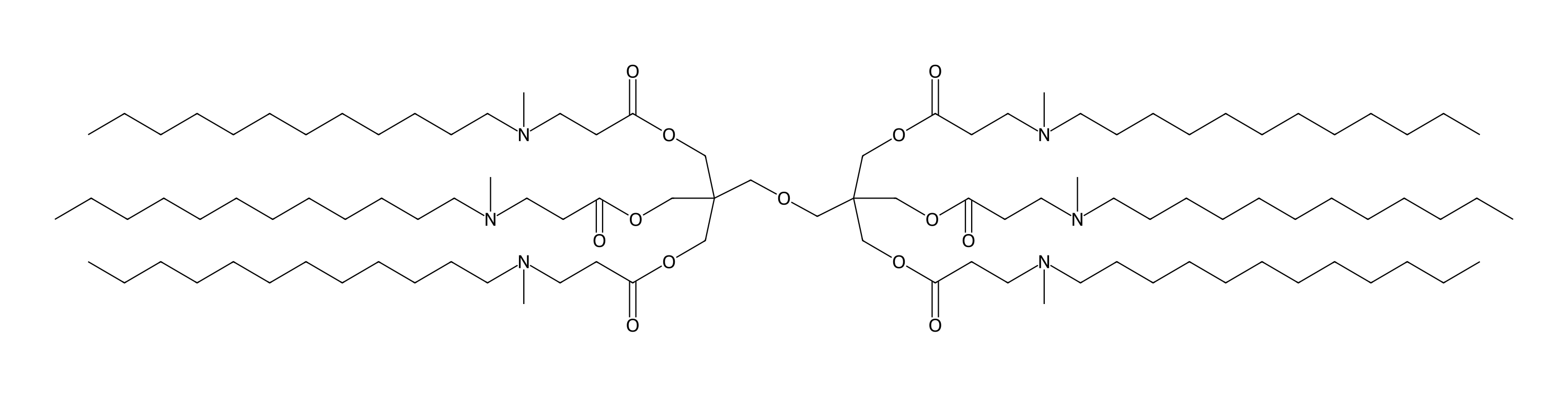
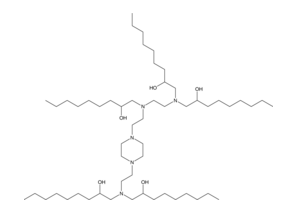
U-502 is a Janus dendritic ionizable lipid with two tertiary amines, two hydroxyl groups and six C8 alkyl tails attached through ether-containing dendrons and ester linkers. In a 16-lipid study, U-502 and U-503 were the leading intravenous mRNA-expression candidates, with modestly higher luciferase signals than ALC-0315 in BALB/c mice at 0.5 mg/kg mRNA and a 3-hour readout. The U-502 formulation had a reported size of 108 nm, PDI of 0.125, apparent LNP pKa of 6.36 and mRNA encapsulation efficiency of 91.83%. U-502 also underwent cell transfection, lysosomal colocalization and representative tissue-histology studies. It supports preclinical research into liver-dominant systemic mRNA delivery and headgroup–tail structure–activity relationships.

U-502 chemical structure
U-503Featured
Price on request

U-503 is a Janus dendritic ionizable lipid with two tertiary amines, two hydroxyl groups, two ester linkers and six C10 alkyl tails connected to dendritic cores through ether bonds. It was identified alongside the C8-tail analogue U-502 as a leading intravenous mRNA-expression candidate in a 16-lipid study. In BALB/c mice given 0.5 mg/kg luciferase mRNA, U-503 produced a modestly higher 3-hour expression signal than the ALC-0315 comparator under the reported formulation conditions. Its LNP formulation had a size of 114 nm, PDI of 0.122, apparent LNP pKa of 6.31 and encapsulation efficiency of 89.36%. U-503 is a preclinical research candidate for systemic mRNA delivery and matched tail-length comparisons with U-502.

U-503 chemical structure
U-510Featured
Price on request

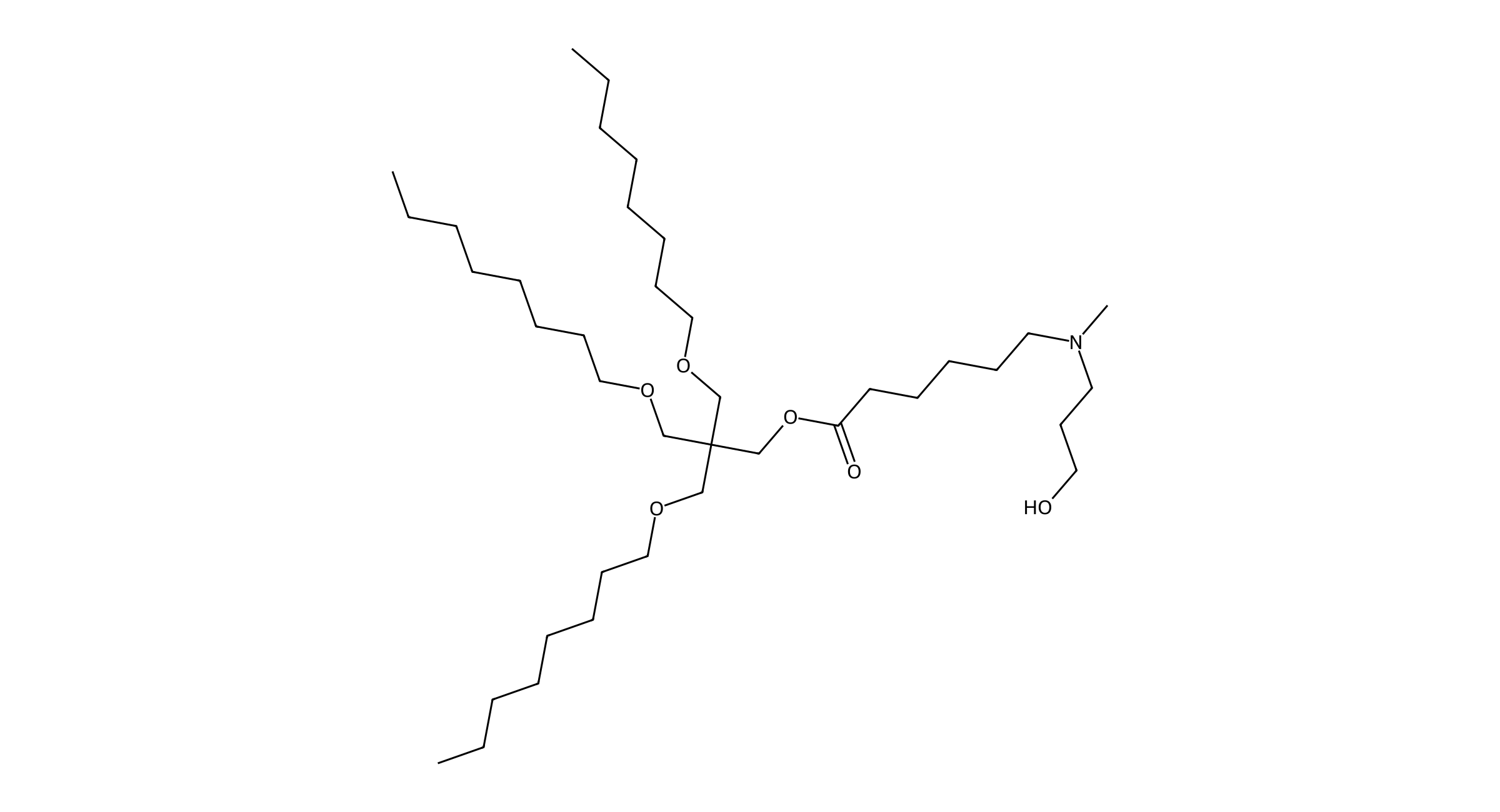
U-510 is a three-tail Janus dendritic ionizable lipid containing an N-methyl tertiary amine, a hydroxypropyl head segment, an ester linker and three C8 ether-linked hydrophobic tails. In an intravenous luciferase-mRNA study in BALB/c mice, it showed a spleen-biased organ-expression profile within the U-509–U-512 series. The authors reported 52% spleen-targeting efficiency in the context of liver and spleen luminescence at 3 hours after 0.5 mg/kg mRNA; this is not a percentage of transfected spleen cells or injected dose. The U-510 LNP formulation had a reported size of 113 nm, PDI of 0.146, apparent LNP pKa of 6.38 and encapsulation efficiency of 87.88%. It supports preclinical evaluation of splenic mRNA expression rather than maximum whole-animal expression.

U-510 chemical structure
iL-19Featured
Price on request

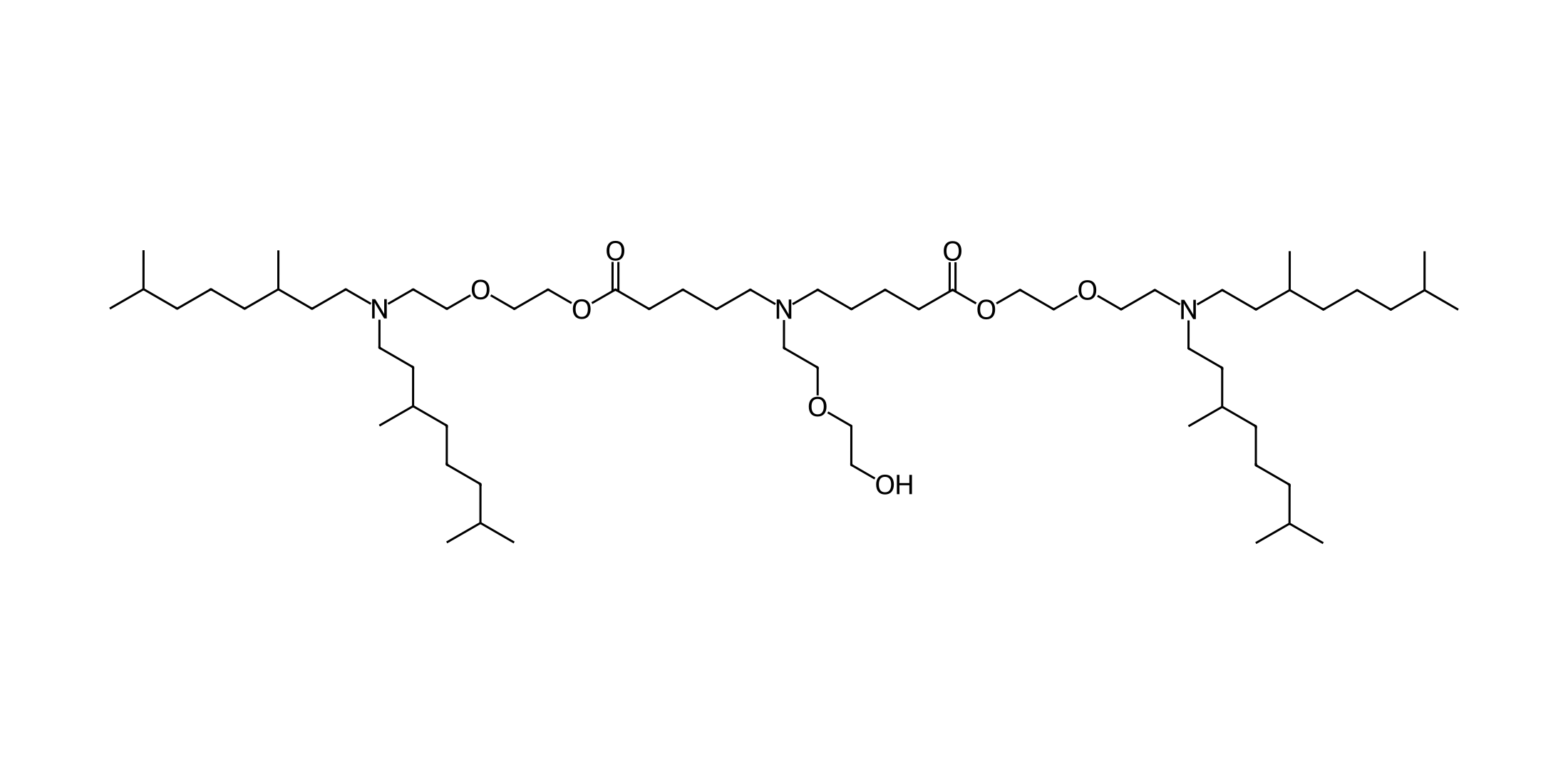
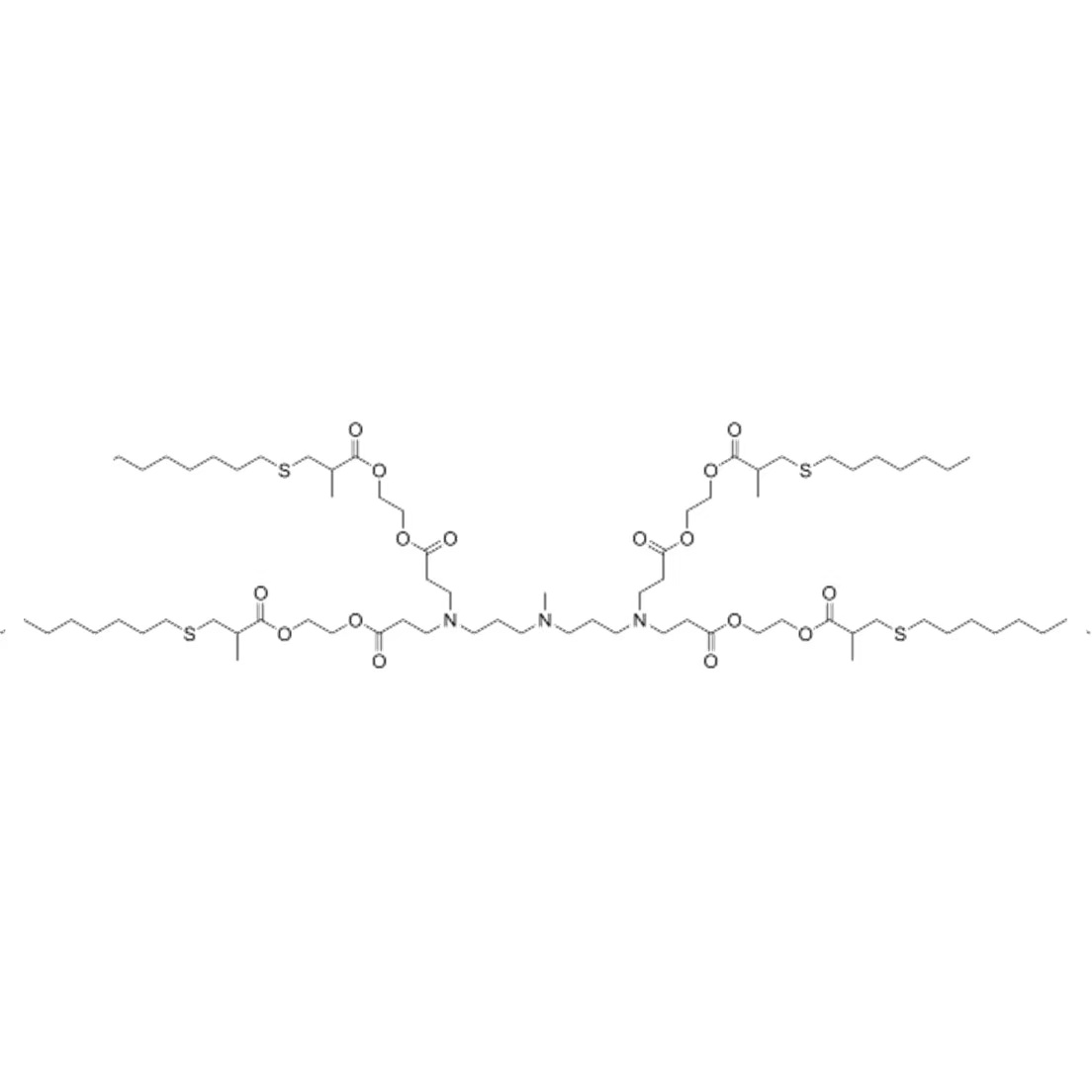
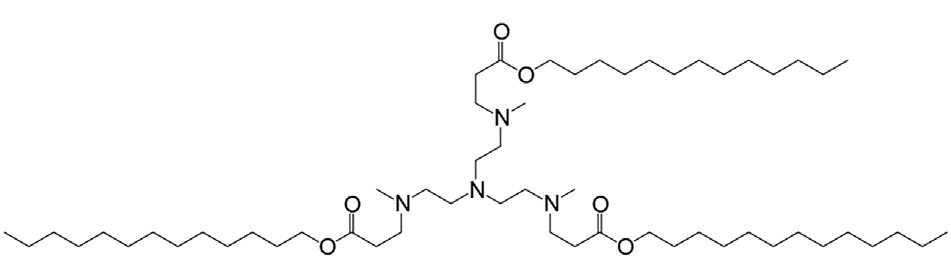
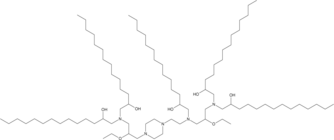
iL-19 is an aminoethoxy-functionalized ionizable lipid with a triamine scaffold, two ester linkages and four doubly branched hydrophobic tails. It was identified as the overall lead for circular RNA delivery in a 2026 JACS study. With circRNA encoding firefly luciferase, iL-19 LNPs produced approximately 28-fold higher expression than the SM-102 benchmark in C2C12 cells and approximately 2.5-fold higher expression after intramuscular administration in BALB/c mice under the reported conditions. The reported circRNA formulation uses iL-19, DSPC, cholesterol and DMG-PEG2000 at 50:10:38.5:1.5 mol%. It supports preclinical investigation of circular RNA delivery to muscle; comprehensive safety and immunogenicity evaluation remains outstanding.

iL-19 chemical structure
PA97MD101Featured
Price on request

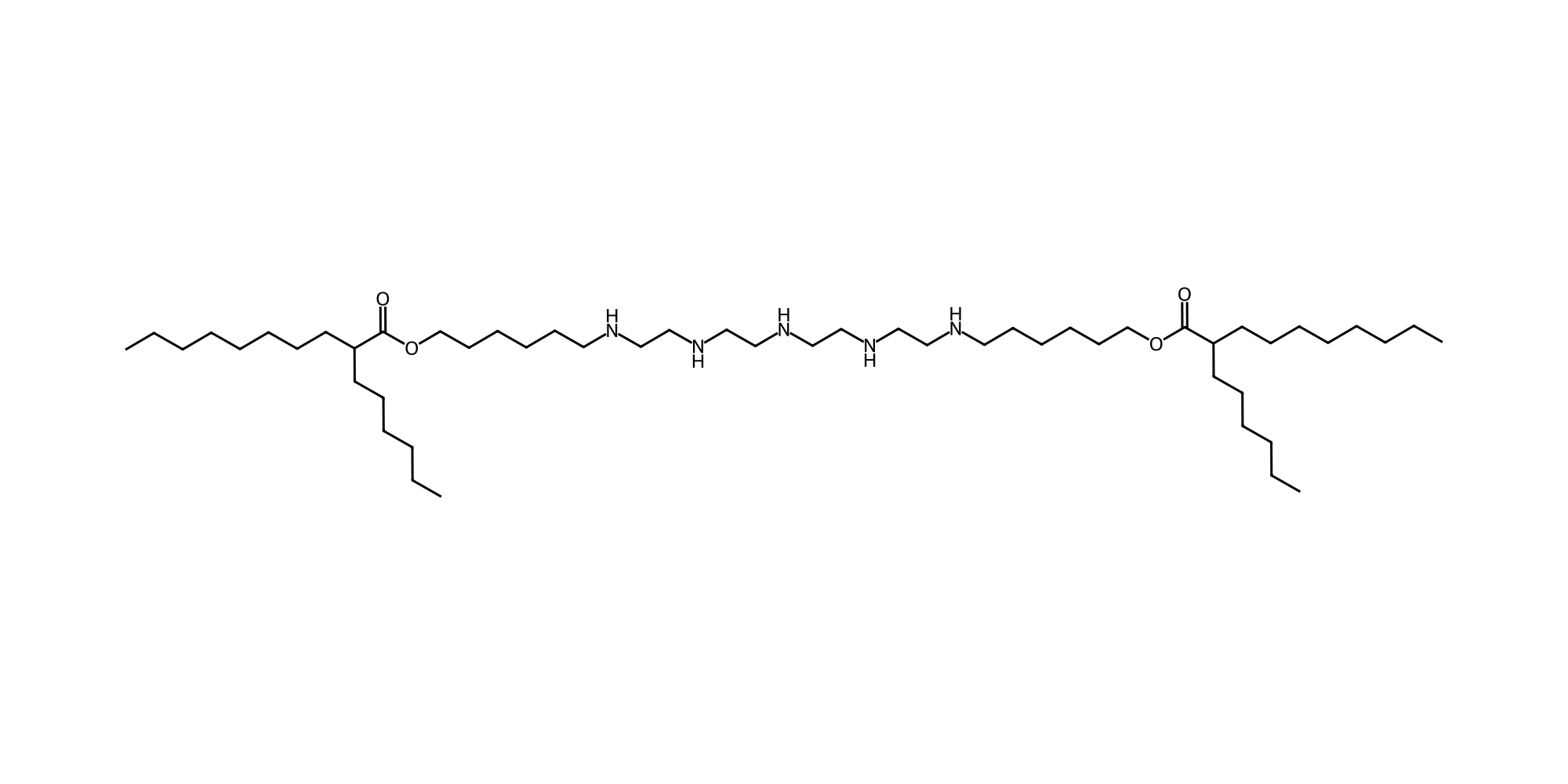
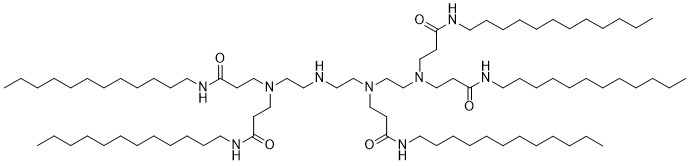
PA97MD101 is an ester-containing ionizable lipid with a tetraethylenepentamine-derived headgroup and two branched hydrophobic ester arms. Identified through machine-learning-guided screening and independent animal validation, its LNPs produced approximately fourfold higher hepatic luciferase expression than SM-102 in mice after intravenous Fluc mRNA delivery at 0.1 mg/kg. The study also demonstrated Cre-dependent liver recombination and Cas9/sgTtr-mediated TTR suppression. Formulation-dependent activity was associated with acidic-pH membrane activity and reduced lysosomal colocalization. PA97MD101 is a preclinical research candidate for hepatic mRNA and CRISPR cargo delivery.

PA97MD101 chemical structure
5mg $550 · 10mg $800 · 25mg $1,100 · 50mg $1,650 · 100mg $2,500

LC-1 (LC-lipid-1) is an ionizable lipid identified by screening a 384-member Ugi-reaction library with a large, 5.7-kb ABE–NanoLuc mRNA cargo. The cited study evaluated LC-1 lipid nanoparticles for delivery of Cas9 and base-editing cargos to the liver, brain and lung in mice, using different formulations and administration routes.

LC-1 (LC-lipid-1) chemical structure
6Ac1-C12Featured

6Ac1-C12 is an ionizable cationic lipid with a hexaester degradable core and six C12 hydrophobic alkyl tails, featuring a pKa around 6.0 and strong endosomal escape capacity. Its four-component LNPs deliver mRNA mainly to liver endothelial cells after IV injection and remain stable for 30 days at 4°C. Formulated without cholesterol, its three-component system enables lung-targeted delivery with low in vivo toxicity, and the ester core facilitates biodegradation for versatile mRNA applications.

6Ac1-C12 chemical structure
25mg $350 · 50mg $600 · 100mg $950

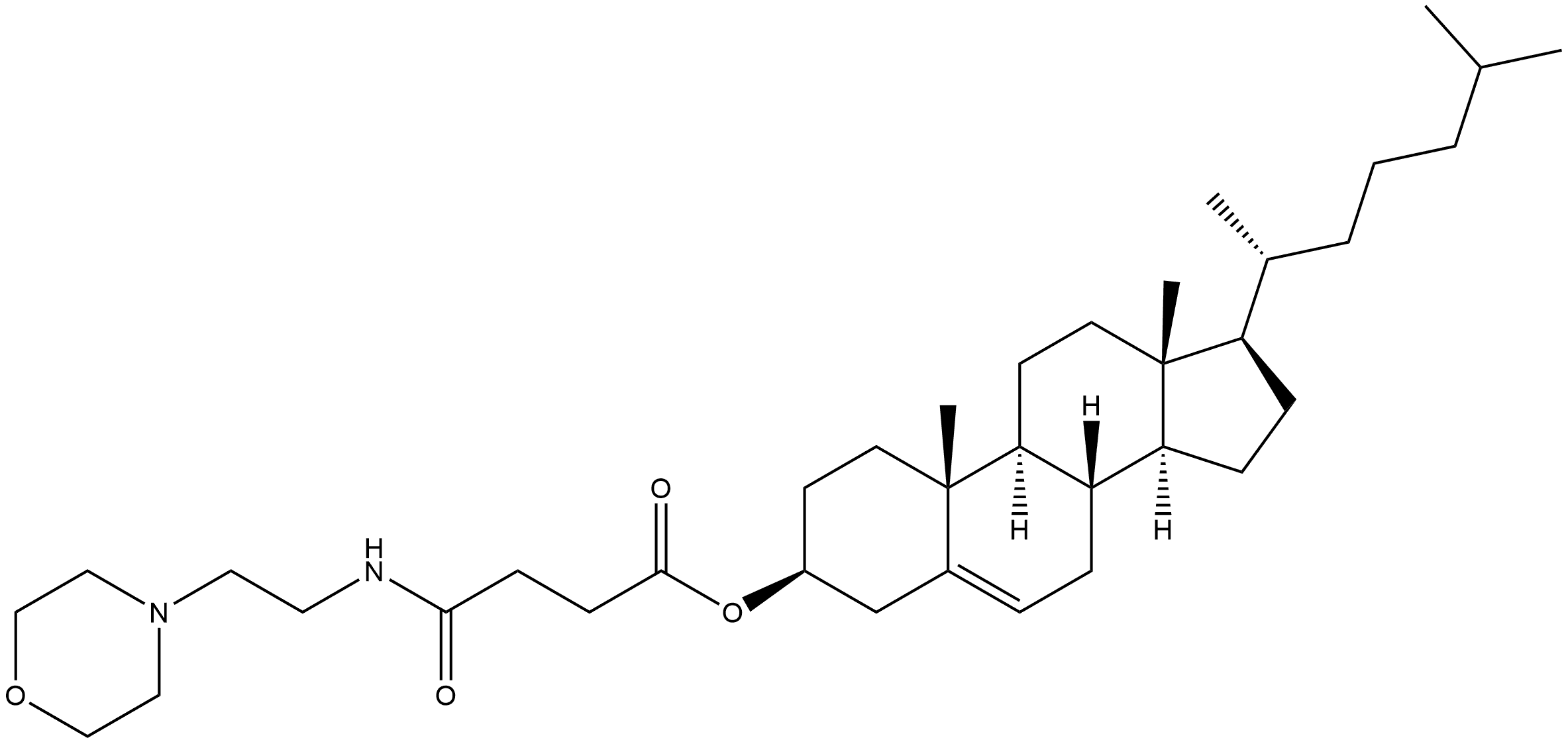
11-10-8 is a degradable, branched ionizable lipidoid identified in a combinatorial screen for mRNA delivery. In the cited mouse study, its optimized LNP formulation supported liver-directed reporter mRNA expression, TTR gene editing with Cas9 mRNA and sgRNA, and FGF21 mRNA expression in a diet-induced obesity model.

lipid 11-10-8 chemical structure
503O13Featured

503O13 is a degradable, four-tail ionizable lipidoid from a second-generation siRNA-delivery library. In the cited mouse Factor VII study, the non-optimized 500-series formulation was screened at 5 mg/kg and optimization of the 503O13 formulation reduced its reported EC50 to 0.01 mg/kg. The exact optimized helper-lipid molar ratio was not disclosed. Results below apply to the cited LNP, not to the neat lipid or a commercial batch.

503O13 chemical structure
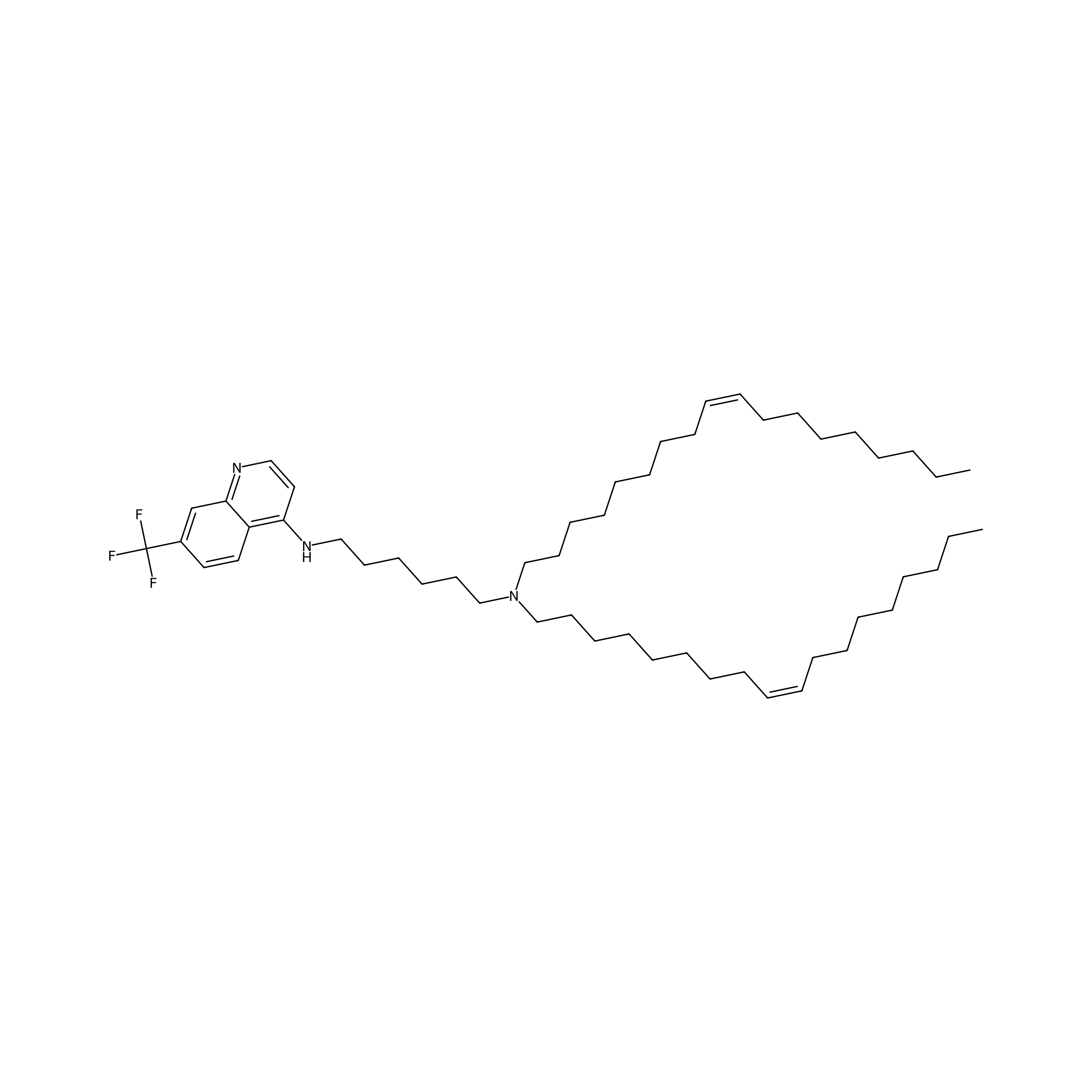
CF3-2N6-UC18Featured

CF3-2N6-UC18​​ is a rationally designed chloroquine-inspired ionizable lipid that enables robust mRNA delivery and genome editing. It integrates three modular components: a 7-trifluoromethyl-substituted quinoline scaffold (mimicking chloroquine’s endosomolytic properties), a hexamethylenediamine linker with two ionizable nitrogen atoms (pH-responsive protonation), and two unsaturated oleyl (C18:1) hydrophobic tails (enhancing membrane fusion and nanoparticle stability). This lipid self-assembles into ecoLNPs (endosomolytic chloroquine-like lipid nanoparticles) with spherical morphology (~200 nm diameter, 98% mRNA encapsulation). Its pH-sensitive activity triggers endosomal escape through dual mechanisms: ​​proton sponge effect​​ (buffering endo-lysosomal pH) and ​​saposin B-mediated membrane disruption​​ (molecular docking confirms chloroquine-like binding to lysosomal saposin B). In vitro, ecoLNPs outperform commercial reagents (18.9-fold higher mRNA delivery than Lipofectamine 2000) and penetrate 3D cell models. They resist serum/RNase degradation and retain >90% activity after 7-day storage at 4°C. In vivo, ecoLNPs achieve tissue-specific mRNA expression via multiple routes (intravenous, intramuscular, etc.), with strong lymph node tropism (90.2% after intramuscular injection) comparable to SM-102 LNPs (Moderna’s COVID-19 vaccine carrier). They mediate efficient Cre mRNA-driven recombination and CRISPR-Cas9 editing in transgenic mice. CF3-2N6-UC18’s modular design, stability, and dual endosomal escape strategies position it as a versatile platform for mRNA vaccines, gene therapy, and genome editing applications.

CF3-2N6-UC18 chemical structure
BIP-20Featured

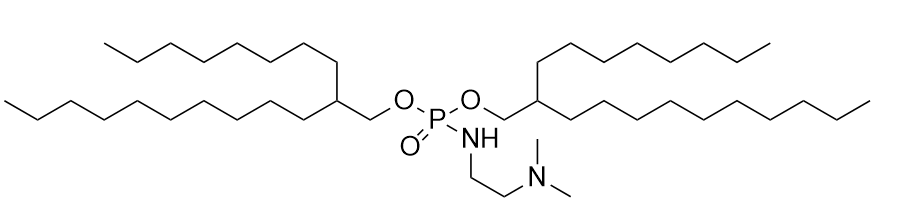
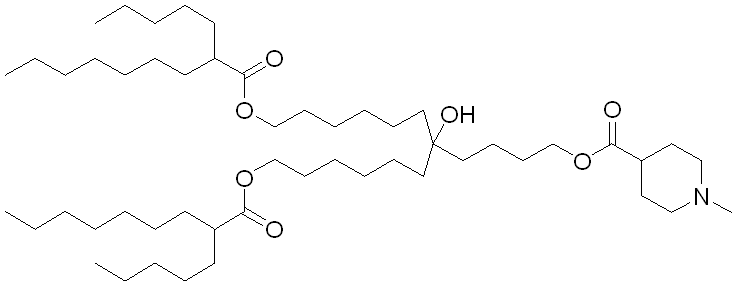
BiP-20 is a branched ionizable phospholipid identified as a lead compound for efficient hepatic mRNA delivery.BiP-20 is a novel, efficient, and safe liver-targeted LNP delivery vehicle. With an ideal pKa of 6.56, it achieves highly efficient liver targeting and endosomal escape primarily through the ApoE/LDL-R pathway. It demonstrates exceptional performance in gene editing at very low doses: for CRISPR-Cas9-mediated editing of TTR, a 10 μg dose achieved ~64% efficiency, which is 8-fold higher than the clinical benchmark lipid LP-01. In Prime Editing targeting the PCSK9 gene, its efficiency (4.30%) also significantly surpassed that of MC3, SM102, and LPO1. Furthermore, it mediates a 5.9-fold increase in hepatic protein expression compared to MC3. Safety assessments indicate it does not induce liver function abnormalities, showing strong therapeutic potential.

BIP-20 chemical structure
9C-SCC-10Featured
Price on request

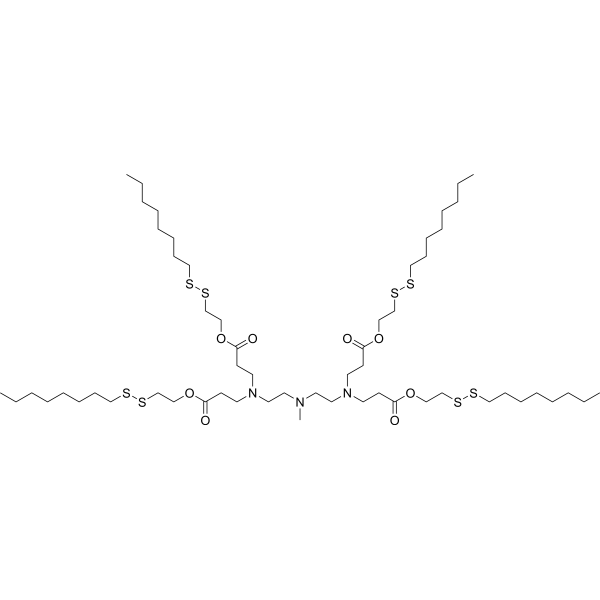
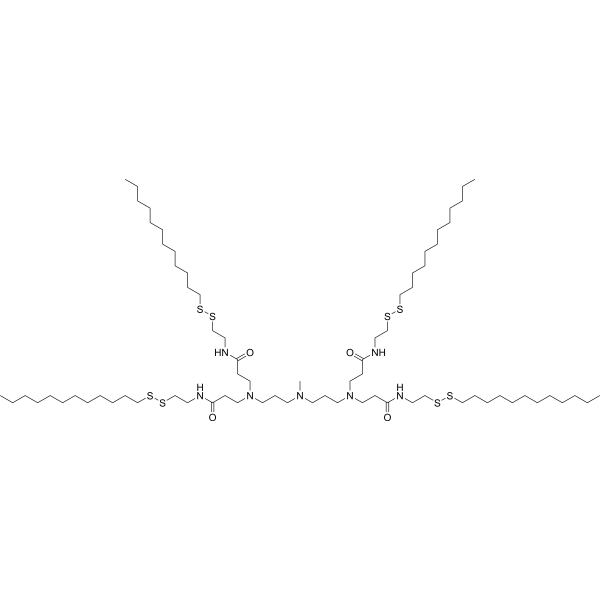
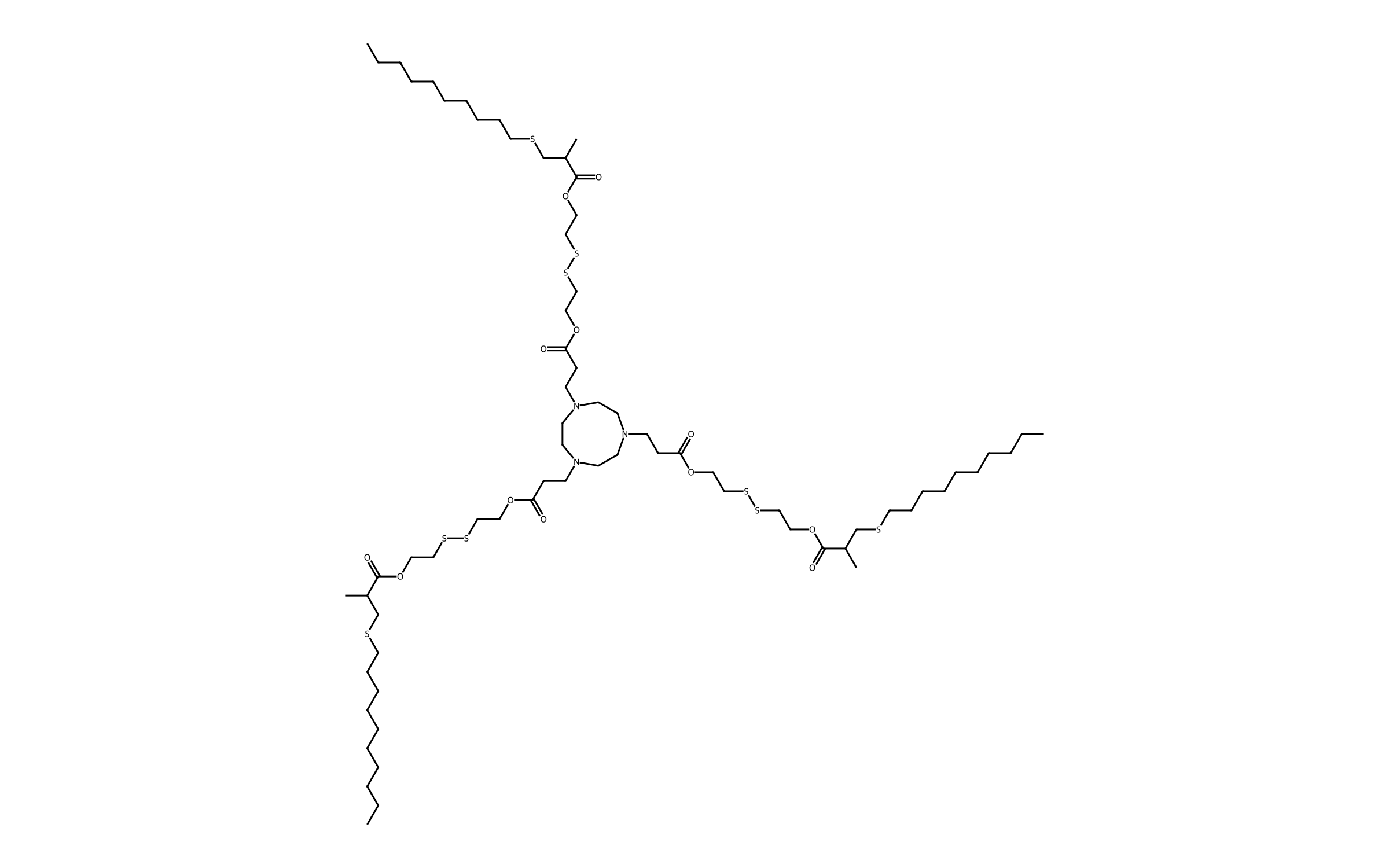
9C-SCC-10 is a biodegradable ionizable lipid with a nine-membered triaza crown-like headgroup and three disulfide-containing hydrophobic arms. In the cited mouse study, LNPs containing uncomplexed 9C-SCC-10 showed liver-biased mRNA-derived expression and an apparent LNP pKa of 6.42. Coordination with zinc produced the distinct Zn-9C-SCC-10 system, which shifted expression toward the lung. DC67451 refers to the uncomplexed lipid; the zinc-coordinated formulation is described separately in the literature analysis.

9C-SCC-10 chemical structure

Study context & references

LipidReported research contextSource & study details
CQ-12
DCL0019
CQ-12 was evaluated as a co-ionizable lipid with SM-102 in LNPs showing functional liver and spleen reporter expression.[1] Source
Fig.6J–L and SI Fig.S29
A18B8C14
DCL0018
A18B8C14 LNPs showed liver-associated mRNA reporter luminescence after intravenous dosing.[2] Source
SI S21, S27 and Fig.S5b
U-502
DCL0014
U-502 LNPs showed liver-associated reporter expression in the reported in vivo mRNA study.[3] Source
Main Fig.2, PDF pp.5–7
U-503
DCL0015
U-503 LNPs showed liver-associated reporter expression in the reported in vivo mRNA study.[3] Source
Main Fig.2, PDF pp.5–7
U-510
DCL0016
U-510 LNPs showed mixed liver and spleen reporter expression in the reported in vivo mRNA study.[3] Source
Main Fig.2, PDF pp.5–7
iL-19
DCL0013
iL-19 showed qualitative hepatic circLuc expression in a small preliminary intravenous experiment (n=2).[4] Source
SI §6.5 and Fig.S12, p.39
PA97MD101
DCL0011
Intravenous mRNA delivery in mice; hepatic reporter expression, Cre recombination and TTR gene-editing experiments.[5] Source
Figs.5–6 and Methods
LC-1
DCL0004
Mouse IV LC-1 DOE-07; Cas9 and adenine-base-editor cargo.[6] Source
Main Fig.2 Cas9; Fig.3/6 base editing; SI Figs.59–61
6Ac1-C12
DC60809
Mouse IV Cre mRNA, 0.25 mg/kg, 48 h; hepatocytes, hepatic endothelial cells and Kupffer cells.[7] Source
section 5; main Fig.3; SI Figs.24,29
lipid 11-10-8
DC60825
Mouse IV optimized F5 11-10-8 LNPs; liver luciferase, TTR editing and FGF21 experiments are separate endpoints.[8] Source
Fig.5a,c,d; Fig.6
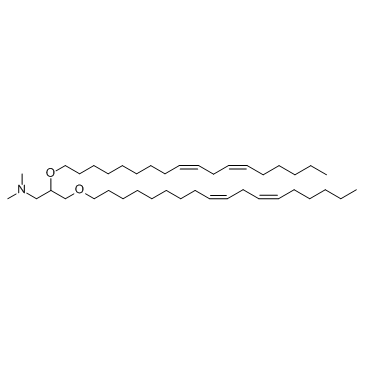
DLin-MC3-DMA
DC10800
Intravenous siRNA delivery with hepatic gene silencing in rodents and non-human primates.[9] Source
Compound 16 (MC3), Table 1; hepatic gene-silencing experiments.
DLinDMA
DC12145
Female BALB/c mice; intravenous 5 micrograms FLuc mRNA; liver expression examined at 4 and 24 h.[10] Source
Fig.4c; Supplementary Data 4
DLin-KC2-DMA
DC12381
Intravenous siRNA; hepatic FVII silencing in rodents and TTR silencing in cynomolgus monkeys.[11] Source
Figure 3; main text, non-human-primate TTR study.
LP-01
DC31000
Intravenous EGFP mRNA; liver protein expression measured in BALB/c mice.[12] Source
Table 2; Figure 2A, 24-hour liver EGFP ELISA.
DODMA
DC33580
Systemic miR-122 delivery using LNP-DP1 in mice; liver and liver-tumor target-gene suppression.[13] Source
Abstract; liver/tumor biodistribution and target-gene suppression experiments.
DODAP
DC33635
DODAP added to a 4A3-SC8-based SORT LNP formulation; liver-directed delivery.[14] Source
Box 1 step 9: 20% DODAP/4A3-SC8 liver SORT formulation.
ALC-0315
DC42537
Intravenous EGFP mRNA; liver protein expression measured in BALB/c mice.[12] Source
Table 2; Figure 2A, 24-hour liver EGFP ELISA.
CKK-E12
DC49882
Mouse IV luciferase mRNA; ex vivo organ imaging at 24 h confirms liver expression; matched OF-02 comparison.[15] Source
Fig.4; PMC5245883
503O13
DC49889
Mouse IV Factor VII siRNA; initial screening and optimized formulations must remain separate because optimized lipid ratios are not disclosed.[16] Source
Fig.6b–d
5A2-SC8
DC49907
Intravenous 5A2-SC8 siRNA delivery in mice with functional hepatic Factor VII silencing.[17] Source
Abstract and in vivo siFVII dose-response experiment.
FTT5
DC49932
Mouse IV FTT5; liver reporter expression, PCSK9 base editing and hFVIII delivery were separate experiments.[18] Source
Main PDF p.2 liver reporter; subsequent PCSK9 and hFVIII experiments
246C10
DC49952
Mouse IV luciferase/Cre mRNA; hepatocytes, liver endothelial and Kupffer cells.[19] Source
Fig.3; Fig.4C; Fig.7C
SM-102
DC52025
Intravenous EGFP mRNA; liver protein expression measured in BALB/c mice.[12] Source
Table 2; Figure 2A, 24-hour liver EGFP ELISA.
L319
DC57006
Mouse IV Factor VII siRNA; nonhuman-primate hepatic TTR silencing.[20] Source
Fig.2 mouse; Fig.6 NHP; PMC3734658
ATX-126(ATX-0126, lipid 10p)
DC57046
Mouse systemic Factor VII siRNA LNPs, 0.03 mg/kg; exact 10p formulation has hepatic functional activity.[21] Source
Table 7, PDF p.9 (10p); Tables 6,8; author-company hosted original PDF at arcturusrx.com
C12-200
DC58046
Mouse Factor VII and multiplex hepatic siRNA; nonhuman-primate TTR silencing; systemic administration.[22] Source
Fig.3; Fig.5; Fig.6; PMC2804742
ssPalmO-Phe
DC59002
Mouse intravenous Factor VII siRNA; plasma endpoint at 24 h in the reported ssPalmO-Phe formulation.[23] Source
Fig.4; PMC8070490
Genevant CL1 (lipid 10)
DC59126
Intravenous CL1/lipid 10 LNPs; distinguish optimization and head-to-head comparison experiments.[12] Source
Fig.1
Arcturus lipid 2(ATX-0114)
DC59217
In vivo hepatic Factor VII siRNA screen; patent Table 1 records the exact lipid rather than a platform-wide claim.[24] Source
Table 1 ATX-0114 row
CL4F8-6
DC60475
Mouse IV mRNA/LNP delivery; reporter and genome editing separate experiments; liver editing measured directly.[25] Source
Fig.5 luciferase; Fig.6 TTR editing; PMC11935957
4A3-SCC-10
DC60508
IV crown-like LNP study; liver delivery under tested lipid/helper composition; not generalized to all crown derivatives.[26] Source
Existing product formulation analysis; liver mRNA experiments
4A3-SCC-PH
DC60509
Mouse IV luciferase mRNA at 0.1 mg/kg, 6 h; hepatic Cre experiments are separate.[26] Source
Fig.3
200Oi10
DC60545
Hybrid liver-and-spleen mRNA expression following systemic administration; not claimed to be exclusively hepatotropic.[27] Source
Original article liver/spleen organ-expression comparison
Lipid GVS-18-B6
DC60564
Systemic GVS18B6 mRNA LNP delivery; liver expression and human OTC expression studies, with species-specific conditions.[28] Source
Original article liver expression and hOTC experiments; PMC11025127
Lipid 119-23
DC60605
119-23 mRNA LNPs in mouse liver/spleen/lung experiments, 0.25 mg/kg.[29] Source
Existing SI-derived product analysis; liver/spleen variant assays
Lipid A4B4-S3
DC60782
Mouse IV Cre mRNA, 0.5 mg/kg on days 0 and 3; liver cell phenotyping on day 5.[30] Source
Fig.3J; PMC11804478
CF3-2N6-UC18
DC60843
Mouse intravenous FLuc mRNA ecoLNP delivery; liver and spleen expression, not exclusive liver targeting.[31] Source
Figure 6a; Supplementary Figure 12b,d,e; section ecoLNPs as a robust platform for mRNA delivery in vivo.
Antioxidant lipid AO12
DC60941
APAP-injured liver IV luciferase experiment and HGF-mRNA antifibrotic experiment are distinct formulations/endpoints.[32] Source
Fig.4b–e; Fig.5g,h; PMC13013598
AA-T3A-C12
DC65328
Fibrotic liver, siHSP47 in activated HSCs.[33] Source
Fig.4e and associated Source Data
VL422
DC65850
Cynomolgus monkey IV F190A LNPs with VL422, adenine-base-editor mRNA and ANGPTL3 guide RNA; liver editing.[34] Source
Example 25, Table 23, Figs.23–25; F190/F190A/VL422
YSK12-C4 (YSK12-MEND)
DC67120
YSK05/YSK12-C4/cholesterol/PEG-DMG 50:20:30:2; mouse LSEC CD31 silencing.[35] Source
Results: YSK05/12-LNP optimized mixture; FVII and liver CD31 silencing experiments.
Acuitas Lipid III-25
DC67212
Mouse IV FLuc mRNA, 0.3 or 1.0 mg/kg; liver protein expression at 4 h using compound 25 formulation A.[36] Source
Example 1; Example 3 Table 3 compound 25; Example 34 synthesis; catalog SMILES reconciled
MOCHOL
DC67623
MOCHOL-containing NOV340/MTL-CEBPA formulations; liver CEBPA activation and liver-disease experiments.[37] Source
Paragraphs 794–805, Figs.34–35; paragraphs 826–830, Figs.36–38
BIP-20
DC68021
Systemic BIP-20 LNPs; hepatic luciferase and TTR editing, with PCSK9 prime-editing experiments treated separately.[38] Source
Fig.1f,h; subsequent prime-editing experiments
Lipid A10 (CSS-A10)
DC68150
Rhesus IV LNP67 aNLuc mRNA; liver-cell expression measured alongside bone-marrow CD34+ cells.[39] Source
Fig.4c–g; identity linkage WO2025217298A1
Lipid CSL3
DC68210
Mouse intravenous CSL3 siRNA LNPs targeting Factor VII; formulation-dependent in vivo silencing.[40] Source
Original article abstract / in vivo Factor VII experiment
98N12-5
DC70010
Systemic siRNA targeting hepatic PCSK9 in the original lipidoid studies; not an mRNA potency claim.[41] Source
Original study hepatic PCSK9 knockdown; original cKK-E12 comparator reference
YSK 05
DC71417
Intravenous YSK05-MEND; hepatocyte FVII and liver-endothelial CD31 siRNA assays in mice.[42] Source
Figure 3a–d; Results comparing YSK05, YSK13 and YSK15.
LIPID A6
DC80050
Intravenous mouse mRNA delivery; A6 alone and cKK-E12/A6 combinations are distinct formulations.[43] Source
Figure 1b–d; Results on cKK-E12/A6 synergistic formulation.
113-O12B
DC80065
Mouse IV mRNA LNPs: predominant hepatic protein expression.[44] Source
Original abstract; PMID40505892; all four tested IV formulations including 113-O12B
306Oi10
DC80066
Intravenous branched-tail 306Oi10 LNP; mRNA expression and delivery to multiple mouse liver cell types.[45] Source
Abstract; in vivo liver delivery experiments.
4A3-SC8
DC82001
Intravenous mouse luciferase mRNA delivery; baseline 4A3-SC8 and 4A3-SC8 plus 20% Cit formulations distinguished.[46] Source
Figure 4; in vivo liver luciferase-expression comparison.
306-O12B-3
DC82025
Systemic 306O12B3 LNPs carrying PCSK9-targeting antisense oligonucleotides; hepatic PCSK9 suppression.[47] Source
Original article PCSK9 ASO in vivo experiments; PMC7036716
PPZ-A10
DC82102
Mouse IV Cre mRNA, 1 mg/kg, 3 days; Kupffer and hepatic dendritic cells; siGFP Kupffer-cell silencing separate.[48] Source
Fig.3c,d,f; use IV route from detailed analysis, not erroneous catalog IP wording
ND-O1 (SM-86 Analog-2)
DC153158
ND-O1 LNP-O1 carrying siHSP47 in CCl4-induced mouse liver fibrosis; hepatic gene suppression and fibrosis endpoints.[49] Source
Original abstract and publisher article S0378517325000286
OF-02
DC49908
Mouse IV luciferase mRNA; ex vivo organ expression at 24 h compared with cKK-E12.[15] Source
Fig.4; PMC5245883
CL15F 9-5
DC60711
BALB/c female mice; IV Fluc mRNA 0.1 mg/kg, 6 h.[50] Source
Paragraphs 128–133; Table 7, CL15F 9-5 row. Hepatic hEPO storage results in the 2024 paper concern other lipids.
4A3-SC7​​
DC60855
PiZ mice IV base-editor mRNA/sgRNA; 4A3-SC7 Liver SORT with Cit co-lipid, studied separately or alongside lung SORT formulations.[51] Source
Fig.3a,b,l,m; publisher-supplied original figure captions verified via ResearchGate publisher preview
306-N16B
DC65327
IV co-delivery of Cas9 mRNA and sgRNA, 1.67 mg/kg total RNA; editing in liver and lung.[52] Source
Fig.4B,C; PMC8872770
ATX L1
DC67542
ATX L1 has siFVII knockdown evidence.[53] Source
SI Table S1, PDF p.4
304O13
DC86070
304O13 LNPs produced factor VII suppression after intravenous siRNA delivery in mice.[16] Source
Fig.3c–d, PDF p.4
Lipid 20b
DC60554
Lipid 20b LNPs delivered mRNA to liver and spleen after intravenous dosing.[54] Source
Hepatic/splenic IV delivery results, PMC10945828
C10-200
DC67133
C10-200 LNPs support hepatic reporter-mRNA expression after intravenous dosing.[55] Source
Hepatic Fluc expression results, Fig.3, PMC11239295
Lipid 5D8
DC67298
5D8 supports hepatic TTR and PCSK9 editing in the reported mouse experiments.[56] Source
Fig.2d–e; preprint record
AZD Lipid 17
DC67522
AZD lipid 17 was tested for intravenous mRNA delivery with a hepatic expression readout.[57] Source
IV mRNA-expression experiments, PMC12107392
4A3-LNSC8​
DC67990
Uncomplexed 4A3-LNSC8 is the liver-delivering parent system.[58] Source
Abstract and uncomplexed-versus-halide-directed organotropism experiment
244-9-cis
DC67994
244-9-cis LNPs delivered FVII-targeting siRNA intravenously to mice, with a hepatic functional knockdown endpoint.[59] Source
Fig.2; siFVII in vivo efficacy experiment following Example 2-2
Lipid GA-16
DC68058
GA-16 LNPs support liver-directed mRNA expression, including hepatic hOTC delivery in rats.[60] Source
GA-16/DEPE hepatic expression and hOTC experiments, PMC13088227
Lipid M10
DC68139
M10-F4 LNPs were evaluated for systemic hepatic PCSK9 editing and downstream plasma LDL reduction.[61] Source
Abstract: M10-F4 hepatic PCSK9 editing
HGT5001
DC68162
HGT5001/DOPE/cholesterol/DMG-PEG2000 LNPs produced hepatic firefly-luciferase expression after intravenous administration in mice.[62] Source
Fig.12: intravenous FFL mRNA experiment
TT3-LLN
DC49845
Tail-vein mRNA/guide RNA LLNs in mice; hepatic reporter expression and liver-biopsy base editing.[18] Source
Figure 1C; Supplementary Figure S7A–C; Methods, in vivo mRNA delivery and base editing.
E4i-200
DC13056
E4i-200 supports hepatic delivery and editing with CRISPR ribonucleoprotein cargo.[63] Source
Fig.6: hepatic RNP delivery/editing, PMC11759712
E8i-200
DC13058
E8i-200 supports hepatic-cell editing with CRISPR ribonucleoprotein cargo.[63] Source
Fig.6i–j: hepatic-cell editing, PMC11759712
O12-D3-I3
DC60603
O12-D3-I3 LNPs demonstrated functional factor VII knockdown in vivo.[64] Source
Abstract: O12-D3-I3 siFVII experiment
12T-O14
DC60619
12T-O14 base LNPs produced liver, spleen and lung mRNA expression after intravenous dosing.[65] Source
Fig.4c–e; systemic mRNA-delivery results (PMC11446653)
Si6-C14b
DC60662
Si6-C14b was a liver-delivery lead in intravenous firefly-luciferase mRNA screening.[66] Source
Main Fig.3, PDF p.6
CL4F11-ζ-2
DC60670
CL4F11-ζ-2 LNPs delivered TTR-targeting CRISPR ribonucleoprotein/oligonucleotide complexes with a hepatic editing-associated functional endpoint.[67] Source
Fig.15A: TTR-targeting RNP/ssODN experiment
THP1
DC60671
THP1 formulations support hepatic mRNA expression and Cre reporter activation.[68] Source
Fig.4A and Fig.S8, PMC11781979
31hP
DC60702
31hP LNPs delivered Cas9 mRNA and TTR guide RNA with liver genomic editing measured after intravenous dosing.[69] Source
Hepatic Cas9/TTR guide-RNA editing experiment
A2C18_D5
DC60797
A2C18_D5 LNPs produced liver and spleen reporter expression after intravenous administration.[70] Source
IV luciferase mRNA organ-expression experiment, PMC12147982
4A3-Cit
DC65001
Intravenous mouse luciferase mRNA; particularly the mixed 4A3-SC8 plus Cit (20%) formulation.[46] Source
Figure 4; 4A3-SC8/Cit formulation comparison.
cKK-E15
DC65620
cKK-E15 LNPs delivered Cre mRNA to hepatic cell populations, including liver-resident immune and endothelial compartments.[71] Source
Liver-cell Cre reporter transfection experiment, PMC7029413
9A1P9
DC66528
Mouse liver delivery by 9A1P9–5A2-SC8 iPLNP. 9A1P9–DDAB lung formulations are a distinct context.[72] Source
Results: 9A1P9–5A2-SC8 liver-selective delivery and CRISPR–Cas experiments.
C9-200
DC66653
C9-200 LNPs delivered Cas9 mRNA and guide RNA for hepatic TTR editing in mice.[55] Source
Hepatic Cas9/TTR editing experiment, PMC11239295
C14-490
DC67283
C14-490 LNPs delivered Cre mRNA to fetal hepatocytes after in utero intravenous administration.[73] Source
Results: Baseline LNP-Mediated Transfection of Mouse HSCs In Utero; SI Fig.S1B–C
9C-SCC-10
DC67451
Uncomplexed 9C-SCC-10 LNPs showed liver-biased functional mRNA expression.[74] Source
SI S8 Fig.S7; S9 Fig.S9; S30 §11
Lipid 114
DC67453
Lipid 114 LNPs delivered anti-IL-1β siRNA in an acute liver-failure model with macrophage-focused delivery and functional benefit.[75] Source
Abstract: lipid 114/siIL-1β in acute liver failure
BCP-NC2-C12
DC67454
BCP-NC2-C12 LNPs delivered editing cargo targeting hepatic PCSK9, with liver indel and circulating PCSK9 readouts.[76] Source
Fig.5b–d and SI Fig.S10, PMC11717372
nor-MC3
DC67520
nor-MC3 LNPs produced hepatic firefly-luciferase expression after intravenous administration.[77] Source
Fig.6A: liver reporter expression
ATX L2
DC67543
ATX L2 has siFVII knockdown evidence.[53] Source
SI Table S1, PDF p.4
GVS-18-B34
DC67616
GVS-18-B34 LNPs showed functional hepatic mRNA expression in the primary in vivo screen.[28] Source
In vivo hepatic mRNA-expression screening
GVS-18-B35
DC67618
GVS-18-B35 LNPs showed functional hepatic mRNA expression in the primary in vivo screen.[28] Source
In vivo hepatic mRNA-expression screening
CLinDMA
DC70008
Intravenous siRNA LNP201 in mice; hepatic Ssb target suppression, with separate dexamethasone co-treatment conditions.[78] Source
Figure 1 and Results: LNP201 composition and hepatic Ssb silencing.
A1-D1-5
DC82210
Intravenous luciferase and uricase mRNA in mice, including hyperuricemia models.[79] Source
Figure 3D–F; Figures 4–5; formulation Methods.
DMAP-BLP
DC83215
DMAP-BLP has hepatic factor VII silencing evidence after intravenous siRNA delivery, explicitly identified in the paper and supplementary data.[80] Source
Discussion and Supplementary Data: hepatic FVII silencing
Lipid 23
DC86805
Lipid 23 LNPs produced hepatic reporter expression and liver-cell transfection in the primary study.[81] Source
Fig.3c–h, PMC10323619

Evidence is formulation- and route-specific. The collection includes hepatic delivery demonstrated in multi-organ studies and does not imply exclusive liver targeting.

References (81)
  1. Zhou et al. Autolysosomal degradation-inhibitory nanoparticles for enhanced mRNA escape and cytokine therapy. Cell Biomaterials. 2026;100593.
  2. Chun et al. Photochemistry-Based Development of Ionizable Lipid Library for mRNA-Lipid Nanoparticle Delivery In Vivo. JACS. 2026;148:42494–42507.
  3. Liu et al. Janus dendritic ionizable lipids with fine designed headgroup and tails to improve mRNA delivery efficiency. Bioorganic & Medicinal Chemistry. 2025;120:118080.
  4. Circular RNA Delivery In Vitro and In Vivo Using Doubly Branched Aminoethoxy-Functionalized Ionizable Lipid Nanoparticles
  5. Zhang et al. Interpretable AI-guided discovery of degradable ionizable lipids with enhanced hepatic mRNA delivery in vivo. Nature Communications. 2026.
  6. Dong et al., Nature Biotechnology (2026)
  7. Su et al., Nature Communications (2024)
  8. Han et al., Nature Communications (2024)
  9. Jayaraman et al. Angew Chem Int Ed. 2012;51:8529–8533.
  10. Communications Biology (2021)
  11. Semple et al. Nature Biotechnology. 2010;28:172–176.
  12. Lam et al., Advanced Materials (2023)
  13. Hsu et al. Nanomedicine. 2013;9:1169–1180.
  14. Selective organ targeting (SORT) lipid nanoparticles for tissue-specific mRNA delivery and CRISPR–Cas gene editing. Nature Protocols 2023.
  15. Fenton et al., Advanced Materials (2016)
  16. Nature Communications (2014)
  17. Zhou et al. Modular degradable dendrimers enable small RNAs to extend survival in an aggressive liver cancer model. PNAS. 2016;113:520–525.
  18. Science Advances (2020)
  19. Kim et al., Science Advances (2021)
  20. Maier et al., Molecular Therapy (2013)
  21. Rajappan et al., Property-Driven Design and Development of Lipids for Efficient Delivery of siRNA
  22. PNAS (2010), C12-200 lipidoid study
  23. Pharmaceutics (2021)
  24. US20180170866A1
  25. Small Science (2023)
  26. Crown-like ionizable lipid study, JACS (2023)
  27. Melamed et al., lipid-dependent mRNA delivery study
  28. Holland et al., ACS Nano (2024)
  29. Li et al., Accelerating ionizable lipid discovery for mRNA delivery using machine learning and combinatorial chemistry
  30. Xu et al., PNAS (2025)
  31. Liu et al. Structure-guided design of endosomolytic chloroquine-like lipid nanoparticles for mRNA delivery and genome editing. Nature Communications 2025.
  32. Nature Communications (2026), AO12 study
  33. Han et al., Nature Communications (2023)
  34. WO2022060871A1
  35. Shobaki et al. Mixing lipids to manipulate the ionization status of lipid nanoparticles for specific tissue targeting. International Journal of Nanomedicine 2018.
  36. US10166298B2, Lipids and lipid nanoparticle formulations for delivery of nucleic acids
  37. WO2016170349A1
  38. Nature Biotechnology (2026), BIP-20 study
  39. Kim et al., Lipid nanoparticle-mediated mRNA delivery to CD34+ cells in rhesus monkeys
  40. Viricel et al., Nanoscale (2017)
  41. Frank-Kamenetsky et al., PNAS (2008)
  42. Sato et al. Relationship Between the Physicochemical Properties of Lipid Nanoparticles and the Quality of siRNA Delivery to Liver Cells. Molecular Therapy 2016.
  43. Miao et al. Synergistic lipid compositions for albumin receptor mediated delivery of mRNA to the liver. Nature Communications 2020.
  44. Ren et al., Impact of ionizable lipid type on the pharmacokinetics and biodistribution of mRNA-lipid nanoparticles after intravenous and subcutaneous injection
  45. Hajj et al. A Potent Branched-Tail Lipid Nanoparticle Enables Multiplexed mRNA Delivery and Gene Editing In Vivo. Nano Letters 2020.
  46. Lee et al. A Systematic Study of Unsaturation in Lipid Nanoparticles Leads to Improved mRNA Transfection In Vivo. Angewandte Chemie 2021.
  47. Yang et al., Molecular Therapy Nucleic Acids (2020)
  48. Ni et al., Nature Communications (2022)
  49. Ether bond-modified lipid nanoparticles for enhancing the treatment effect of hepatic fibrosis
  50. CA3194148A1, Lipid nanoparticle
  51. Kim et al., Dual SORT LNPs for multi-organ base editing
  52. PNAS (2022), lipid nanoparticle co-delivery study
  53. Design and Evaluation of Biodegradable Self-Immolative Lipids for RNA Delivery
  54. Thiophene-based lipids for mRNA delivery to pulmonary and retinal tissues
  55. Influence of ionizable lipid tail length on lipid nanoparticle delivery of mRNA of varying length
  56. Plug-and-play assembly of biodegradable ionizable lipids for potent mRNA delivery and gene editing in vivo
  57. New ionizable lipids for non-viral mRNA delivery with secondary amine cyclic ether head groups
  58. Thiourea-Functionalized Ionizable Lipids Enable Systemic mRNA Delivery to Secondary Lymphoid Organs and Dual-Modal Lymphatic Metastasis Imaging
  59. Ionizable lipid containing biodegradable ester bond and lipid nanoparticles comprising same
  60. Potent Liver-Tropic mRNA Lipid Nanoparticles: ApoE-Mediated Delivery Through a Low-Density Lipoprotein Receptor Independent Uptake Mechanism
  61. Piperazine-Derived Diamine Lipid Nanoparticles Targeting to the Liver for Delivering Clustered Regularly Interspaced Short Palindromic Repeat Editing of PCSK9 to Durably Maintain Plasmatic Low-Density Lipoprotein Cholesterol in Low Levels
  62. Pulmonary delivery of mRNA to non-lung target cells
  63. Branched endosomal disruptor (BEND) lipids mediate delivery of mRNA and CRISPR-Cas9 ribonucleoprotein complex for hepatic gene editing and T cell engineering
  64. Imidazolyl Lipids Enhanced LNP Endosomal Escape for Ferroptosis RNAi Treatment of Cancer
  65. Fast and facile synthesis of amidine-incorporated degradable lipids for versatile mRNA delivery in vivo
  66. Combinatorial design of siloxane-incorporated lipid nanoparticles augments intracellular processing for tissue-specific mRNA therapeutic delivery
  67. Lipid compositions for delivery of ribonucleoprotein complexes
  68. Tetrahydropyrimidine Ionizable Lipids for Efficient mRNA Delivery
  69. Optimization of the activity and biodegradability of ionizable lipids for mRNA delivery via directed chemical evolution
  70. Rational Design of Unsaturated, Thioether Ionizable Lipids for Enhanced In Vivo mRNA Delivery
  71. Mild innate immune activation overrides efficient nanoparticle-mediated RNA delivery
  72. Liu et al. Membrane-destabilizing ionizable phospholipids for organ-selective mRNA delivery and CRISPR–Cas gene editing. Nature Materials 2021.
  73. In utero delivery of targeted ionizable lipid nanoparticles facilitates in vivo gene editing of hematopoietic stem cells
  74. Crown-like Biodegradable Lipids Enable Lung-Selective mRNA Delivery and Dual-Modal Tumor Imaging In Vivo
  75. Identification of a potent ionizable lipid for efficient macrophage transfection and systemic anti-interleukin-1β siRNA delivery against acute liver failure
  76. Isosteric 3D Bicyclo[1.1.1]Pentane (BCP) Core-Based Lipids for mRNA Delivery and CRISPR/Cas Gene Editing
  77. nor-MC3 and nor-KC2: cationic ionizable lipids for delivery of therapeutic nucleic acids
  78. Evaluation of Efficacy, Biodistribution, and Inflammation for a Potent siRNA Nanoparticle: Effect of Dexamethasone Co-treatment. Molecular Therapy 2010.
  79. Zhang et al. Atavistic strategy for the treatment of hyperuricemia via ionizable liposomal mRNA. Nature Communications 2024.
  80. Lipid Nanoparticle Delivery of siRNA to Silence Neuronal Gene Expression in the Brain
  81. A Combinatorial Library of Lipid Nanoparticles for Cell Type-Specific mRNA Delivery