E10i-494
DC13101
Recommended because it shares a closely related research category or delivery context. Formulation and performance are product- and study-specific.
View product →
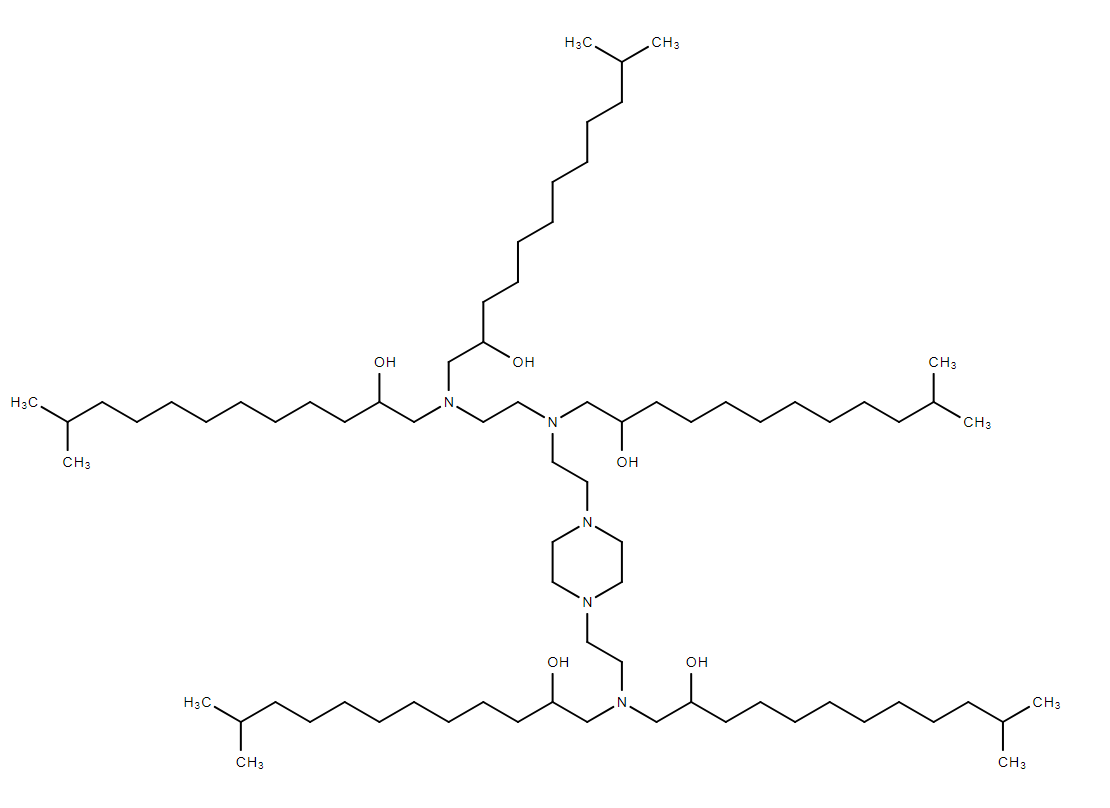
Ionizable lipid for LNP and nucleic-acid delivery research.
E8i-200 is a novel Branched Endosomal Disruptor (BEND) ionizable lipid, designed to enhance the efficiency of lipid nanoparticles (LNPs) in drug delivery, particularly for mRNA and protein delivery. Its unique structure, featuring terminal branching, improves endosomal escape, a critical step in the delivery of therapeutic cargo into cells.E8i-200 is designed to enhance endosomal escape, a key bottleneck in mRNA and protein delivery. Its terminal branching structure provides several advantages:Improved Endosomal Membrane Penetration: The branched structure allows E8i-200 to more effectively disrupt endosomal membranes, facilitating the release of mRNA and proteins into the cytoplasm.Enhanced Gene Editing Efficiency: E8i-200 has been shown to significantly improve the delivery of CRISPR-Cas9 ribonucleoprotein (RNP) complexes, enabling efficient gene editing in vivo.E8i-200 significantly enhanced mRNA expression in the liver, outperforming traditional linear lipids like C12-200 in mouse models.E8i-200 effectively delivered CRISPR-Cas9 RNP complexes, achieving high editing efficiency in the liver, surpassing that of linear lipids.E8i-200 also showed high transfection efficiency and low cytotoxicity in T cells, making it a promising candidate for CAR-T cell engineering and other immunotherapies.
| CAS No. | Not available |
| Chemical Name | E8i-200 |
| Synonyms | E8i200, E8i 200 |
| SMILES | CC(C)CCCCCCCCC(O)CN(CCN1CCN(CCN(CC(O)CCCCCCCCC(C)C)CC(O)CCCCCCCCC(C)C)CC1)CCN(CC(O)CCCCCCCCC(C)C)CC(O)CCCCCCCCC(C)C |
| Formula | C75H155O5N5 |
| M.Wt | 1,207.10 |
| Purity | Not available |
| Storage | Pure form: −20 °C, 1 year; In solvent: −80 °C, 6 months; −20 °C, 1 month. Sealed and protected from light. |
| Shipping condition | Ships from Shanghai. Pure lipid is stable during ice-pack transport. |
| Publication | Not available |
The product molecular weight is prefilled when available and remains editable. Confirm solvent compatibility and solubility before preparation.
Solvent volumes update from the molecular weight above.
| Mass | 1 mM | 5 mM | 10 mM |
|---|---|---|---|
| 10 mg | 8.2843 mL | 1.6569 mL | 828.43 μL |
| 25 mg | 20.7108 mL | 4.1422 mL | 2.0711 mL |
| 50 mg | 41.4216 mL | 8.2843 mL | 4.1422 mL |
| 100 mg | 82.8432 mL | 16.5686 mL | 8.2843 mL |
| 250 mg | 207.1079 mL | 41.4216 mL | 20.7108 mL |
Contact our team with the catalog number and requested quantity.