For research use only. We do not sell to patients.
← All classifications
Research applications

Lipids for Solid-tumor Delivery

Compare functional RNA delivery within solid tumors. Study evidence distinguishes systemic delivery, local intratumoral administration and delivery to cells in the tumor microenvironment.

10 products currently listedResearch-use products only
Evidence noteCategory membership indicates research relevance. Organ targeting, cell specificity and performance must be verified from the formulation and study conditions cited for each product.
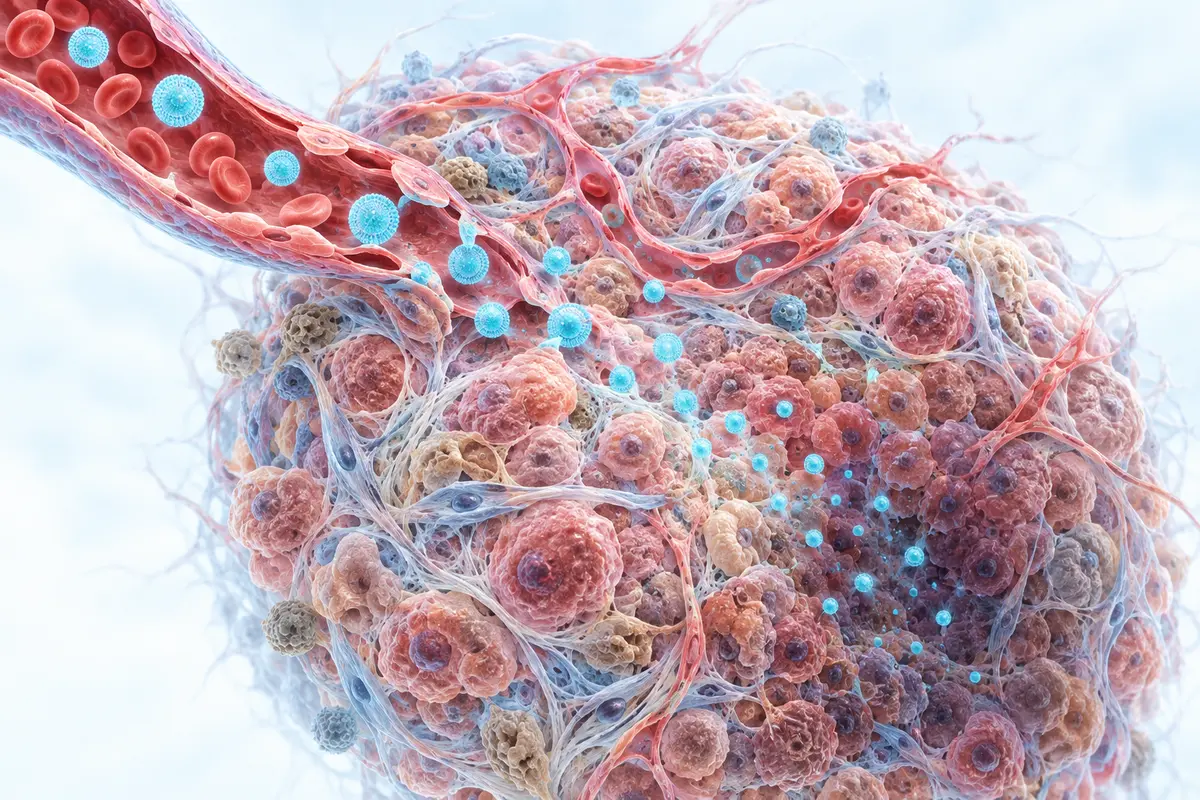
Scientific illustration for Solid-tumor delivery
About this lipid class

Lipids for Solid-tumor Delivery in LNP research

Ionizable lipids are central components of many lipid nanoparticle systems for nucleic-acid delivery. During formulation they contribute to cargo association and particle assembly. Lipids designed to remain comparatively neutral near physiological pH can become protonated under acidic endosomal conditions, which may support membrane interaction and cytosolic cargo release.

DC Chemicals provides research-use lipids for candidate screening, formulation development and mechanistic studies. Our capabilities include complex lipid synthesis, purification, analytical release and process-development support; product-specific commercial specifications remain separate from any literature-reported formulation or biological performance.

Proprietary innovation · Co-development · GMP

From proprietary lipid design to GMP-grade custom synthesis

DC Chemicals has independently developed ionizable-lipid structures supported by company-owned intellectual property, and selected proprietary lipid programs have advanced to GMP-stage development.

We welcome joint development with customers—from molecular design and lipid synthesis through route and process development. We can also support custom synthesis of GMP-grade ionizable lipids to agreed technical specifications and quality requirements.

Discuss a co-development project →
Proprietary ionizable-lipid structuresCollaborative molecular designCustom lipid synthesisProcess development and scale-upGMP-grade project support
Browse this category

Lipids for Solid-tumor Delivery

10 products · 20 per page
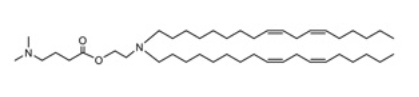
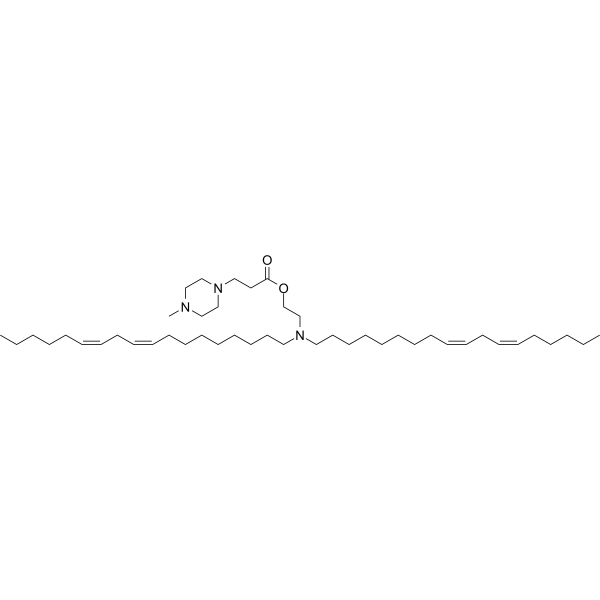
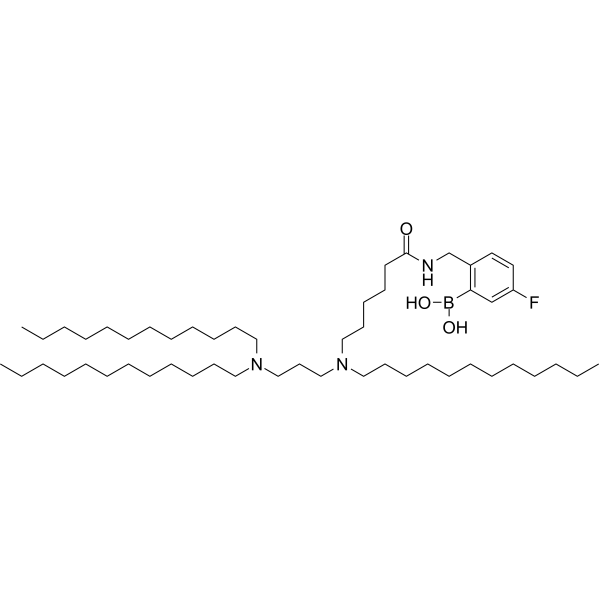
Cat. No.Product NameField of ApplicationChemical Structure

Study context & references

LipidDelivery setting & functional evidenceSource & study details
Systemic tumor delivery
YSK 05
DC71417
intravenous
PEGylated YSK05 MENDs delivered siRNA to mouse tumors with functional PLK1 silencing after intravenous administration.
[1] Source
Primary abstract; tumor PLK1 mRNA/protein silencing experiments
Lipid PPz-2R1
DC67452
intravenous
PPz-2R1 LNPs supported systemic PTEN mRNA delivery and PTEN restoration in an orthotopic mouse lung-cancer model.
[2] Source
Primary abstract; PTEN restoration and orthotopic lung-cancer experiments
Local intratumoral delivery
Lipid 8
DC86601
Intracerebral intratumoral
Lipid 8 LNPs supported local CRISPR editing in an orthotopic brain-tumor model following intracerebral injection.
[3] Source
Lipid preparation methods; intracerebral orthotopic glioblastoma editing experiment
DMT7
DC67458
Intratumoral
DMT7 LNPs supported local IL-12 mRNA expression in mouse melanoma tumors. The cited study measured tumor-tissue IL-12 expression separately from the immune-response endpoints.
[4] Source
Intratumoral delivery study; Supplementary Figure S18, tumor-tissue IL-12 p70 expression
Diamino lipid DAL4
DC67981
Intratumoral
DAL4 LNPs produced GFP expression within established mouse melanoma tumors following intratumoral administration; tumor-infiltrating immune cells were also evaluated.
[5] Source
Results: in vivo DAL4-LNP-GFP expression in established B16F10 tumors
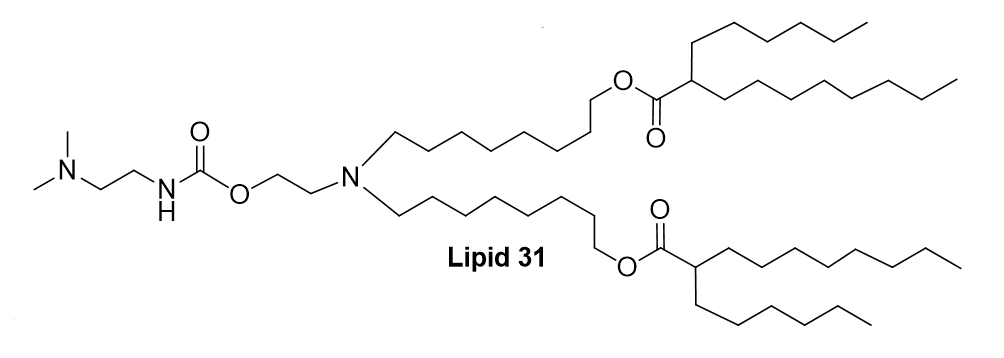
L31(Lipid 31)
DC67984
intratumoral
Anti-EGFR-targeted L31 LNPs delivered Cas9 mRNA/sgRNA for SOX2 editing in a mouse head-and-neck cancer xenograft after intratumoral injection.
[6] Source
Figs.5C,6B-C; Results 2.5; in vivo GFP and gene-editing methods
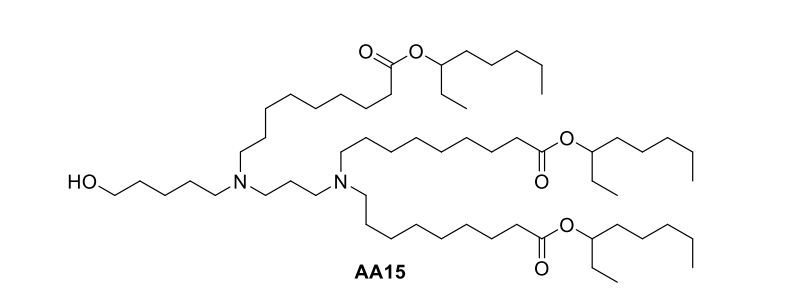
Lipid AA15
DC67315
intratumoral
AA15V LNPs delivered self-amplifying RNA encoding antigen-presenting MHC-I trimers to tumor cells after intratumoral injection in B16F10 and A20 mouse models.
[7] Source
Abstract; tumor-cell antigen presentation after intratumoral AA15V; AA15 formulation optimization
Regional intraperitoneal tumor delivery
EA-PIP(LIPID 10)
DC86120
Intraperitoneal
EA-PIP (lipid 10) LNPs delivered siRNA in a mouse peritoneal ovarian-cancer model, with reduced CKAP5 protein in tumor tissue following intraperitoneal administration.
[8] Source
Figure 1A (lipid 10); Figures 7–8 and 9B (peritoneal tumor delivery and CKAP5 silencing)
Systemic and local tumor delivery
XH-07
DC67983
Intravenous and intratumoral
XH-07 was the lipid in JCXH-211, which supported IL-12 expression in mouse tumor tissues after intravenous and intratumoral administration; the result is not evidence of exclusive tumor-cell transfection.
[9] Source
Abstract; Results: XH-07 identity and tumor-tissue expression; Figures 1–2
Tumor-microenvironment cells
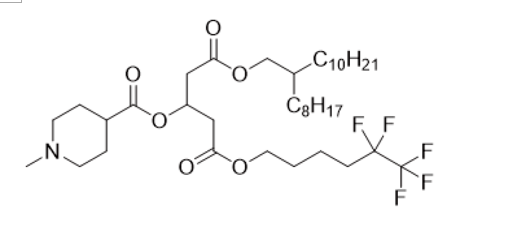
Lipid A1F5C5
DC68022
Intravenous
A1F5C5-containing F5 LNPs delivered mRNA to tumor-infiltrating macrophages following intravenous administration. This is tumor-microenvironment delivery rather than direct malignant-cell delivery.
[10] Source
Primary article introduction and Scheme 1; selective delivery to splenic and tumor-infiltrating macrophages
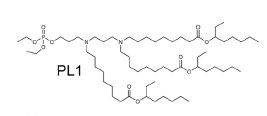
LIPID PL1
DC80068
intratumoral
Intratumoral PL1 LNPs delivered GFP and OX40 mRNA to tumor-infiltrating T cells in mouse melanoma and lymphoma models.
[11] Source
Fig.2f-g; Fig.3f; Supplementary Fig.7; GFP/OX40 expression methods

Evidence identifies functional RNA delivery within tumors and the measured cell population. Findings apply to the specified formulation, cargo, tumor model and administration route.

References (11)
  1. Gene silencing via RNAi and siRNA quantification in tumor tissue using MEND, a liposomal siRNA delivery system
  2. Lung-targeted delivery of PTEN mRNA combined with anti-PD-1-mediated immunotherapy for In Situ lung cancer treatment
  3. CRISPR-Cas9 genome editing using targeted lipid nanoparticles for cancer therapy
  4. Delivery of mRNA Encoding Interleukin-12 and a Stimulator of Interferon Genes Agonist Potentiates Antitumor Efficacy through Reversing T Cell Exhaustion
  5. Intratumoral delivery of IL-12 and IL-27 mRNA using lipid nanoparticles for cancer immunotherapy
  6. Targeted CRISPR/Cas9 Lipid Nanoparticles Elicits Therapeutic Genome Editing in Head and Neck Cancer
  7. LNP-RNA-mediated antigen presentation leverages SARS-CoV-2-specific immunity for cancer treatment
  8. Therapeutic gene silencing of CKAP5 leads to lethality in genetically unstable cancer cells
  9. Intravenous administration of IL-12 encoding self-replicating RNA-lipid nanoparticle complex leads to safe and effective antitumor responses
  10. Fluorinated lipid nanoparticles enable in vivo CAR-macrophage therapy in solid tumor and enhance anti PD-L1 immunotherapy
  11. Biomimetic nanoparticles deliver mRNAs encoding costimulatory receptors and enhance T cell mediated cancer immunotherapy