For research use only. We do not sell to patients.
← All classifications
Target cells

Lipids for Hematopoietic Stem & Progenitor Cell Delivery

Compare functional RNA delivery to hematopoietic stem and progenitor cells. Each study identifies the tested cell population, in vivo or ex vivo setting, and any antibody or formulation features used for delivery.

8 products currently listedResearch-use products only
Evidence noteCategory membership indicates research relevance. Organ targeting, cell specificity and performance must be verified from the formulation and study conditions cited for each product.
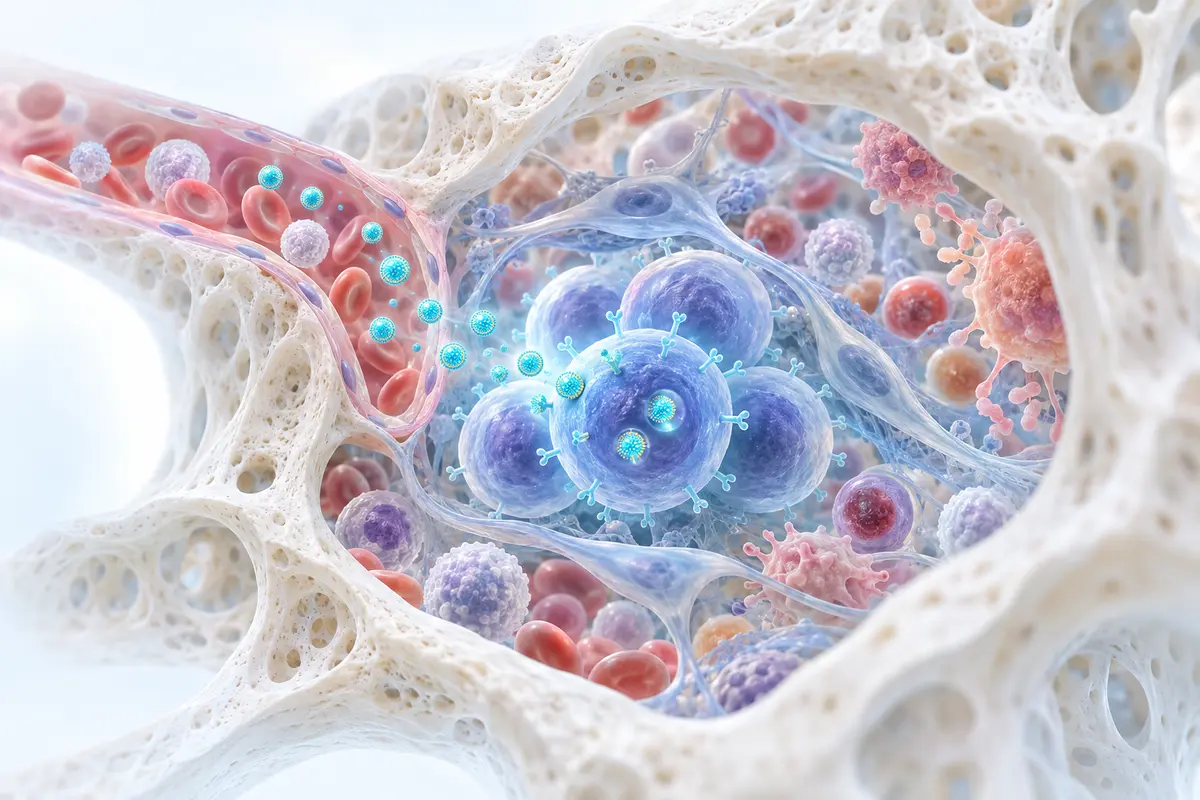
Scientific illustration for Hematopoietic stem-cell delivery
About this lipid class

Lipids for Hematopoietic Stem & Progenitor Cell Delivery in LNP research

Ionizable lipids are central components of many lipid nanoparticle systems for nucleic-acid delivery. During formulation they contribute to cargo association and particle assembly. Lipids designed to remain comparatively neutral near physiological pH can become protonated under acidic endosomal conditions, which may support membrane interaction and cytosolic cargo release.

DC Chemicals provides research-use lipids for candidate screening, formulation development and mechanistic studies. Our capabilities include complex lipid synthesis, purification, analytical release and process-development support; product-specific commercial specifications remain separate from any literature-reported formulation or biological performance.

Proprietary innovation · Co-development · GMP

From proprietary lipid design to GMP-grade custom synthesis

DC Chemicals has independently developed ionizable-lipid structures supported by company-owned intellectual property, and selected proprietary lipid programs have advanced to GMP-stage development.

We welcome joint development with customers—from molecular design and lipid synthesis through route and process development. We can also support custom synthesis of GMP-grade ionizable lipids to agreed technical specifications and quality requirements.

Discuss a co-development project →
Proprietary ionizable-lipid structuresCollaborative molecular designCustom lipid synthesisProcess development and scale-upGMP-grade project support

Research evidence and study context

LipidStudy contextSource & details
Human HSPCs in vivo; antibody-targeted
CICL-207
DC67515
Intravenous, humanized mouse
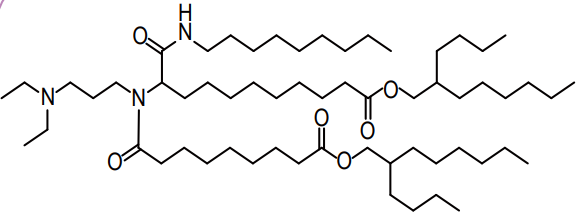
CD117-targeted CICL-207/F50 nanoparticles supported reporter expression and B2M editing in human CD34+ marrow cells in humanized mice. These phenotypic CD34+ populations do not establish long-term repopulating HSC modification.
[1] Source
Example 71; Figs. 9–11; F50 composition mapping
CICL-1 (L829)
DC99010
Intravenous, humanized mouse
CD117-targeted CICL-1/F9 nanoparticles supported reporter expression in human CD34+ marrow populations in humanized mice. These phenotypic CD34+ populations do not establish long-term repopulating HSC modification.
[1] Source
Example 71; Figs. 9–10; F9/CICL-1 mapping
Mouse CD34+ progenitor-enriched cells; antibody-targeted
DLin-MC3-DMA
DC10800
Ex vivo; intravenous, mouse
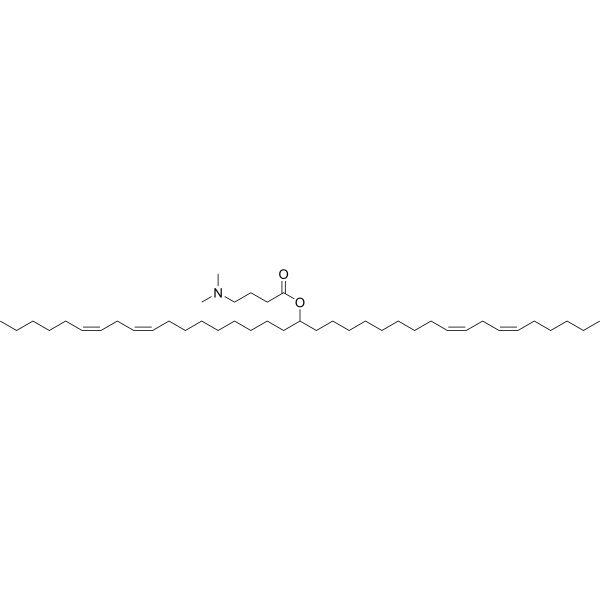
CD34-antibody-modified MC3 nanoparticles enabled transient CAR expression in mouse CD34+ hematopoietic progenitor-enriched cells ex vivo and in vivo.
[2] Source
Results: formulation identity; Figs. 1–2 and 4; in-vivo expression section
Mouse HSPCs in vivo; antibody-targeted
ALC-0315
DC42537
Intravenous, mouse
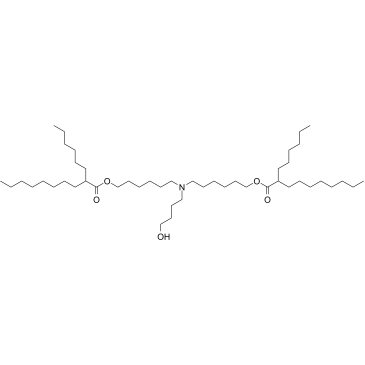
Anti-CD117-targeted ALC-0315 nanoparticles delivered functional siRNA and Cre mRNA to mouse HSPCs, including phenotypically defined long-term HSCs.
[3] Source
In-vivo formulation selection; siCD45 and Cre-reporter experiments
Mouse and human HSPCs in vivo; antibody-free formulation
Lipid-168
DC60683
Intravenous, mouse/humanized mouse
Antibody-free LNP-168 supported in vivo RNA delivery to marrow HSPCs and base editing in patient-derived human HSCs engrafted in mice.
[4] Source
Abstract; LNP-168-Cre marrow HSPC experiment; human HSC HBG1/2-editing results
Multispecies HSPC expression; ligand-free formulation
Lipid A10 (CSS-A10)
DC68150
Intravenous, mouse/rhesus; ex vivo human HSPCs
CSS-A10 in LNP67 supported mRNA expression in mouse HSC-enriched populations, primary human HSPCs ex vivo, and rhesus-macaque CD34+ marrow cells in vivo.
[5] Source
Patent Examples 4–6, para. 00177 and Figs. 6–7; paper DOI 10.1038/s41587-024-02470-2, Fig. 5
Human HSPCs; antibody-targeted and local in-vivo delivery
lipid a12Dab4
DC68211
Ex vivo human HSPCs; intrafemoral, humanized mouse
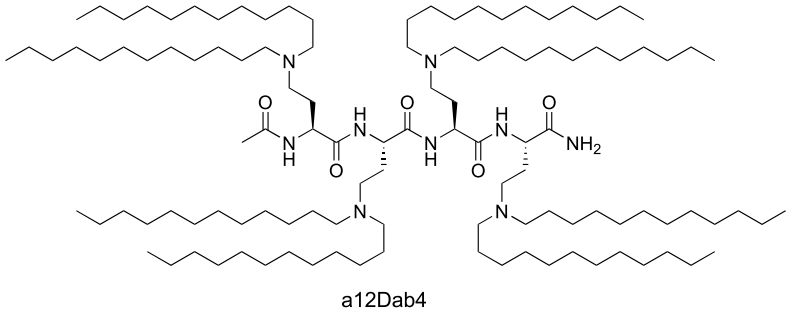
Anti-CD34-targeted a12Dab4 nanoparticles supported human HSPC editing ex vivo and after local intrafemoral administration in humanized mice.
[6] Source
LNP preparation identity; Fig. 3 ex-vivo HSPC editing; Fig. 4 intrafemoral delivery; BCL11A-editing results
Fetal mouse HSCs; antibody-targeted
C14-490
DC67283
In utero intravenous, fetal mouse
CD45-targeted C14-490 nanoparticles supported functional RNA delivery and persistent Cre-reporter recombination in mouse HSCs following fetal administration.
[7] Source
Fig. 1 formulation identity; in-utero HSC reporter and long-term follow-up results

Each entry identifies the reported lipid or complete formulation, experimental setting and source. Reference products and limited-expression findings are labeled in their study context.

References (7)
  1. Constrained Ionizable Cationic Lipids and Lipid Nanoparticles (US20250127728A1)
  2. CAR-CD34 (+) hematopoietic stem/progenitor cells produced in vivo protect against thoracic aortic aneurysm and dissection
  3. In Vivo RNA Delivery to Hematopoietic Stem and Progenitor Cells via Targeted Lipid Nanoparticles
  4. In vivo genome editing of human haematopoietic stem cells for treatment of blood disorders using mRNA delivery
  5. Novel lipids containing diketopiperazine core (WO2025217298A1); Lipid nanoparticle-mediated mRNA delivery to CD34+ cells in rhesus monkeys
  6. Engineered lipid nanoparticles for in vivo and durable editing of haematopoietic stem cells within humanized mice
  7. In utero delivery of targeted ionizable lipid nanoparticles facilitates in vivo gene editing of hematopoietic stem cells
Browse this category

Lipids for Hematopoietic Stem & Progenitor Cell Delivery

8 products · 20 per page
Cat. No.Product NameField of ApplicationChemical Structure
CICL-207Featured

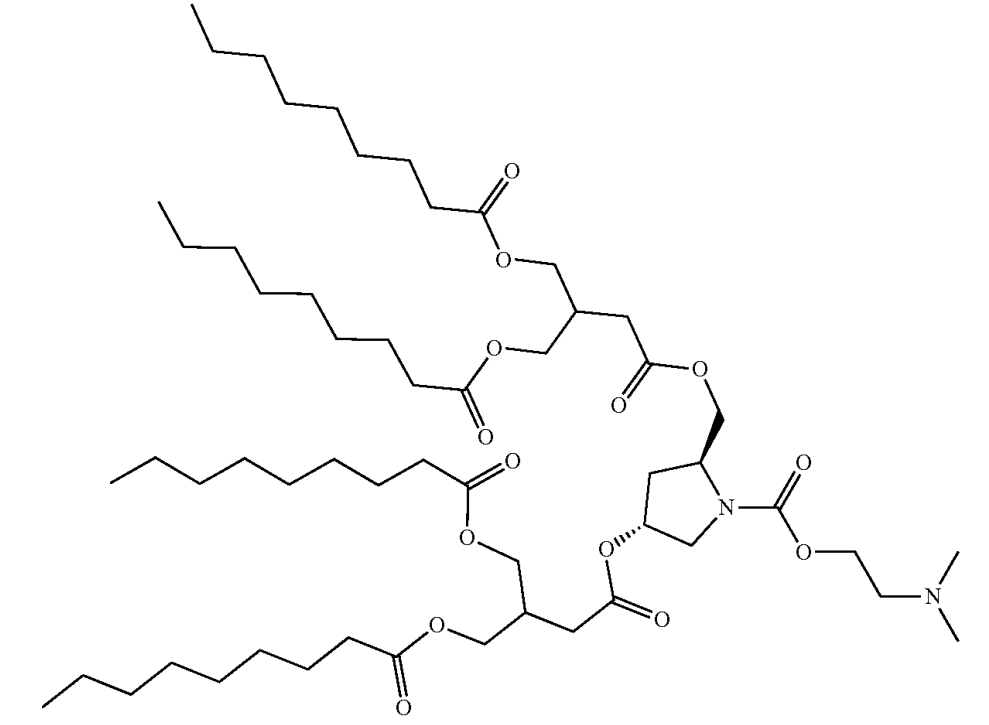
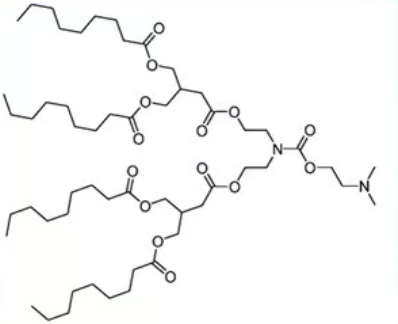
CICL 207 is structurally optimized based on Lipid CICL-1. CICL207​​ is a constrained ionizable cationic lipid designed for lipid nanoparticle (LNP) delivery systems developed by Capstan. Its structure features a ​​rigid cyclic backbone​​ (e.g., pyrrolidine-derived core) paired with a ​​tertiary amine group​​ that ionizes at acidic pH (pKa ~6.5–7.0), enhancing endosomal escape. The lipid includes ​​asymmetric hydrophobic tails​​ (likely C14–C18 alkyl/ester chains) to stabilize LNP membranes and improve nucleic acid encapsulation. Integrated into LNPs (e.g., 58% CICL-207, 10% DSPC, 30.5% cholesterol, PEG-lipids), it enables targeted delivery to T cells (anti-CD5/CD8 tLNPs) with ​​high transfection efficiency​​ (spleen T cells >70% mCherry+), ​​reduced liver uptake​​, and ​​low toxicity​​ (no significant ALT/AST elevation in rats). Its constrained design balances stability, tissue specificity, and biocompatibility for gene therapy applications.CICL 207 (F50) significantly outperforms CICL-1 by delivering dramatically enhanced target cell transfection with reduced off-target effects. It achieves >50% transfection efficiency in splenic T-cells—nearly double that of CICL-1—while slashing off-target expression in liver cells to <5% (versus >15% for CICL-1. This precision translates to superior therapeutic outcomes: CICL-207 enables ~95% B-cell depletion in CAR-T applications, far exceeding CICL-1 ’s ~60% efficacy. Critically, it maintains an exceptional safety profile, showing no significant liver toxicity or inflammatory cytokine elevation even at high doses. Furthermore, CICL-207 demonstrates 2-fold higher transfection efficiency in hematopoietic stem cells, enabling robust gene editing. Its optimized pKa (~6.5) and constrained amine structure enhance endosomal escape while minimizing Kupffer cell uptake, making it ideal for targeted therapeutics requiring both potency and safety.​

CICL-207 chemical structure