This category focuses on ionizable lipids used for circular RNA delivery research. Compare formulation, RNA architecture, expression duration, innate immune readouts and administration route using the original study conditions.
7 products currently listedResearch-use products only
Evidence noteCategory membership indicates research relevance. Organ targeting, cell specificity and performance must be verified from the formulation and study conditions cited for each product.
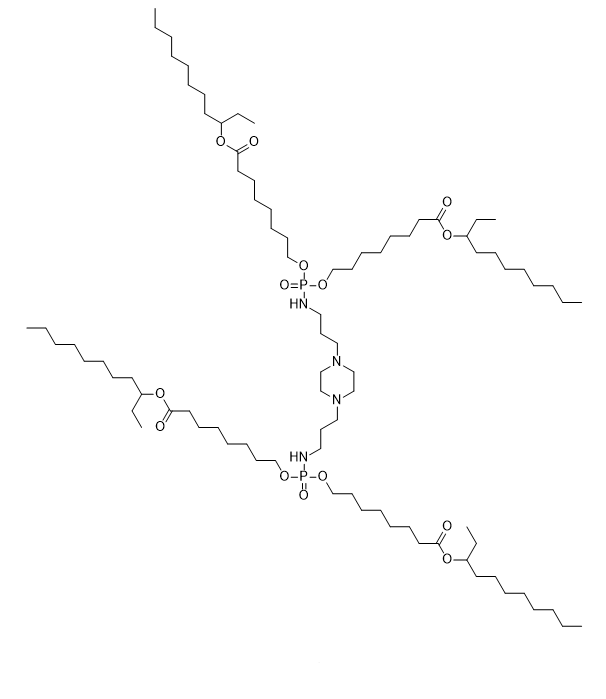
PL40 is a cardiolipin-mimic phosphoramide (CAMP) lipid developed for antibody-free, T-cell-favored mRNA delivery. The cited study reported approximately 100-fold higher luciferase expression than ALC-0315 LNP and MessengerMax in primary human T cells under a specific in vitro assay, more than 80% GFP-positive human T cells at tested doses of at least 0.5 micrograms per 100,000 cells, and spleen-favored expression after intravenous administration. PL40 LNPs carrying circular uPAR CAR mRNA were also evaluated in preclinical liver-fibrosis and collagen-induced-arthritis models. All formulation and performance information shown below is literature-derived study evidence, not a product specification or a guarantee of reproducible LNP performance.
Sail Lipid 2231 is a novel ionizable lipid targeting to spleen developed by Sai Biomedicine.As described on US20250205167A1 Lipid 2231 features a pyrrolidine core (5-membered ring) with biodegradable ester linkages and asymmetric C17/C11 hydrophobic chains. In vivo data shows moderate spleen targeting (Spleen RLU: 3.8E+06) with a spleen-to-liver ratio of 12.767.
Sail Lipid 2308 is a novel ionizable lipid targeting to spleen developed by Sai Biomedicine.As described on US20250205167A1, Lipid 2308 was designed with a piperidine core (6-membered ring) and asymmetric C17/C11 chains, this lipid achieves unprecedented spleen-specificity. It demonstrates dominant spleen accumulation (Spleen RLU: 7.8E+06, 91.8% of total signal) with a record spleen-to-liver ratio of 112.7 (9× higher than 2231). Despite lower protein expression (hEPO: 11,000 ng/mL), near-zero liver uptake (Liver RLU: 66,000) makes Lipid 2308 unparalleled for vaccine/immunotherapy applications targeting splenic immune cells.
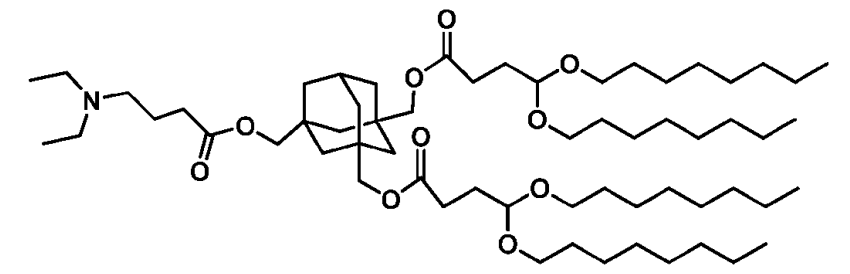
AX6 is an ionizable lipid in the F32 LNP formulation, engineered by ReNAgade/Orna Therapeutics for targeted mRNA delivery to T cells. AX-6's unique bridged bicyclic/polycyclic core with a tertiary amine group enables pH-dependent protonation and endosomal escape, while C14-C18 hydrophobic tails (optionally branched/fluorinated) enhance bilayer stability and mRNA encapsulation. Demonstrating exceptional T-cell tropism, AX6 achieves high transfection efficiency in CD4+/CD8+ T cells (validated in NHP/humanized models) with minimal toxicity. Compared to clinical benchmarks (SM-102, ALC-0315), its rigid core offers superior serum stability and immune-cell specificity, positioning it as an ideal candidate for CAR-T/NK therapies and next-gen vaccines. The F32 LNP system's proven efficacy (e.g., in vivo B-cell depletion) underscores AX 6's transformative potential for cell engineering and immunotherapies.
Lipid 10a-26 is an ionizable lipid developed by Orna Therapeutics for lipid nanoparticle (LNP) formulations. Lipid 10a-26 is a key ionizable lipid in the LNP-6 formulation. Through structural modification, it exhibits reduced binding to ApoE proteins and lowered liver affinity compared to traditional ionizable lipids. Instead, Lipid 10a-26 demonstrates strong splenic tropism—in non-human primate studies, it effectively delivers payloads to the spleen and immune cells in peripheral blood, such as T cells, NK cells, and macrophages, enabling the possibility of "in vivo CAR-T" therapy. Its pKa is tuned to approximately 6.0–6.5, allowing rapid protonation in the acidic endosomal environment, which promotes endosomal membrane disruption and efficient cytosolic release of circular RNA.
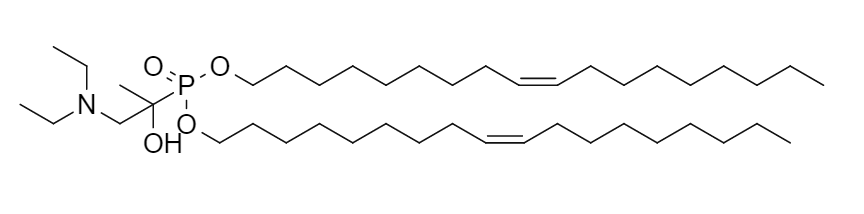
AP60 is a novel, biomimetic ionizable lipid, identified as the lead compound from a library of 67 aminophosphonate-derived lipids. Inspired by the structure of natural phospholipids, it forms the core component of lipid nanoparticles within the CROSS delivery platform. AP60-based LNPs demonstrate superior efficiency in delivering mRNA and circular RNA to neuronal cells and astrocytes compared to the clinically used MC3 LNP. In a mouse model of spinal cord injury, AP60 LNPs achieved significantly higher protein expression at the lesion site (13.7-fold locally, 4.6-fold intravenously) while concurrently reducing off-target accumulation in the liver by nearly 5-fold. This indicates improved targeting to the central nervous system injury site and a potentially better safety profile. Its cellular uptake is primarily mediated by clathrin-mediated endocytosis and macropinocytosis, followed by efficient endosomal escape. By encapsulating therapeutic circular RNAs encoding Sox2, Ascl1, and GDNF, AP60 LNPs enable effective in vivo reprogramming and neuroprotection, leading to significant functional recovery of bladder and locomotor functions after spinal cord injury.
ORNA lipid 144 is a novel ionizable lipid engineered for splenic RNA delivery developed by ORNA Therapeutics, featuring a biodegradable structure with a protonatable tertiary amine headgroup and ester-linked branched C14 alkyl chains. This design enables exceptional spleen-targeting capability, demonstrated by 3-fold higher luciferase expression in the spleen compared to benchmark lipids and near-complete B-cell depletion when delivering anti-CD19 CAR circRNA. It forms highly stable lipid nanoparticles maintaining homogeneous size (60–80 nm) and low polydispersity across diverse manufacturing conditions and buffer systems. Rapid clearance from the liver and spleen minimizes off-target accumulation, while high circRNA encapsulation efficiency (>90%) and pH-dependent endosomal escape make it ideal for immunotherapies and vaccines requiring precise splenic bioavailability and sustained efficacy.