Lipid PL40
DC67553
Recommended because it shares a closely related research category or delivery context. Formulation and performance are product- and study-specific.
View product →
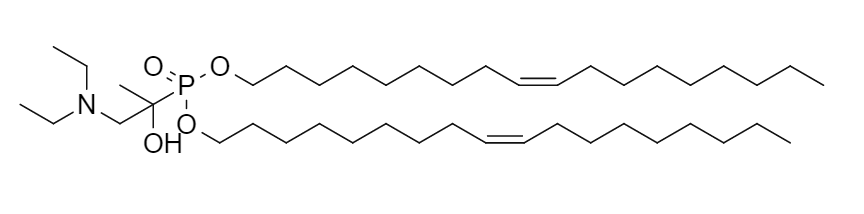
Ionizable lipid for LNP and nucleic-acid delivery research.
AP60 is a novel, biomimetic ionizable lipid, identified as the lead compound from a library of 67 aminophosphonate-derived lipids. Inspired by the structure of natural phospholipids, it forms the core component of lipid nanoparticles within the CROSS delivery platform. AP60-based LNPs demonstrate superior efficiency in delivering mRNA and circular RNA to neuronal cells and astrocytes compared to the clinically used MC3 LNP. In a mouse model of spinal cord injury, AP60 LNPs achieved significantly higher protein expression at the lesion site (13.7-fold locally, 4.6-fold intravenously) while concurrently reducing off-target accumulation in the liver by nearly 5-fold. This indicates improved targeting to the central nervous system injury site and a potentially better safety profile. Its cellular uptake is primarily mediated by clathrin-mediated endocytosis and macropinocytosis, followed by efficient endosomal escape. By encapsulating therapeutic circular RNAs encoding Sox2, Ascl1, and GDNF, AP60 LNPs enable effective in vivo reprogramming and neuroprotection, leading to significant functional recovery of bladder and locomotor functions after spinal cord injury.
| CAS No. | Not available |
| Chemical Name | Lipid AP60 |
| Synonyms | Lipid-AP60;LipidAP60 |
| SMILES | CCCCCCCC/C=C\CCCCCCCCOP(=O)(OCCCCCCCC/C=C\CCCCCCCC)C(C)(O)CN(CC)CC |
| Formula | C43H86O4NP |
| M.Wt | 712.14 |
| Purity | 98% |
| Storage | Pure form: −20 °C, 1 year; In solvent: −80 °C, 6 months; −20 °C, 1 month. Sealed and protected from light. |
| Shipping condition | Ships from Shanghai. Pure lipid is stable during ice-pack transport. |
| Publication | Not available |
The product molecular weight is prefilled when available and remains editable. Confirm solvent compatibility and solubility before preparation.
Solvent volumes update from the molecular weight above.
| Mass | 1 mM | 5 mM | 10 mM |
|---|---|---|---|
| 10 mg | 14.0422 mL | 2.8084 mL | 1.4042 mL |
| 25 mg | 35.1055 mL | 7.0211 mL | 3.5105 mL |
| 50 mg | 70.2109 mL | 14.0422 mL | 7.0211 mL |
| 100 mg | 140.4218 mL | 28.0844 mL | 14.0422 mL |
| 250 mg | 351.0546 mL | 70.2109 mL | 35.1055 mL |
Contact our team with the catalog number and requested quantity.