Explore lipid formulations studied for cardiac RNA delivery. Local administration and delivery to defined cardiac or immune-cell populations are identified in each study.
2 products currently listedResearch-use products only
Evidence noteCategory membership indicates research relevance. Organ targeting, cell specificity and performance must be verified from the formulation and study conditions cited for each product.
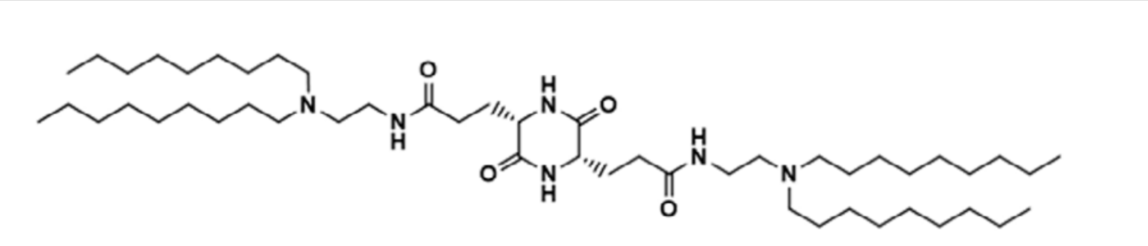
Intravenous D-2 formulations were investigated for CAR expression in cardiac macrophages following myocardial injury. This is a myeloid-cell study, not evidence of cardiomyocyte transfection.
[1] Source Figure 2b: D-2 structure; Effects of LNPs after MI figure, panel c: cardiac CAR/Lgmn expression; panel b: intravenous administration
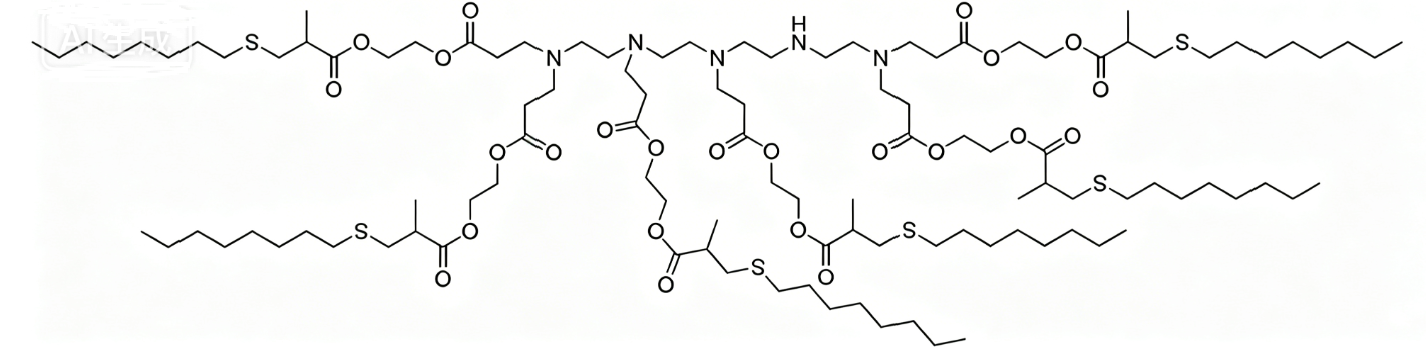
Local cardiac and systemic study routes The 6A1-SC8-based 18:1 TAP10 formulation was evaluated for functional RNA delivery to cardiac cells. Cardiomyocyte and non-cardiomyocyte responses depended on administration route.
[2] Source Primary indexed formulation identity; abstract and route-comparison results
Each entry identifies the reported lipid or complete formulation, experimental setting and source. Reference products and limited-expression findings are labeled in their study context.
D-2 is a novel, custom-synthesized ionizable cationic lipid that serves as the core functional component of the targeted lipid nanoparticle (LNP) delivery system. Its key function is to enable the efficient in vivo delivery of therapeutic mRNAs. Under acidic conditions, it ionizes to a positive charge, allowing it to complex with and encapsulate the negatively charged mRNAs encoding the anti-FAP CAR and Lgmn protease. At physiological pH, it returns to a neutral state, which helps reduce systemic toxicity and is crucial for promoting the release of the mRNA payload inside the target macrophages within the infarcted heart. As part of the optimized LNP formulation, D-2 is fundamental for achieving high transfection efficiency, thereby enabling the in situ generation of efferocytosis-boosted CAR-Ms to treat cardiac fibrosis.
6A1‑SC8 is a biodegradable ionizable lipid developed for LNP-based nucleic acid delivery. With multi-tertiary amine core enabling optimal endosomal escape and built-in hydrolyzable ester linkages for in vivo metabolic clearance, it efficiently encapsulates mRNA, sgRNA and gene-editing payloads. When blended with helper lipids or modified via the SORT strategy with cationic additives like DOTAP, it generates organ-targeted LNPs ranging from liver to cardiac tropism, widely applied in preclinical gene therapy, in vivo CAR‑T and rare disease therapeutic research.