Search covers product name, catalog number, synonyms, available CAS numbers and categories. Spaces, hyphens and common punctuation are ignored. Duplicate legacy records are consolidated under one canonical product result.
849 products · Showing 81–100 · 20 per page
Cat. No.Product NameField of ApplicationChemical Structure
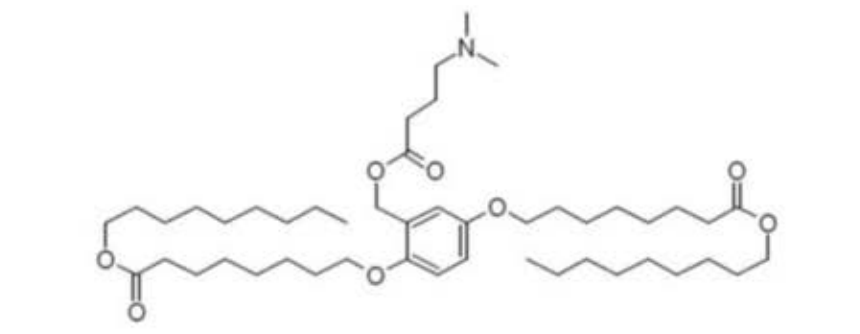
XH-04 is an ionizable lipid engineered for advanced mRNA delivery developed by JiaChen West Lake Biotech. Its core structure features a central benzene ring with asymmetric hydrophobic tails (C9-C10 chains) and pH-responsive tertiary amines that enable efficient mRNA encapsulation and endosomal escape. As detailed in CN113993839A, XH04 outperforms industry benchmarks (e.g., MC3 lipid), boosting protein expression by >10-fold in BHK cells. In PCT/CN2024/121624, JiaChen further demonstrated its utility in lung-targeted LNPs (tLNP/tLCNP). When combined with cationic lipids (e.g., DOTMA at 2:1 molar ratio), XH 04 redirects >80% of mRNA delivery to murine lungs—overcoming liver tropism—while maintaining low toxicity. The lipid’s benzenic core and optimized alkyl chain geometry (patent claims 1-9) are credited for enhanced endosomal disruption and mRNA release kinetics. JiaChen’s innovations position XH-04 as a cornerstone for next-generation mRNA therapeutics.
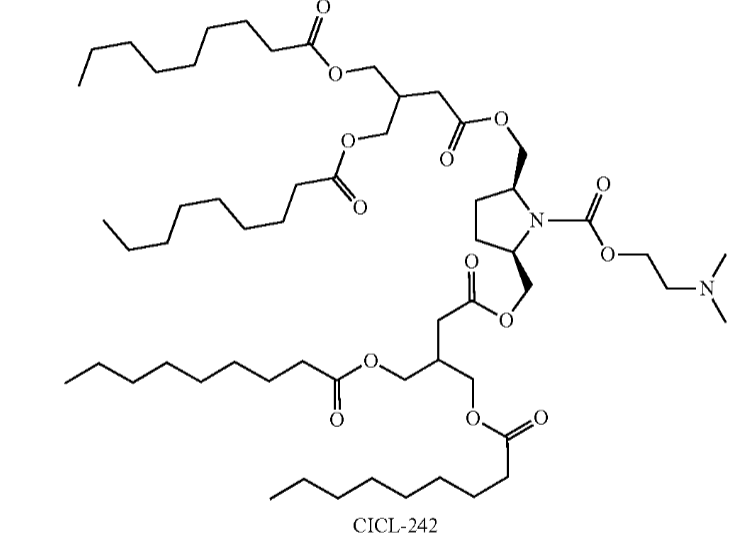
CICL-242 is a constrained ionizable cationic lipid highlighted in patent US 20250127728A1 developed by Capstan as a promising candidate for advanced therapeutic delivery, particularly in stem cell and gene editing applications. Its structure features a rigid amine headgroup similar to CICL-207, which likely facilitates efficient endosomal escape and reduces non-specific uptake, enhancing targeted nucleic acid delivery. Although detailed performance data is not fully disclosed in the patent, CICL-242 is explicitly synthesized and included in gene editing experimental systems (e.g., CRISPR-Cas9 workflows), suggesting its potential for high-efficiency transfection in hard-to-transfect cells like hematopoietic stem cells (CD34⁺). This makes it a strong candidate for ex vivo cell engineering and regenerative medicine, where precision and low off-target effects are critical. While further validation is needed to quantify its efficacy and safety profile, CICL-242 represents a strategic innovation in the lipid library for next-generation genetic therapies.
Lipid A10 (CSS-A10) is a diketopiperazine-core ionizable lipid used in the LNP67 formulation for mRNA delivery to hematopoietic stem and progenitor cells. In the cited study, ligand-free LNP67 delivered reporter mRNA to mouse bone-marrow HSC/HSPC populations and to CD34+ cells in young rhesus monkeys after intravenous administration.
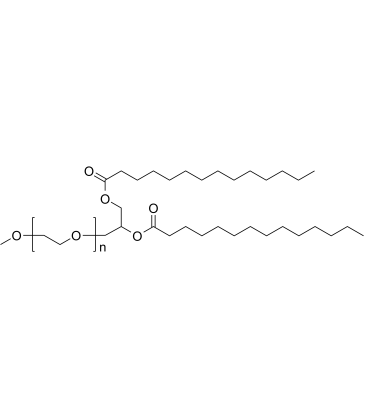
DMG-PEG 2000 is used for the preparation of liposome for siRNA delivery with improved transfection efficiency in vitro. DMG-PEG 2000 is also used for the lipid nanoparticle for an oral plasmid DNA delivery approach in vivo through a facile surface modification to improve the mucus permeability and delivery efficiency of the nanoparticles1.
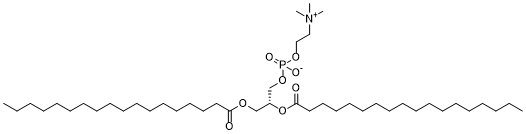
1,2-Distearoyl-sn-glycero-3-phosphorylcholine (1,2-Distearoyl-sn-glycero-3-PC; DSPC) is a cylindrical-shaped lipid. 1,2-Distearoyl-sn-glycero-3-phosphorylcholine is used to synthesize liposomes, and is the lipid component in the lipid nanoparticle (LNP) system12.
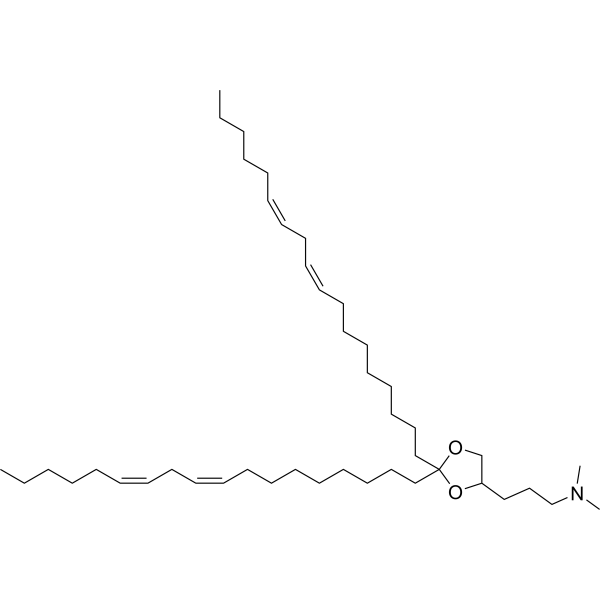
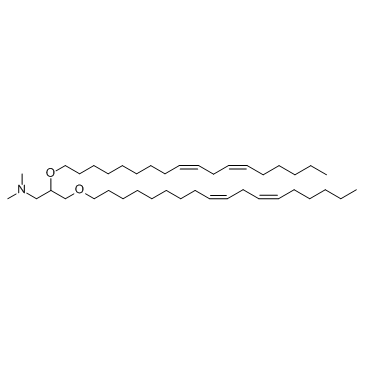
DLin-KC3-DMA, a nucleic acid, shows in vivo silencing activity. DLin-K-C3-DMA can be used in the synthesis of nucleic acid-lipid particle to delivery of nucleic acid.
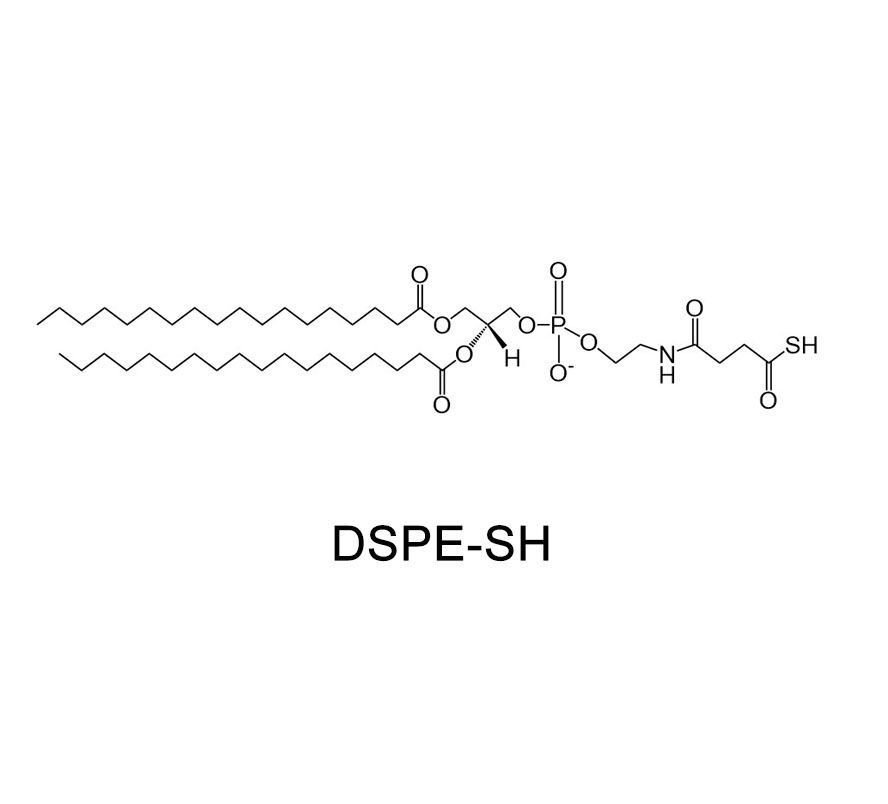
Modified phospholipid products: it is to modify the amino group (primary amino group) -NH3 at the end of DSPE into NHS, COOH, N3, MAL, Thiol (SH), OPSS, FITC, FA, Biotin and other different active groups. Phospholipids DSPE belong to the lipid family of biopolymers. Phospholipids consist of two fatty acids, a glycerol unit, a phosphate group, and a polar molecule. The phosphate groups and polar head regions of the molecule are hydrophilic (attracted to water), while the fatty acid tail is hydrophobic (repelled by water). When placed in water, the phospholipids Orient themselves into a double layer, where the non-polar tail region faces the inner region of the double layer. The polar head region faces outward and interacts with the water.
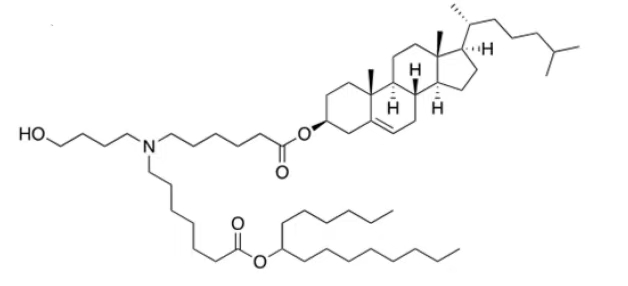
ARV-T1 is a novel ionizable lipid featuring a cholesterol moiety incorporated in its tail, designed to enhance mRNA delivery efficiency. With a pKa of 6.73, it exhibits optimal pH-dependent ionization for endosomal escape and mRNA release. Structurally, ARV-T1 contains a tertiary amine head group and ester-linked lipid tails, enabling rapid in vivo metabolism and improved biocompatibility.Compared to SM-102 (used in Moderna's vaccine), LNPs formulated with ARV-T1 demonstrate superior physicochemical properties: smaller particle size (~80 nm vs. 90 nm), lower polydispersity index (0.09 vs. 0.10), and higher absolute zeta potential (-10 mV vs. -5 mV). These characteristics correlate with >90% mRNA encapsulation efficiency and enhanced stability, maintaining performance for 12 weeks at -20°C.In vitro, ARV-T1 LNPs showed 7-fold higher protein expression than SM-102 LNPs. In vivo, they prolonged luciferase expression (>72 hours vs. <48 hours for SM-102) and induced 10-fold higher neutralizing antibodies against SARS-CoV-2 spike protein at low doses. The cholesterol tail promotes endosomal membrane fusion, while ester linkages facilitate metabolic clearance, yielding an excellent safety profile in toxicity studies. This combination of efficacy and safety positions ARV-T1 as a promising platform for mRNA vaccines and therapeutics.
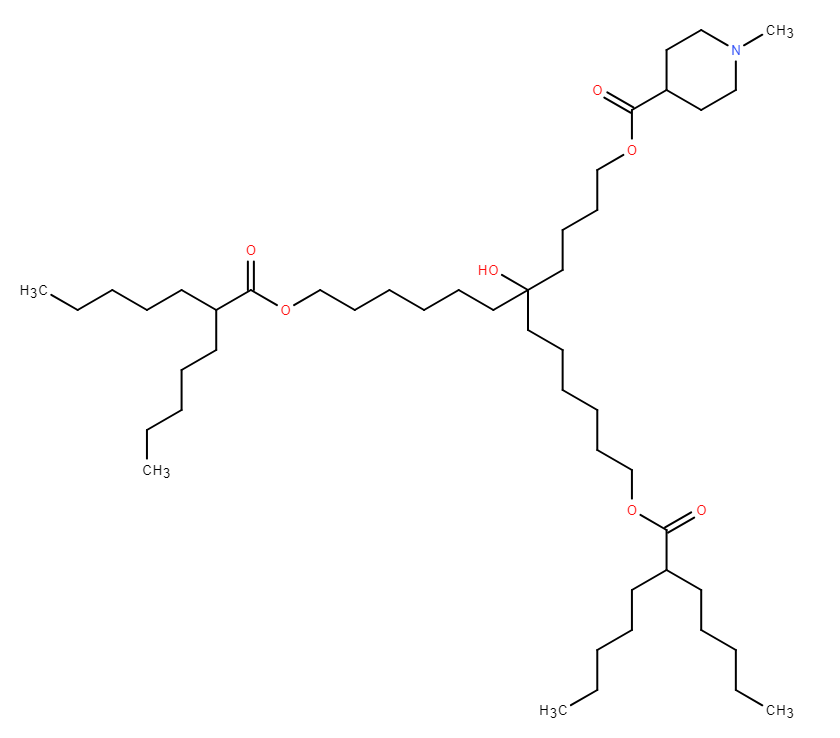
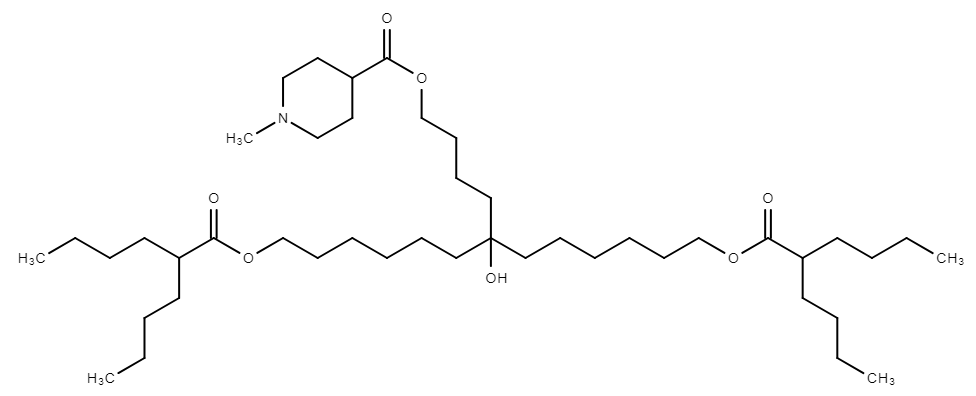
CL15F 7-5 is a piperidine-based ionizable lipid from the CL15F library, characterized by a symmetrically branched tail structure with a 7-carbon main chain and a 5-carbon side chain. This moderate tail length positions it between short-tail (e.g., CL15F 6-4) and long-tail (e.g., CL15F 14-12) variants, granting it a unique balance in mRNA delivery properties. Its LNPs exhibit optimized organ selectivity, enabling significant mRNA expression in both the spleen and muscle, as demonstrated by in vivo luciferase assays following intravenous and intramuscular administration. This lipid structure facilitates a favorable DSPC surface density on LNPs, which moderates interactions with serum proteins like ApoE, thereby reducing rapid hepatic clearance and promoting extrahepatic delivery. In vaccine applications, CL15F 7-5 LNPs encapsulating SARS-CoV-2 RBD mRNA elicited robust anti-RBD IgG titers and neutralizing antibodies in mice, outperforming the clinically benchmarked SM-102 lipid. The piperidine headgroup further contributes to storage stability by minimizing the generation of aldehyde impurities that can form mRNA-lipid adducts. Consequently, CL15F 7-5 represents a versatile lipid for developing stable, spleen-targeted mRNA vaccines and therapeutics, leveraging tail-length engineering for enhanced efficacy without complex formulation changes.
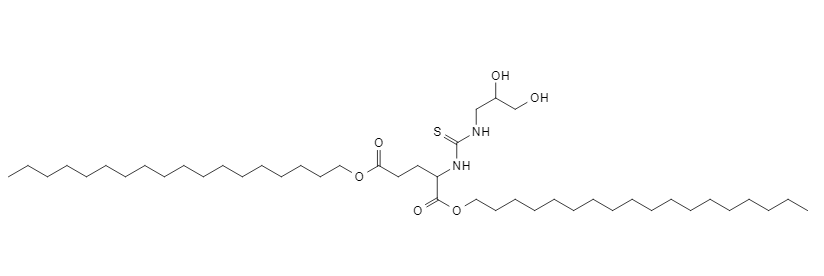
C18 NC-TNP is a novel noncationic thiourea lipid without positively charged groups. It binds nucleic acids via hydrogen bonds instead of electrostatic attraction, avoiding cation-triggered systemic inflammation. Formulated into nanoparticles, it efficiently encapsulates mRNA, siRNA and plasmids, shows excellent serum tolerance and long-term liquid/lyophilized storage stability. It enters cells mainly through macropinocytosis, escapes endosomes intact to reduce nucleic acid degradation. In vivo, it targets spleen preferentially, induces robust long-lasting Th1-type cellular and humoral immunity with minimal organ toxicity, superior to SM102 LNPs for mRNA cancer vaccine delivery.
CL15F 6-4 is a short-tail ionizable lipid from the piperidine-based CL15F series, characterized by its symmetric branched structure with a 6-carbon main chain and 4-carbon side chain. This specific tail length critically determines the lipid nanoparticle's (LNP) properties, resulting in larger particles with a high surface density of the phospholipid DSPC. This elevated DSPC density reduces interactions with serum proteins like ApoE, minimizing rapid liver clearance and shifting mRNA delivery preference towards the spleen. Consequently, CL15F 6-4 LNPs achieve efficient, endogenous spleen-targeted delivery, making them a highly promising candidate for enhancing vaccine efficacy by preferentially transfecting antigen-presenting cells without complex functionalization.
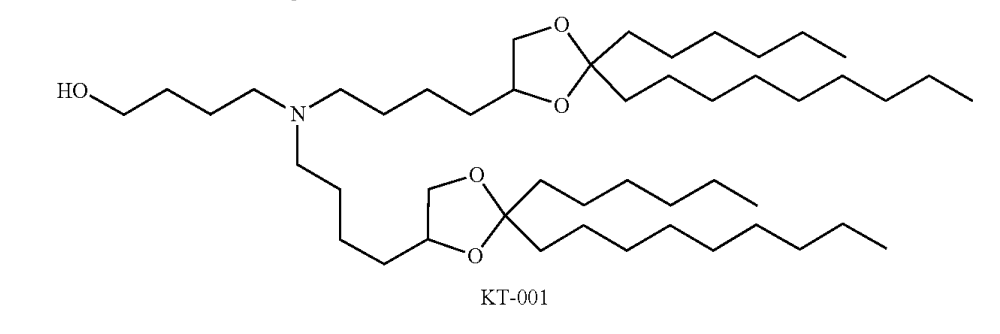
KT-001 is a novel ionizable cationic lipid developed by Vivas, Inc., disclosed in US 2026/0007612 A1 (published Jan 8, 2026).KT-001 demonstrates exceptional skeletal muscle targeting and low liver toxicity.Unlike traditional lipids that primarily accumulate in the liver, KT-001 avoids serum ApoE binding, preventing hepatic uptake. Upon intramuscular injection, it achieves a 29-fold reduction in liver off-target expression compared to standard lipids, while maintaining robust, long-lasting protein expression at the injection site.Its optimized pKa enables precise, pH-responsive endosomal escape for high transfection efficiency. KT-001 is an ideal carrier for localized mRNA vaccines and targeted therapeutics for muscle-related disorders.
S-Ac7-DOg is an ionizable lipid engineered for optimized mRNA delivery to the retina, featuring a sulfur-based ester bond (S-Ac) and dual oleyl glyceride chains (DOg). Its pKa (~6.74) is finely tuned to enhance endosomal escape in acidic environments, enabling efficient cytosolic mRNA release. Unlike traditional lipids (e.g., C12-200, MC3), S-Ac7-DOg incorporates biodegradable ester linkages that hydrolyze intracellularly, minimizing lipid accumulation and reducing innate immune activation. In vitro, S-Ac7-DOg LNPs achieved >80% transfection efficiency in retinal cells (ARPE-19, MIO-M1) with negligible cytokine secretion, outperforming MC3 and rivaling C12-200 while avoiding the latter’s high immunogenicity. In vivo, intravitreal delivery in mice showed robust protein expression in the optic nerve head (ONH) and Müller glia (75–100% of eyes), sustained for ≥7 days. Critically, it induced the lowest immunogenicity among tested lipids: minimal leukocyte infiltration (<1.5-fold vs. PBS), no microglial reactivity, and reduced GFAP upregulation.
H5T5 is a leading ionizable lipid nanoparticle (LNP) formulation optimized for in vivomRNA delivery, featuring a pKa of 6.51, a size of ~154 nm, and a narrow polydispersity index (PDI) of 0.05. It demonstrated superior in vitromRNA transfection efficiency in primary immune cells, such as bone marrow-derived macrophages. Following intravenous administration, H5T5 exhibits precise organotropism, predominantly targeting the spleen and bone marrow, where it effectively delivers mRNA to a broad spectrum of immune cells, including macrophages, dendritic cells, T cells, B cells, and NK cells. This capability enables its core application: the in vivogeneration of "pan-CAR" immune cells. When loaded with anti-HER2 CAR mRNA, the H5T5-based therapy achieved potent tumor regression and prolonged survival in multiple solid tumor models. Preliminary safety assessments indicated a manageable cytokine profile and no significant organ toxicity, positioning it as a promising platform for in vivocell engineering.
DLin-DMA is an ionizable amino lipid with cationic properties and a pKa of 6.7. It is widely utilized in lipid nanoparticle (LNP) formulations alongside helper lipids to enable efficient nucleic acid delivery.
93-O17O is a chalcogen-containing ionizable cationic lipidoid. It has been used in the generation of lipid nanoparticles (LNPs). LNPs containing 93-O17O localize to the spleen after intravenous injection into mice.LNPs containing 93-O17O have been used for the delivery of Cre recombinase and ribonucleoproteins for genome editing in mice and for the intratumoral delivery of cGAMP to enhance cross-presentation of tumor antigens.
9322-O16B is a lipidoid for the efficient delivery of antiCD19 mRNA CAR to murine primary macrophages. LNP 9322-O16B is more efficient than delivery with lipofectamine 2000 (LPF2K) or MC3.
246C10 is a synthesized ionizable lipid. 246C10 can be formulated into lipid nanoparticles (LNPs) with dioleoylphosphatidylethanolamine (DOPE), cholesterol, and C16-PEG2000 ceramide (PEG-lipid) as well as mRNA. The lipid nanoparticle formulations can be used for mRNA delivery. To obtain iLNPs that could specifically target liver sinusoidal endothelial cells (LSECs), six different ionizable lipids (241C10 to 246C10) were synthesized by an epoxide ring-opening reaction with piperazine- or piperidine-containing amines. Biodistribution and gene regulation of various iLNPs were assessed in vivo, and the results showed that the 246C10 iLNPs (containing piperazine amine) had the highest luciferase expression in the liver. When further analyzing the 246C10 iLNPs transfection efficiency in different types of liver cells, it was found that tdTomato fluorescence was mainly concentrated in hepatocytes, not in LSECs. Figure 6f shows that 80% of hepatocytes are fluorescent, 40% of LSECs are fluorescent, and 20% of Kupffer cells are fluorescent. Due to the mannose receptor on LSECs, mannose-PEG lipid was introduced into 246C10 iLNPs to alter the distribution of iLNPs in different liver cells. As shown in Figure 6g, tdTomato fluorescence distribution was 15% of hepatocytes, 70% of LSECs, and 15% of Kupffer cells, significantly improved the ability of iLNPs to actively target LSECs. In contrast, this work indirectly shows that the iLNPs with piperazine head lipid are more able to deliver mRNA to the liver and translate the target protein than the iLNPs with piperidine head lipid. It is worth mentioning that the preparation buffer of 246C10 iLNPs could influence the encapsulation efficiency of mRNA. With the addition of sodium chloride in the citrate buffer, the encapsulation efficiency of CRISPR-Cas9 mRNA and sgRNA was increased. These iLNPs were able to treat hemophilia safely, without causing hepatotoxicity, the immune response induced by Cas9 and off-target editing.
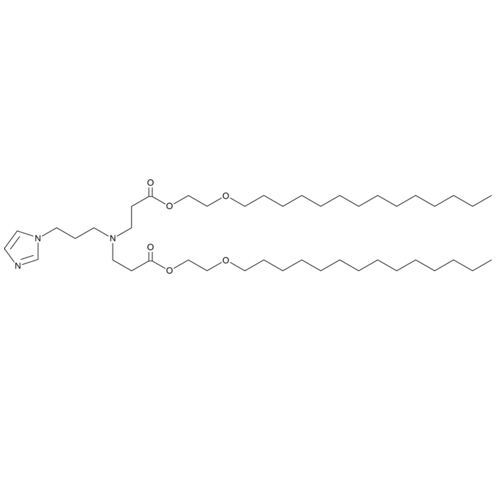
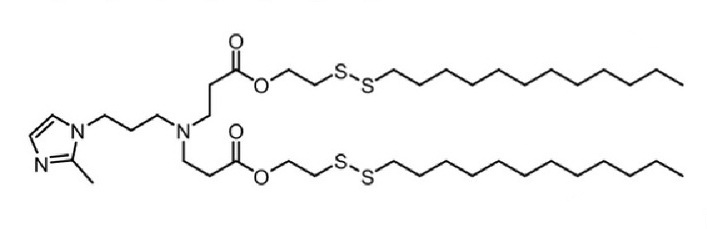
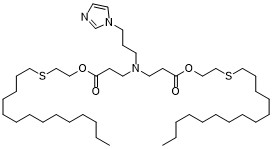
93-O17S is an imidazole-based synthetic lipidoid for in vivo mRNA delivery. Lipid nanoparticles (LNPs) with 93-O17S promotes both the cross-presentation of tumor antigens and the intracellular delivery of cGAMP (STING agonist).
TCL053 is a three-tail ionizable lipid studied for local delivery of mRNA and separately encapsulated guide RNA to skeletal muscle in mice. The findings concern the specified research formulation and are not performance specifications for the supplied neat lipid.