Search covers product name, catalog number, synonyms, available CAS numbers and categories. Spaces, hyphens and common punctuation are ignored. Duplicate legacy records are consolidated under one canonical product result.
849 products · Showing 781–800 · 20 per page
Cat. No.Product NameField of ApplicationChemical Structure
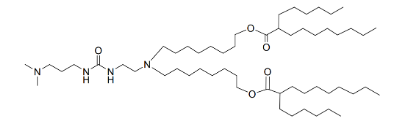
Lipid 35 is an novel ionizable lipid designed to enhance the delivery of mRNA to specific tissues, particularly the lungs.Lipid 35 demonstrates superior chemical stability, especially in storage conditions. This stability ensures that the lipid maintains its integrity over extended periods, making it ideal for long-term storage and large-scale production.Lipid 35 exhibits high transfection efficiency in various cell types, including nonimmune cells, endothelial cells, and epithelial cells. Lipid 35 has demonstrated excellent biocompatibility and safety in preclinical studies. It does not cause significant liver damage or adverse immune responses, making it a safer alternative for therapeutic applications.
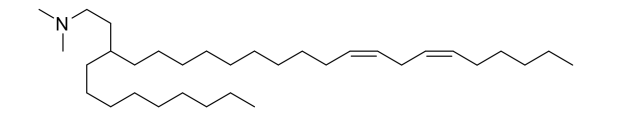
L-608 is a novel ionizable amino lipid designed for formulating lipid nanoparticles (LNPs) to enable efficient subcutaneous (s.c.) delivery of mRNA therapeutics. Engineered to address inflammation associated with mRNA LNPs, L608 integrates seamlessly with steroid prodrugs, such as budesonide-C16 and budesonide-C18:1, to suppress local and systemic inflammatory responses while prolonging therapeutic protein expression. Preclinical studies demonstrate that L608 LNPs significantly reduce injection-site edema (>80% improvement) and lower systemic inflammatory markers (e.g., haptoglobin), while achieving 2–3× higher plasma AUC for proteins like hFGF21 compared to non-steroid LNPs.
C14-490 is an ionizable cationic lipid (pKa = 5.94).1 It has been used in the generation of lipid nanoparticles (LNPs) for the delivery of mRNA in vivo.C14-490-containing LNPs accumulate primarily in the fetal mouse liver and, to a lesser extent, in the lungs, intestine, and brain after vitelline vein injection on gestational day 16 (E16).1 CD45-functionalized LNPs containing C14-490 and encapsulating mRNA encoding GFP transfect Jurkat cells, which constitutively express the CD45 receptor (CD45R).C14-490-containing CD45-functionalized LNPs encapsulating Cre mRNA mediate genome modulation in bone marrow hematopoietic stem cells (HSCs) for at least four months after in utero injection in R26mT/mG mice at E13.5.
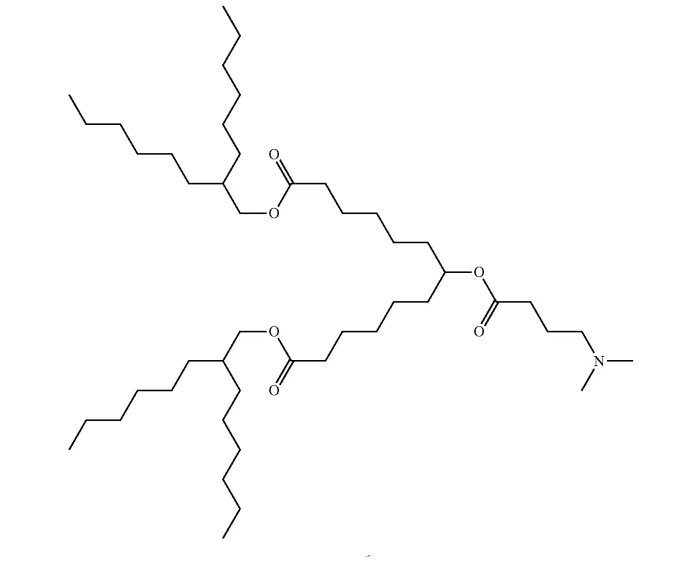
ATX-231 which is from Arcturus RNA delivery platform, is a novel ionizable lipid used in the formulation of lipid nanoparticles (LNPs) for the delivery of RNA.
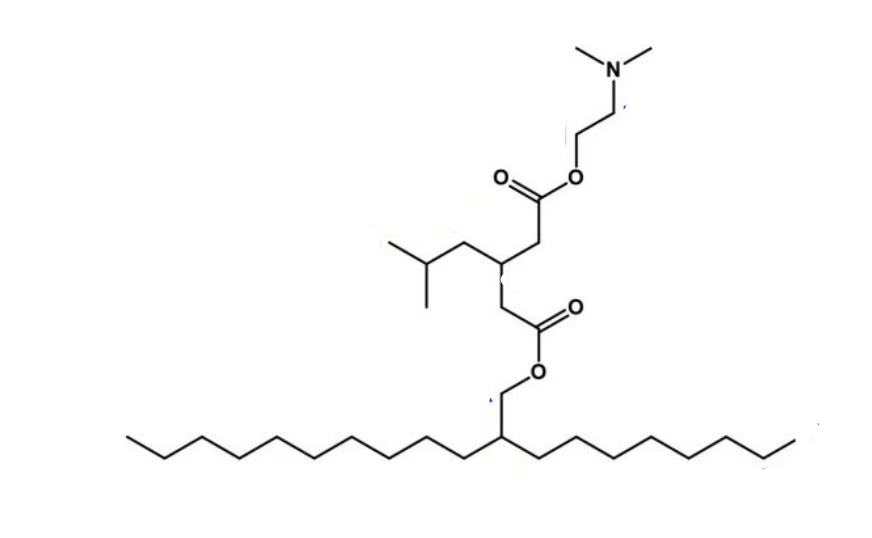
Lipid B1 is a next-generation ionizable lipid engineered for superior mRNA delivery, featuring a patented β-isobutylglutarate branching linker that optimizes nanoparticle assembly and intracellular release. Its unique structure combines a pH-responsive tertiary amine headgroup with twin C18 alkyl tails connected via biodegradable ester bonds, enabling precise control over lipid packing and endosomal escape. Preclinical studies demonstrate that Lipid B1-based LNPs (bLNPs) achieve **>75% transfection efficiency in vitro at ultra-low mRNA doses (1 μg), outperforming commercial benchmarks like SM-102. In vivo, subcutaneous administration of bLNPs delivers 10-fold higher luciferase expression** than linear-chain analogs, with targeted biodistribution to lymph nodes and tumor sites. Clinically relevant data show 100% tumor prevention in prophylactic cancer vaccine models and 70% tumor regression in therapeutic settings when combined with checkpoint inhibitors. The ester-based backbone ensures rapid metabolic clearance, minimizing systemic toxicity risks (NOAEL >10 mg/kg in mice). Compatible with mRNA, siRNA, and CRISPR-Cas9 payloads, Lipid B1 is ideal for vaccines, gene therapies, and immuno-oncology. Its scalable 3-step synthesis (yield >80%) and lyophilization stability (-80°C, 12 months) make it a cost-effective solution for GMP-grade production. For advanced delivery with unmatched safety and efficacy, Lipid B1 sets a new standard in nucleic acid therapeutics.
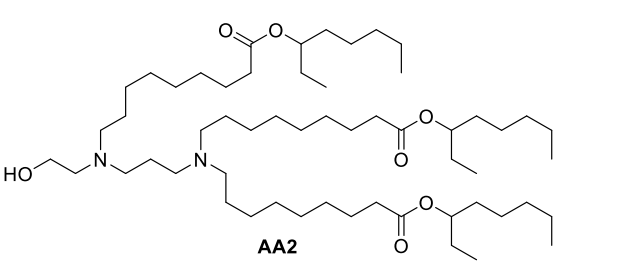
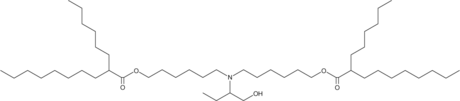
AA2 lipid is an innovative amino alcohol-derived ionizable lipid designed for optimized mRNA delivery. Its unique structure includes a hydroxyl-containing headgroup that enhances mRNA binding through hydrogen bonds and a branched ester tail (R2) that promotes a cone-shaped architecture, facilitating efficient endosomal escape. Formulated into lipid nanoparticles (LNPs) with a size of 108.6 ± 3.7 nm and a polydispersity index (PDI) below 0.3, AA2 achieves high mRNA encapsulation efficiency (89.0 ± 1.4%) and an ideal pKa of approximately 6.2, ensuring effective endosomal release.In vivo studies demonstrate that AA2 LNP-encapsulated spike mRNA elicits 4.7-fold higher IgG titers and robust CD8+ T-cell responses (characterized by IFN-γ+, TNF-α+, and granzyme B+ markers) compared to SM-102/ALC-0315 LNPs. Notably, AA2 exhibits minimal off-target accumulation, with low biodistribution in the liver and spleen. Its slightly positive surface charge (+3–5 mV) enhances cellular uptake, while the biodegradable ester structure ensures metabolic clearance, reducing potential toxicity.
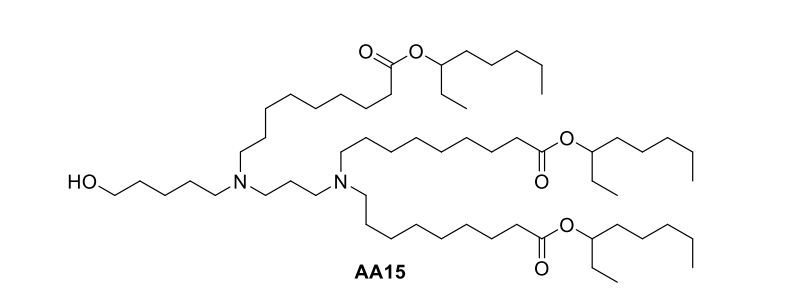
The AA15 lipid, an amino acid-derived ionizable lipid, integrates a carboxylic acid-containing headgroup and biodegradable branched ester tails (R2) to enhance mRNA delivery. Optimized as AA15V LNP, it exhibits a hydrodynamic diameter of 102.3 ± 4.1 nm, low polydispersity (PDI <0.15), and slightly positive zeta potential (+4–6 mV), enabling efficient tumor-targeted delivery. With a pKa ~6.1–6.4, AA15V ensures protonation in acidic endosomes, promoting mRNA release. It achieves >85% mRNA encapsulation efficiency, critical for stable saRNA delivery. In vitro, AA15V LNP-sSE-SCTs induced sustained SE-SCT expression (69% H-2Kb+β2m+ B16F10 cells at 72 h), outperforming mRNA formulations. In vivo, a single intratumoral dose of AA15V LNP-sSE-SCTs suppressed tumor growth by 22-fold in vaccinated mice, synergizing with checkpoint inhibitors (anti-PD-1/CTLA-4) for complete regression in 28.6% of lymphoma models. Ex vivo, AA15V enabled SE-SCT expression in human glioblastoma (7.1% CD45− cells) and lung cancer samples (5.8–8.7%), underscoring clinical potential. Key data: pKa ~6.3; encapsulation: 85–89%; zeta: +4–6 mV; size: 102.3 ± 4.1 nm.
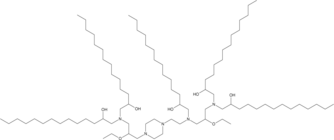
PPz-2R1 is an ionizable cationic lipid engineered for mRNA delivery via lipid nanoparticles (LNPs). These LNPs demonstrate remarkable lung-selective accumulation in mice, showing significantly higher uptake compared to heart, liver, spleen, and kidney tissues. When loaded with PTEN mRNA, PPz-2R1 LNPs effectively restore tumor suppressor function in PTEN-deficient lung cancer cells and inhibit tumor progression in orthotopic models, with enhanced efficacy observed in combination with PD-1 blockade therapy.
Lipid 114 (pKa ~6.8) is an ionizable cationic lipid optimized for siRNA delivery via LNPs, demonstrating predominant hepatic accumulation with secondary renal uptake in murine models. When formulated with IL-1β-targeting siRNA, these LNPs effectively suppress pro-inflammatory cytokine expression in both macrophage cell lines and primary cells in a dose-dependent manner. In LPS/galactosamine-induced acute liver failure models, the therapeutic LNPs significantly reduce IL-1β levels in target organs while attenuating hepatic inflammation and injury markers.
BCP-NC2-C12 is an ionizable cationic lipid designed for mRNA delivery, forming LNPs that predominantly localize to hepatic and splenic tissues in vivo. When formulated with CRISPR-Cas9 components (Cas9 mRNA and Pcsk9-targeting sgRNA), these LNPs effectively generate gene-editing indels and significantly lower circulating PCSK9 levels in murine models.
Lipid U 105 is an ionizable cationic lipid (pKa 6.65) specifically designed for circular RNA delivery via LNPs. These formulations effectively enhance VEGF-A expression in HUVECs, promoting endothelial cell proliferation and migration. When applied topically in diabetic mouse models, the VEGF-A-encoding circular RNA LNPs significantly accelerate wound healing, demonstrating therapeutic potential for impaired tissue repair.
Lipid A represents a modified variant of ALC-0315, functioning as an ionizable cationic lipid with a pKa of 4.67 for optimized nucleic acid delivery applications.
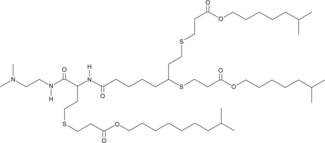
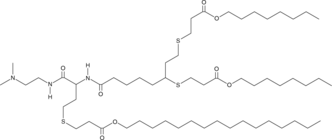
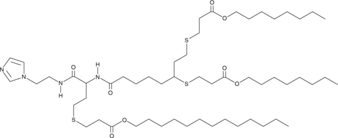
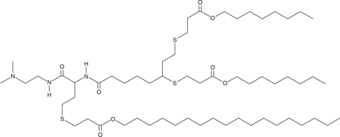
Derived from the natural amino acid homocysteine, CP-LC-1422 is an ionizable cationic lipid that enables robust in vivo delivery of various RNA forms (mRNA, cRNA, and saRNA), driving high protein expression. When formulated into LNPs (50/38.5/10/1.5 molar ratio of ionizable lipid/cholesterol/DOPE/PEG-lipid), it achieves superior spleen-specific targeting compared to commercial options through intravenous administration, while maintaining an excellent safety profile.
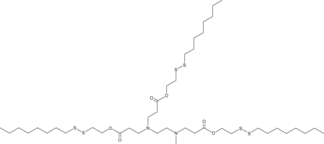
2N12B is a redox-responsive cationic lipid (pKa = 6.5) designed for siRNA delivery. Its LNPs mediate robust VEGFA knockdown in both cultured retinal cells and ex vivo mouse retina, while functionally impairing HUVEC motility. When administered in retinopathy models, the nanoparticles alleviate disease hallmarks including abnormal vessel growth and retinal vascular leakage.
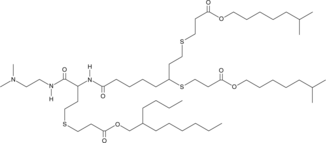
Derived from the natural amino acid homocysteine, CP-LC-1428 is an ionizable cationic lipid that enables highly efficient in vivo delivery of multiple RNA formats (including mRNA, cRNA and saRNA) with robust protein expression. When formulated into standard LNPs (50:38.5:10:1.5 molar ratio of ionizable lipid:cholesterol:DOPE:PEG-lipid), it demonstrates superior spleen-selective targeting compared to conventional delivery systems following intravenous administration, while maintaining an excellent safety profile.
CP-LC-1074 is a homocysteine-derived ionizable cationic lipid that enables highly efficient in vivo delivery of various RNA therapeutics (including mRNA, cRNA, and saRNA) with robust protein expression. When formulated in standard LNP compositions (50:38.5:10:1.5 molar ratio of ionizable lipid:cholesterol:DOPE:PEG-lipid), it demonstrates superior lung-specific targeting compared to commercial alternatives following intravenous administration, while maintaining an excellent safety profile.
DSPE-polysarcosine100 represents an innovative amphiphilic conjugate, combining the phospholipid DSPE with a 100-unit polysarcosine chain terminated by an amine group. This polymer-modified lipid serves as a promising alternative to PEGylated compounds in nanoparticle formulations, offering reduced immunogenicity for both protein therapeutics and lipid-based delivery systems.
Hexa lipid 114 represents a structural derivative of lipid 114, engineered as an ionizable cationic compound for enhanced nucleic acid delivery applications.