Polyethyleneimine (PEI), also known as polyethyleneimine, is a water-soluble polymer. Colorless or yellowish viscous liquid, hygroscopic, soluble in water, ethanol, insoluble in benzene. PEG-PEI, a copolymer of cationic poly (ethylene imide) (PEI) and polyethylene glycol (PEG), is a well-studied compound that significantly improves the delivery of oligonucleotides and nucleic acids (DNA, siRNA) in vitro and in vivo. By varying the MW of PEI and PEG, PEG-PEI drug conjugates, polymers, or nanoparticles with dynamic range of size, surface charge, and stability can be prepared, all of which are important for transfection efficiency. PEI-PEG-DSPE, polyethylenimine-PEGyl-phospholipid is an AB block copolymer with phospholipids at the end of PEG that can be used in drug delivery systems. DSPE, 1, 2-distearoyl-SN-glycerol-3-phosphate ethanolamine is a synthetic phospholipid that can be used as a membrane material with solubility and is suitable for the development of liposomes and phospholipid complexes.

DSPE-PEG-OH, MW 2000 is a PEG-based PROTAC linker that can be used in the synthesis of PROTACs. Additionally, DSPE-PEG-OH, MW 2000 can also be used for drug delivery.
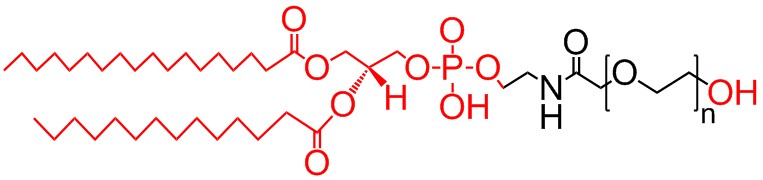
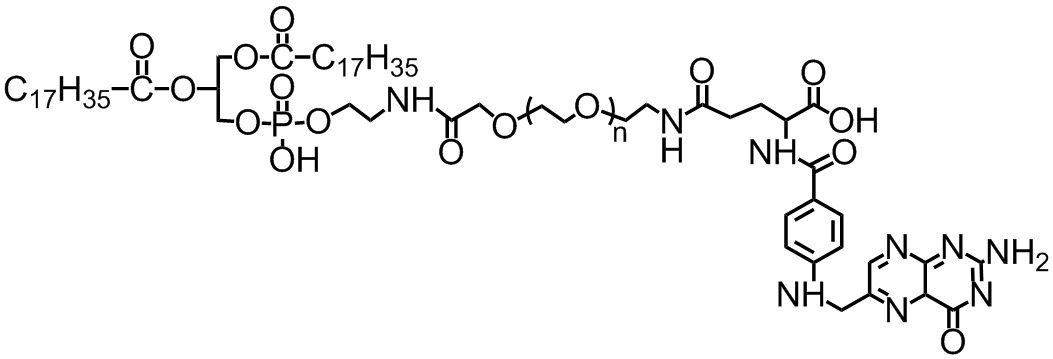
Phospholipid polyethylene glycol folate (dspe-peg-fa), carboxyl group and amino group form amide bond. This reaction makes folate ligand attach to protein, antibody, peptide or particle surface. Pegylated folate has good water solubility and bioactivity. Folate functionalized substrates have been used for targeted drug delivery, imaging and bioassay. DSPE (1,2-distearyl-sn-glycerin-3-phosphate ethanolamine) is a saturated 18 carbon phospholipid, which is commonly used in the synthesis of liposomes. Polyethylene glycol (PEG) - coupled DSPE is hydrophilic and can be used for drug delivery, gene transfection and biomolecular modification.
DSPE-Biotin is a lipid. DSPE-Biotin can be used for the research of various biochemical.
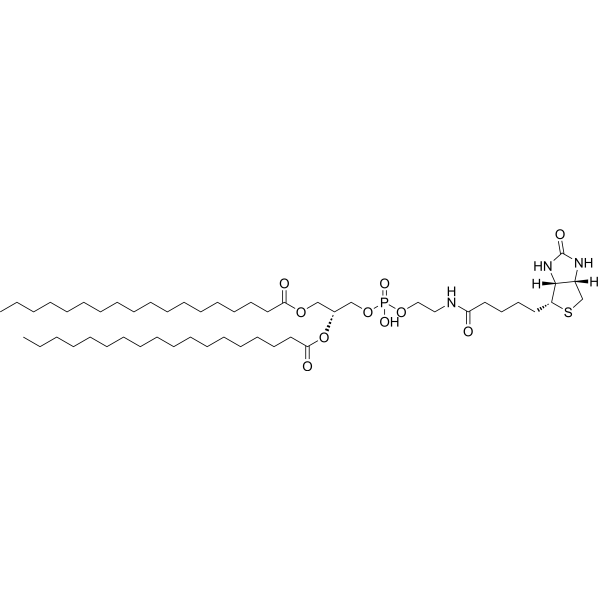
Phospholipids DSPE belong to the lipid family of biopolymers. Phospholipids consist of two fatty acids, a glycerol unit, a phosphate group, and a polar molecule. The phosphate groups and polar head regions of the molecule are hydrophilic (attracted to water), while the fatty acid tail is hydrophobic (repelled by water). When placed in water, the phospholipids Orient themselves into a double layer, where the non-polar tail region faces the inner region of the double layer. The polar head region faces outward and interacts with the water. Applications in drug release, nanotechnology and new materials research, cell culture. As well as ligand research, peptide synthesis support, grafted polymer compounds, new materials and pegylated modified functional coatings and other active compounds.

Phospholipids DSPE belong to the lipid family of biopolymers. Phospholipids consist of two fatty acids, a glycerol unit, a phosphate group, and a polar molecule. The phosphate groups and polar head regions of the molecule are hydrophilic (attracted to water), while the fatty acid tail is hydrophobic (repelled by water). When placed in water, the phospholipids Orient themselves into a double layer, where the non-polar tail region faces the inner region of the double layer. The polar head region faces outward and interacts with the water. Applications in drug release, nanotechnology and new materials research, cell culture. As well as ligand research, peptide synthesis support, grafted polymer compounds, new materials and pegylated modified functional coatings and other active compounds.

ICG indocyanine green is a three carbon cyanine dye with good water solubility and a molecular weight of 775. Indocyanine green can almost completely bind to plasma proteins in plasma and whole blood, ensuring that it remains almost completely in Xueguan and is not easily diffused outward. Indocyanine green (ICG) is a near-infrared imaging reagent currently approved by the US Food and Drug Administration (FDA) for clinical use. ICG is a three carbon cyanine dye with near-infrared characteristic absorption peaks, emission wavelengths between 795 and 845nm, and has amphiphilic structures that are both hydrophilic and lipophilic. Near infrared light has a greater penetration depth in tissues and is less affected by biological tissue background, Due to its near-infrared absorption and emission fluorescence characteristics, ICG can be used as an excellent tissue penetrating agent in vivo.

TLR7/8 agonist 4 hydroxy-PEG10-acid hydrochloride (compound 9) is a drug-linker conjugate for ADC with potent antitumor activity by using TLR7/8 agonist 4, linked via the cleavable ADC linker hydroxy-PEG10-acid.
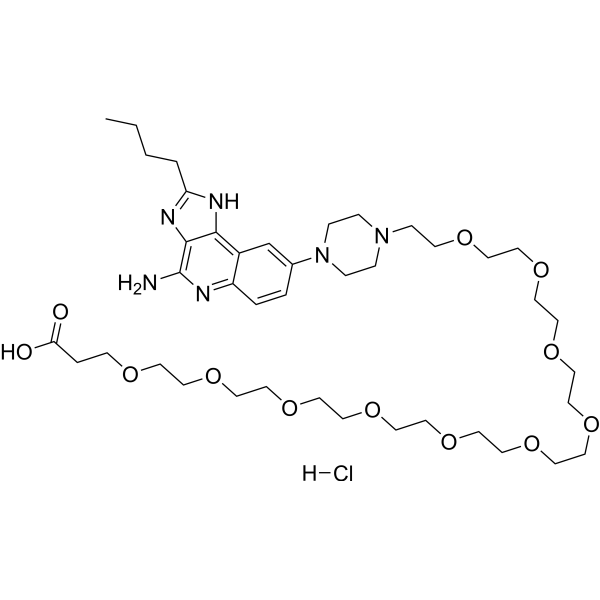
TLR4-IN-C34-C2-COO is a linker that incorporates TLR4 inhibitor TLR4-IN-C34. TLR4-IN-C34 inhibits TLR4 in enterocytes and macrophages, and reduces systemic inflammation in mouse models of endotoxemia and necrotizing enterocolitis.
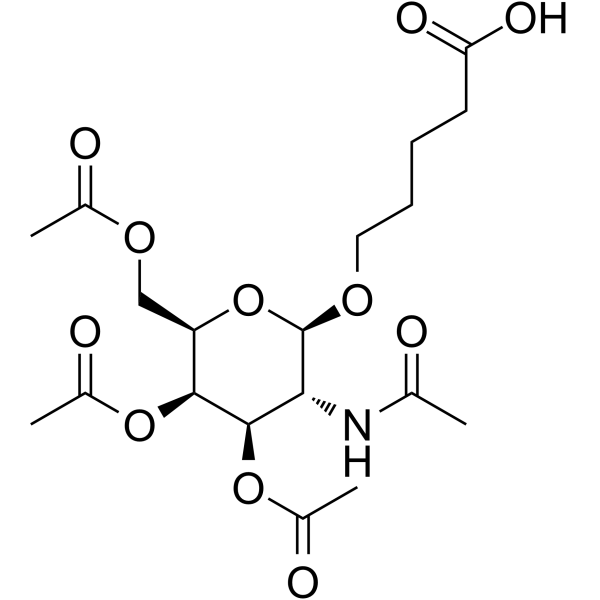
SMU127 (SMU-127, ZINC666243) is a specific TLR1-TLR2 small molecule agonist with EC50 of 0.55 uM; stimulates NF-κB activation and promotes TNFα secretion in human macrophages and mononuclear cells, inhibits the growth of breast cancer tumors in BABL/c mice.
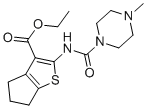
A potent TLR7/8 agonist that induces robust production of the Th1-polarizing cytokines TNF-alpha and IL-12 from neonatal antigen-presenting cells (APCs)..

A selective TLR8 agonist that induces activation of NF-κB at 0.4 uM; induces similar cytokine profiles from human PBMC compared with TLR8 agonist ssRNA; effectively stimulates IL-12 production from mDC, but not pDC; induces TNF-α and IL-12 at 0.1 uM from monocytes and monocyte-derived DC (Mo-DC).

ANA975 is an oral prodrug of the TLR-7 agonist Isatoribine (ANA245;7-Thia-8-oxoguanosine) against hepatitis C virus (HCV) infection.HCV InfectionPhase 1 Discontinued

Novel TLR7 agonist via immune response induction and tumor microenvironment modulation

Toll-like receptor 2/6 (TLR-2/6) agonist, regulating Lcn2 gene, promoting collateral growth

Novel anticryptosporidial agent, acting as a toll-like receptor-2 (TLR2) antagonist