PNI 132Featured
PNI 132, an ionizable lipid derived from the patent WO2020252589A developed by Precision Nanosystem, is useful in the formulation of lipid nanoparticles.

Explore 849 lipid and RNA delivery products. Search the full catalog or browse by research category.
Search covers product name, catalog number, synonyms, available CAS numbers and categories. Spaces, hyphens and common punctuation are ignored. Duplicate legacy records are consolidated under one canonical product result.
PNI 132, an ionizable lipid derived from the patent WO2020252589A developed by Precision Nanosystem, is useful in the formulation of lipid nanoparticles.
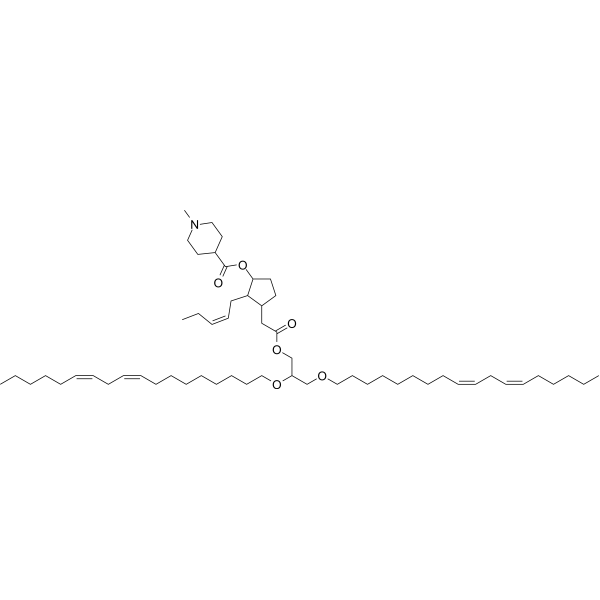
VC1052 is the component of Vaxfectin. Vaxfectin is a cationic lipid-based adjuvant that can be used for plasmid DNA- and protein-based vaccines.
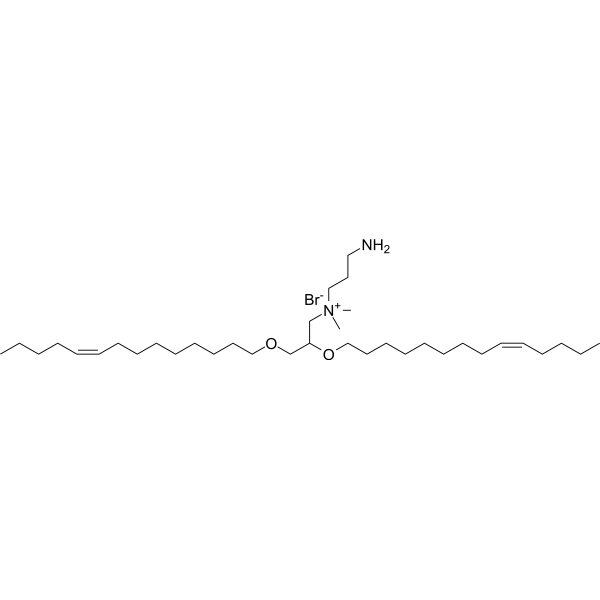
C10-200-based LNPs show enhanced liver tropism for mRNA delivery, outperforming branched-chain lipidoids (e.g., C12-200) in hepatic reporter gene expression. The system's therapeutic potential is confirmed through successful EPO production, with measurable increases in circulating protein levels following administration.
IM21.7c is listed as a ionizable lipid for laboratory research use.
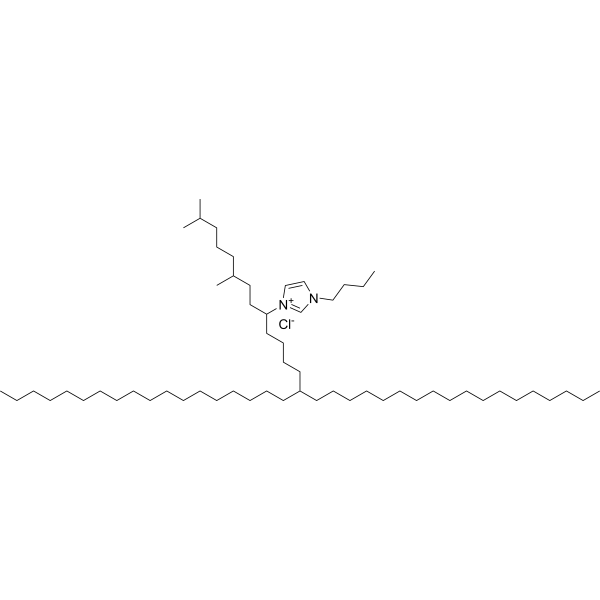
BNT-51 is an ionizable thiolipid developed by Biontech, characterized by its sulfur-containing moieties and a multiarm dendron-like architecture. Synthesized via reactions between amine-containing compounds and sulfur-based halides or sulfonates, it forms stable lipid nanoparticles (LNPs) optimized for mRNA delivery. The LNPs exhibit uniform particle size (80–100 nm, PDI <0.2), near-neutral zeta potential, and high mRNA encapsulation efficiency (>90%), while maintaining payload integrity through freeze-thaw cycles and extended storage. In vitro, BNT-51 demonstrates low cytotoxicity (>80% cell viability in C2C12, HepG2, and HEK293 cells) and superior transfection efficiency compared to conventional lipids, particularly in immune cells such as CD4+/CD8+ T cells within PBMCs. Its modular design allows integration of stealth lipids (e.g., PEG or vitamin E derivatives) to prolong circulation time and minimize immune activation, as evidenced by low hemolysis and complement activation risks. In vivo, BNT-51-based LNPs enable targeted mRNA delivery to splenic macrophages, achieving potent genome editing (e.g., Cre mRNA) and therapeutic protein expression (e.g., BACH1) in preclinical models. With its tunable structure, robust stability, and cell-specific tropism, BNT-51 holds promise for advancing mRNA therapeutics in gene editing, cancer immunotherapy, and regenerative medicine, offering a versatile platform for next-generation nanomedicine.
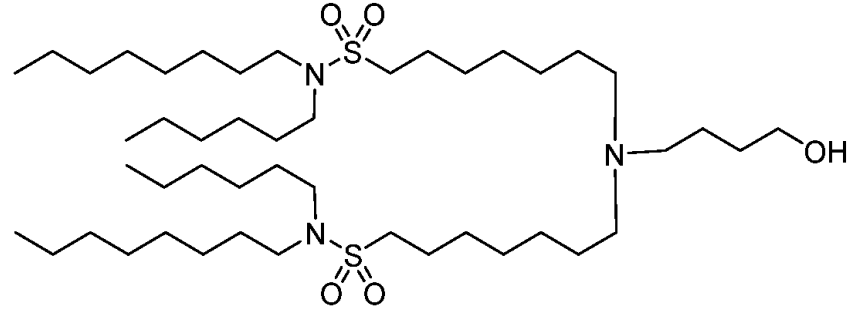
ATX-054 which is from Arcturus RNA delivery platform, is a novel ionizable lipid used in the formulation of lipid nanoparticles (LNPs) for the delivery of RNA.
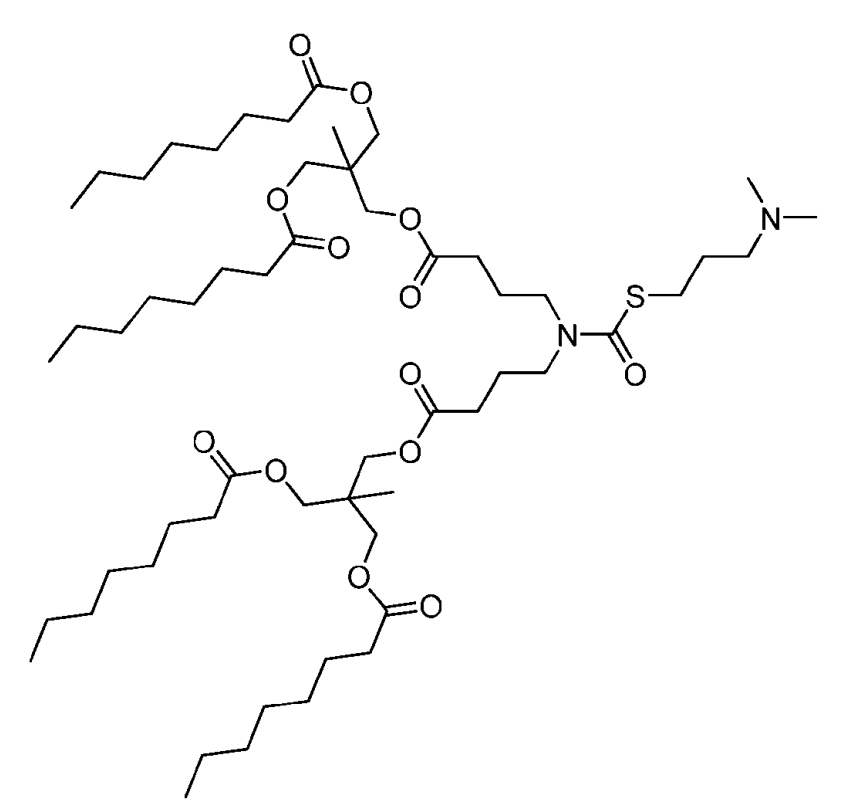
Lipid 5D8 is a novel biodegradable ionizable lipid (IL) developed through a combinatorial chemistry strategy to overcome the limitations of conventional lipid nanoparticles (LNPs) in mRNA delivery. Synthesized via a one-step, solvent-free Michael addition reaction between amine and thiol monomers, 5D8 features asymmetric lipid tails and a biodegradable ester backbone, ensuring both structural versatility and reduced toxicity. In preclinical studies, 5D8-based LNPs demonstrated exceptional liver-targeting efficiency and mRNA delivery performance. A single intravenous dose (1 mg/kg) achieved 61% CRISPR-Cas9-mediated editing of the TTR gene in mice, reducing serum TTR protein by 90%, outperforming benchmark lipids like C12-200 (51% editing). Moreover, 5D8 enabled efficient delivery of base editors (ABE8.8 and CBE4max), achieving 42% PCSK9 editing (74% serum protein reduction) and correcting hereditary tyrosinemia in mice, significantly extending survival. Beyond gene editing, 5D8 LNPs effectively delivered siRNA (complete serum TTR clearance at 0.05 mg/kg) and enhanced hepatocyte targeting by enriching apolipoprotein E on particle surfaces. Crucially, 5D8 exhibited superior biocompatibility with no hepatotoxicity (normal ALT/AST levels), contrasting traditional LNPs. Its rapid biodegradability and "plug-and-play" design make 5D8 a versatile platform for mRNA therapeutics, holding broad potential for treating genetic disorders, cardiovascular diseases, and beyond. This innovation represents a critical advancement toward safer, high-efficiency clinical translation of gene-editing therapies.L
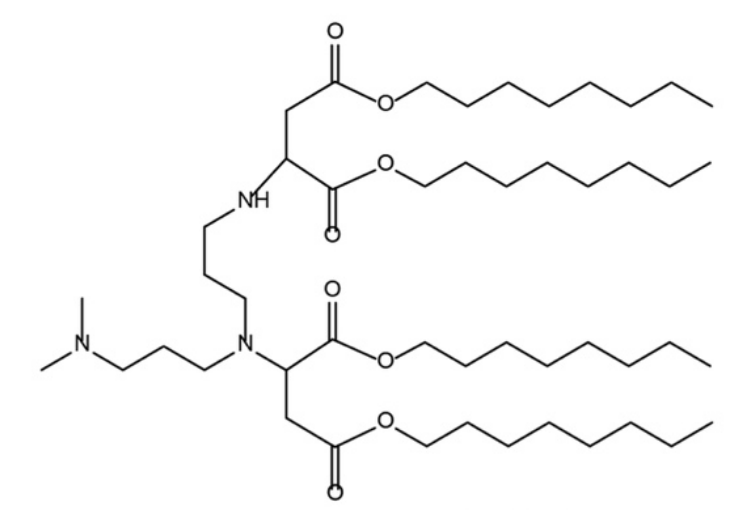
GalNAc Lipid 1002 is a trivalent GalNAc-lipid conjugate designed for ASGPR-mediated hepatic delivery. It features a lysine-based scaffold covalently linked to three GalNAc moieties via a 12-unit PEG spacer, anchored by a 1,2-O-dioctadecyl-sn-glyceryl (DSG) lipid tail.
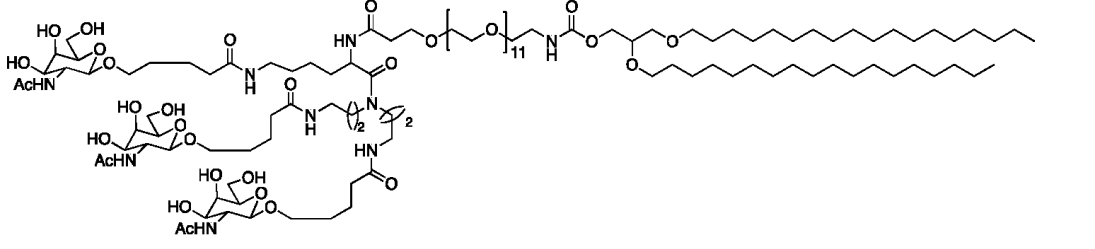
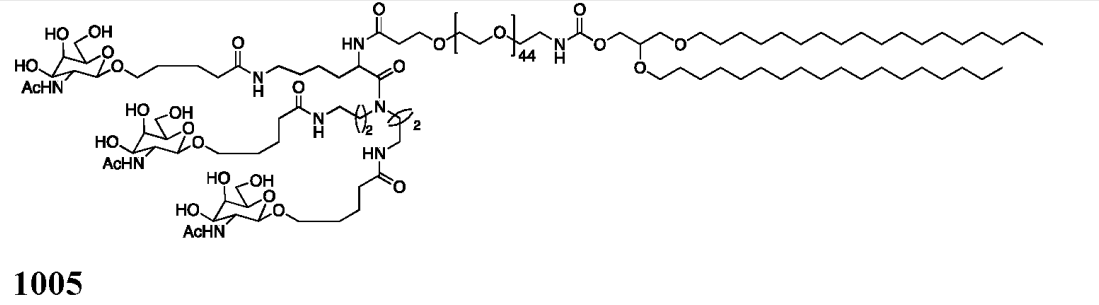
GalNAc Lipid 1005 is a trivalent GalNAc-lipid conjugate designed for ASGPR-mediated hepatic delivery. It features a lysine-based scaffold covalently linked to three GalNAc moieties via a 44-unit PEG spacer, anchored by a 1,2-O-dioctadecyl-sn-glyceryl (DSG) lipid tail.
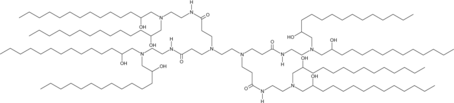
Lipid 1 HG3 serves as a key component in LNPs specifically engineered for in vivo delivery of closed-end DNA (ceDNA), demonstrating efficient nucleic acid encapsulation and targeted release capabilities.

DMT7 (pKa 6.5) is an ionizable cationic lipid engineered for co-delivery of mRNA and immunomodulators via LNPs. In 4T1 breast cancer metastasis models, DMT7 LNPs carrying IL-12 mRNA and STING agonist MSA-2 significantly reduce tumor burden and pulmonary metastases while modulating T cell populations. The formulation demonstrates broad immunotherapeutic effects in melanoma models, shifting tumor macrophages toward the M1 phenotype, reducing Tregs, and elevating pro-inflammatory cytokines (IL-12, IL-2, TNF-α, IFN-γ).

7-1 lipid represents a novel ionizable cationic compound designed for nucleic acid delivery applications.

G0-C14 analog is a derivative of the ionizable cationic lipid G0-C14.
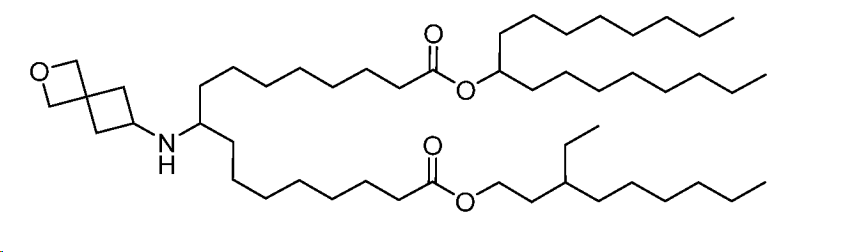
Lipid 17 is a novel, highly potent ionizable lipid designed for mRNA delivery within lipid nanoparticles (LNPs) developed by AstraZeneca . Its structure features a secondary amine head group attached to a cyclic ether moiety (specifically, the 2-oxaspiro[3.3]heptan-6-amine head group). It possesses an asymmetric tail architecture: one tail is derived from heptadecan-9-ol (a branched C17 secondary alcohol), while the other tail is a modified nonyl chain (C9) with a key ethyl branch at the 3-position. The linker connecting the head group to the tails has a length equivalent to n=3 (three methylene units) as defined in the study. This specific combination of the secondary amine cyclic ether head group, asymmetric tails, and the ethyl branch at the 3-position of the nonyl chain proved critical for its exceptional performance. When formulated into LNPs and administered intravenously in mice, Lipid 17 demonstrated a remarkable 6-fold increase in functional protein (eGFP) expression in the liver compared to the benchmark lipid MC3, with high statistical significance (P < 0.0001). This makes Lipid 17 one of the most active lipids identified in the study and a promising candidate for liver-targeted mRNA therapeutics.
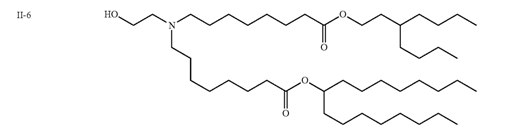
Moderna Lipid II-6 is listed as a ionizable lipid for laboratory research use.
Lipid 19 is an engineered cationic lipid designed to optimize the delivery of RNA within lipid nanoparticles (LNPs) developed by Nitto. Its unique structure—featuring a dual-hydroxyl headgroup and tailored hydrophobic chains—enables highly efficient encapsulation of these fragile genetic payloads, protecting them from degradation. The resulting LNPs exhibit exceptional stability (<100 nm size), target the liver specifically for enhanced therapeutic impact, and support applications ranging from mRNA vaccines to gene-silencing therapies. This makes lipid 19 a pivotal advancement in precision nanomedicine for liver-related disorders.
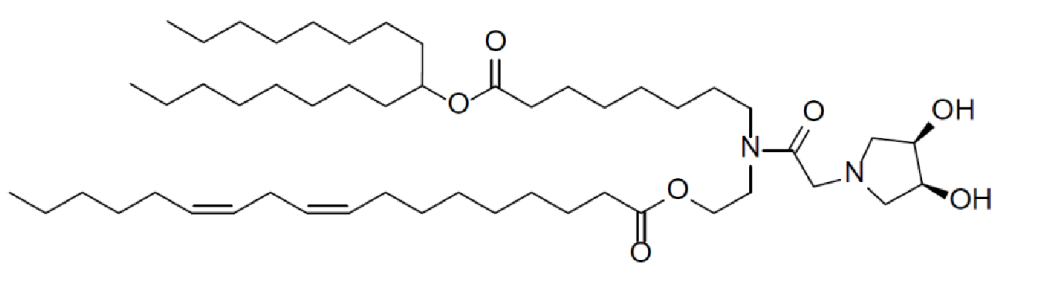
L649 is a next-generation, lung-targeting ionizable lipid specifically designed for systemic mRNA delivery developed by Hopewell. Belonging to the novel "N-series" lipid class, it features a unique structure with an amine-containing head group and hydrophobic tails incorporating amide bonds. This design enables L649 to form highly stable lipid nanoparticles (LNPs) that exhibit exceptional tropism for the lower respiratory tract (lungs, bronchi, trachea) following intravenous administration. It demonstrates superior efficiency in delivering therapeutic payloads (like mRNA) specifically to key lung cell types, including alveolar epithelial cells (AT1 and AT2) and bronchial cells, while minimizing off-target accumulation in organs like the liver. L649-based LNPs, particularly when formulated with helper lipids like POPE, combine high potency with significantly improved tolerability, allowing for effective dosing in vivo. This makes L649 a promising candidate for developing treatments for various lung diseases such as pulmonary fibrosis, COPD, lung cancer, and infectious diseases like COVID-19.
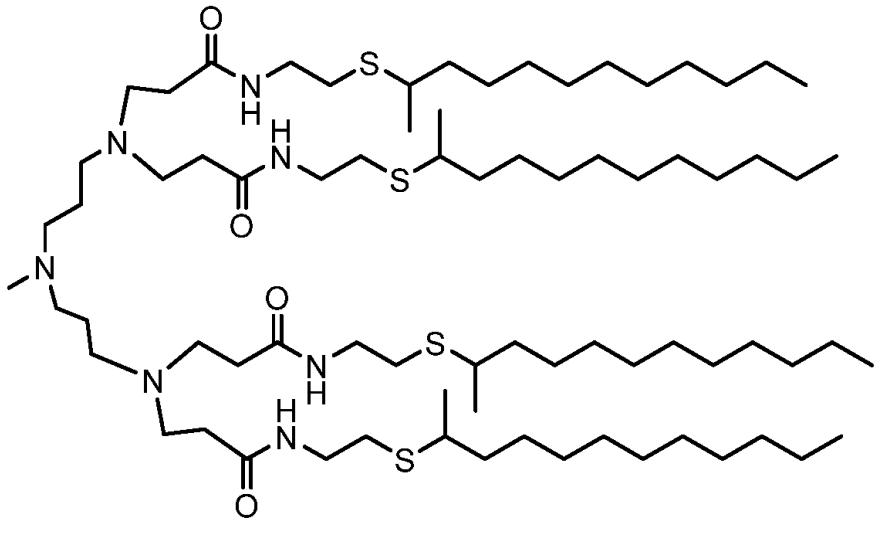
HY-501 is a next-generation cationically ionizable lipid engineered for high-efficiency RNA delivery developed by Biontech. Formulated at 40–50 mol% in lipid nanoparticles (LNPs) alongside DSPC, cholesterol, and polysarcosine-conjugated lipid C14pSar23, HY-501 yields uniform, stable particles (80–100 nm) with >90% RNA encapsulation. It demonstrates superior in vivo performance: driving 2-fold higher protein expression than benchmark lipids (EA-405/HY-405) in muscle tissue, minimizing off-target liver accumulation, and reducing immunogenic risks (near-zero complement activation and <5% hemolysis). Preclinically, HY-501-based LNPs encoding SARS-CoV-2 spike protein elicit potent neutralizing antibodies and T-cell responses, underscoring its utility in precision vaccines. Its combination of scalable synthesis, exceptional transfection efficiency, and biosafety establishes HY-501 as a transformative vector for therapeutic RNA delivery.
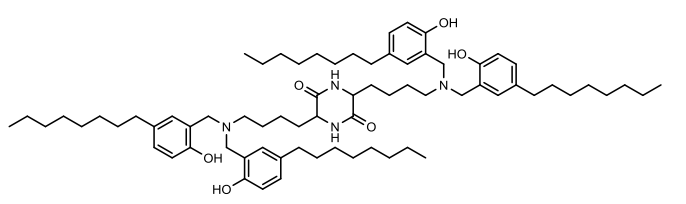
C-a16 is an ionizable lipid engineered through Mannich reaction chemistry, designed to revolutionize mRNA delivery by synergizing high efficiency with minimized immune activation. Synthesized by reacting a phenolic tail derivative, formaldehyde, and a branched tertiary amine core under optimized ethanol conditions, this lipid integrates antioxidant phenol groups directly into its structure. These phenol moieties serve as intrinsic radical scavengers, effectively neutralizing intracellular reactive oxygen species that typically degrade mRNA and trigger inflammation.In lipid nanoparticle formulations, C-a16 constitutes the functional backbone, enabling superior mRNA encapsulation efficiency while maintaining a stable nanoparticle size of approximately 80–100 nm. Critically, it outperforms conventional lipids like DLin-MC3-DMA by achieving significantly higher target-protein expression in vivo alongside markedly reduced pro-inflammatory cytokine secretion. The antioxidant capability is not incidental but fundamental—quenching the phenol groups drastically diminishes both ROS suppression and delivery efficacy, confirming the design's mechanistic elegance.C-a16 represents a paradigm shift: its biomimetic antioxidant architecture addresses the chronic trade-off between delivery potency and immunogenicity, unlocking safer therapeutic applications for vaccines and gene therapies.
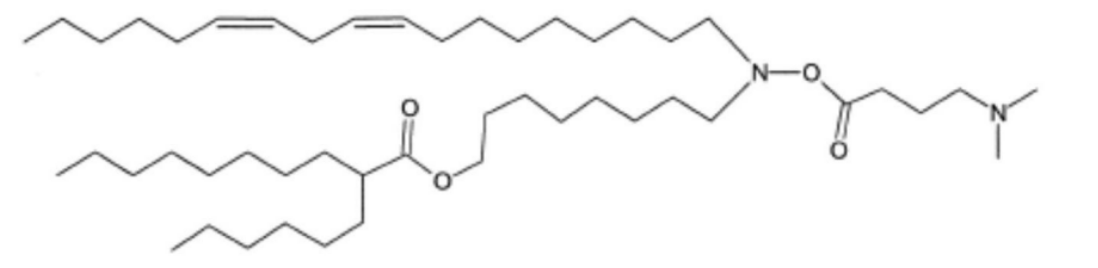
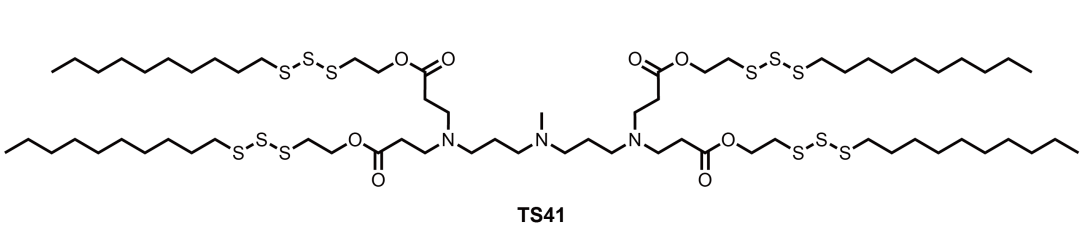
TS41 is a trisulfide-derived ionizable lipid engineered for lipid nanoparticles (LNPs) to deliver mRNA therapeutics against multidrug-resistant bacterial pneumonia. Its optimized formulation, TS41S LNP, combines TS41 with helper lipids (e.g., DOPE, cholesterol) at a precise ratio, achieving a hydrodynamic diameter of ~105 nm, low polydispersity, and high mRNA encapsulation efficiency (~84%). This design enables efficient pulmonary delivery via intratracheal administration, with luminescence signals in lungs 4.8-fold higher than clinical benchmarks like SM-102 LNPs, ensuring targeted expression in epithelial cells, macrophages, and neutrophils. Crucially, TS41 LNPs exhibit potent anti-inflammatory properties by scavenging reactive oxygen species (ROS), reducing neutrophil infiltration and proinflammatory cytokines (e.g., IL-6, TNF-α) in infected lungs. In preclinical models, TS41S LNP encoding PB9 peptibody mRNA eradicated pathogens like Staphylococcus aureus and Pseudomonas aeruginosa, improved survival rates to 80%, and minimized tissue damage without systemic toxicity. Its ROS-scavenging capability synergizes with antibacterial effects, offering a promising, translatable platform for combating resistant infections while controlling inflammation. Future enhancements, such as codon optimization or inhalation delivery, could further broaden its therapeutic potential.
Page 23 of 43 · Browse all 849 products