Search covers product name, catalog number, synonyms, available CAS numbers and categories. Spaces, hyphens and common punctuation are ignored. Duplicate legacy records are consolidated under one canonical product result.
849 products · Showing 661–680 · 20 per page
Cat. No.Product NameField of ApplicationChemical Structure
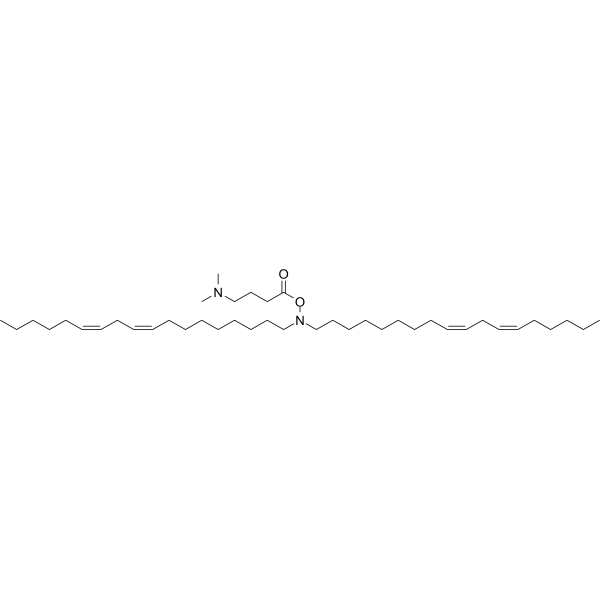
TT3 is an ionizable cationic amino lipid that has been used in combination with other lipids in the formation of lipid-like nanoparticles (LLNs). Administration of LLNs containing TT3 and encapsulating mRNA encoding human coagulation Factor IX induces human coagulation Factor IX expression in the plasma of mice.
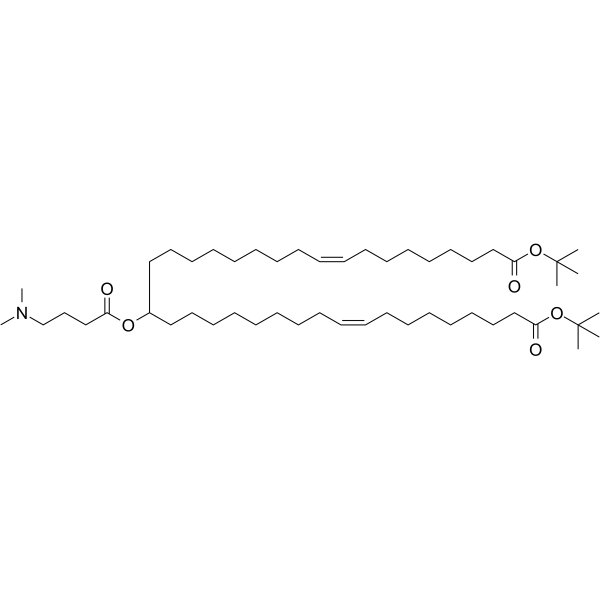
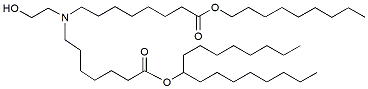
L-343 is an ionizable cationic lipidoid and can be used to synthetic liposomes for systemic delivery of RNAi therapeutics, Pka: 6.34.L343, with its sterically hindered tert-butyl esters, exhibited slower elimination from plasma and higher and more persistent levels in liver compared with L319.
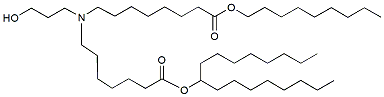
BAMEA-O16B, a lipid nanoparticle integrated with disulfide bonds, can efficiently deliver Cas9 mRNA and sgRNA into cells while releasing RNA in response to the reductive intracellular environment for genome editing as fast as 24 h post mRNA delivery.
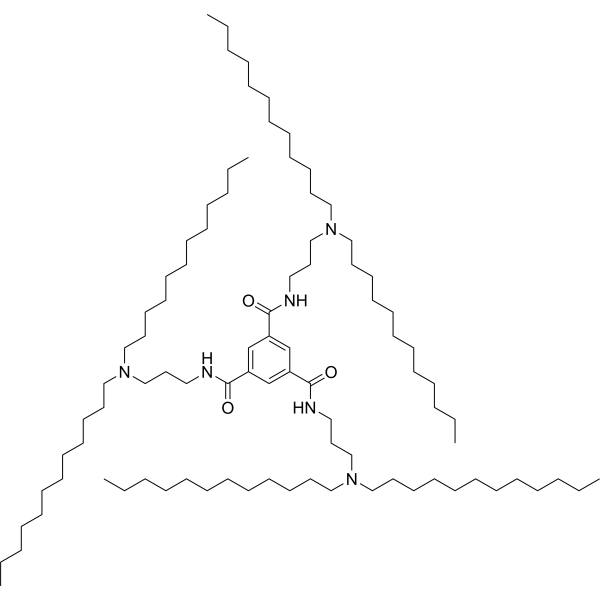
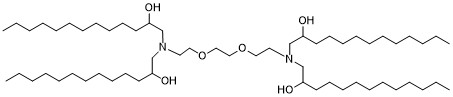
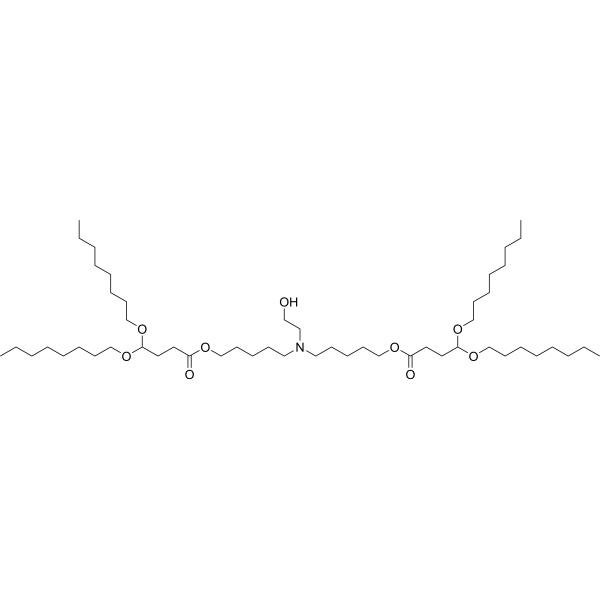
C13-112-tetra-tail is an advanced ionizable lipid molecule designed for use in lipid nanoparticles (LNPs) to deliver anionic substrates, such as nucleic acids (e.g., siRNA, mRNA) or proteins, both in vitro and in vivo.
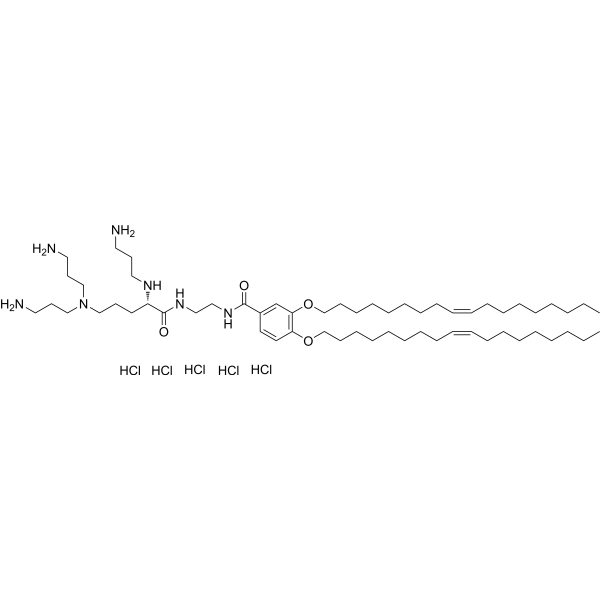
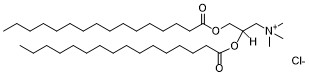
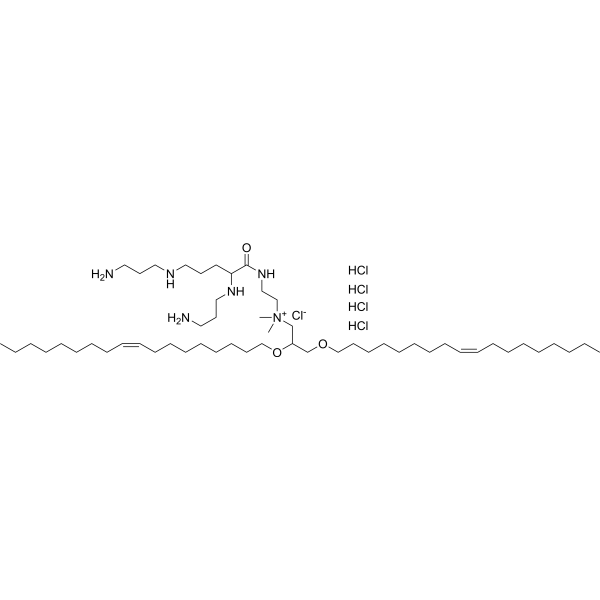
16:0 TAP is a cationic derivative of trimethylammonium linked with two 16-carbon fatty acid tails. 16:0 TAP is a cationic liposome-forming compound that may be used for transfection of DNA, RNA, and other negatively charged molecules into eukaryotic cells. Reagent grade, for research use only.
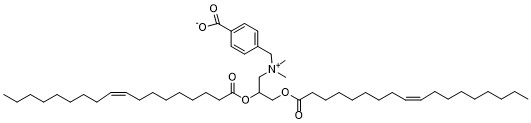
DOBAQ, N-(4-carboxybenzyl)-N,N-dimethyl-2,3-bis(oleoyloxy)propan-1-aminium, is a cationic lipids with a quaternary amine and unsaturated hydrocarbon chains. DOBAQ also serves as a pH-sensitive transfection reagent. Reagent grade, for research use only.
IR-117-17 (A10-LIN) is an ionizable and biodegradable lipid specifically designed for nebulized mRNA delivery. When formulated into lipid nanoparticles (LNPs), IR-117-17 demonstrates remarkable efficacy, achieving a 300-fold enhancement in lung mRNA delivery compared to the best-performing LNP previously reported. Additionally, it shows a two-fold improvement over the leading PBAE-based delivery system, with up to a 45-fold increase in mRNA delivery efficiency to the large airways.
SM-102 Analog 2(Compound 8-8) is a lipid compound. SM-102 Analog 2(Compound 8-8) is involved in the synthesis of lipid nanoparticles compositions. SM-102 Analog 2(Compound 8-8) has potential applications in the transportation of biologically active substances.
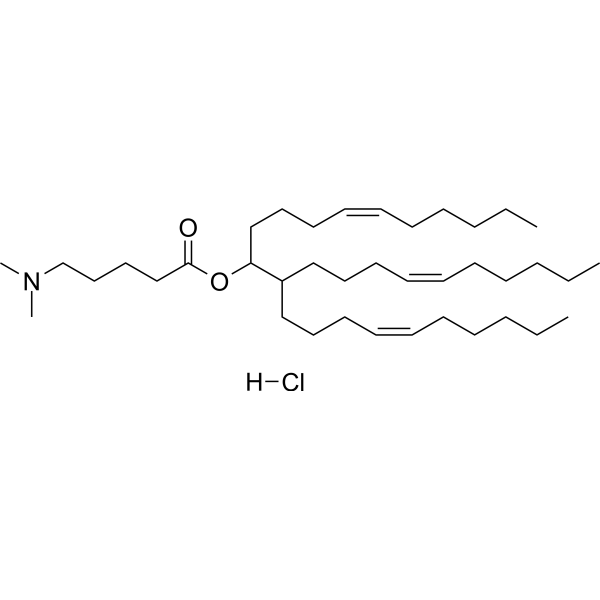
Genevant CL1 monohydrochloride, an ionizable lipid with a pKa of 6.3 (also referred to as lipid 10), serves as a key component in the formulation of lipid nanoparticles (LNPs) for the delivery of mRNA vaccines.
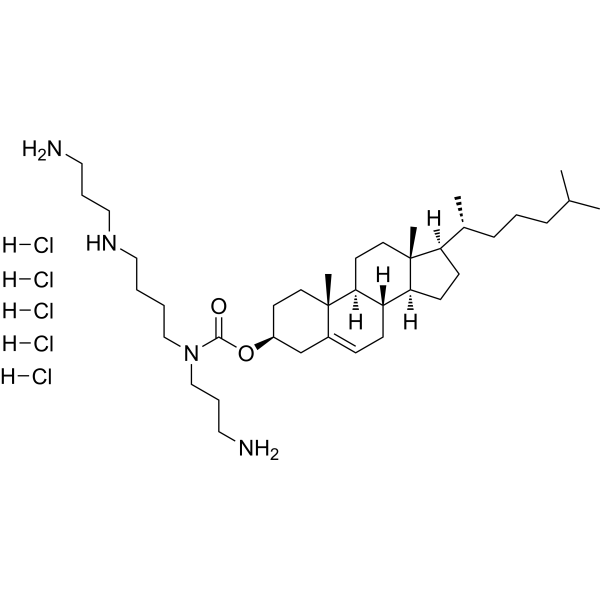
GL67 (N4-Spermine cholesteryl carbamate) in its pentahydrochloride form is a cationic lipid with versatile applications in the delivery of nucleic acid agents, vaccines, and gene transfection, owing to its efficient encapsulation and transport capabilities.GL67 (N4-Spermine cholesteryl carbamate) in its pentahydrochloride form is a cationic lipid with versatile applications in the delivery of nucleic acid agents, vaccines, and gene transfection, owing to its efficient encapsulation and transport capabilities.
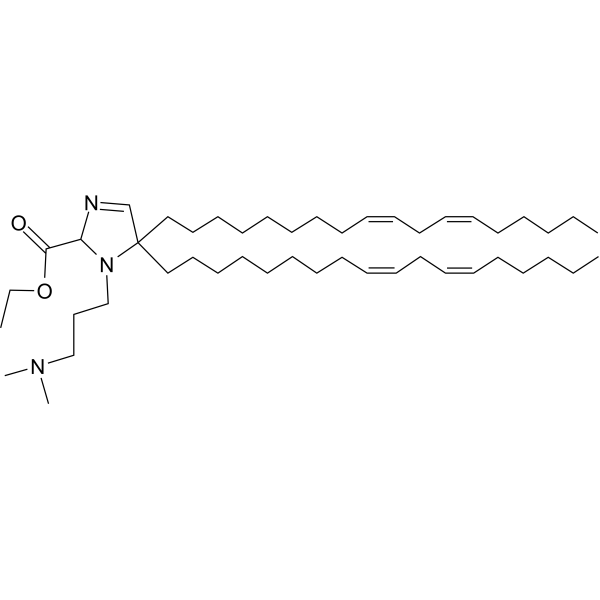
A12-Iso5-4DC19 is a cationic lipid with ionizable properties, designed to enhance mRNA delivery efficiency. Its unique structure makes it a promising candidate for developing advanced RNA-based vaccines and therapeutics.
A1-EP10-O18A is an asymmetric ionizable lipid developed by Starna Therapeutics for mRNA vaccine delivery. Synthesized via Michael addition between amine alcohols and acrylates, its optimized structure—combining a hydrophilic C10 chain and hydrophobic unsaturated C18 tail—enables pH-dependent ionization. As the core component of the STAR0225 lipid nanoparticle (LNP) platform, it efficiently encapsulates mRNA and facilitates endosomal escape. Preclinical studies demonstrate superior in vivo mRNA delivery (vs. commercial SM102 LNPs), with enhanced local biodistribution and minimal off-target accumulation. This lipid underpins STR-V003, an RSV prefusion F mRNA vaccine showing robust immunogenicity and protection in animal models, supporting its clinical transition (NCT06344975).