Search covers product name, catalog number, synonyms, available CAS numbers and categories. Spaces, hyphens and common punctuation are ignored. Duplicate legacy records are consolidated under one canonical product result.
849 products · Showing 761–780 · 20 per page
Cat. No.Product NameField of ApplicationChemical Structure
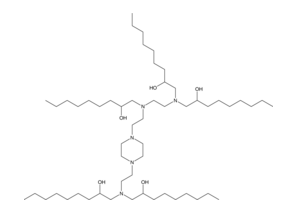
SIL lipid is an ionizable cationic lipid that has been used in the generation of lipid nanoparticles (LNPs) for the delivery of siRNA in vitro.1 LNPs containing SIL lipid and encapsulating siRNA targeting mRNA encoding the purinergic P2X7 receptor decrease protein levels of the purinergic P2X7 receptor, reduce migration in a wound healing assay, and induce apoptosis and necrosis in 4T1 breast cancer cells.
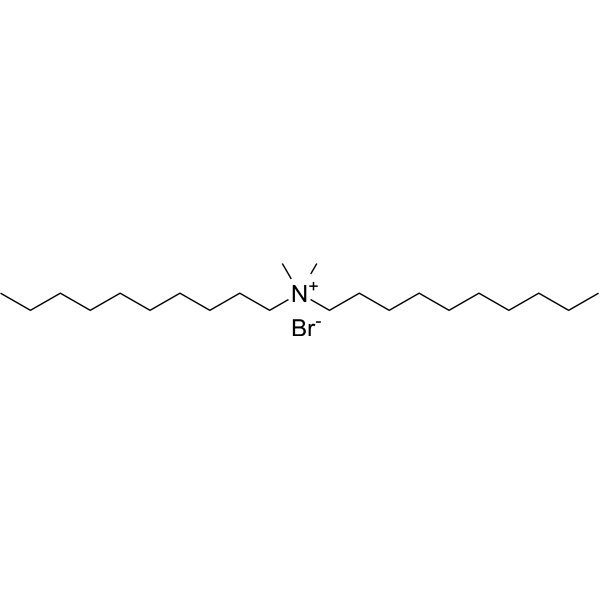
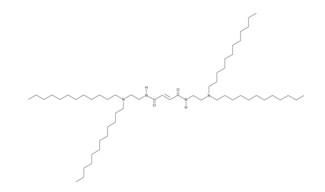
DDAB, also known as dodecyltrimethylammonium bromide, is a cationic surfactant with specific solubility, stability, and storage conditions. 1. Solubility: DDAB is soluble in water and organic solvents such as ethanol and chloroform. It forms clear solutions in water, but can become turbid at high concentrations or low temperatures. It has a higher solubility in organic solvents compared to CTAB. 2. Stability: DDAB is relatively stable under normal storage conditions. However, it can undergo degradation and lose its surfactant properties if exposed to extreme temperatures, humidity, or oxidizing agents for extended periods. It is important to store DDAB in a cool, dry place away from direct sunlight. 3. Storage conditions: DDAB should be stored in a tightly sealed container to prevent moisture absorption and contamination. It is recommended to store it at room temperature (around 20-25°C) or in a refrigerator (2-8°C) to maintain its stability and extend its shelf life.
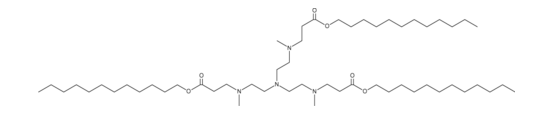
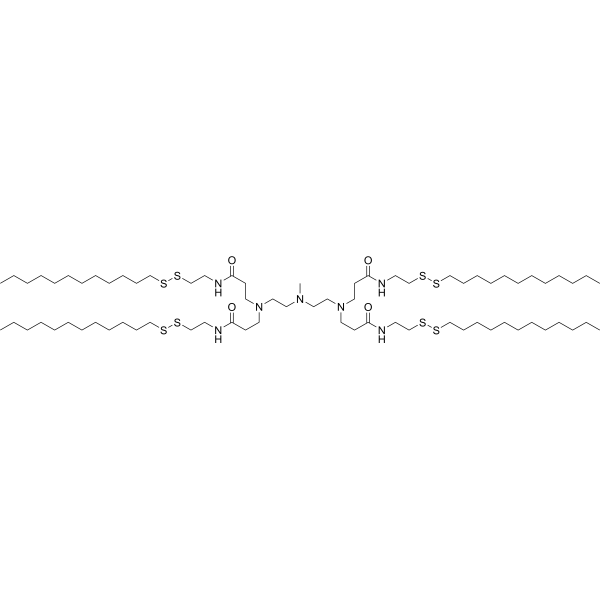
Al-28 is a multi-ionizable aminolipid featuring a central amine and three identical disulfide-linked saturated side chains. The hydrophobic side chains are linked to the central structure by ester as well as disulfide bonds. Disulfide bonds are readily cleaved in the reducing environment of the cell cytoplasm. Ionizable lipids are typically used in the design of nucleic acid lipid nanoparticles, as their pH-dependent positive charge stabilizes the anionic nucleic acids they encapsulate.
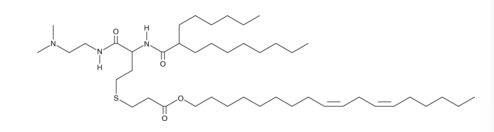
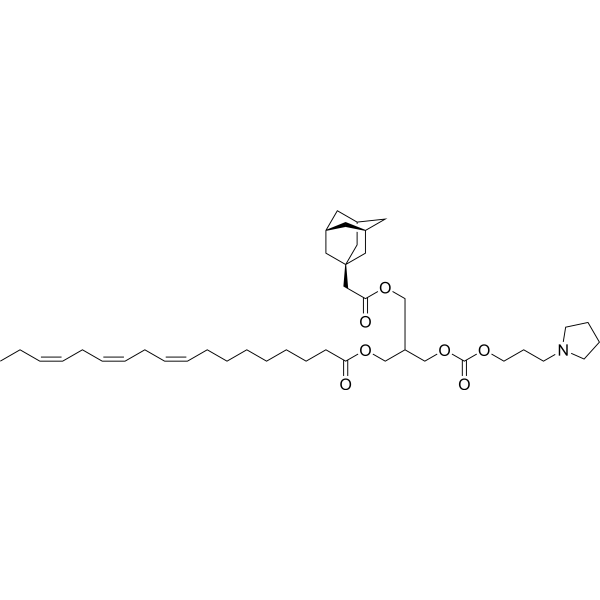
Lipid CP-LC-1143 is an ionizable cationic amino lipid derived from homocysteine, a naturally occurring amino acid. This lipid has demonstrated an efficient delivery and high protein expression of different kinds of RNA (mRNA, cRNA and saRNA) in vivo, with no signs of toxicity.
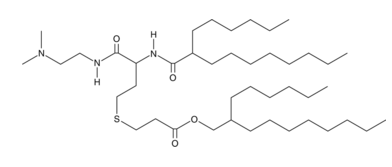
Lipid CP-LC-0729, an ionizable cationic amino lipid synthesized from homocysteine—a naturally occurring amino acid—has been shown to exhibit superior efficacy in the delivery and subsequent protein expression of various RNA modalities, including messenger RNA (mRNA), circular RNA (cRNA), and self-amplifying RNA (saRNA) in vivo. Importantly, CP-LC-0729 demonstrates an exemplary safety profile, with no observable toxicological effects in preclinical studies. Comparative analyses reveal that CP-LC-0729 significantly surpasses MC3, a widely utilized benchmark lipid nanoparticle formulation, in terms of protein expression efficiency. Specifically, CP-LC-0729 achieves a striking 32-fold enhancement in protein expression within lung tissue relative to MC3, underscoring its pronounced tissue selectivity and targeting efficacy for pulmonary applications. These findings suggest that CP-LC-0729 represents a highly promising candidate for the development of RNA-based therapeutics, particularly in the context of lung-targeted delivery systems, where its combination of high efficiency and low toxicity offers significant translational potential.
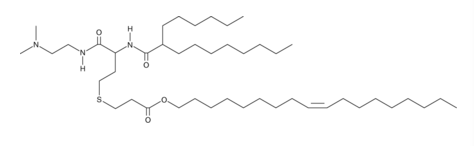
Lipid CP-LC-0743 is an ionizable cationic amino lipid derived from homocysteine, a naturally occurring amino acid. This lipid has demonstrated an efficient delivery and high protein expression of different kinds of RNA (mRNA, cRNA and saRNA) in vivo, with no signs of toxicity.
C9-200 is an ionizable cationic lipid that has been used in the formation of lipid nanoparticles (LNPs). LNPs containing C9-200 and encapsulating mRNA encoding erythropoietin (EPO) increase serum EPO levels in mice. LNPs containing C9-200 and encapsulating mRNA encoding the Cas9 nuclease and small-guide RNA (sgRNA) targeting transthyretin (TTR) induce 3-fold higher hepatic insertion and deletion (indel) formation than LNPs containing C12-200 and encapsulating mRNA encoding Cas9 in mice.
YHS-12 is an ionizable cationic lipid (pKa = 6.506) that has been used in the generation of lipid nanoparticles (LNPs) for the delivery of siRNA and mRNA in vitro and in vivo.1 LNPs containing YHS-12 and the macrophage targeting peptide CRVLRSGSC and encapsulating mRNA encoding chimeric antigen receptor targeting methicillin-resistant S. aureus (MRSA) and siRNA targeting caspase-11 increase the phagocytosis rate of MRSA in RAW 264.7 macrophages and primary mouse bone marrow-derived macrophages (BMDMs). Intravenous administration of these LNPs decreases blood bacterial burden and increases survival in a model of sepsis using cyclophosphamide-induced immunosuppressed mice.
113-N16B is an ionizable cationic lipid used for the generation of lipid nanoparticles (LNPs). 113-N16B delivers mRNA preferentially to pulmonary endothelial cells.
1-A-N is a lipid nanoparticle (LNP) used for in vivo delivery of siRNA. 1-A-N can regulate immune response by delivering siCD45 (siRNA targeting CD45) to T cells and silencing the CD45 gene.
Lipid 50 (compound 50) is an ionizable lipid that can be used for the generation of lipid nanoparticles (LNPs). Lipid 50 is a carrier for both siRNA and mRNA.
Lipid DIM1 is an ionizable cationic lipid that has been used in combination with other lipids in the formation of lipid nanoparticles (LNPs) for mRNA delivery in vitro.1 LNPs containing lipid DIM1 and encapsulating mRNA encoding a luciferase reporter induce luminescence in primary mouse adipose stem cells (ASCs).
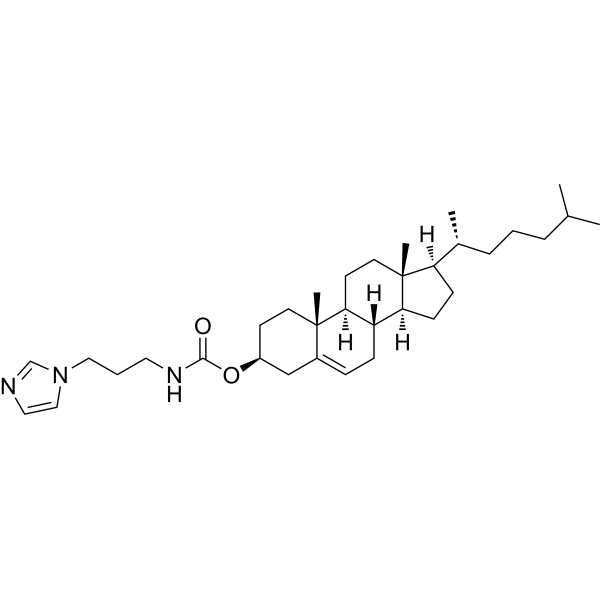
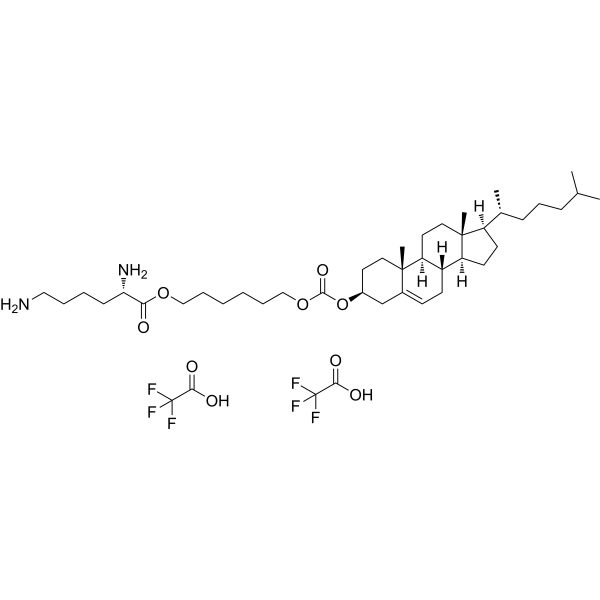
IZ-Chol (IZ-Cholesterol) is an ionizable cationic lipid containing cholesterol. IZ-Chol-LNPs is highly potential to effectively complex with DNA, and endosome escape mechanisms mediated by proton sponge effect.
4-O10b1 is an ionizable lipid used to generate lipid nanoparticles (LNPs) for delivering RNA to cells. LNPs comprised of 4-O10b1 and conjugated with the macrophage antibody F4/80 were able to delivery siRNA targeting TAK1 to RAW264.7 cells resulting in suppressed activation of NF-kB. Intranasal administration reduced lung injury in an influenza mouse model.