Search covers product name, catalog number, synonyms, available CAS numbers and categories. Spaces, hyphens and common punctuation are ignored. Duplicate legacy records are consolidated under one canonical product result.
849 products · Showing 461–480 · 20 per page
Cat. No.Product NameField of ApplicationChemical Structure
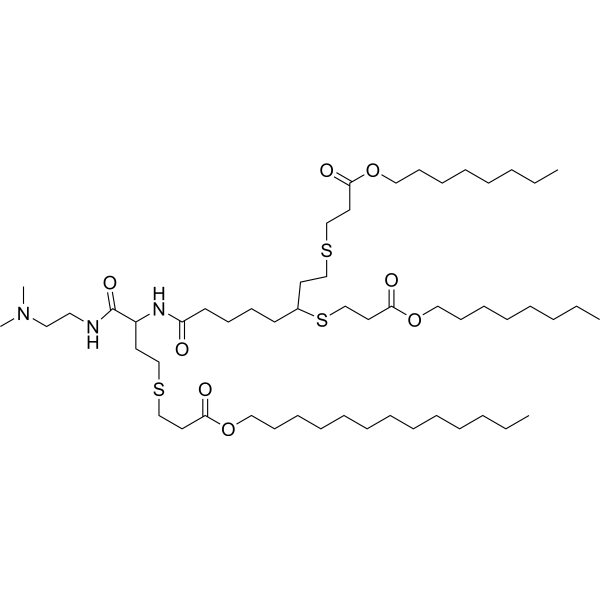
4A2-B8-PH is an optimally designed thioketal-incorporated biodegradable ionizable lipid (TBIL) for mRNA delivery to pancreatic ductal epithelial cells. It features a 4A2 headgroup with three tertiary amines, a biodegradable thioketal-based B8 linker, and a branched PH tail. The thioketal linker enables ROS-responsive degradation in the tumor microenvironment, enhancing endosomal escape and mRNA release. In vivo, 4A2-B8-PH LNPs achieve 98.3% pancreas-specific targeting after intraperitoneal administration, with a 218-fold improvement in delivery efficiency compared to previous benchmarks. It successfully transfects 30.5% of pancreatic ductal epithelial cells and induces complete tumor regression in orthotopic PDAC models via IL-12 mRNA therapy, demonstrating high efficacy and safety.
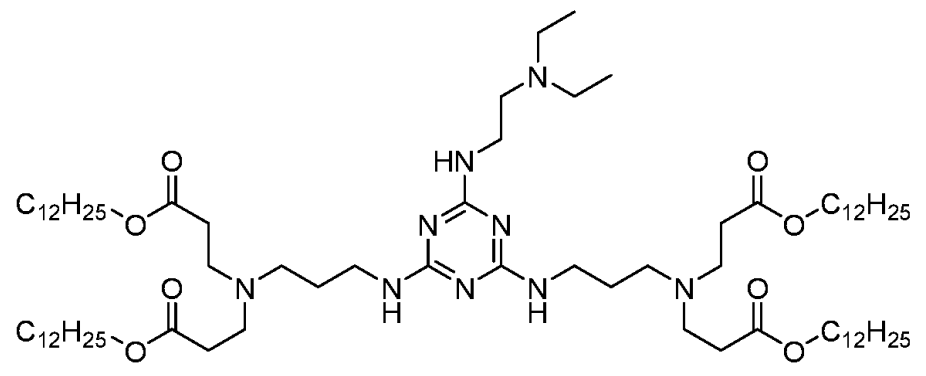
Lipid 48 is a leading ionizable lipid designed for therapeutic nucleic acid delivery. Its key function is to form the core of lipid nanoparticles (LNPs) that efficiently encapsulate and deliver cargoes like mRNA and CRISPR guide RNAs into cells. Its optimized structure allows it to remain neutral in the bloodstream for low toxicity but become positively charged in acidic cellular compartments (endosomes), where it disrupts the membrane to release the therapeutic payload. Data from the patent demonstrates its superior profile: it achieves high gene editing efficiency (e.g., ~80% indel rates in vitro and 16.2% in vivo in mouse liver) while maintaining low cytotoxicity (cell viability >80% at effective doses), establishing it as an ideal candidate for gene therapy applications due to its exceptional balance of potency and safety.
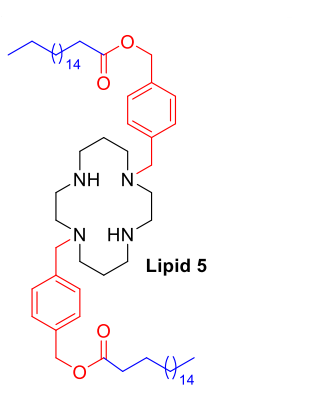
Lipid 5 is an ionizable lipid based on a macrocyclic cyclam headgroup. Its structure incorporates a benzylmethyl carbonate (BMC) linker, which contains an aromatic benzene ring, and a saturated C18 hydrophobic tail. Lipid 5 was mixed with helper lipids at a fixed molar ratio and formulated into mRNA-loaded lipid nanoparticles (LNPs) using microfluidic technology. Characterization data show that these LNPs have a hydrodynamic diameter of approximately 50-80 nanometers and a polydispersity index (PDI) below 0.2, indicating a small particle size with a uniform distribution. Their zeta potential at physiological pH is near neutral (ranging from -3 to +3 mV). The mRNA encapsulation efficiency, as determined by the Ribogreen assay, exceeds 95%. Cryo-transmission electron microscopy images reveal that the LNPs exhibit a typical spherical bilayer structure. In in vitro experiments, Lipid 5 LNPs mediated a higher level of luciferase protein expression in HEK293FT cells compared to the benchmark lipid DLin-MC3-DMA. In Balb/c mice, intravenous injection of LNPs encapsulating luciferase mRNA resulted in in vivo imaging signals predominantly concentrated in the lungs. Quantitative analysis indicated that the signal intensity in the lungs was over 100 times greater than that in the liver, with more than 95% of the total signal distributed in the lungs. In Ai9 reporter gene mice, two intravenous injections of Lipid 5 LNPs encapsulating Cre mRNA led to quantitative analysis of lung tissue sections showing that approximately 30% of lung cells were positive for tdTomato signal.
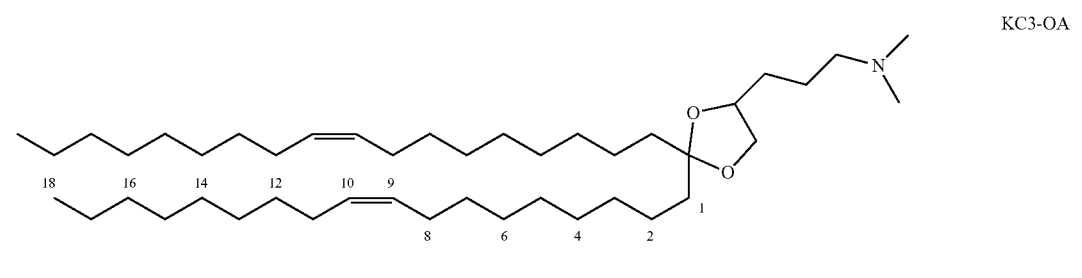
KC3-OA, chemically known as 3-((S)-2,2-di((Z)-octadec-9-en-1-yl)-1,3-dioxolan-4-yl)-N,N-dimethylpropan-1-amine, is an ionizable cationic lipid (ICL) optimized for lipid nanoparticle (LNP) formulations in nucleic acid delivery, particularly for mRNA vaccines. It features a unique structure with mono-unsaturated alkyl chains (C18:1), which enhances oxidative stability compared to polyunsaturated analogs like KC3, while maintaining efficient membrane fusion and endosomal escape capabilities. In LNP compositions, KC3-OA is typically incorporated at 46–54 mol% of total lipids, with an N/P ratio of 4–6 relative to mRNA, ensuring high encapsulation efficiency and transfection potency. Experimental data demonstrate that KC3-OA-based LNPs achieve superior mRNA expression in human dendritic cells, outperforming alternatives like KC3-PA or KC3-01 in both in vitro and in vivo models. For instance, in FIG. 2, KC3-OA LNPs showed ~2-fold higher mCherry expression at low mRNA doses (0.1 μg/mL) due to improved cellular uptake and reduced degradation. Its synergy with anionic phospholipids like DPPS (5 mol%) further enhances dendritic cell targeting via receptor-mediated internalization, leading to robust CD4+ and CD8+ T-cell responses against Mycobacterium tuberculosis antigens. This balance of stability, efficiency, and immunogenicity makes KC3-OA a leading candidate for next-generation vaccines.
Diamino lipid DAL4 is diamino lipid for the preparation of lipid nanoparticles (LNPs) encapsulated with mRNAs encoding cytokines including IL-12, IL-27 and GM-CSF. Diamino lipid DAL4 delivers mRNA to tumor cells to exert anti-tumor activity.
XH-07 is an innovative ionizable cationic lipid that forms the backbone of the JCXH-211 lipid nanoparticle (LNP) delivery system. This complex is engineered to encapsulate and deliver self-replicating RNA (srRNA) encoding interleukin-12 (IL-12), a potent immunostimulatory cytokine. The LNP formulation featuring XH-07 exhibits optimal physicochemical properties, such as a mean particle size of approximately 82.12 nm with low polydispersity, and a near-neutral zeta potential around -3.181 mV, which facilitates stable circulation and efficient cellular uptake upon intravenous administration. Upon delivery, the srRNA leverages the host cell's machinery to produce sustained levels of IL-12p70, as demonstrated in B16F10 tumor-bearing mice, where a single dose led to peak cytokine production in sera and tumors. This induced IL-12 expression activates T cells and NK cells, generating a robust antitumor response. In murine models of melanoma and breast cancer, JCXH-211 monotherapy resulted in significant tumor regression and complete responses in some subjects, and it synergized with anti-PD-1 therapy to enhance efficacy. Importantly, the safety profile was acceptable, with transient liver enzyme elevations in mice that normalized quickly, and no significant adverse events in cynomolgus monkeys after repeated dosing, as evidenced by stable clinical observations and pathology tests. Thus, XH-07 is pivotal for enabling the safe and effective delivery of IL-12 encoding RNA, positioning JCXH-211 as a promising cancer immunotherapy.
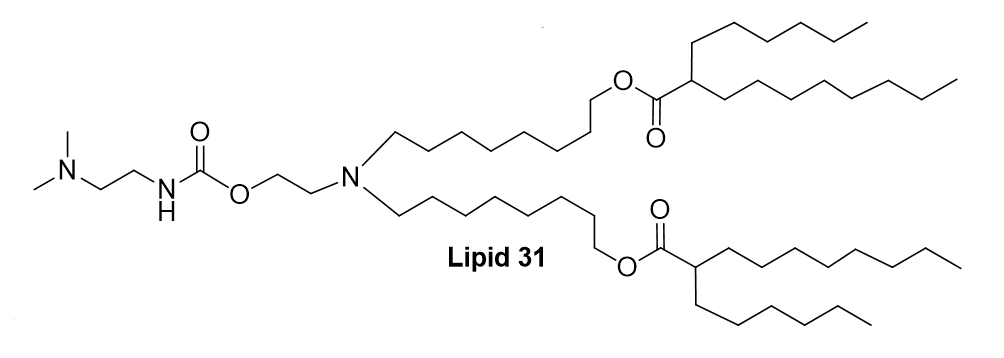
L31 is identified as a novel, proprietary ionizable cationic lipid that serves as the critical functional component within lipid nanoparticles (LNPs) engineered for CRISPR/Cas9 genome editing in head and neck squamous cell carcinoma (HNSCC). It was selected from a screened library of lipids for its superior performance. LNPs formulated with L31 exhibited excellent physicochemical properties, including a uniform size of 80-100 nm, low polydispersity, and high encapsulation efficiency (>85%) for both Cas9 mRNA and sgRNA. In vitro, L31-based LNPs demonstrated outstanding therapeutic efficacy, achieving approximately 68% gene editing of the oncogene SOX2 and an 88% reduction in cancer cell viability.For in vivo applications, L31-LNPs were further functionalized with anti-EGFR antibodies using the ASSET linker strategy to create targeted nanoparticles (tLNPs). This modification enhanced specific uptake by tumor cells. In a xenograft mouse model, intratumoral injection of these targeted L31-cLNPs co-encapsulating Cas9 mRNA and sgSOX2 led to potent tumor growth inhibition (90%) and a significant increase in survival, with tumor disappearance observed in half of the treated mice. In conclusion, L31 is a highly efficient ionizable lipid that forms the foundation of a potent targeted LNP platform for precise CRISPR-based cancer therapy against solid tumors.
Cl-4A3-LNSC8 represents a novel class of thiourea-functionalized ionizable lipids engineered for selective organ-targeted mRNA delivery. Its core innovation lies in an anion-coordination strategy, where the parent lipid, 4A3-LNSC8, binds chloride ions (Cl⁻) via hydrogen-bonding interactions with its thiourea groups. This binding event is not merely structural but functionally critical, as it induces a significant shift in the surface pKa of the resulting lipid nanoparticles (LNPs) from approximately 5.54 to 8.79. This pKa modulation is the key mechanism that redirects the organotropism of the LNPs upon systemic administration. While the unmodified 4A3-LNSC8 LNPs preferentially deliver mRNA to the liver, Cl-4A3-LNSC8 LNPs effectivelyreprogram this tropism, enabling highly efficient mRNA delivery to secondary lymphoid organs (SLOs), particularly the spleen and lymph nodes. This platform demonstrates remarkable efficacy, achieving up to 65.7% gene editing efficiency in splenic macrophages in vivo, significantly outperforming benchmark delivery systems. Furthermore, by leveraging the coordination with different halides, such as iodine for computed tomography (CT) contrast, the system can be adapted for dual-modal theranostic applications, enabling simultaneous lymphatic metastasis imaging and therapeutic mRNA delivery.
4A3-LNSC8 is a strategically designed thiourea-functionalized ionizable lipid that serves as the foundational core for a novel anion-coordination delivery platform. Its structure features a central 4A3 amine headgroup symmetrically extended with four hydrophobic tails, each incorporating a biodegradable ester linkage and a key thiourea-bridged linker. The inclusion of the thiourea group is the pivotal innovation, as it provides specific hydrogen-bonding sites capable of interacting with various halide anions (F⁻, Cl⁻, I⁻). When formulated into lipid nanoparticles (LNPs) without anion coordination, 4A3-LNSC8 itself exhibits a characteristic liver tropism, efficiently delivering mRNA to hepatocytes following systemic administration, with a measured surface pKa of approximately 5.54. However, its primary significance lies in its role as a versatile precursor. The strong anion-binding capability of its thiourea linkers allows for predictable modulation of the LNP's properties. Upon binding with anions like Cl⁻, the resulting complex (e.g., Cl-4A3-LNSC8) undergoes a significant pKa shift, which reprograms the LNP's in vivo fate, redirecting mRNA delivery from the liver to secondary lymphoid organs such as the spleen and lymph nodes. Thus, 4A3-LNSC8 is not merely an efficient ionizable lipid but a programmable scaffold that enables precise control over organ-targeting specificity through simple anion coordination, offering a powerful rational design strategy for advanced mRNA therapeutics.
244-9-cis is a novel ionizable lipid disclosed in United States Patent US 2026/0014075 A1, specifically engineered for advanced lipid nanoparticle (LNP) delivery systems. Its distinctive molecular architecture features biodegradable ester bonds, which contribute to excellent physicochemical properties such as a near-neutral surface charge (approximately -3 mV) for improved biocompatibility, an optimal pKa of about 6.2 to facilitate endosomal escape, and consistently high nucleic acid encapsulation efficiency exceeding 90%. In vivo studies confirm significantly enhanced delivery to hepatocytes and markedly higher therapeutic protein expression compared to control formulations, positioning 244-9-cis as a promising candidate for next-generation genetic medicines.
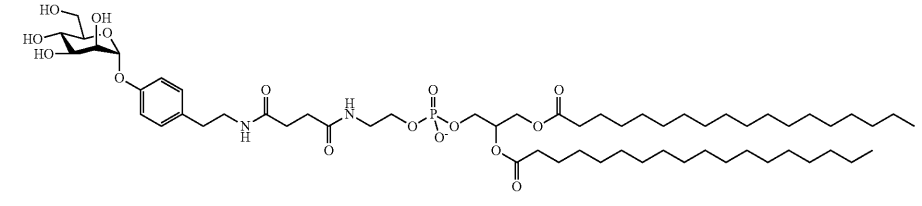
Compound 22, as detailed in United States Patent US 2026/0014089 A1, is a bifunctional ionizable lipid engineered for precision drug delivery. Its structure integrates a monosaccharide targeting headgroup, designed to bind specifically to DC-SIGN receptors on dendritic cells, via a sophisticated linker connected to a biodegradable lipid anchor. This design enables it to serve as a key component of lipid nanoparticles (LNPs), forming a targeted delivery system. By leveraging the specific carbohydrate-receptor interaction, these LNPs are preferentially internalized by dendritic cells, critical for initiating adaptive immune responses. In vivo studies from the patent, such as the biodistribution data shown in Figure 5, confirm effective accumulation in lymphoid tissues like the spleen and lymph nodes. Consequently, this targeted delivery enhances the potency of encapsulated payloads (e.g., mRNA vaccines) by ensuring professional antigen presentation, eliciting a stronger and more specific immune response—evidenced by higher neutralizing antibody titers—making it a powerful tool for next-generation vaccines and therapeutics.
Lipid OC7, as described in the patent WO2022207938A1, is a novel ionizable lipid that serves as the core functional component of the saNppa-LNP delivery system. Its key innovation lies in its unique biodegradable structure featuring an internal ester bond. Under typical physiological conditions, this bond hydrolyzes, triggering a charge shift from a cationic form that complexes nucleic acids to a zwitterionic form that releases them. This property is central to its role in enabling long-acting self-amplifying RNA (saRNA) therapies. Specifically, OC7 facilitates immune stealth by mitigating early interferon responses, supports sustained and efficient intracellular replication of saRNA even at low doses, and enables therapeutic protein expression that persists for over 28 days from a single administration. This combination of efficient delivery, controlled release, and extended duration of action makes OC7-based LNPs a promising platform for long-term treatments, such as for myocardial infarction, as demonstrated in the referenced research.
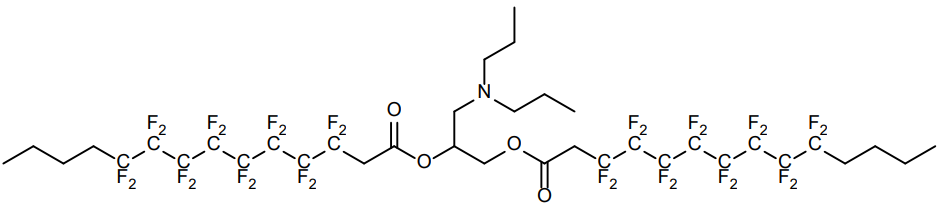
A1F5C5 is a core fluorinated ionizable lipid that forms the basis of the F5-LNP platform. Its key biological functions are multifaceted. Primarily, it enables efficient, targeted mRNA delivery in vivo. Following intravenous administration, F5-LNPs exhibit a strong tropism for the spleen and tumor sites, successfully transfecting over 70% of splenic macrophages and more than 20% of tumor-infiltrating macrophages. This allows for in situ cell engineering. Beyond delivery, A1F5C5 possesses intrinsic immunostimulatory activity. It promotes the maturation and activation of antigen-presenting cells (e.g., upregulating CD80/86 on dendritic cells) and enriches immune-related pathways like "cytokine-cytokine receptor interaction." Mechanistically, its unique 5-fluorine (F5) configuration confers superior membrane fusion capability, which is critical for efficient endosomal escape and cytosolic mRNA release. Therapeutically, when loaded with CAR mRNA, it serves as a platform for in vivo generation of CAR-macrophages (CAR-M). These CAR-M cells phagocytose tumors, reprogram the tumor microenvironment by shifting macrophages to an M1 phenotype, and activate CD8+ T cells. Notably, this approach synergizes powerfully with anti-PD-L1 therapy, achieving complete tumor regression in preclinical models.
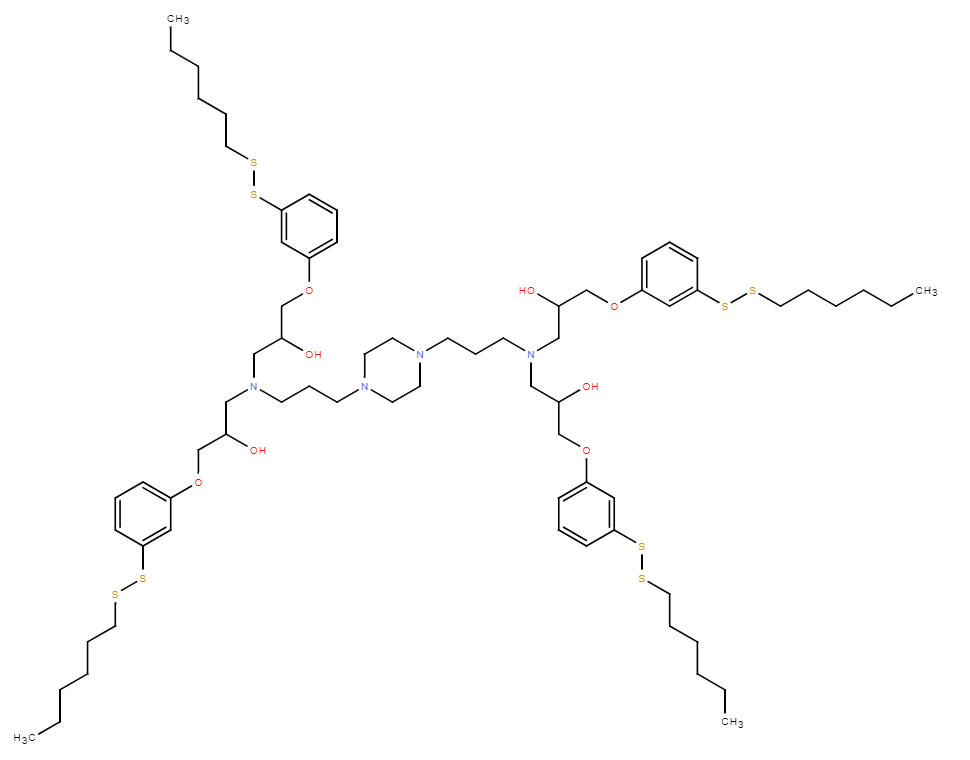
C6mPhE-383 is a top-performing ionizable lipid featuring an aromatic ring and a bioreducible disulfide bond. Formulated into lipid nanoparticles, it preferentially delivers mRNA to lymphoid tissues (lymph nodes/spleen) while minimizing off-target liver accumulation after intramuscular injection. In a SARS-CoV-2 vaccine study, it elicited strong antibody responses, promoted protective effector memory T cells, and exhibited enhanced safety by significantly reducing systemic inflammatory cytokines compared to the standard SM-102 LNP.
A1T2C3 (CP-LC-1067) is a highly potent ionizable lipid designed for lung-targeted mRNA delivery. When formulated into lipid nanoparticles (LNPs), it produces particles approximately 80 nm in size with excellent uniformity and a high mRNA encapsulation efficiency (>94%). Its most distinguished feature is its exceptional organ selectivity. Following intravenous administration in mice, A1T2C3-based LNPs demonstrated a remarkable accumulation of over 94% of the signal in the lungs, with minimal distribution to other major organs. This makes it a leading candidate for developing therapeutics specifically targeted to pulmonary tissues.
GA-16 is a novel ionizable lipid designed with an N-(2-Hydroxyethyl)piperazine-N'-(4-butanesulfonic acid) (HEPBS) core. Its key functional characteristic is enabling highly efficient, liver-tropic mRNA delivery through an ApoE-mediated yet Low-Density Lipoprotein Receptor (LDLR)-independent cellular uptake mechanism. When formulated in LNPs with the helper lipid DEPE, GA-16 achieves superior protein expression. More importantly, this uptake pathway bypasses the canonical LDLR dependency, making it a strategically valuable component for developing therapies targeting genetic liver diseases like familial hypercholesterolemia, where patients often have deficient LDLR function.
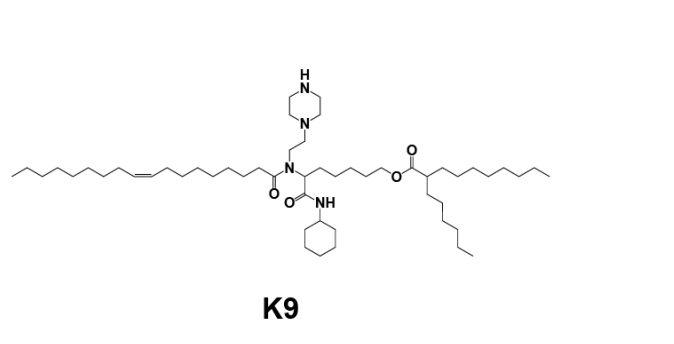
K9 is a novel ionizable lipid designed by the multi-objective AI model MOLEA. Its core function is to enable tissue-selective mRNA delivery. When formulated into Lipid Nanoparticles (LNPs), K9 can preferentially deliver mRNA efficiently to articular chondrocytes while significantly reducing delivery to hepatocytes. This facilitates targeted drug delivery for conditions like osteoarthritis and lowers the risk of off-target effects in the liver. In vitro experiments confirm that K9-LNPs promote endosomal escape and efficient expression of mRNA in chondrocytes. Its targeted delivery efficiency is further enhanced by optimizing the LNP formulation (e.g., lipid composition ratios) using a Design of Experiment (DoE) approach. In vivo studies show that after intra-articular injection, K9-LNPs exhibit high biodistribution and gene expression in the knee joint, with limited distribution in major organs like the liver. Therefore, K9 represents an advanced, rationally designed LNP component for achieving joint tissue-specific therapy, providing a key tool for developing targeted mRNA therapeutics.
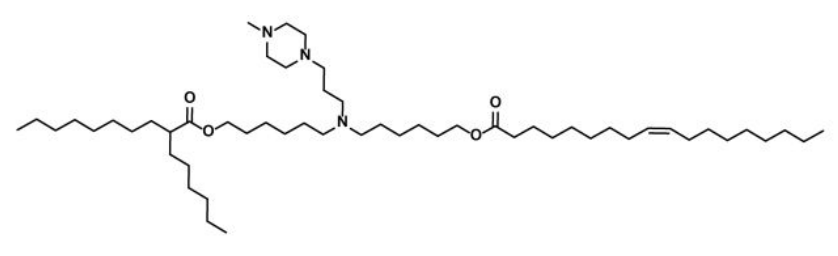
Lipid M3 is a novel ionizable lipid. Lipid M3's primary role is to enable the efficient co-encapsulation and delivery of CRISPR/Cas9 components—Cas9 mRNA and sgRNA targeting the VEGFA gene—into human retinal endothelial cells. M3 facilitates critical steps for successful gene editing, including stabilizing the nucleic acid cargo, promoting cellular uptake, and enabling effective endosomal escape to release the payload into the cytoplasm. This results in high gene-editing efficiency (indel frequency ~28.7%). A single intravitreal injection of the M3-F4 LNP carrying this CRISPR system demonstrated potent therapeutic effects in mouse models of diabetic retinopathy by significantly inhibiting pathological neovascularization and vascular leakage, while maintaining excellent biocompatibility.
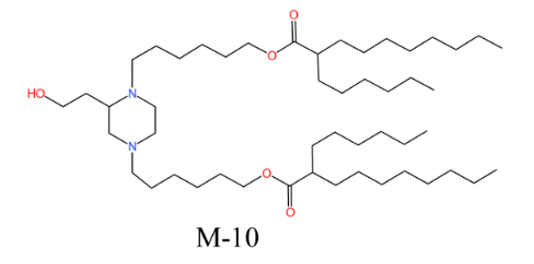
M10 is a piperazine-derived bis-tertiary amine ionizable lipid. With an optimal pKa of 6.56, it enables efficient liver-targeted CRISPR/Cas9 delivery, achieving durable PCSK9 silencing and LDL-C reduction after a single dose, alongside a favorable safety profile.