
Research lipid catalog
Ionizable Lipid Products
Explore 848 lipid and RNA delivery products. Search the full catalog or browse by research category.
Search covers product name, catalog number, synonyms, available CAS numbers and categories. Spaces, hyphens and common punctuation are ignored. Duplicate legacy records are consolidated under one canonical product result.
3666 products · Showing 3121–3140 · 20 per page
DC Chemicals lipid expertise
Built for ionizable-lipid discovery and RNA delivery research
DC Chemicals supports formulation and delivery research with a broad, searchable portfolio of cationic and ionizable lipids. The current directory brings together 848 unique research-use products, with product specifications, pricing, chemical structures and literature-linked formulation data added as each record is verified.
Our experience spans complex lipid synthesis, purification, analytical release and process development. For custom molecules or larger-scale requirements, our team can discuss route development, technical specifications and scale-up options for the intended research workflow.
Learn about cationic and ionizable lipids →Proprietary innovation · Co-development · GMP
From proprietary lipid design to GMP-grade custom synthesis
DC Chemicals has independently developed ionizable-lipid structures supported by company-owned intellectual property, and selected proprietary lipid programs have advanced to GMP-stage development.
We welcome joint development with customers—from molecular design and lipid synthesis through route and process development. We can also support custom synthesis of GMP-grade ionizable lipids to agreed technical specifications and quality requirements.
Discuss a co-development project →Proprietary ionizable-lipid structuresCollaborative molecular designCustom lipid synthesisProcess development and scale-upGMP-grade project support
Product quick links
Explore ionizable lipids
Browse specifications, pricing and literature-linked product information.
Cat. No.Product NameField of ApplicationChemical Structure
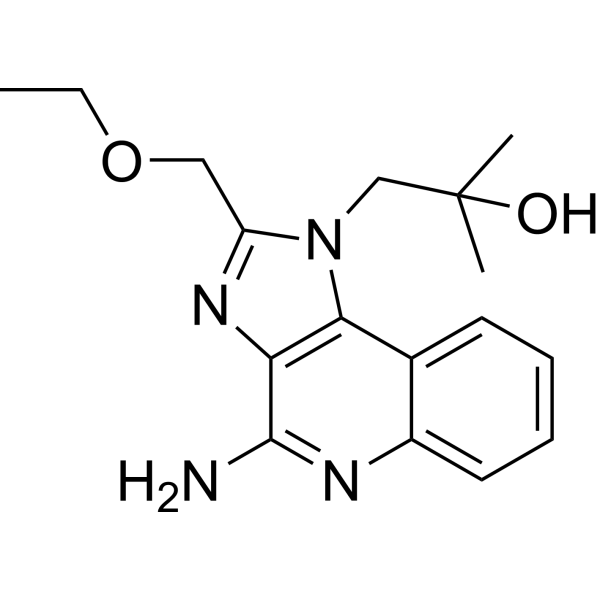
Resiquimod(R848)FeaturedFeatured
Resiquimod is a Toll-like receptor 7 and 8 (TLR7/TLR8) agonist that induces the upregulation of cytokines such as TNF-α, IL-6 and IFN-α.
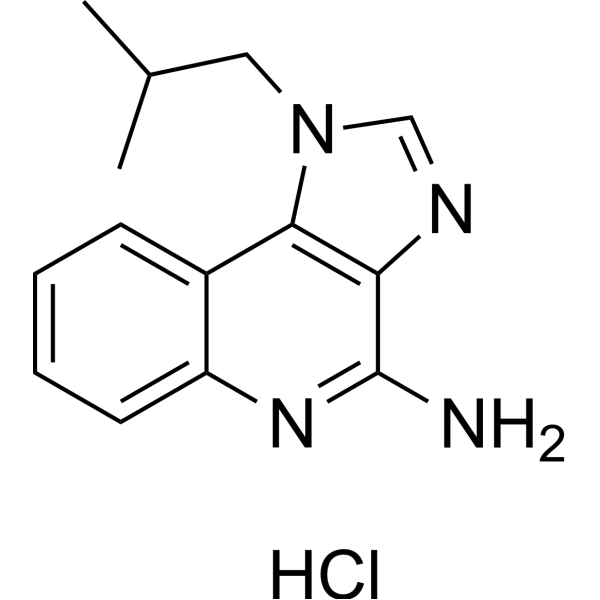
Imiquimod hydrochlorideFeaturedFeatured
Imiquimod hydrochloride (R 837 hydrochloride), an immune response modifier, is a selective toll like receptor 7 (TLR7) agonist. Imiquimod hydrochloride exhibits antiviral and antitumor effects in vivo. Imiquimod hydrochloride can be used for the research of external genital, perianal warts, cancer and COVID-19.
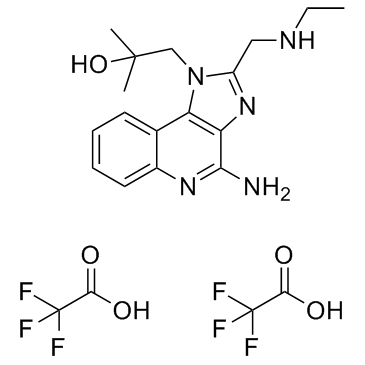
Gardiquimod trifluoroacetateFeaturedFeatured
Gardiquimod trifluoroacetate is a specific TLR7 agonist which can also inhibit HIV-1 reverse transcriptase.
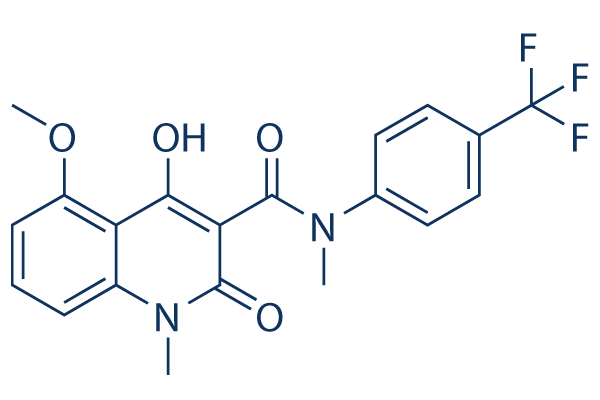
Tasquinimod(ABR-215050)FeaturedFeatured
Tasquinimod is an oral antiangiogenic agent in clinical trials for the treatment of castration-resistant prostate cancer. Tasquinimod binds to the regulatory Zn2+ binding domain of HDAC4 with Kd of 10-30 nM.
1V209(TLR7 agonist T7)FeaturedFeatured
1V209 (TLR7 agonist T7) is a Toll-like receptor 7 (TLR7) agonist and has anti-tumor effects. 1V209 can be conjugated with various polysaccharides to improve its water solubility, and enhance its efficacy, and maintain low toxicity12.
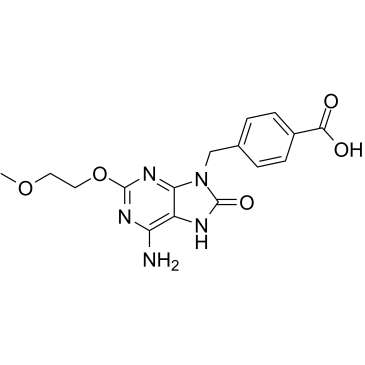
GS-9620(Vesatolimod)FeaturedFeatured
GS-9620 is a potent and selective orally active small molecule agonist of Toll-like receptor 7(TLR-7) in chimpanzees with chronic HBV infection.
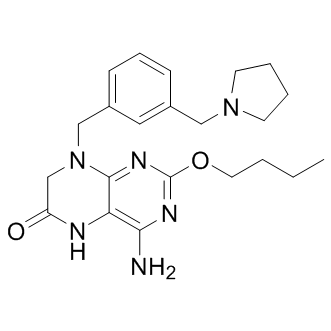
Motolimod (VTX-2337)FeaturedFeatured
Motolimod is a selective Toll-like receptor 8 (TLR8) agonist, with an EC50 of approximately 100 nM.
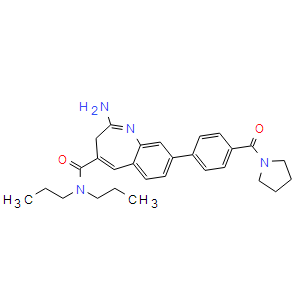
TLR7/8 agonist 3FeaturedFeatured
TLR7/8 agonist 3 is a potent TLR7 and TLR8 agonist, extracted from patent WO2016057618 (compound of formula (II))1.
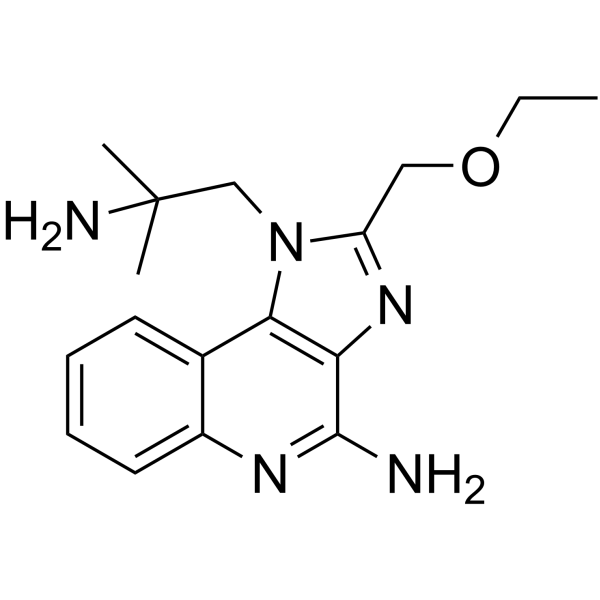
TLR7/8 agonist 1FeaturedFeatured
TLR7/8 agonist 1 is a toll-like receptor (TLR7)/TLR8 dual-agonistic imidazoquinoline.
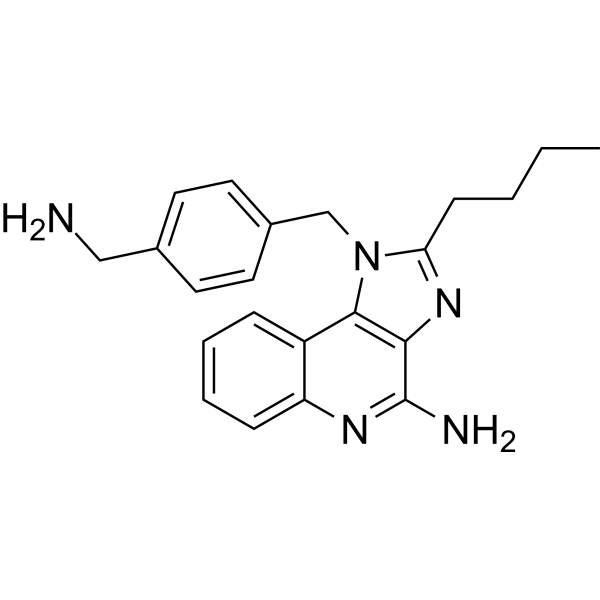
TelratolimodFeaturedFeatured
Telratolimod (MEDI 9197, 3M 052) is a novel, injectable, tissue-retained TLR7/8 agonist that forms a tissue depot with gradual, sustained release, allowing local TLR triggering activity without systemic cytokine release.
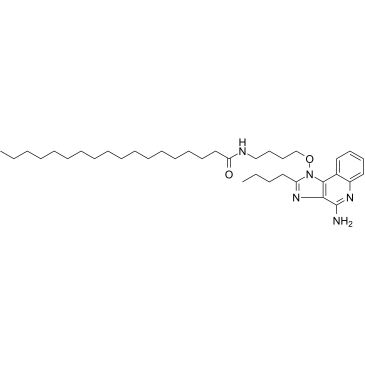
3M-011FeaturedFeatured
3M-011 is a potent TLR7/8 agonist and cytokine inducer; stimulates type I interferon (IFN) and other cytokines such as TNF-alpha, IL-12, and IFN-gamma from rat peripheral blood mononuclear cells; induces IL-12 and COX-2 expression in mDC from HIV+ and HIV- individuals, and inhibits H3N2 influenza viral replication in the nasal cavity; potentiates NK cytotoxicity, and shows antitumor effects in scid/B6 mice and scid/NOD mice.
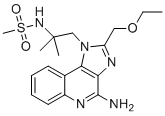
CU-115FeaturedFeatured
CU115 is a potent TLR8 antagonist (IC50=1.04 µM), and shows selective for TLR8 over TLR7 (IC50=>50 µM). CU 115 decreases TNF-α and IL-1β production activated by R-848 in THP-1 cells.
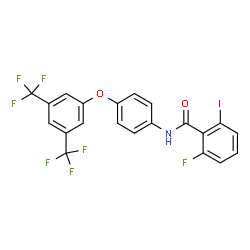
AZ617FeaturedFeatured
AZ617 is a potent TLR4 agonist.
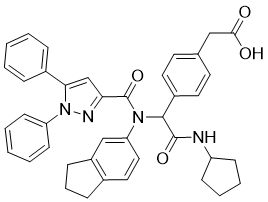
GardiquimodFeaturedFeatured
Gardiquimod, an imidazoquinoline analog, is a TLR7/8 agonist. Gardiquimod could inhibit HIV-1 infection of macrophages and activated peripheral blood mononuclear cells (PBMCs). Gardiquimod specifically activates TLR7 when used at concentrations below 10 μM12.
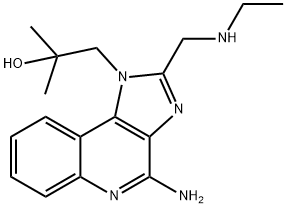
TLR4-IN-C34FeaturedFeatured
TLR4-IN-C34 is an orally active TLR4 inhibitor and reduces systemic inflammation in models of endotoxemia and necrotizing enterocolitis[1][2].
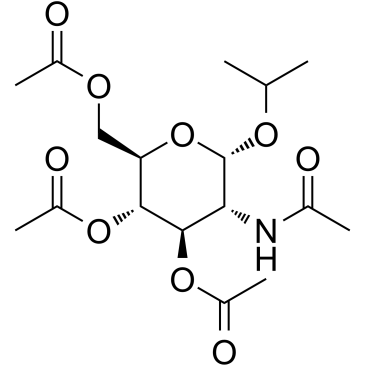
TJ-M2010-5FeaturedFeatured
TJ-M2010-5 is a MyD88 inhibitor that binds to the TIR domain of MyD88 to interfere with its homodimerization, and the TLR/MyD88 signal pathway. TJ-M2010-5 can be used for the research of myocardial ischemia/reperfusion injury (MIRI).
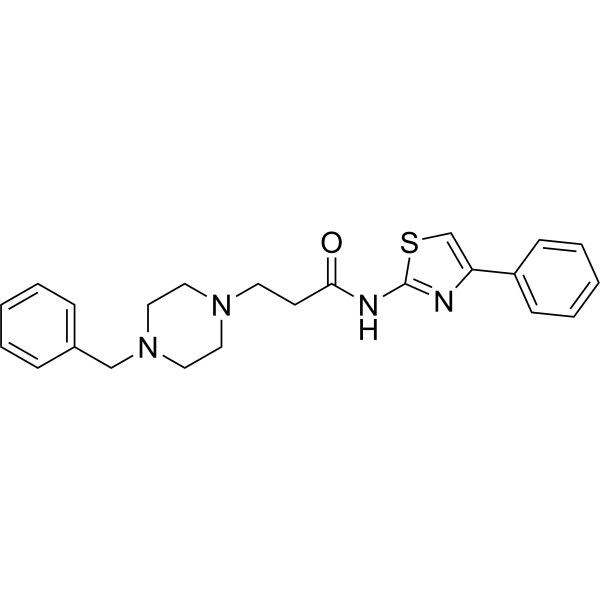
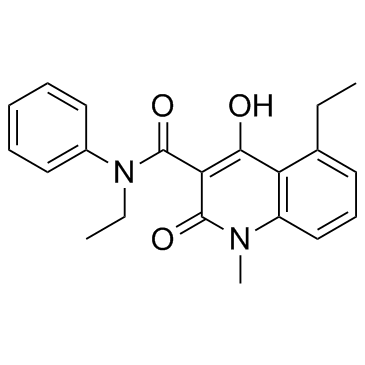
PaquinimodFeaturedFeatured
Paquinimod is a S100A9 inhibitor, which prevents S100A9 binding to TLR-4.
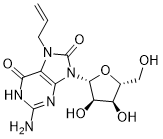
LoxoribineFeaturedFeatured
Loxoribine (7-Allyl-8-oxoguanosine) is a guanosine analog with anti-viral and anti-tumor activities. Loxoribine is an orally bioavailable and selective Toll-like receptor (TLR) 7 agonist123.
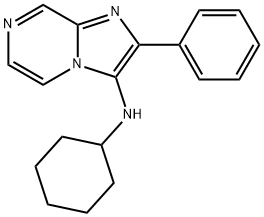
WAY-327512FeaturedFeatured
activate TLR8-dependent NF-kB signaling
CU-CPT17eFeaturedFeatured
CU-CPT17e shows strong NF-κB activation in TLR3, TLR8 and TLR9 HEK293 cells with EC50 values of 4.80±0.73, 13.5±0.58 and 5.66±0.17 μM, respectively. CU-CPT17e significantly improves the activity with 13.9±0.9 fold of NF-κB activation and an EC50 value of 4.8±0.7 μM. CU-CPT17e inhibits the proliferation of HeLa cancer cells by triggering apoptosis and arresting the cell cycle at the S phase. The induction of apoptosis by CU-CPT17e in HeLa cells is investigated. HeLa cells are cultured with increasing concentrations of CU-CPT17e or poly I:C or blank control (DMSO) for 24 h. Treatment with CU-CPT17e for 24 h at different concentrations (10 to 40 μM) results in an elevation of apoptotic cell population ranging from 10% to 17%, which is more effective than poly I:C at 5 μg/mL. These results suggest that the antiproliferative activity of CU-CPT17e against HeLa cells might result from its ability to directly induce apoptosis[1].

No products match this search.
Page 157 of 184 · Browse all 3666 products