
Research lipid catalog
Ionizable Lipid Products
Explore 848 lipid and RNA delivery products. Search the full catalog or browse by research category.
Search covers product name, catalog number, synonyms, available CAS numbers and categories. Spaces, hyphens and common punctuation are ignored. Duplicate legacy records are consolidated under one canonical product result.
3666 products · Showing 1841–1860 · 20 per page
DC Chemicals lipid expertise
Built for ionizable-lipid discovery and RNA delivery research
DC Chemicals supports formulation and delivery research with a broad, searchable portfolio of cationic and ionizable lipids. The current directory brings together 848 unique research-use products, with product specifications, pricing, chemical structures and literature-linked formulation data added as each record is verified.
Our experience spans complex lipid synthesis, purification, analytical release and process development. For custom molecules or larger-scale requirements, our team can discuss route development, technical specifications and scale-up options for the intended research workflow.
Learn about cationic and ionizable lipids →Proprietary innovation · Co-development · GMP
From proprietary lipid design to GMP-grade custom synthesis
DC Chemicals has independently developed ionizable-lipid structures supported by company-owned intellectual property, and selected proprietary lipid programs have advanced to GMP-stage development.
We welcome joint development with customers—from molecular design and lipid synthesis through route and process development. We can also support custom synthesis of GMP-grade ionizable lipids to agreed technical specifications and quality requirements.
Discuss a co-development project →Proprietary ionizable-lipid structuresCollaborative molecular designCustom lipid synthesisProcess development and scale-upGMP-grade project support
Product quick links
Explore ionizable lipids
Browse specifications, pricing and literature-linked product information.
Cat. No.Product NameField of ApplicationChemical Structure
Pramipexole 2HCL monohydrateFeatured
1 g USD 300 · 10 mM * 1 mL in DMSO USD 150Pramipexole dihydrochloride hydrate is a selective dopamine D2-type receptor agonist, with Kis of 2.2 nM, 3.9 nM, 0.5 nM and 1.3 nM for D2-type receptor, D2, D3 and D4 receptors, respectively. Pramipexole dihydrochloride hydrate can be used for the research of Parkinson's disease (PD) and restless legs syndrome (RLS). Pramipexole dihydrochloride hydrate can cross the blood-brain barrier (BBB)[1][2][3].
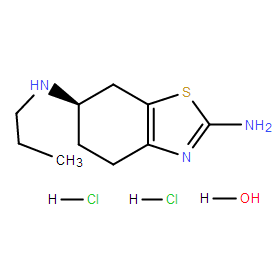
Alkyne tyramideFeatured
250 mg USD 800 · 100 mg USD 500 · 1 g USD 1,300 · 10 mM * 1 mL in DMSO USD 220Alkyne tyramide is a clickable ascorbate peroxidase 2 (APEX2) probe. Alkyne tyramide substantially improves APEX-labeling efficiency in intact yeast cells, as it is more cell wall-permeant than APEX2 substrate biotin-phenol (BP). Alkyne tyramide also faci
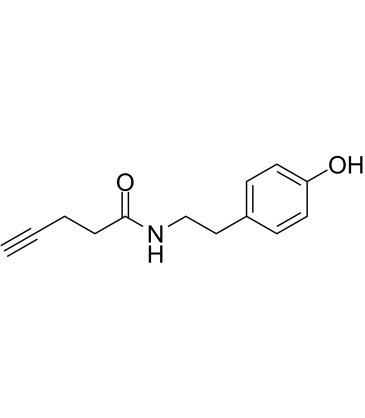
BLU-285 (Avapritinib)Featured
100 mg USD 350 · 250 mg USD 600 · 1 g USD 1,250Avapritinib is a potent and selective exon 17 mutant KIT kinase inhibitor with IC50 of 0.27 nM for KIT D816V.
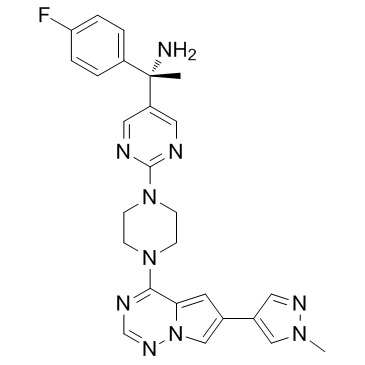
Filanesib(ARRY-520)Featured
100 mg USD 1,000 · 250 mg USD 1,900 · 1 g USD 3,800 · 10 mM * 1 mL in DMSO USD 220Filanesib (ARRY-520) is a synthetic kinesin spindle protein (KSP) inhibitor with IC50 of 6 nM.
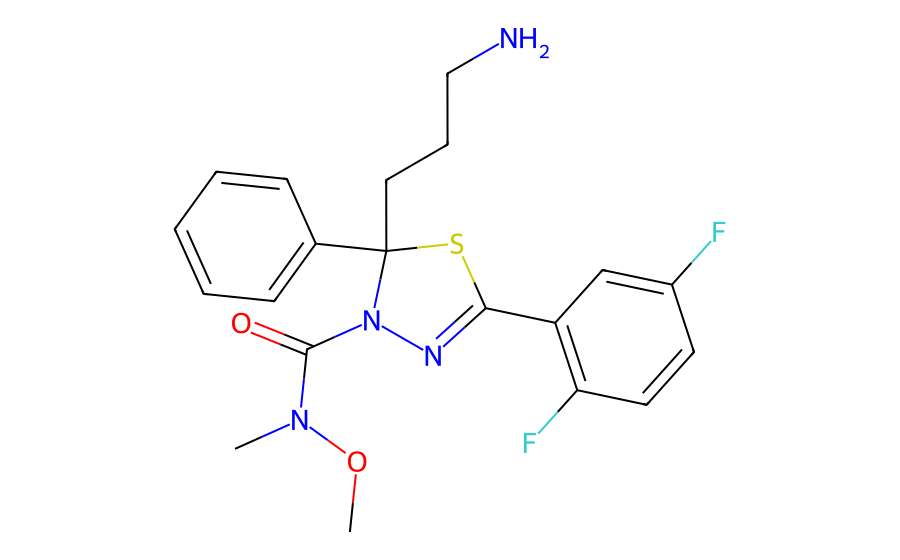
ElexacaftorFeatured
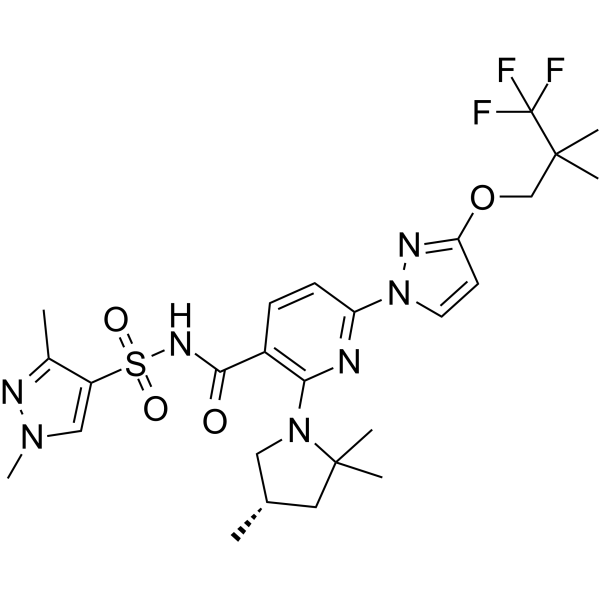
10 mg USD 600 · 250mg USD 1,100 · 1g USD 2,200Elexacaftor is a modulator of cystic fibrosis transmembrane conductance regulator (CFTR). CFTR corrector 1 (compound 1) facilitates the processing and trafficking of CFTR to increase the amount of CFTR at the cell surface[1].
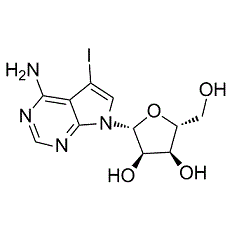
5-IODOTUBERCIDINFeatured
100 mg USD 700 · 250 mg USD 900 · 1 g USD 1,950 · 10 mM * 1 mL in DMSO USD 2205-Iodotubercidin (Itu) has been shown to inhibit mitogen-activated protein kinase (ERK2) (Ki = 525 nM), adenosine kinase (ADK) (Ki = 30 nM), casein kinases 1 & 2 (CSNK1A1 & CSNK2A1), protein kinase A (PKA) and insulin receptor kinase (IC50 ranging from 0.
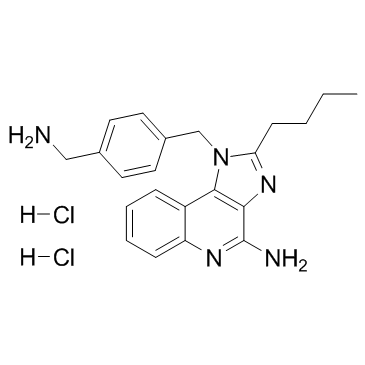
TLR7/8 agonist 1 dihydrochlorideFeatured
100 mg USD 600 · 250 mg USD 1,100 · 1 g USD 1,950 · 10 mM * 1 mL in DMSO USD 220TLR7/8 agonist 1 dihydrochloride is a toll-like receptor TLR7/TLR8 dual-agonistic imidazoquinoline.
MDI-2268Featured
5mg USD 300MDI-2268 (MDI2268) is a small-molecule, in vivo-active inhibitor of plasminogen activator inhibitor type-1 (PAI-1), demonstrates excellent pharmacokinetics, potent activity against vitronectin-bound PAI-1 in vivo, and efficacy in murine model of venous thrombosis.
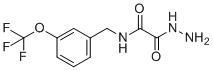
IM156Featured
100 mg USD 500 · 250 mg USD 850 · 1 g USD 1,700 · 10 mM * 1 mL in DMSO USD 220IM156, a metformin derivative, is a potent activator of AMPK that increases AMPK phosphorylation. IM156 blocks oxidative phosphorylation (OXPHOS) through the inhibition of complex I and increases apoptosis. IM156 ameliorates various types of fibrosis and inhibits tumors.
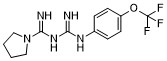
CortagineFeatured
5mg USD 450Cortagine is a specific corticotropin-releasing factor receptor subtype 1 (CRF1) agonist with an IC50 of 2.6 nM for rCRF1. Cortagine is an anxiolytic and antidepressive drug in the mouse model.

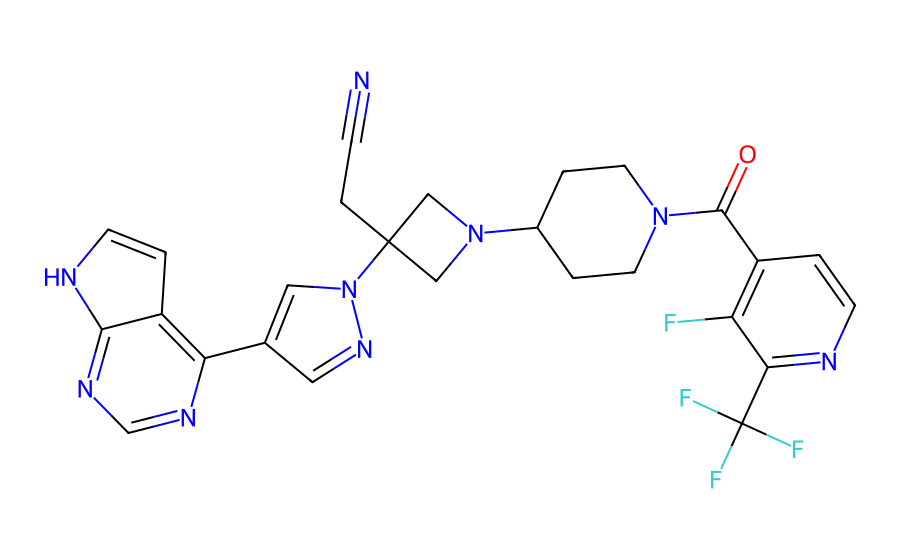
Itacitinib(INCB039110)Featured
100 mg USD 800 · 250 mg USD 1,500 · 1 g USD 2,900 · 10 mM * 1 mL in DMSO USD 220Itacitinib is a potent and selective inhibitor of JAK1, with >20-fold selectivity for JAK1 over JAK2 and >100-fold over JAK3 and TYK2; Itacitinib is used in the research of myelofibrosis.
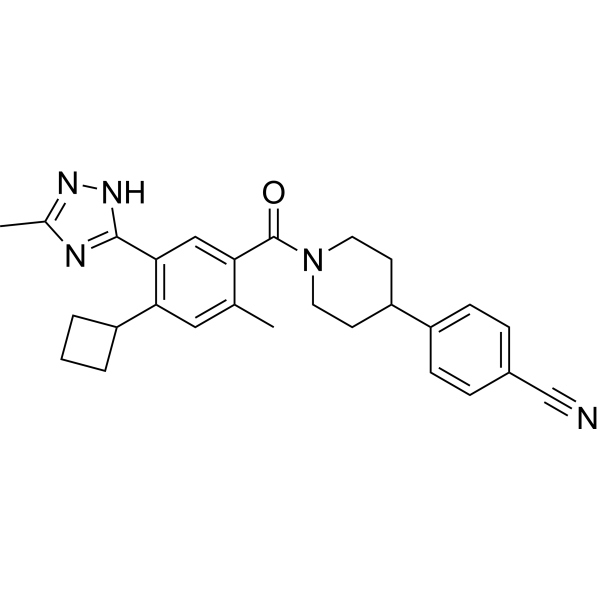
Denifanstat (TVB-2640)Featured
100 mg USD 950 · 250 mg USD 1,700 · 1 g USD 3,200 · 10 mM * 1 mL in DMSO USD 220TVB-2640(FASN-IN-2) is a Fatty Acid Synthase (FASN) inhibitor extracted from patent WO2012122391A1, compound 152, has an IC50 of 0.052 μM and an EC50 of 0.072 μM[1].
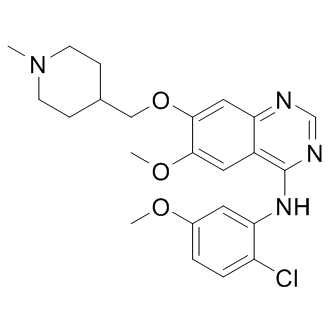
AZM475271Featured
100 mg USD 600 · 250 mg USD 1,200 · 1 g USD 2,400 · 10 mM * 1 mL in DMSO USD 220AZM475271 is a potent and selective Src kinase inhibitor with IC50 of 5 nM; no inhibitory activity on Flt3, KDR, Tie-2.
Semaglutide (sodium salt)Featured
100 mg USD 650 · 250mg USD 1,100 · 1g USD 2,400Semaglutide, a long-acting GLP-1 analogue, is a glucagon-like peptide-1 (GLP-1) receptor agonist that can be used in the treatment of type 2 diabetes.

100 mg USD 200 · 250 mg USD 400 · 1 g USD 800 · 10 mM * 1 mL in DMSO USD 150
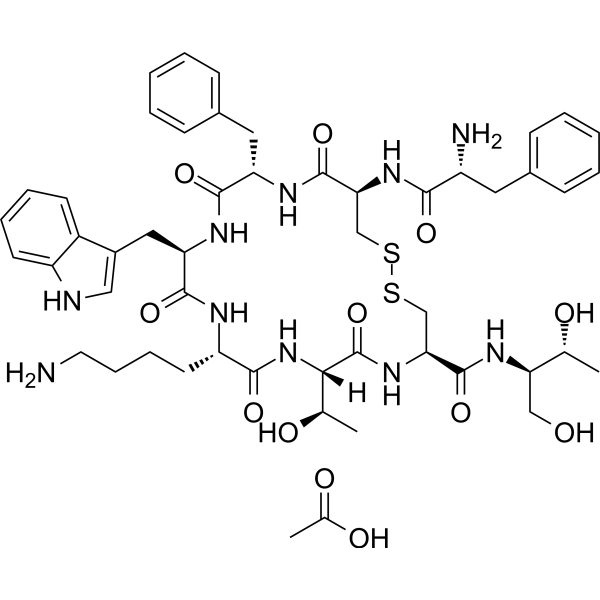
Octreotide acetate, a long-acting synthetic analog of native somatostatin, inhibits growth hormone, glucagon, and insulin more potently.
25mg USD 700 · 10mg USD 450
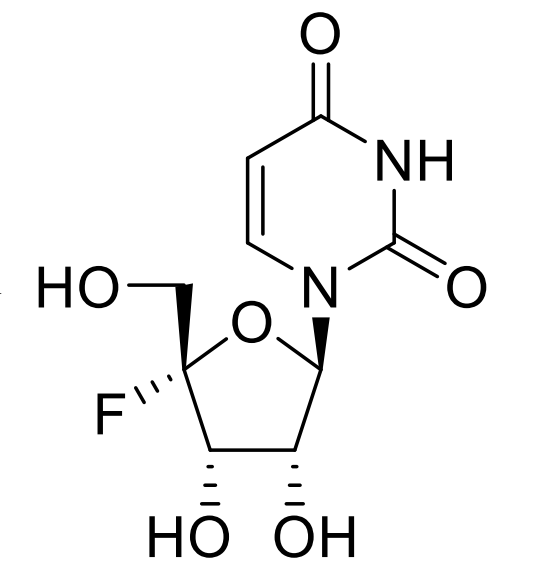
4'-fluorouridine (4'-FlU, EIDD-2749) is a ribonucleoside analog that inhibits respiratory syncytial virus (RSV), related RNA viruses, and SARS-CoV-2 with high selectivity index (EC50/CC50 of ≥1877) in cells and human airway epithelia organoids. 4'-FlU induces a delayed stalling of RSV and SARS-CoV-2 RdRP (RNA-dependent RNA polymerase).
ZINC02092166Featured
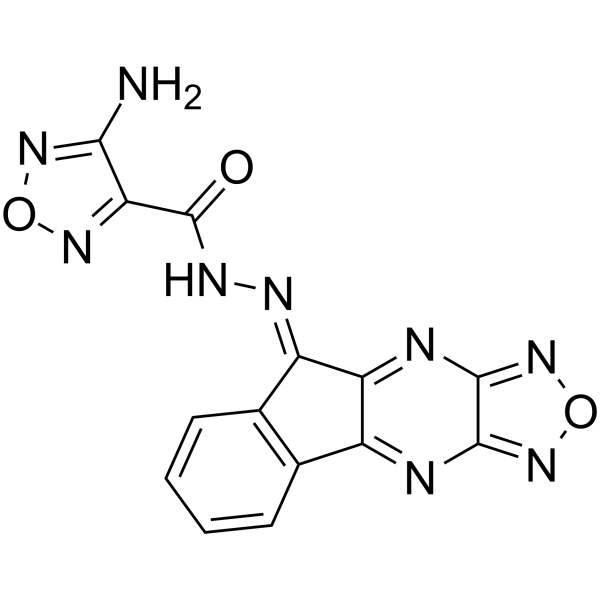
5 mg USD 550ZINC02092166 is a novel potent, and selective small-molecule inhibitor for the β-catenin/Tcf4 protein-protein interaction with Ki of 1.7 and 7.0 uM in AlphaScreen and FP assay (wild-type β-catenin), respectively; remain affinity for muant catenin V511S, V511S/I569S and R469A with Ki of 20-50 uM; exhibits dual selectivity for β-catenin/Tcf over β-catenin/cadherin and β-catenin/APC PPIs.
TecovirimatFeatured
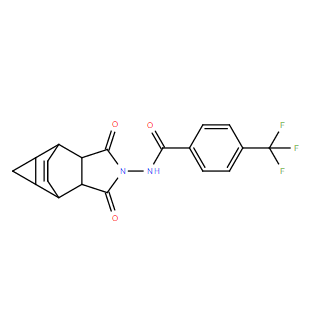
100 mg USD 600 · 250 mg USD 1,100 · 1 g USD 2,200 · 10 mM * 1 mL in DMSO USD 220Tecovirimat(ST-246) is an orally bioavailable antipoxvirus compound; potent and selective active against multiple orthopoxviruses with EC50 about 10 nM.
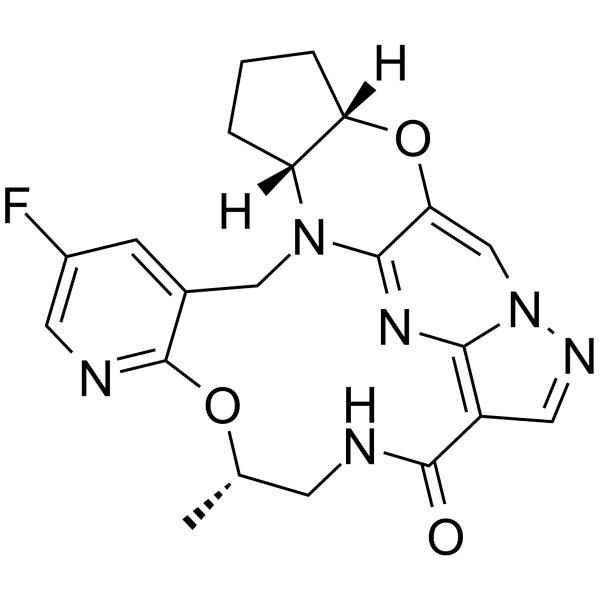
EnbezotinibFeatured
10 mg USD 650 · 100 mg USD 1,950Enbezotinib, an inhibitor of RET, can inhibit the RET autophosphorylation. Enbezotinib can be used for the research of cancer[1].
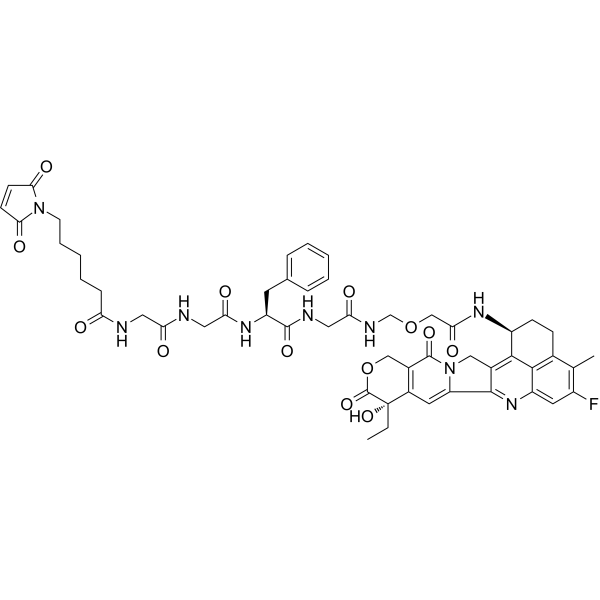
DeruxtecanFeatured
100mg USD 600 · 250mg USD 1,100 · 1g USD 2,200Deruxtecan, a topoisomerase I inhibitor, is an exatecan derivative (DX-8951 derivative) with a cleavable pepetide linker and a maleimide group. The maleimide group in Deruxtecan can react with antibody to form antibody-drug conguates (ADC) such as Trastuzumab deruxtecan (DS-8201a), which is a HER2-targeting antibody–drug conjugate.
No products match this search.
Page 93 of 184 · Browse all 3666 products