
Research lipid catalog
Ionizable Lipid Products
Explore 848 lipid and RNA delivery products. Search the full catalog or browse by research category.
Search covers product name, catalog number, synonyms, available CAS numbers and categories. Spaces, hyphens and common punctuation are ignored. Duplicate legacy records are consolidated under one canonical product result.
3666 products · Showing 1881–1900 · 20 per page
DC Chemicals lipid expertise
Built for ionizable-lipid discovery and RNA delivery research
DC Chemicals supports formulation and delivery research with a broad, searchable portfolio of cationic and ionizable lipids. The current directory brings together 848 unique research-use products, with product specifications, pricing, chemical structures and literature-linked formulation data added as each record is verified.
Our experience spans complex lipid synthesis, purification, analytical release and process development. For custom molecules or larger-scale requirements, our team can discuss route development, technical specifications and scale-up options for the intended research workflow.
Learn about cationic and ionizable lipids →Proprietary innovation · Co-development · GMP
From proprietary lipid design to GMP-grade custom synthesis
DC Chemicals has independently developed ionizable-lipid structures supported by company-owned intellectual property, and selected proprietary lipid programs have advanced to GMP-stage development.
We welcome joint development with customers—from molecular design and lipid synthesis through route and process development. We can also support custom synthesis of GMP-grade ionizable lipids to agreed technical specifications and quality requirements.
Discuss a co-development project →Proprietary ionizable-lipid structuresCollaborative molecular designCustom lipid synthesisProcess development and scale-upGMP-grade project support
Product quick links
Explore ionizable lipids
Browse specifications, pricing and literature-linked product information.
Cat. No.Product NameField of ApplicationChemical Structure
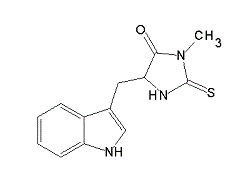
Necrostatin-1Featured
100 mg USD 150 · 250 mg USD 300 · 1 g USD 1,000 · 10 mM * 1 mL in DMSO USD 150Necrostatin-1 is a potent, selective and cell-permeable necroptosis inhibitor with an EC50 of 490 nM in Jurkat cells. It acts by inhibiting the death domain kinase RIP (RIP1) in the necroptosis pathway.
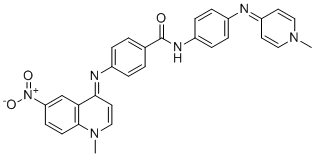
NSC 260594Featured
5mg USD 500NSC260594 (NSC 260594) is a specific inhibitor of HIV-1 RNA packaging, which involves preventing the interaction of Gag with SL3 by stabilizing this small RNA stem-loop which then leads to stabilization of the global packaging signal region (psi or ψ); specifically blocks HIV-1 RNA encapsidation, binds to HIV-1 gRNA and exhibits potent antiviral activity; NSC260594 also is a small molecule inhibitor of the Escherichia coli condensin MukBEF, affects MukB directly.
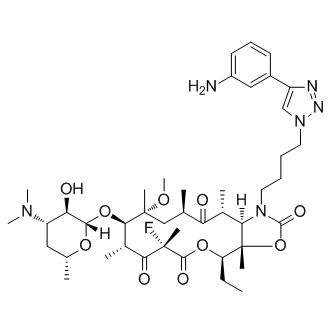
SolithromycinFeatured
100 mg USD 400 · 250 mg USD 800 · 1 g USD 1,600 · 10 mM * 1 mL in DMSO USD 150Solithromycin is a novel fluoroketolide with improved antimicrobial effectiveness.Solithromycin binds to the large 50S subunit of the ribosome and inhibits protein biosynthesis. The mean 50% inhibitory concentrations (IC50s) for Solithromycin inhibition of cell viability, protein synthesis, and growth rate were 7.5, 40, and 125 ng/ml for Streptococcus pneumoniae,Staphylococcus aureus, and Haemophilus influenzae, respectively.
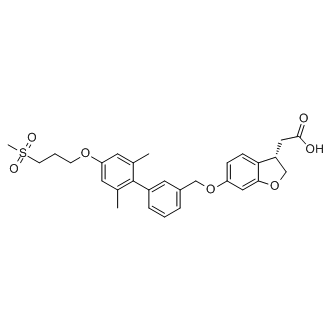
TAK-875(Fasiglifam)Featured
100 mg USD 600 · 250 mg USD 1,200 · 1 g USD 2,300 · 10 mM * 1 mL in DMSO USD 220Fasiglifam (TAK-875) is a potent, selective and orally bioavailable GPR40 agonist with EC50 of 72 nM.
SCH-772984Featured
100 mg USD 500 · 250 mg USD 900 · 1 g USD 1,800 · 10 mM * 1 mL in DMSO USD 220SCH772984 potently inhibits ERK1 and ERK2 activity with IC50s of 4 and 1 nM, respectively.
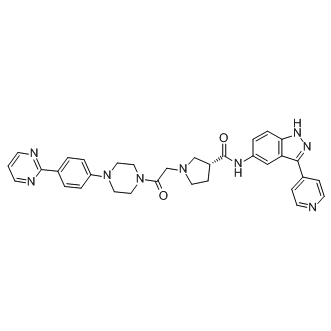
GNE-9822Featured
100 mg USD 700 · 250 mg USD 1,200 · 1 g USD 2,400GNE-9822 is a potent, orally active and selective ITK inhibitor with a Ki value of 0.7 nM. GNE-9822 has good ADME properties. GNE-9822 can be used in research of asthma.
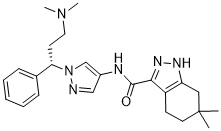
ML349Featured
100 mg USD 550 · 250 mg USD 950 · 1 g USD 1,900 · 10 mM * 1 mL in DMSO USD 220ML349 is a potent and specific acyl protein thioesterase 2 (APT-2) inhibitor with a Ki of 120 nM. ML349 is also an inhibitor of LYPLA2 with an IC50 of 144 nM.
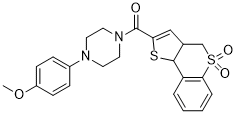
PD-123319 free baseFeatured
100mg USD 580 · 250mg USD 980 · 1g USD 1,880 · 10 mM * 1 mL in DMSO USD 220PD 123319 (ditrifluoroacetate) is a potent, selective AT2 angiotensin II receptor antagonist with IC50 of 34 nM.
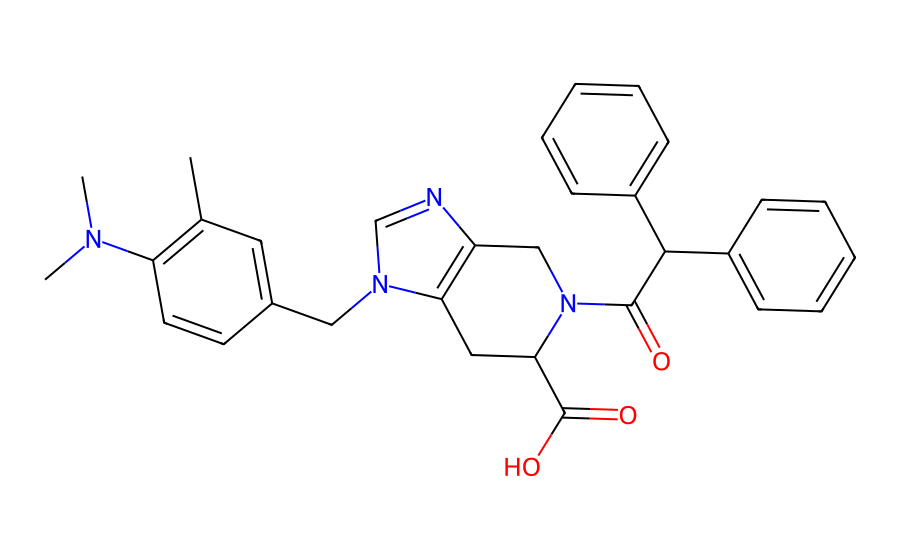
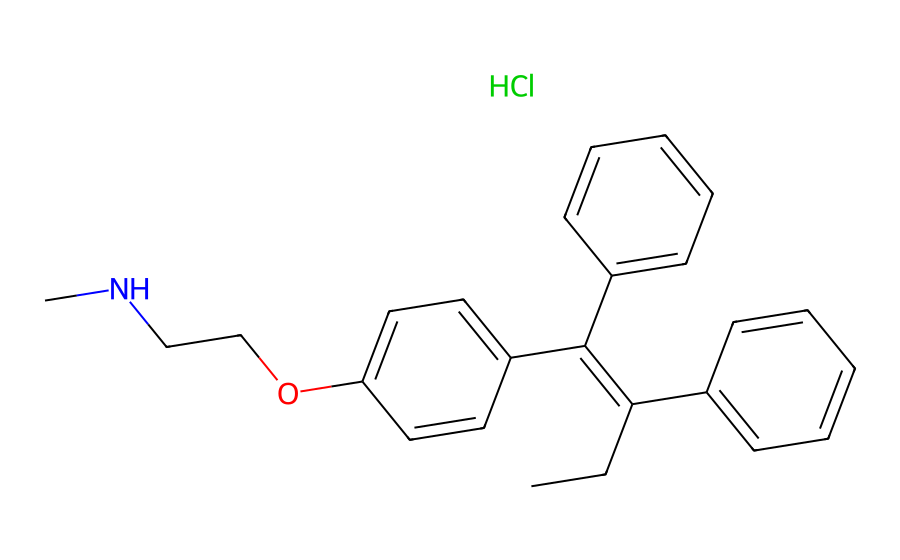
100mg USD 750 · 250mg USD 1,350 · 1g USD 2,700 · 10 mM * 1 mL in DMSO USD 220
N-Desmethyltamoxifen hydrochloride is the major metabolite of tamoxifen in humans. N-Desmethyltamoxifen, a poor antiestrogen, is a ten-fold more potent protein kinase C (PKC) inhibitor than Tamoxifen. N-Desmethyltamoxifen hydrochloride is also a potent regulator of ceramide metabolism in human AML cells, limiting ceramide glycosylation, hydrolysis, and sphingosine phosphorylation[1][2][3].
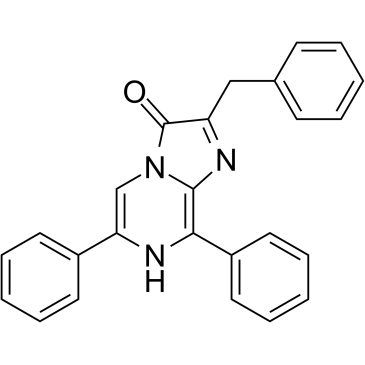
Diphenylterazine (DTZ)Featured
100mg USD 700 · 250mg USD 1,200 · 1g USD 2,400 · 10 mM * 1 mL in DMSO USD 220Diphenylterazine is a bioluminescence agent.
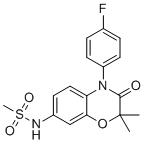
ApararenoneFeatured
100 mg USD 650 · 250 mg USD 1,100 · 1 g USD 2,200 · 10 mM * 1 mL in DMSO USD 220Apararenone (MT-3995) is a novel non-steroidal mineralocorticoid receptor antagonists under development for the treatment of diabetic nephropathies and non-alcoholic steatohepatitis.
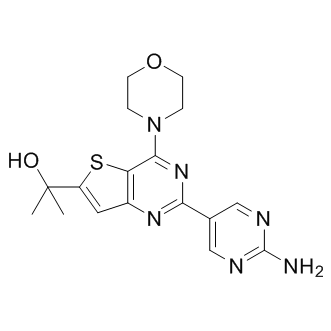
GNE-493Featured
100 mg USD 700 · 250 mg USD 1,375 · 1 g USD 2,500 · 10 mM * 1 mL in DMSO USD 220GNE-493 is a potent, selective, and orally available dual pan-PI3-kinase/mTOR inhibitor with IC50s of 3.4 nM, 12 nM, 16 nM, 16 nM and 32 nM for PI3Kα, PI3Kβ, PI3Kδ, PI3Kγ and mTOR.
BenitrobenrazideFeatured
5mg USD 450Benitrobenrazide is a novel selective hexokinase 2 (HK2) inhibitor, blocking cancer cells growth by targeting glycolysis.
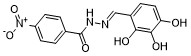
Bim-IN-1Featured
5mg USD 650Bim-IN-1 is a potent Bim expression inhibitor. Bim-IN-1 reduces Bim expression levels and has little inhibitory effect upon protein kinase A activity and minimal toxicity.
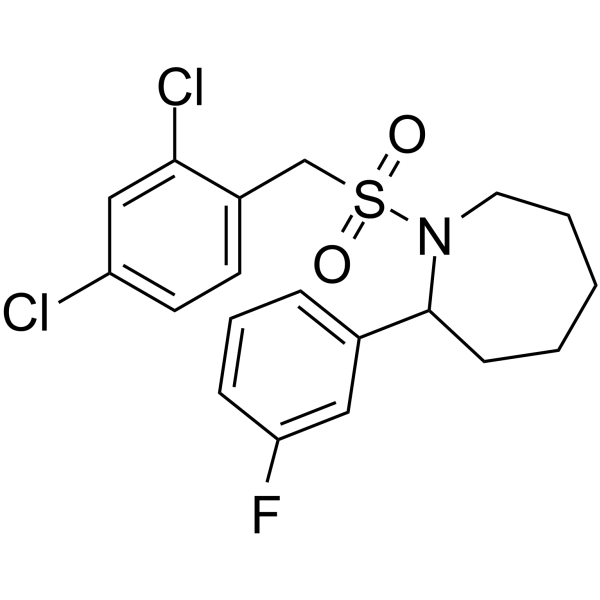
ML382Featured
100 mg USD 500 · 250 mg USD 850 · 1 g USD 1,700 · 10 mM * 1 mL in DMSO USD 220ML382 is a potent, selective, positive allosteric modulator of Mas-related G protein-coupled receptor X1 (MrgprX1) with EC50 of 190 nM in cell based Ca2+ imaging assay; displays >100-fold selectivity versus MrgX2; enhances the ability of BAM8-22 to inhibit high-voltage-activated Ca2+ channels and attenuates spinal nociceptive transmission; effectively attenuated evoked, persistent, and spontaneous pain without causing obvious side effects; attenuates both evoked pain hypersensitivity and spontaneous pain in MrgprX1 mice; an invaluable research tool to study the role of MrgprX1 in chronic pain.
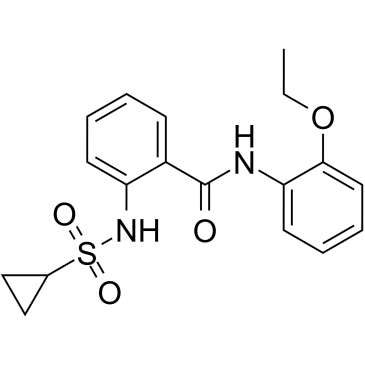
BUN79398Featured
100mg USD 600 · 250mg USD 1,100 · 1g USD 2,200 · 10 mM * 1 mL in DMSO USD 220BUN79398(MRGPRX1 agonist 1) is a highly potent agonist of MRGPRX1 (Mas-related G-protein-coupled receptor X1), with an EC50 of 50 nM, and is inactive on MRGPRC11. Analgesic effect[1].
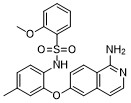
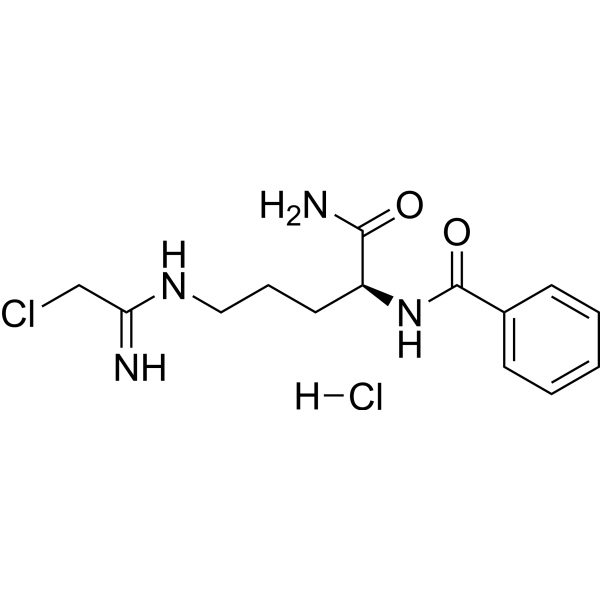
Cl-amidine hydrochlorideFeatured
100 mg USD 600 · 250 mg USD 1,000 · 1 g USD 2,000In Vitro Cl-amidine is a peptidylarginine deminase (PAD) inhibitor, with an IC50 of 5.9±0.3 μM for PAD4 and Cl-amidine is a bioavailable haloacetamidine-based compound that inhibits all the active PAD isozymes with near equal potency (kinact/KI=13,000 M-1.min-1 for PAD4). Cl-amidine induces apoptosis (identified as annexin V-positive/propidium iodide-negative cells) in such cells in a dose-dependent manner, indicating that Cl-amidine induces apoptosis of WBCs in vitro. Interestingly, the colon cancer cell line (HT29) is relatively resistant to apoptosis caused by Cl-amidine. In Vivo Significantly higher levels of colon inflammation in the 2% DSS than the 2% DSS+Cl-amidine mice are showed. The mean histology scores are 24.2±1.7 (SE) and 13.9±1.6, respectively. Most of the damage in the DSS-only group is in the distal colon, and this damage is suppressed with DSS+Cl-amidine. For the DSS-treated group, the mean colon length is 7.2±0.2 cm. In contrast, the average colon length of the DSS+Cl-amidine group is 8.4±0.2 cm, which is comparable to the mean colon lengths obtained for the wateralone and water+Cl-amidine groups (8.4±0.3 and 7.9±0.2 cm, respectively). The total distance and average speed of mice over a 96-h period are also measured. The results of these analyses demonstrate that the total distance is 5,072±381 and 3,190±401 m for the water-treated and DSS+Cl-amidine mice, but only 800±163 m for the DSS-only group. Similarly, the average speed on the wheel over the 4-day period is 6.2±0.63 and 5.3±0.58 m/min for the water-treated and DSS+Cl-amidine groups, but only 1.8±0.51 m/min for the DSS group.
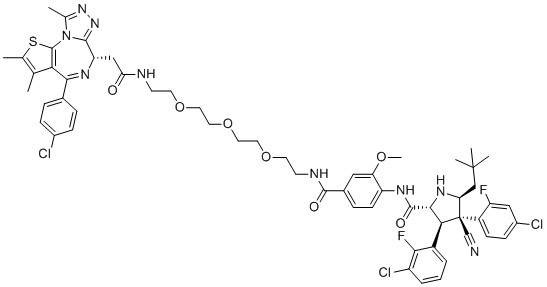
A1874Featured
100 mg USD 950 · 250 mg USD 1,600 · 1 g USD 3,200 · 10 mM * 1 mL in DMSO USD 220A1874 is a nutlin-based and BRD4-degrading PROTAC with a DC50 of 32 nM (induce BRD4 degradation in cells). Effective in inhibiting many cancer cell lines proliferation[1].
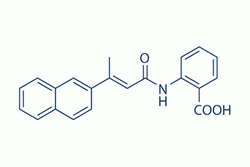
BIBR-1532Featured
100 mg USD 300 · 250 mg USD 600 · 1 g USD 1,200 · 10 mM * 1 mL in DMSO USD 150BIBR 1532 is a potent, selective and non-competitive telomerase inhibitor with IC50 of 100 nM in a cell-free assay.
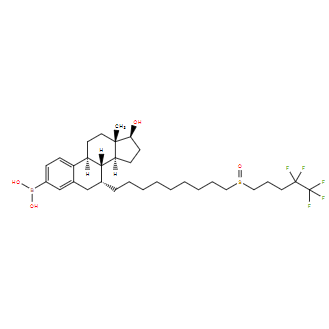
5mg USD 550
ZB716 is a steroidal, orally bioavailable SERD (selective estrogen receptor downregulator) that binds to ER with high affinity and exerts its antiestrogenic effect on ER-expressing breast cancer cells.
No products match this search.
Page 95 of 184 · Browse all 3666 products