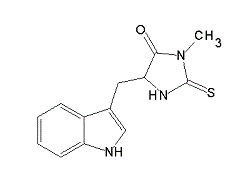
Necrostatin-1 chemical structure
Chemical structureResearch use only
CAT. NO. DC2084Featured

Necrostatin-1

Pack Sizes & Prices

TotalUS$150
We match the best price and quality on market.
Product overview

Description & Application

Necrostatin-1 is a potent, selective and cell-permeable necroptosis inhibitor with an EC50 of 490 nM in Jurkat cells. It acts by inhibiting the death domain kinase RIP (RIP1) in the necroptosis pathway.

ParameterValue
Chemical Name4-Imidazolidinone, 5-(1H-indol-3-ylmethyl)-3-methyl-2-thioxo-
CAS No.4311-88-0
SynonymsNecrostatin1, Necrostatin 1
FormulaC13H13N3OS
M.Wt259.33
SMILESC(=S)1NC(CC2C3=C(NC=2)C=CC=C3)C(=O)N1C
Purity>98%
Storage2 years -20°C Powder, 2 weeks 4°C in DMSO, 6 months -80°C in DMSO

Biological Activity

Necrostatin-1 is a potent, selective and cell-permeable necroptosis inhibitor with an EC50 of 490 nM in Jurkat cells. It acts by inhibiting the death domain kinase RIP (RIP1) in the necroptosis pathway.

In Vitro

Necrostatin-1 (Nec-1) is a specific and potent small-molecule inhibitor of cell death caused by death-domain receptor (DR) stimulation in the presence of caspase inhibition in multiple cell types. Necrostatin-1 efficiently inhibits the TNFα-induced necrotic death of L929 cells, which does not require exogenous caspase inhibitors[1]. Necrostatin-1 (Nec-1) prevents radiocontrast media (RCM)-induced dilation of peritubular capillaries, suggesting a novel role unrelated to cell death for the RIP1 kinase domain in the regulation of microvascular hemodynamics and pathophysiology of contrast-induced AKI (CIAKI)[2]. The decreased viability of C6 glioma cells caused by 3.0 µM and 6.0 µM shikonin is improved by pretreatment with Necrostatin-1 (Nec-1) to 92.3% and 82.9% at 1.5 h and 84.4% and 78.6% at 3.0 h, respectively. Similarly, the viability of U87 glioma cells is elevated by Necrostatin-1 to 91.6% and 81.5% at 1.5 h, and 81.8% and 71.2% at 3.0 h, respectively[3]. Necrostatin-1 (Nec-1) (30 µM) increases the survival of cardiomyocyte progenitor cell (CMPCs) by inhibiting necrotic cell death[4].

In Vivo

Necrostatin-1 (Nec-1) induces tubular bilation and affects the kinetics of the dilation of peritubular capillaries after RCM application. Upon a single intraperitoneal application of a single dose of Necrostatin-1 (1.65 mg/kg body weight, i.p.) 15 minutes before RCM, the return to baseline levels is prevented within the observation period[2].

References & source

DC Chemicals original product information

Published experimental findings depend on the model and assay conditions. They do not guarantee equivalent performance in every application. For laboratory research use only.

Product documentation

Refer to the certificate supplied with your lot for batch-specific release results.

Handling guide

2 years -20°C Powder, 2 weeks 4°C in DMSO, 6 months -80°C in DMSO

Solution calculator

Related research products

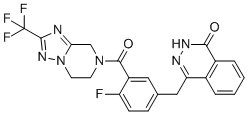
Fluzoparib chemical structureDC22228

Fluzoparib

Fluzoparib (SHR-3162) is a novel, potent and orally available inhibitor of PARP; potently inhibited PARP1 enzyme activity and induced DNA double-strand breaks, G2/M arrest and apoptosis in homologous recombination…

View activity & prices
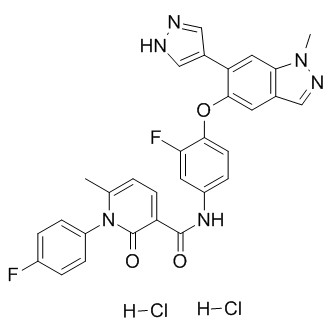
PF-670462 chemical structureDC2086

PF-670462

PF-670462 is a potent and selective inhibitor of casein kinase (CK1ε and CK1δ), with IC50s of 7.7 nM and 14 nM, respectively.

View activity & prices
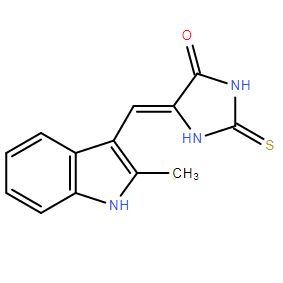
PBIT chemical structureDC7550

PBIT

PBIT is a specific inhibitor of the Jumonji AT-rich Interactive Domain 1(JARID1) enzymes. PBIT inhibits JARID1B (KDM5B or PLU1 ) histone demethylase an IC50 of about 3 μM . PBIT also inhibits JARID1A and JARID1C with…

View activity & prices
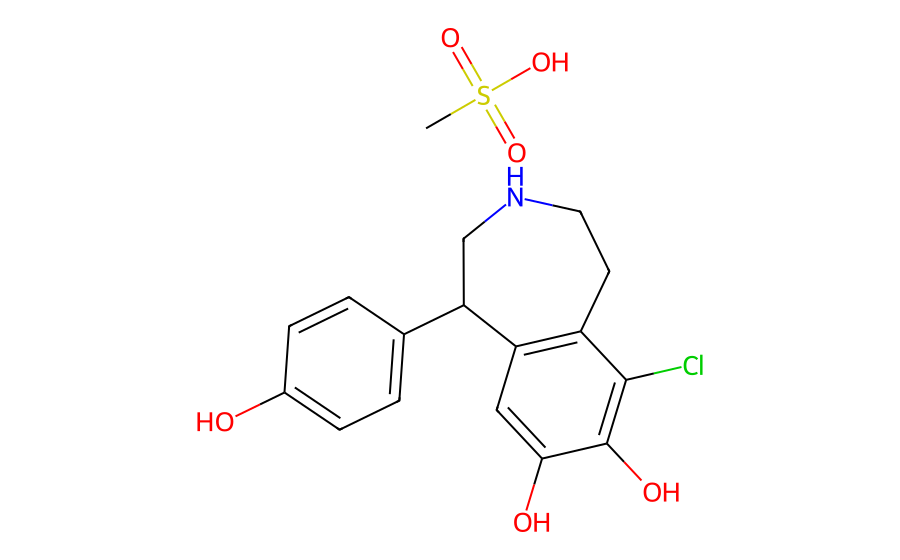
Fenoldopam (mesylate) chemical structureDC9424

Fenoldopam (mesylate)

Fenoldopam(SKF 82526) mesylate is a drug and synthetic benzazepine derivative which acts as a selective D1 receptor partial agonist.Target: D1 ReceptorFenoldopam is a selective dopamine-1 (DA1) agonist with…

View activity & prices
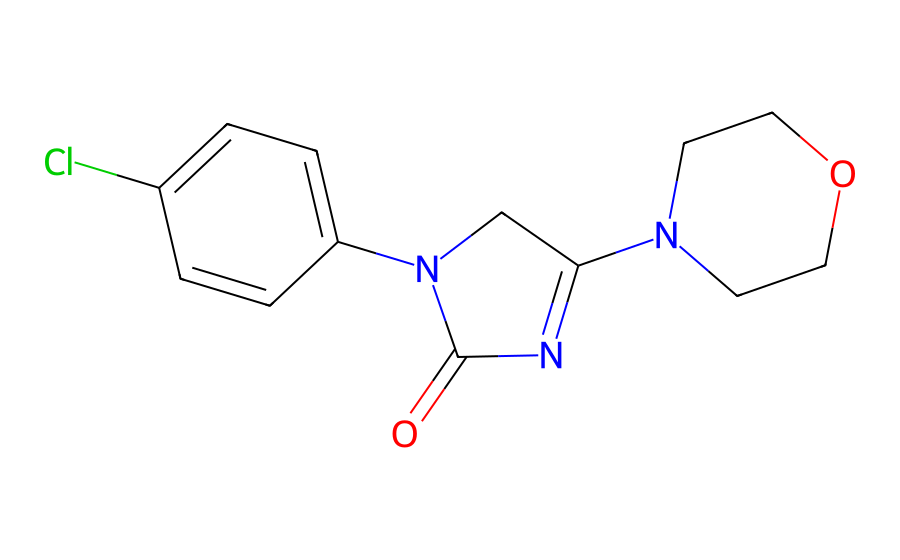
PKG drug G1 chemical structureDC10821

PKG drug G1

PKG drug G1 targets C42 of PKG Iα. PKG drug G1 can couple to vasodilation and blood pressure lowering by a C42 PKG Iα-independent mechanism.

View activity & prices

Cart

Request quotation