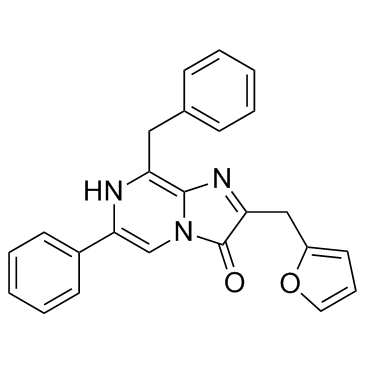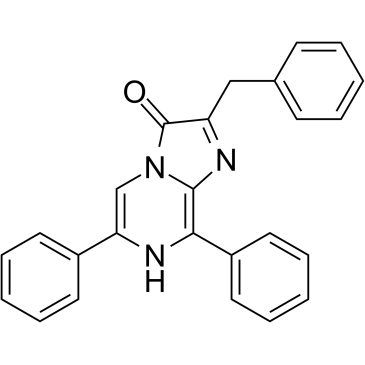
Diphenylterazine (DTZ) chemical structure
Chemical structureResearch use only
CAT. NO. DC39823Featured

Diphenylterazine (DTZ)

Pack Sizes & Prices

TotalUS$700
We match the best price and quality on market.
Product overview

Description & Application

Diphenylterazine is a bioluminescence agent.

ParameterValue
Chemical NameDiphenylterazine
CAS No.344940-63-2
FormulaC25H19N3O
M.Wt377.43
SMILESO=C1N2C(=C(NC(=C2)C2C=CC=CC=2)C2C=CC=CC=2)N=C1CC1C=CC=CC=1
Storage2 years -20°C Powder, 2 weeks 4°C in DMSO, 6 months -80°C in DMSO

Biological Activity

Diphenylterazine is a bioluminescence agent.

In Vitro

Diphenylterazine is a bioluminescence agent. Diphenylterazine alone yields very little background, leading to excellent signal-to-background ratios. Furthermore, Diphenylterazine elicits minimal cell toxicity at millimolar concentrations. Diphenylterazine injections into untransfected BALB/c mice do not yield any background emission. The bioluminescence resulting from intraperitoneally injected Diphenylterazine displays extended kinetics[1].

In Vivo

No in vivo data are provided in the current product source. Contact us for further information.

References & source

[1]. Yeh HW, et al. Red-shifted luciferase-luciferin pairs for enhanced bioluminescence imaging. Nat Methods. 2017 Oct;14(10):971-974.

[2]. Hsien-Wei Yeh, et al. ATP-Independent Bioluminescent Reporter Variants To Improve in Vivo Imaging. ACS Chem Biol.

DC Chemicals original product information

Published experimental findings depend on the model and assay conditions. They do not guarantee equivalent performance in every application. For laboratory research use only.
Product documentation

Refer to the certificate supplied with your lot for batch-specific release results.

Handling guide

2 years -20°C Powder, 2 weeks 4°C in DMSO, 6 months -80°C in DMSO

Solution calculator

Related research products

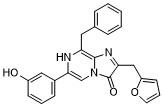
Coelenterazine chemical structureDC8863

Coelenterazine

Coelenterazine is widely distributed among marine organisms which can produce bioluminescence by calcium-dependent oxidation mediated by the photoprotein aequorin.

View activity & prices
Furimazine chemical structureDC42623

Furimazine

Furimazine is an imidazopyrazinone substrate. NanoLuc (Nluc) paired with Furimazine produced 2.5 million-fold brighter luminescence in mammalian cells relative to Oluc-19 with Coelenterazine.

View activity & prices
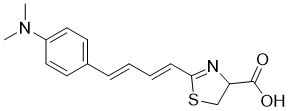
AkaLumine chemical structureDC34025

AkaLumine

AkaLumine is a luciferin analogue. The bioluminescence produced by AkaLumine in reactions with native firefly luciferase is in the near-infrared wavelength ranges (λmax=677?nm), and yields significantly increased…

View activity & prices
Hydrofurimazine chemical structureDC45184

Hydrofurimazine

Hydrofurimazine is a NanoLuc substrate whose enhanced aqueous solubility allows delivery of higher doses to mice. Hydrofurimazine enables sensitive bioluminescence imaging for either prolonged light production of high…

View activity & prices
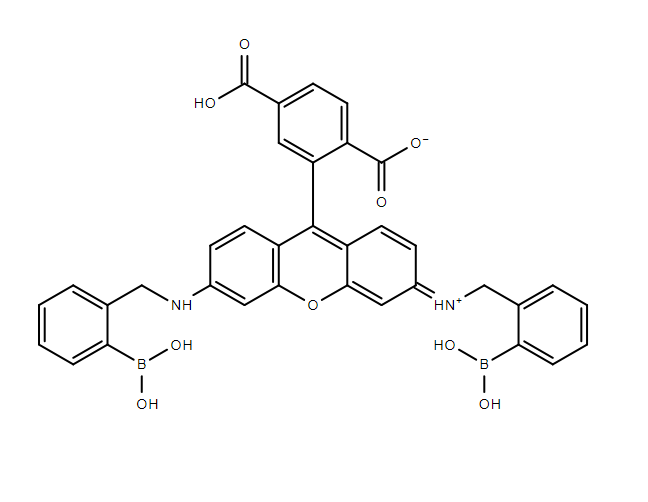
Rhobo6 chemical structureDC67279

Rhobo6

Rhobo6 is a fluorescent glycan-binding probe optimized for live-cell imaging and in vivo tracking of glycoconjugates. It exhibits pH-dependent binding (pKa ~5-7), high photostability, and minimal cytotoxicity.…

View activity & prices
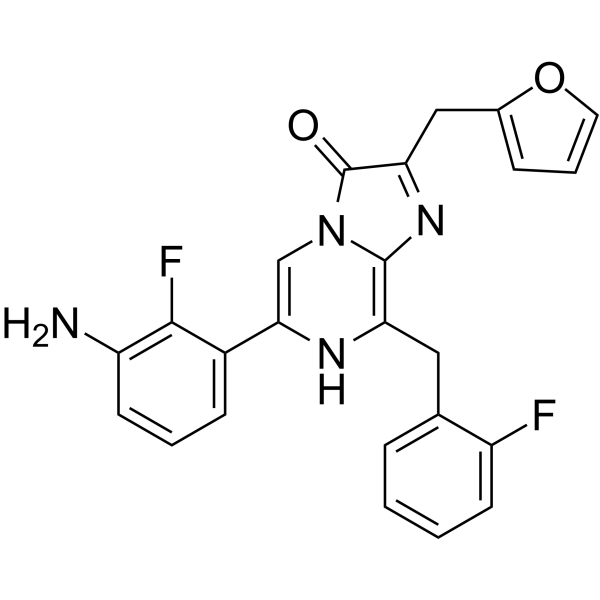
Fluorofurimazine chemical structureDC74576

Fluorofurimazine

Fluorofurimazine is an advanced furimazine derivative with enhanced aqueous solubility, allowing for greater signal output compared to furimazine in bioluminescence imaging. This compound supports higher substrate…

View activity & prices

Cart

Request quotation