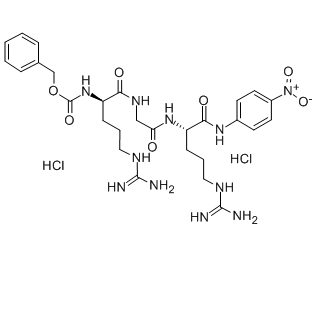
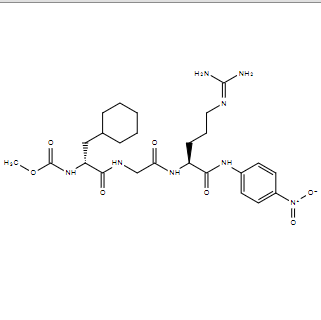
S-2765, which is specific to activated factor X (FXa), is a short peptide covalently bound to pNA (4-nitroaniline). When attacked by FXa, it releases a free pNA which could be detected by a spectrophotometer at 405 nm.S-2765 is mainly used in anti-FXa activity assay of heparin. S-2765 can be used in many applications, such as:
1:Anti-factor Xa activity to anti-factor IIa activity ratios of heparin and LMWHs.
2: Anti-factor Xa activities of heparin and LMWHs.
3: Activities of antithrombin and coagulation factors.
4: Anti-factor Xa activities of heparin and LMWHs in human plasma.
5: Production of kits for automated blood analyzers.
6: Evaluation of potential anticoagulants from chemical synthesis, bacterial fermentation and animal tissues.
2 years -20°C Powder, 2 weeks 4°C in DMSO, 6 months -80°C in DMSO
Biological Activity
S-2765, which is specific to activated factor X (FXa), is a short peptide covalently bound to pNA (4-nitroaniline). When attacked by FXa, it releases a free pNA which could be detected by a spectrophotometer at 405 nm.S-2765 is mainly used in anti-FXa activity assay of heparin. S-2765 can be used in many applications, such as:
1:Anti-factor Xa activity to anti-factor IIa activity ratios of heparin and LMWHs.
2: Anti-factor Xa activities of heparin and LMWHs.
3: Activities of antithrombin and coagulation factors.
4: Anti-factor Xa activities of heparin and LMWHs in human plasma.
5: Production of kits for automated blood analyzers.
6: Evaluation of potential anticoagulants from chemical synthesis, bacterial fermentation and animal tissues.
In Vitro
No in vitro data are provided in the current product source. Contact us for further information.
In Vivo
No in vivo data are provided in the current product source. Contact us for further information.
Published experimental findings depend on the model and assay conditions. They do not guarantee equivalent performance in every application. For laboratory research use only.
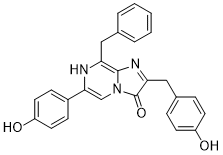
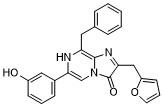
Coelenterazine is widely distributed among marine organisms which can produce bioluminescence by calcium-dependent oxidation mediated by the photoprotein aequorin.
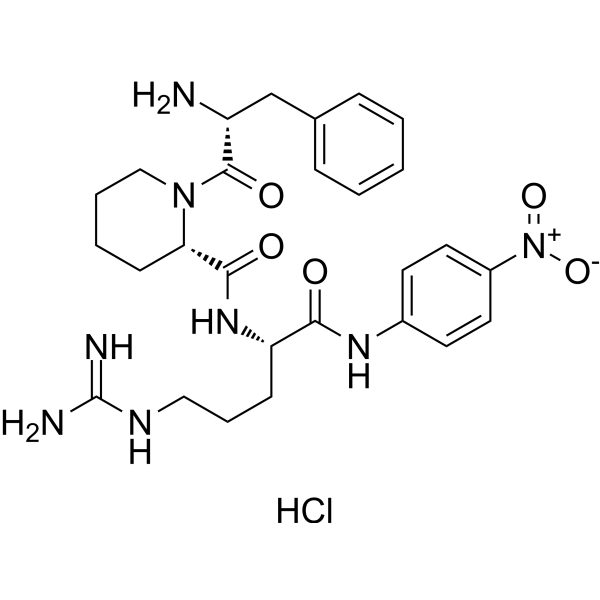
H-D-Phe-Pip-Arg-pNA hydrochloride, a chromogenic substrate, is patterned after the N-terminal portion of the A alpha chain of fibrinogen, which is the natural substrate of thrombin. H-D-Phe-Pip-Arg-pNA hydrochloride is…
Furimazine is an imidazopyrazinone substrate. NanoLuc (Nluc) paired with Furimazine produced 2.5 million-fold brighter luminescence in mammalian cells relative to Oluc-19 with Coelenterazine.
AkaLumine is a luciferin analogue. The bioluminescence produced by AkaLumine in reactions with native firefly luciferase is in the near-infrared wavelength ranges (λmax=677?nm), and yields significantly increased…
Hydrofurimazine is a NanoLuc substrate whose enhanced aqueous solubility allows delivery of higher doses to mice. Hydrofurimazine enables sensitive bioluminescence imaging for either prolonged light production of high…
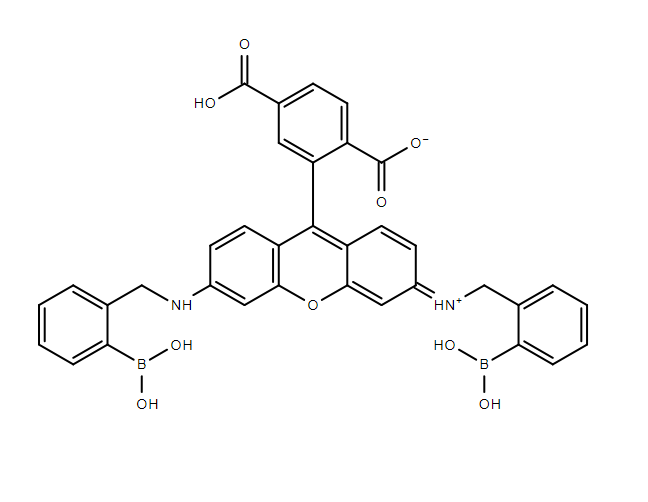
Rhobo6 is a fluorescent glycan-binding probe optimized for live-cell imaging and in vivo tracking of glycoconjugates. It exhibits pH-dependent binding (pKa ~5-7), high photostability, and minimal cytotoxicity.…
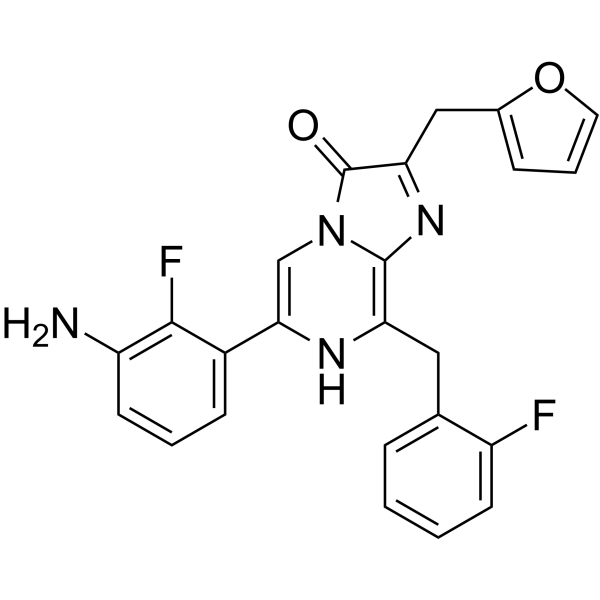
Fluorofurimazine is an advanced furimazine derivative with enhanced aqueous solubility, allowing for greater signal output compared to furimazine in bioluminescence imaging. This compound supports higher substrate…