
Research lipid catalog
Ionizable Lipid Products
Explore 848 lipid and RNA delivery products. Search the full catalog or browse by research category.
Search covers product name, catalog number, synonyms, available CAS numbers and categories. Spaces, hyphens and common punctuation are ignored. Duplicate legacy records are consolidated under one canonical product result.
3666 products · Showing 2781–2800 · 20 per page
DC Chemicals lipid expertise
Built for ionizable-lipid discovery and RNA delivery research
DC Chemicals supports formulation and delivery research with a broad, searchable portfolio of cationic and ionizable lipids. The current directory brings together 848 unique research-use products, with product specifications, pricing, chemical structures and literature-linked formulation data added as each record is verified.
Our experience spans complex lipid synthesis, purification, analytical release and process development. For custom molecules or larger-scale requirements, our team can discuss route development, technical specifications and scale-up options for the intended research workflow.
Learn about cationic and ionizable lipids →Proprietary innovation · Co-development · GMP
From proprietary lipid design to GMP-grade custom synthesis
DC Chemicals has independently developed ionizable-lipid structures supported by company-owned intellectual property, and selected proprietary lipid programs have advanced to GMP-stage development.
We welcome joint development with customers—from molecular design and lipid synthesis through route and process development. We can also support custom synthesis of GMP-grade ionizable lipids to agreed technical specifications and quality requirements.
Discuss a co-development project →Proprietary ionizable-lipid structuresCollaborative molecular designCustom lipid synthesisProcess development and scale-upGMP-grade project support
Product quick links
Explore ionizable lipids
Browse specifications, pricing and literature-linked product information.
Cat. No.Product NameField of ApplicationChemical Structure
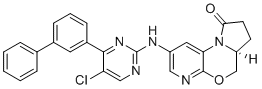
TMX-4102Featured
5mg USD 650TMX-4102 (TMX4102) is a highly potent, selective PIP4K2C binder with KD of 0.45 nM, shows no affinity for PIP4K2B and PIP4K2A (KD>10 uM).
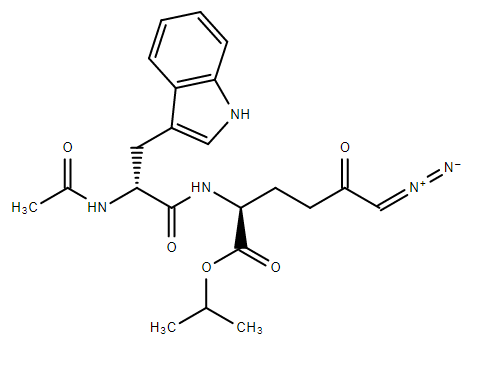
R-SirpiglenastatFeatured
5mg USD 450R-Sirpiglenastat is the R- isomer of Sirpiglenastat(DRP-104).Sirpiglenastat (DRP104) is a broad acting glutamine antagonist. Sirpiglenastat has anticancer effects by directly targeting tumor metabolism and simultaneously inducing a potent antitumor immune response.
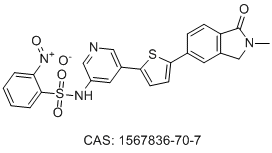
SN34960Featured
5mg USD 350SN34960 is a small molecule Perforin inhibitor, inhibits perforin-induced lysis of Jurkat T-lymphoma cells with IC50 of 6.65 uM, shows suboptimal physicochemical properties and toxicity toward the natural killer (NK) cells that secrete perforin in vivo.
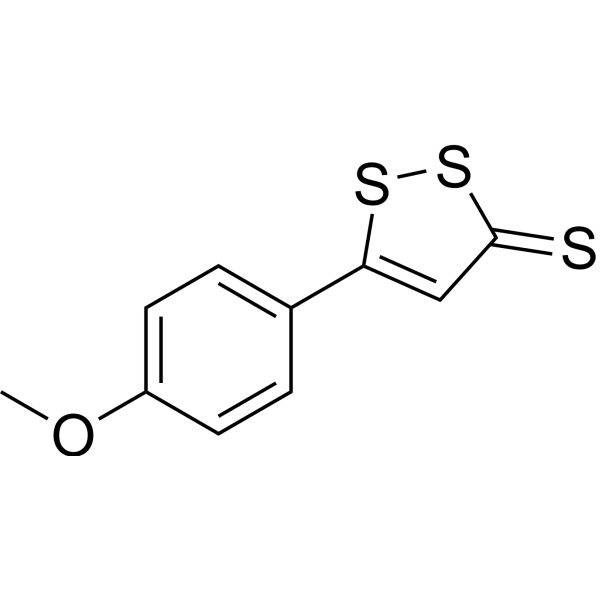
Anethole trithioneFeatured
20 mg USD 280For the detailed information of Anethole trithione, the solubility of Anethole trithione in water, the solubility of Anethole trithione in DMSO, the solubility of Anethole trithione in PBS buffer, the animal experiment(test) (test) of Anethole trithione, the cell expriment (test) of Anethole trithione, the in vivo, in vitro and clinical trial test of Anethole trithione, the EC50, IC50,and Affinity of Anethole trithione,, please contact DC Chemicals.
ACA-14Featured
10mg USD 350 · 25mg USD 550 · 100mg USD 900ACA-14 is a small molecule direct inhibitor of KRAS, impedes the interaction of KRAS with its effector Raf and reduces both intrinsic and SOS-mediated nucleotide exchange rates.
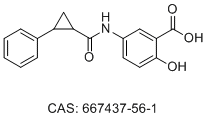
ODH-08Featured
10mg USD 400 · 25mg USD 600 · 50mg USD 800 · 100mg USD 1,200ODH-08 is a novel specific small molecule ligand and agonist of RORα with KD value of 8.4 um, shows potent antifibrotic effect. ODH-08 does not activate other nuclear receptors involved in lipid metabolism such as PPARα, PPARγ, PPARδ, and LXRα. ODH-08 reduces hepatic collagen deposition and expression levels of fibrogenic markers such as α-smooth muscle actin and collagen type I alpha 1 chain in Western diet-fed mice. ODH-08 suppresses the expression of fibrogenic proteins in hepatic stellate cells (HSCs). ODH-08 suppresses the activity of SMAD2 and 3, which are the primary downstream proteins of transforming growth factor β.
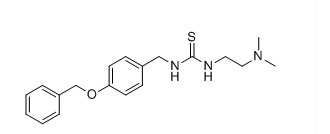
Z271-0326Featured
5mg USD 550Z271-0326 is a first-in-class, potent and specifc inhibitor of NACK (Notch activation complex kinase) with SPR KD value of 0.89 uM, directly blocks NACK recruitment to the Notch ternary complex (NTC).
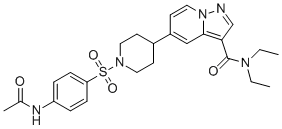
BioE-11979(BioE1197)Featured
5mg USD 500BioE-1197 is a novel Pask inhibitor. BioE-1197 is a compound that enhances T cell function. Functionally, treatment with BIOE-1197 significantly boosts the ability of effector T cells (such as CD8+, Th1, and Th2 cells) to produce lineage-specific cytokines upon restimulation. BIOE-1197 is considered a novel agent with potential applications in tumor immunotherapy and enhancing vaccine efficacy.
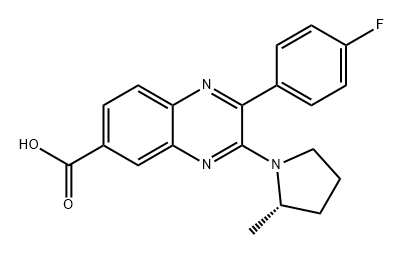
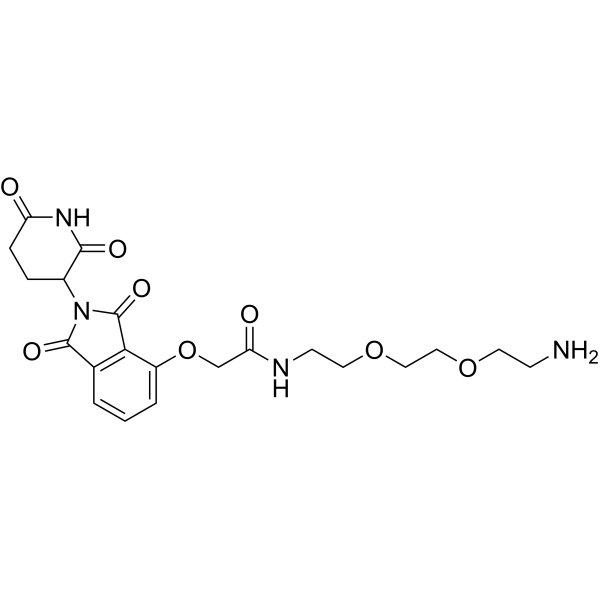
E3 Ligand-Linker Conjugate 8Featured
100 mg USD 850An E3 ligase ligand-linker conjugate for PROTAC.
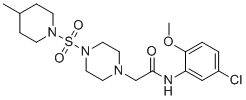
VU0606170Featured
10mg USD 350 · 25mg USD 550VU 0606170 (also referred to as VU0606170) is a selective inhibitor of the sodium-activated potassium channel KNa1.1, also known as Slack or Slo2.2. This compound has shown specificity for Slack channels over other related potassium channels, making it a valuable tool for studying the physiological and pathological roles of KNa1.1.
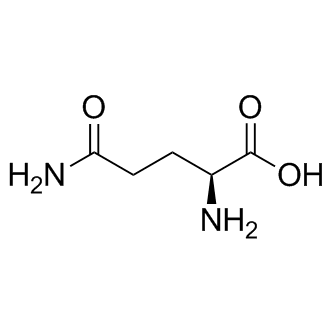
L-GlutamineFeatured
20 mg USD 280For the detailed information of L-Glutamine, the solubility of L-Glutamine in water, the solubility of L-Glutamine in DMSO, the solubility of L-Glutamine in PBS buffer, the animal experiment(test) (test) of L-Glutamine, the cell expriment (test) of L-Glutamine, the in vivo, in vitro and clinical trial test of L-Glutamine, the EC50, IC50,and Affinity of L-Glutamine,, please contact DC Chemicals.
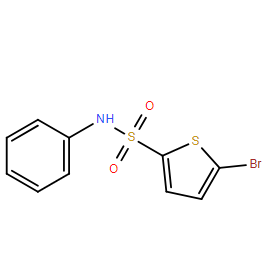
ES9-17Featured
10 mg USD 400 · 25 mg USD 600 · 100 mg USD 1,000ES9-17 is a CME inhibitor a, ES9-17 inhibited recruitment of the plasma membrane-localized BRI1-GFP to the BFA body. Samples were pretreated with 50 µM CHX for 1 h and treated with either DMSO (indicated as Ø) or ES9-17 (30 µM) for 30 min, followed by a combined application of FM4-64 (2 µM) and BFA (50 µM) for an additional 30 min in the presence of the inhibitor. Scale bar, 10 µm. b, Confocal images of Arabidopsis root epidermal cells expressing PEPR1-GFP. Seedlings were treated with ES9-17 (30 µM) or DMSO (Ø) for 30 min, followed by elicitation with 100 nM Pep-1. The internalization of PEPR1-GFP was followed until 90 min post elicitation. Scale bar, 20 µm. c, Histograms representing the measured endocytic foci lifespan of CLC1-GFP (CLC1:CLC1-GFP/Col-0) in the presence of ES9-17 (30 µM) or DMSO (Ø); n = 1,276 and 1,069 measurements from ten and four seedlings, respectively. Kymographs represent a line trace (horizontal axis), over a time period (vertical axis) taken from a time lapse (2 frames s–1) of Arabidopsis root epidermal cells that illustrates the lifespan of endocytic foci labeled by CHC1-GFP. Scale bar, 10 s. The experiments in a–c were repeated independently three times with similar results. The life time distribution graph was generated by grouping the events into specific categories, annotated as, for example, 0 ≤ x < 10: the category holding those events with a life time (x) being larger or equal (≤) than 0 s and smaller (<) than 10 s.
Foldamer 33Featured
10 mg USD 450Foldamer 33 is a small molecule HSP110 inhibitor, directly binds to the nucleotide-binding domain (NBD) of HSP110, blocks HSP110 chaperone function and colorectal cancer growth.Foldamer 33 significantly inhibit HSP110 anti-aggregating activity with IC50 of 87.8 uM.Foldamer 33 disrupts HSP110-STAT3 interaction with IC50 of 35.9 uM in competitive BLI assays.Foldamer 33 inhibits SW480 colorectal cancer cell proliferation, and (5 mg/kg) Foldamer 33 displays an anti-tumor effect (TGI of 40% and 60%) in mice bearing a colorectal cancer.
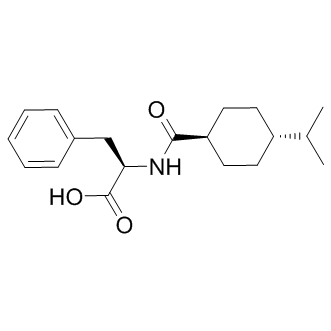
NateglinideFeatured
1 g USD 300Nateglinide is an insulin secretagog agent used for the treatment of non-insulin-dependent diabetes mellitus (NIDDM).Nateglinide is an oral antihyperglycemic agent used for the treatment of non-insulin-dependent diabetes mellitus (NIDDM). It belongs to the meglitinide class of short-acting insulin secretagogues, which act by binding to β cells of the pancreas to stimulate insulin release. Nateglinide is an amino acid derivative that induces an early insulin response to meals decreasing postprandial blood glucose levels. It should only be taken with meals and meal-time doses should be skipped with any skipped meal. Approximately one month of therapy is required before a decrease in fasting blood glucose is seen. Meglitnides may have a neutral effect on weight or cause a slight increase in weight. The average weight gain caused by meglitinides appears to be lower than that caused by sulfonylureas and insulin and appears to occur only in those na?ve to oral antidiabetic agents. Due to their mechanism of action, meglitinides may cause hypoglycemia although the risk is thought to be lower than that of sulfonylureas since their action is dependent on the presence of glucose. In addition to reducing postprandial and fasting blood glucose, meglitnides have been shown to decrease glycosylated hemoglobin (HbA1c) levels, which are reflective of the last 8-10 weeks of glucose control. Meglitinides appear to be more effective at lowering postprandial blood glucose than metformin, sulfonylureas and thiazolidinediones. Nateglinide is extensively metabolized in the liver and excreted in urine (83%) and feces (10%). The major metabolites possess less activity than the parent compound. One minor metabolite, the isoprene, has the same potency as its parent compound.
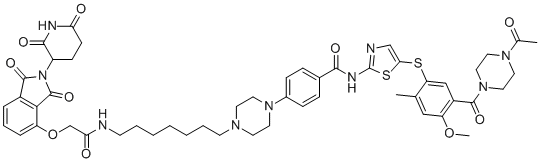
Autotaxin-IN-8Featured
5mg USD 850BSJ-05-037 is a potent and selective heterobifunctional degrader of ITK with DC50 of 17.6-41.8 nM in TCL lines DERL-2 and Hut78. BSJ-05-037 induces potent degradation of ITK dependent on CRBN, neddylation, and the proteasome. BSJ-05-037 induces GATA-3 loss and decreases chemotherapy resistance in vitro. BSJ-05-037 disrupts TCR signaling, downregulates the Th2-associated transcription factor GATA-3, and can overcome chemotherapy resistance in TCL models in vivo.
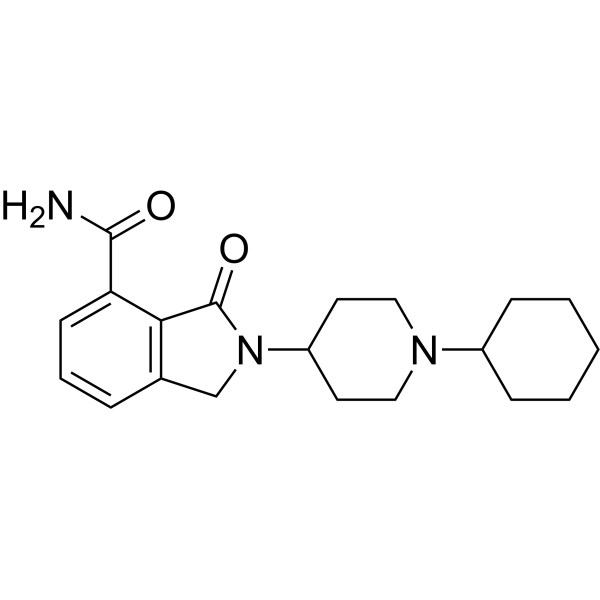
NMS-P293Featured
100mg USD 700 · 250mg USD 1,200 · 1g USD 2,400NMS-P293 is a novel potent and selective PARP-1 inhibitor possessing >200-fold selectivity versus PARP-2; NMS-P293 inhibits hydrogen peroxide induced poly ADP-ribose (PAR) synthesis with an IC50 in the single digit nanomolar range; possesses favorable ADME properties, causes complete tumor regressions in mice bearing BRCA mutated breast cancer xenografts.
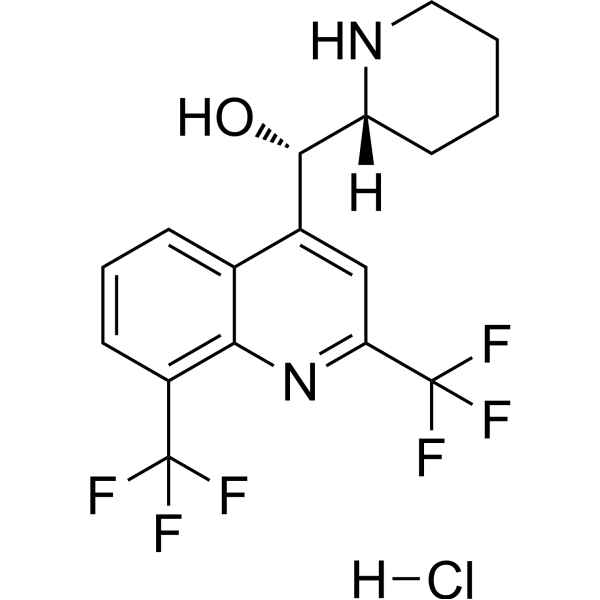
Mefloquine hydrochlorideFeatured
1 g USD 150A quinoline antimalarial drug that is structurally related to the antiarrhythmic agent quinidine; inhibits autophagy and has been recognized as a potential target for cancer therapy.Bacterial InfectionApproved
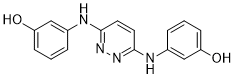
RS-0406Featured
10mg USD 350 · 25mg USD 500RS-0406 is a novel beta-sheet breaker, RS-0406 reverses amyloid beta-induced cytotoxicity and impairment of long-term potentiation in vitro. RS-0406 arrests amyloid-beta oligomer-induced behavioural deterioration in vivo.
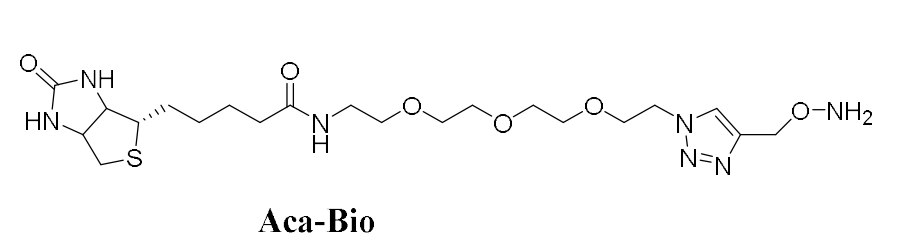
Probe Aca-BioFeatured
5mg USD 550Aca-Bio is a specialized chemical probe designed for the specific enrichment and detection of lysine acetoacetylation (Kacac). Its core architecture consists of a hydroxylamine group, a polyethylene glycol (PEG) linker, and a biotin tag. Functionally, the hydroxylamine group selectively reacts with the unique ketone carbonyl moiety of Kacac under physiological conditions to form a stable, covalent oxime bond. This specific targeting allows Aca-Bio to accurately label Kacac-modified peptides in complex biological samples. Subsequently, the attached biotin tag enables efficient isolation of these labeled peptides via streptavidin-mediated affinity purification. A critical feature of Aca-Bio is its pH-responsive reversibility; the oxime bond remains stable at neutral pH but undergoes controlled cleavage in acidic environments. This allows for the gentle and effective elution of enriched peptides, facilitating subsequent mass spectrometry analysis. By overcoming the limitations of traditional antibody-based methods, Aca-Bio serves as a highly specific and sensitive tool for global Kacac substrate profiling.
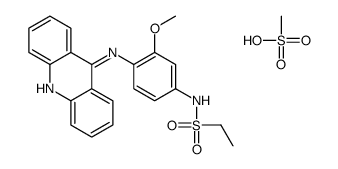
NSC 243928Featured
5mg USD 500A small molecule that potently inhibit ovarian cancer stem-like cells (CSC) growth with GI50 of 0.83 uM, which os consistent with cell death/apoptosis.
No products match this search.
Page 140 of 184 · Browse all 3666 products