
Research lipid catalog
Ionizable Lipid Products
Explore 848 lipid and RNA delivery products. Search the full catalog or browse by research category.
Search covers product name, catalog number, synonyms, available CAS numbers and categories. Spaces, hyphens and common punctuation are ignored. Duplicate legacy records are consolidated under one canonical product result.
3666 products · Showing 2741–2760 · 20 per page
DC Chemicals lipid expertise
Built for ionizable-lipid discovery and RNA delivery research
DC Chemicals supports formulation and delivery research with a broad, searchable portfolio of cationic and ionizable lipids. The current directory brings together 848 unique research-use products, with product specifications, pricing, chemical structures and literature-linked formulation data added as each record is verified.
Our experience spans complex lipid synthesis, purification, analytical release and process development. For custom molecules or larger-scale requirements, our team can discuss route development, technical specifications and scale-up options for the intended research workflow.
Learn about cationic and ionizable lipids →Proprietary innovation · Co-development · GMP
From proprietary lipid design to GMP-grade custom synthesis
DC Chemicals has independently developed ionizable-lipid structures supported by company-owned intellectual property, and selected proprietary lipid programs have advanced to GMP-stage development.
We welcome joint development with customers—from molecular design and lipid synthesis through route and process development. We can also support custom synthesis of GMP-grade ionizable lipids to agreed technical specifications and quality requirements.
Discuss a co-development project →Proprietary ionizable-lipid structuresCollaborative molecular designCustom lipid synthesisProcess development and scale-upGMP-grade project support
Product quick links
Explore ionizable lipids
Browse specifications, pricing and literature-linked product information.
Cat. No.Product NameField of ApplicationChemical Structure
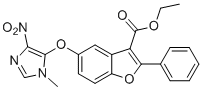
STOML3 inhibitor OB-1Featured
100 mg USD 650 · 250mg USD 1,100 · 1g USD 2,200 · 10 mM * 1 mL in DMSO USD 220A small-molecule inhibitor of STOML3 oligomerization that reverses pathological mechanical hypersensitivity in vivo; effectively inhibits the self-association of stomatin, STOML1 and STOML2 at 2 uM, but not podocin; reversibly reduces the sensitivity of mechanically gated currents in sensory neurons and silence mechanoreceptors in vivo; also reversibly attenuates fine touch perception in normal mice, reverses pathological mechanical hypersensitivity.
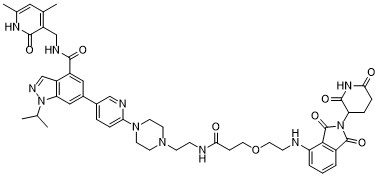
MS177Featured
25mg USD 650MS177 (MS-177) is a potent and selective EZH2 degarder (PROTAC) based on EZH2 inhibitor C24 with CRBN ligand pomalidomide with DC50 of 0.2 uM in EOL-1 cells.MS177 effectively degraded cellular EZH2-PRC2, suppressed global H3K27me3 in leukaemia cells.MS177 exhibited half-maximal degradation concentration (DC50) values of 0.2 ± 0.1 μM and 1.5 ± 0.2 μM, and maximum degradation (Dmax) values of 82% and 68%, respectively, in EOL-1 and MV4;11 cells.MS177 efficiently suppresses EZH2-PRC2 functions, also efficiently induces Myc degradation in cancer cells, suppresses EZH2-PRC2 functions.MS177 efficiently induces leukaemia cell growth inhibition, apoptosis and cell cycle progression arrest, which is more effective than EZH2 inhibitors. MS177 (i.p. injection, 50-1 g/kg) represses AML growth without apparent toxicity in PDX models.
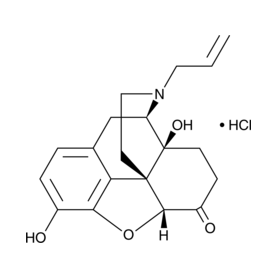
Naloxone (hydrochloride)Featured
100 mg USD 200 · 250 mg USD 400 · 1 g USD 800 · 10 mM * 1 mL in DMSO USD 100Naloxone is an opioid inverse agonist drug used to counter the effects of opiate overdose.
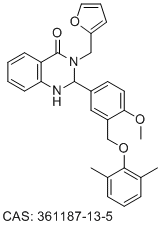
NCGC00161856Featured
5mg USD 400NCGC00161856 is identified as the first small-molecule ligand and inverse agonist of the thyroid-stimulating hormone receptor (TSHR). It inhibits basal cAMP production in HEK-EM 293 cells that stably express TSHRs, with a half-maximal inhibitory concentration (IC50) of 3.0 µM. This means that NCGC00161856 effectively reduces the constitutive activity of TSHR, which is the receptor's activity in the absence of its natural ligand (thyroid-stimulating hormone, TSH).
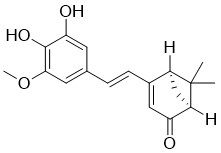
SP-8356Featured
100 mg USD 650 · 250mg USD 1,100 · 1g USD 2,200SP-8356, an anti-inflammatory synthetic verbenone derivative, is a potent, orally active cluster of differentiation 147 (CD147) inhibitor. SP-8356 inhibits CD147-cyclophilin A (CypA) interaction and reduces MMP-9 activity. SP-8356 exerts anti-breast cancer effects by inhibiting NF-κB signaling. Anti-atherosclerotic effects[1][2][3].
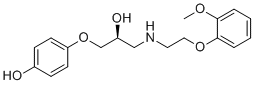
STD-101-D1Featured
5mg USD 350STD-101-D1 is a novel brain permeable, G protein-biased beta-1 adrenergic receptor (ADRB1) partial agonist with EC50 of 16.9 nM; engages very little beta-arrestin recruitment compared to the unbiased agonist isoproterenol; also inhibits the acute peripheral and CNS TNFα response induced by LPS both in vitro and in vivo.
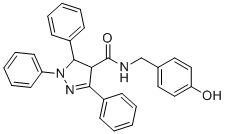
FN1-8Featured
5mg USD 400FN1-8 is a novel, synthetic small molecule that efficiently interferes with Gli/TAF9 interaction and downregulate Gli/TAF9-dependent transcriptional activity (at 15 uM); inhibits non-canonical Gli activation and acts downstream of the canonical Hh pathway; suppresses cancer cell proliferation in vitro and inhibits tumor growth in vivo.
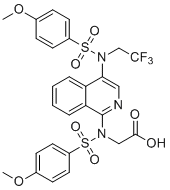
PRL-295Featured
5mg USD 500PRL-295 is a small molecule Keap1-Nrf2 protein–protein interaction inhibitor.PRL-295 binds to Keap1 in the cellular environment, disrupting its interaction with Nrf2, which leads to enhanced gene expression of the classical Nrf2 target NQO1 in cells and in vivo in the mouse liver.PRL-295 increases the thermostability of Keap1 in cell lysates and in live cells.PRL-295 decreased the levels of plasma alanine aminotransferase and aspartate aminotransferase upon acetaminophen-induced hepatic injury.
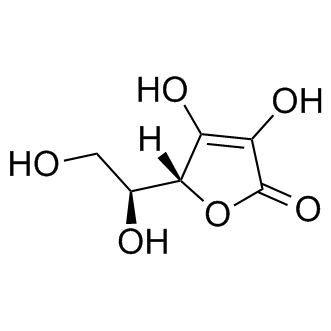
Vitamin CFeatured
20 mg USD 280For the detailed information of Vitamin C, the solubility of Vitamin C in water, the solubility of Vitamin C in DMSO, the solubility of Vitamin C in PBS buffer, the animal experiment(test) (test) of Vitamin C, the cell expriment (test) of Vitamin C, the in vivo, in vitro and clinical trial test of Vitamin C, the EC50, IC50,and Affinity of Vitamin C,, please contact DC Chemicals.
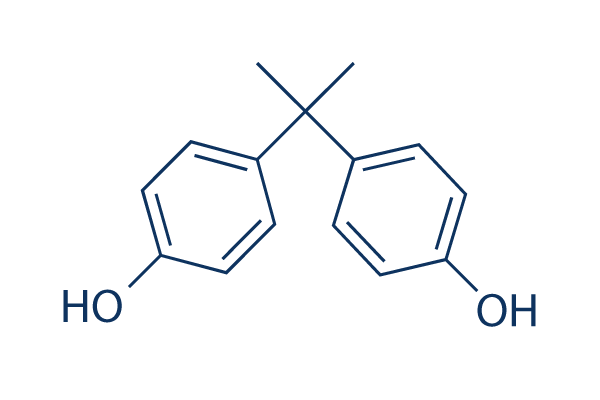
Bisphenol AFeatured
100 mg USD 150 · 250 mg USD 300 · 1 g USD 600Bisphenol A is a starting material for the synthesis of plastics, primarily certain polycarbonates and epoxy resins, as well as some polysulfones and certain niche materials. It exhibits estrogen-mimicking, hormone-like properties.
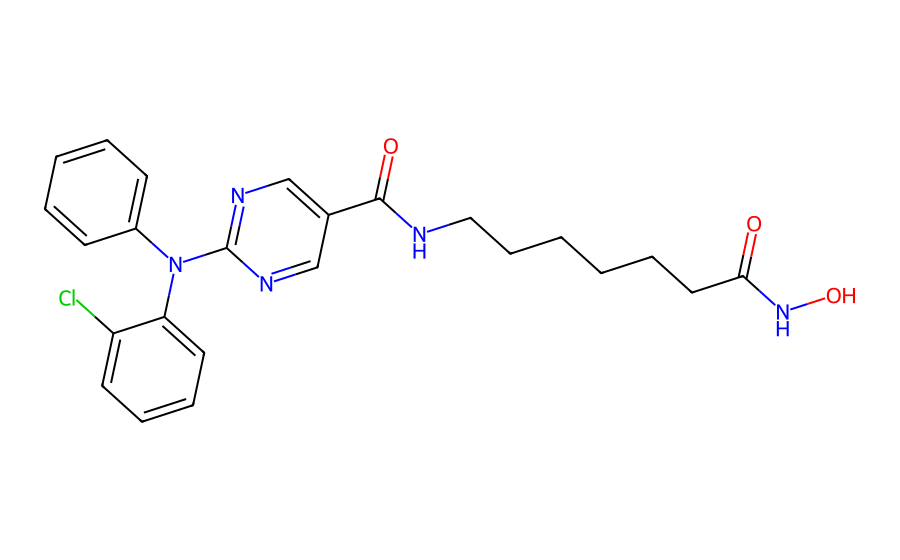
Citarinostat(ACY-241)Featured
100 mg USD 500 · 250 mg USD 950 · 1 g USD 1,900 · 10 mM * 1 mL in DMSO USD 220Citarinostat is a HDAC6 specific inhibitor, with IC50 of 4 nM and 76 nM for HDAC6 and HDAC3, respectively.IC50 value: 4 nM (HDAC6), 76 nM (HDAC3)Target: HDACThe detailed information please refer to WO2015061684A1 and 2015054197A1.
GlutathioneFeatured
20 mg USD 280For the detailed information of Glutathione, the solubility of Glutathione in water, the solubility of Glutathione in DMSO, the solubility of Glutathione in PBS buffer, the animal experiment(test) (test) of Glutathione, the cell expriment (test) of Glutathione, the in vivo, in vitro and clinical trial test of Glutathione, the EC50, IC50,and Affinity of Glutathione,, please contact DC Chemicals.
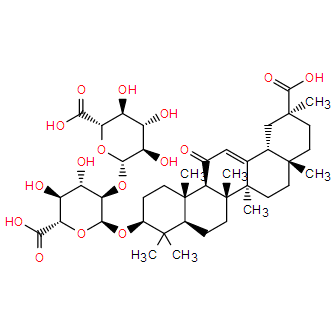
Glycyrrhizic acidFeatured
20 mg USD 280Glycyrrhizic acid is a triterpenoid saponinl, acting as a direct HMGB1 antagonist, with anti-tumor, anti-diabetic activities.
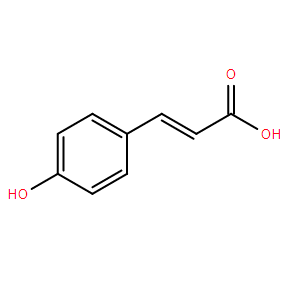
4-Hydroxycinnamic acidFeatured
20 mg USD 280For the detailed information of 4-Hydroxycinnamic acid, the solubility of 4-Hydroxycinnamic acid in water, the solubility of 4-Hydroxycinnamic acid in DMSO, the solubility of 4-Hydroxycinnamic acid in PBS buffer, the animal experiment(test) (test) of 4-Hydroxycinnamic acid, the cell expriment (test) of 4-Hydroxycinnamic acid, the in vivo, in vitro and clinical trial test of 4-Hydroxycinnamic acid, the EC50, IC50,and Affinity of 4-Hydroxycinnamic acid,, please contact DC Chemicals.
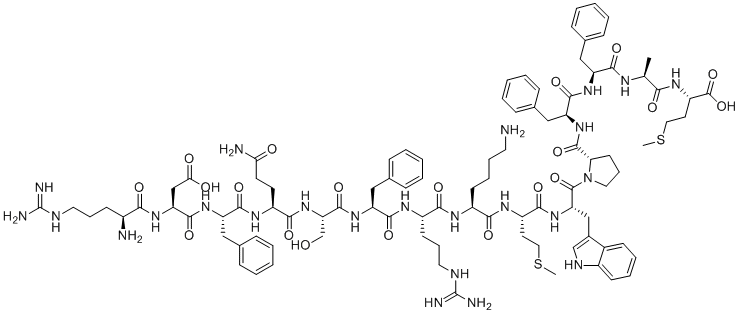
Peptide P60Featured
10 mg USD 500Peptide P60 (FOXP3 inhibitor P60) is a 15-mer synthetic peptide, cell-permeable inhibitor of FOXP3, binds specifically to FOXP3; inhibits murine and human-derived Treg and improves effector T cell stimulation, overcomes the inhibitory effect of FOXP3 on the activity of the transcription factors NF-κB and NFAT, inhibits upregulation of mRNA for Foxp3 and IL-10 on effector T cells and enhances mRNA for IFN-γ after anti-CD3 stimulation; induces a scurfy-like disease in newborn mice, improves vaccine efficacy in mice model of CT26 tumor and HCV infection.
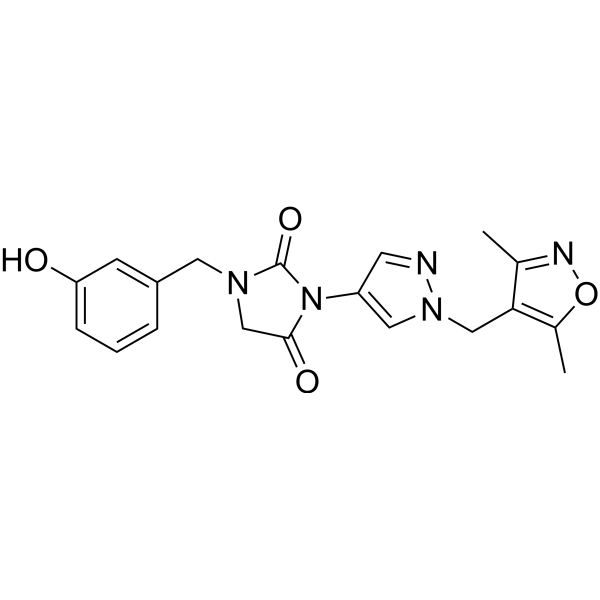
S6821Featured
10mg USD 550S6821 (S 6821) is a potent and selective antagonist of the bitter taste receptor TAS2R8, exhibiting an IC50 value of 21 nM. It demonstrates high selectivity across a panel of 16 TAS2Rs, effectively reduces the bitterness of coffee, and shows an excellent safety profile.
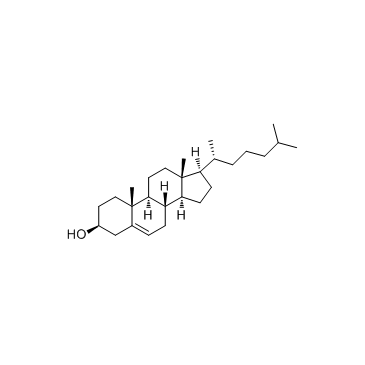
CholesterolFeaturedFeatured
Cholesterol is a component of Lipid nanoparticles (LNPs) for RNA delivery.
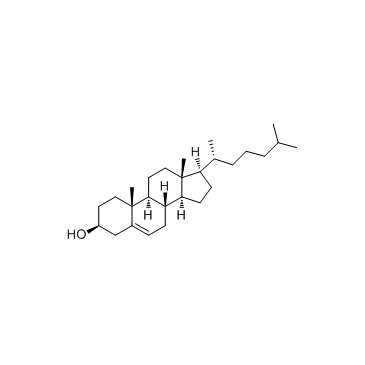
CholesterolFeatured
1g USD 450For the detailed information of Cholesterol, the solubility of Cholesterol in water, the solubility of Cholesterol in DMSO, the solubility of Cholesterol in PBS buffer, the animal experiment(test) (test) of Cholesterol, the cell expriment (test) of Cholesterol, the in vivo, in vitro and clinical trial test of Cholesterol, the EC50, IC50,and Affinity of Cholesterol,, please contact DC Chemicals.
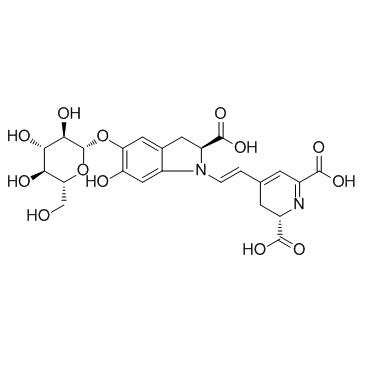
BetaninFeatured
100 mg USD 100 · 250 mg USD 200 · 1 g USD 400In Vitro Betanin is a representative constituent of red beetroot betacyanins, could inhibit peroxynitrite (ONOO-), with an IC50 of 19.2 μM. Betanin also has anti-inflammatory, anti-proliferative effects, nephroprotective activity, cardioprotective activity, strong, antioxidant and angiotensin converting enzyme (ACE) inhibitory activity. Another study is also indicated the protective effect of Betanin against high glucose induced rat renal epithelial cell fibrosis and matrix accumulation, major features of diabetic nephropathy (DN). In Vivo Betanin can inhibit the fructose-induced diabetic cardiac fibrosis and paraquat induced acute kidney toxicity. The co-administration of Betanin (20 mg/kg b.w.) to diabetic rats prevent significantly the raise of glucose level and also reverse the levels of insulin compared with untreated diabetic rats. Interestingly diabetic rats treated with Betanin (20 mg/kg b.w.) and glibenclamide portray the significant changes in the body weight compared to diabetic control. HbA1c levels significantly increases in diabetic rats and when treated with Betanin as well as glibenclamide. Treatment with Betanin as well as glibenlamide to STZ-NA induces diabetic rat’s elicit significant decreases in those levels when compared with diabetic control rats.
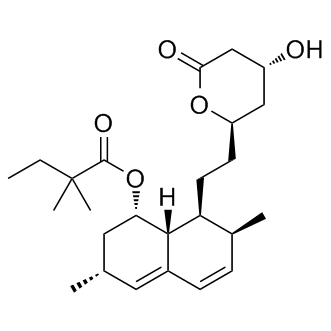
Simvastatin (Zocor)Featured
100 mg USD 250 · 250 mg USD 500 · 1 g USD 1,000 · 10 mM * 1 mL in DMSO USD 150Simvastatin (MK 733) is a competitive inhibitor of HMG-CoA reductase with a Ki of 0.2 nM.
No products match this search.
Page 138 of 184 · Browse all 3666 products