
Research lipid catalog
Ionizable Lipid Products
Explore 848 lipid and RNA delivery products. Search the full catalog or browse by research category.
Search covers product name, catalog number, synonyms, available CAS numbers and categories. Spaces, hyphens and common punctuation are ignored. Duplicate legacy records are consolidated under one canonical product result.
3666 products · Showing 2721–2740 · 20 per page
DC Chemicals lipid expertise
Built for ionizable-lipid discovery and RNA delivery research
DC Chemicals supports formulation and delivery research with a broad, searchable portfolio of cationic and ionizable lipids. The current directory brings together 848 unique research-use products, with product specifications, pricing, chemical structures and literature-linked formulation data added as each record is verified.
Our experience spans complex lipid synthesis, purification, analytical release and process development. For custom molecules or larger-scale requirements, our team can discuss route development, technical specifications and scale-up options for the intended research workflow.
Learn about cationic and ionizable lipids →Proprietary innovation · Co-development · GMP
From proprietary lipid design to GMP-grade custom synthesis
DC Chemicals has independently developed ionizable-lipid structures supported by company-owned intellectual property, and selected proprietary lipid programs have advanced to GMP-stage development.
We welcome joint development with customers—from molecular design and lipid synthesis through route and process development. We can also support custom synthesis of GMP-grade ionizable lipids to agreed technical specifications and quality requirements.
Discuss a co-development project →Proprietary ionizable-lipid structuresCollaborative molecular designCustom lipid synthesisProcess development and scale-upGMP-grade project support
Product quick links
Explore ionizable lipids
Browse specifications, pricing and literature-linked product information.
Cat. No.Product NameField of ApplicationChemical Structure
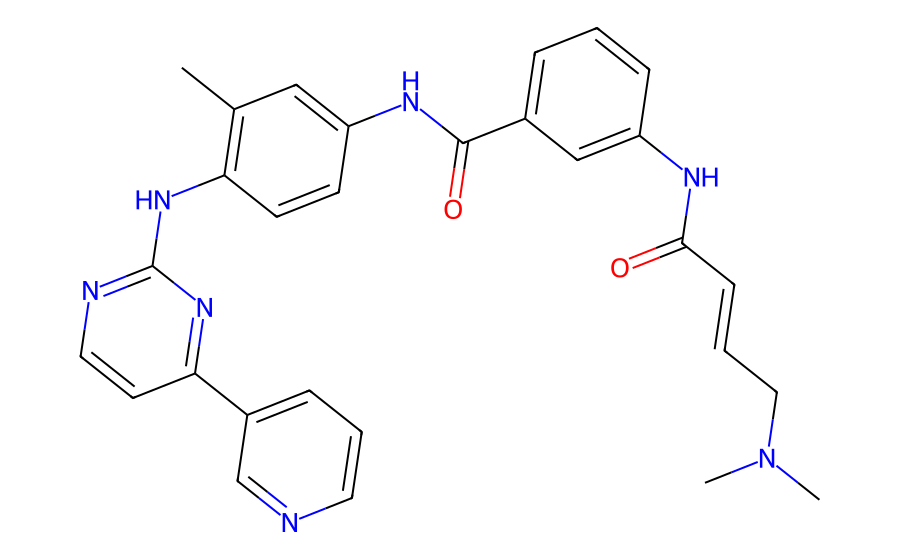
JNK-IN-8Featured
100 mg USD 650 · 250 mg USD 1,200 · 1 g USD 2,400 · 10 mM * 1 mL in DMSO USD 220JNK-IN-8 is a potent JNK inhibitor with IC50s of 4.7 nM, 18.7 nM, and 1 nM for JNK1, JNK2, and JNK3, respectively.
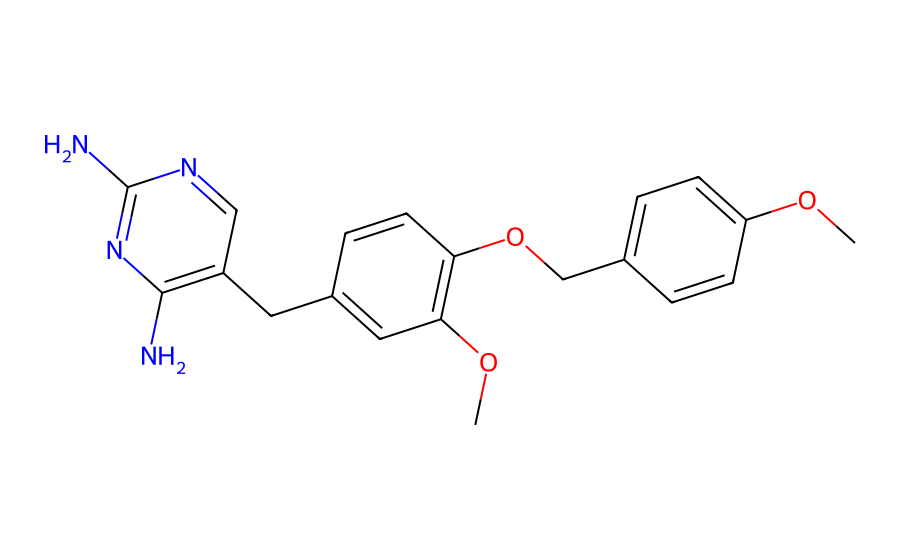
GW-2580 (GW2580)Featured
100 mg USD 250 · 250 mg USD 500 · 1 g USD 1,000 · 10 mM * 1 mL in DMSO USD 150GW2580 is an orally bioavailable inhibitor of c-Fms kinase which completely inhibits human cFMS kinase in vitro at 0.06 μM.
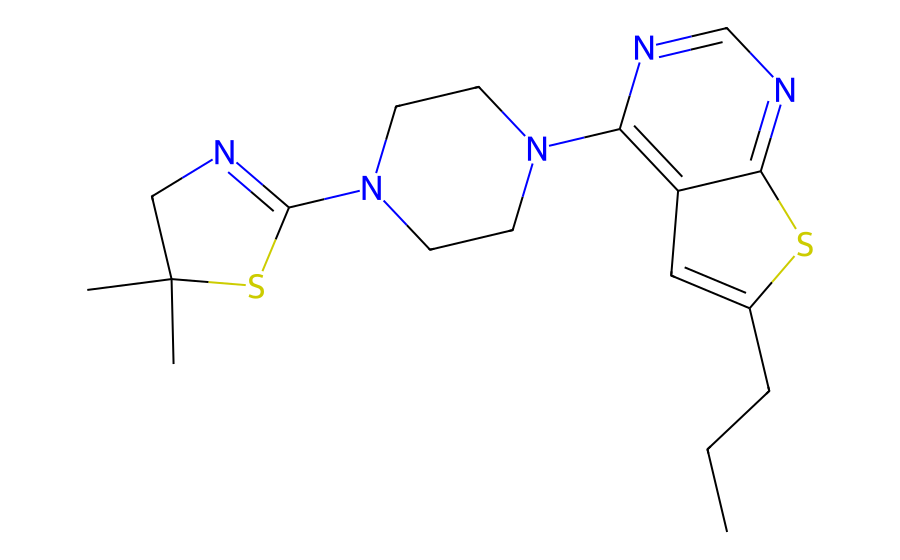
MI 2 (Menin-MLL Inhibitor)Featured
100 mg USD 450 · 250 mg USD 800 · 1 g USD 1,500 · 10 mM * 1 mL in DMSO USD 220MI-2 is a Menin-MLL interaction inhibitor with IC50 of 446±28 nM.
Camostat mesylateFeatured
100 mg USD 350 · 250 mg USD 600 · 1 g USD 1,200 · 10 mM * 1 mL in DMSO USD 150Camostat Mesylate(FOY305; FOY-S980) is a trypsin-like protease inhibitor.Camostat mesilate (500 mM) inhibits generation of TGF-beta by suppressing plasmin activity and reduces the activity of TGF-beta, which blocks in vitro activation of HSCs [1]. Camostat mesilate (20 mM) combined with insulin results a significant hypoglycemic effect following large intestinal administration. Camostat mesilate (20 mM) is effective in reducing insulin degradation in both small and large intestinal homogenates of rats [2]. Camostat mesilate (2 mM) inhibits MCP-1 and TNF- production in activated rat monocytes. Camostat mesilate (2 mM) inhibits proliferation and MCP-1 production of cultured rat PSCs. Camostat mesilate (1 mg/g) prevents pancreatic atrophy and improves pancreatic exocrine function of rat chronic pancreatitis induced by DBTC. Camostat mesilate (1 mg/g) inhibits chronic inflammation and pancreatic fibrosis induced by DBTC. Camostat mesilate (1 mg/g) inhibits the development of pancreatic fibrosis and PSCs activation in the pancreas induced by DBTC. Camostat mesilate (1 mg/g) suppresses monocytes infiltration and inhibits MCP-1 expression both in serum and in pancreatic tissue [3].

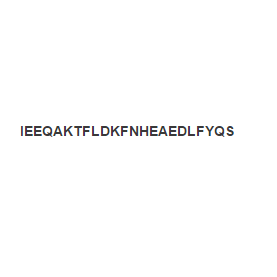
SBP1(spike-binding peptide 1)Featured
10mg USD 500SBP1(spike-binding peptide 1) is a first-in-class peptide binder to the SARS-CoV-2 spike protein. SBP1 specifically binds SARS-CoV-2-RBD with low nanomolar affinity. SBP1 to the RBD was determined to be 47 nM with the average Kon = 4.69*104M-1S-1 and Koff
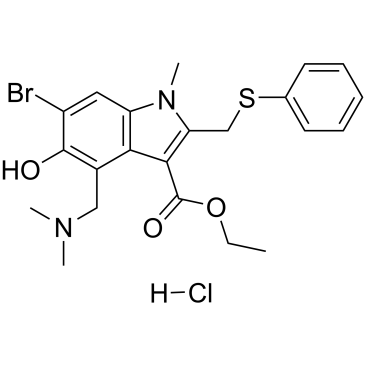
Arbidol HCl (Umifenovir)Featured
100 mg USD 200 · 250 mg USD 300 · 1 g USD 600 · 10 mM * 1 mL in DMSO USD 150Arbidol (Umifenovir) hydrochloride is an broad-spectrum antiviral chemical agent which can inhibit cell entry of enveloped viruses by blocking viral fusion with host cell membrane
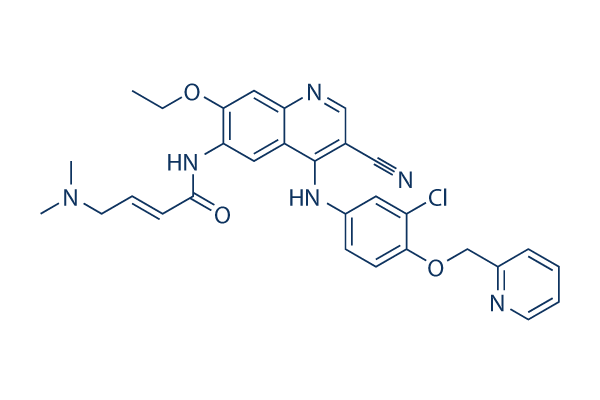
Neratinib (HKI-272)Featured
100 mg USD 200 · 250 mg USD 400 · 1 g USD 800 · 10 mM * 1 mL in DMSO USD 220Neratinib is an orally available, irreversible tyrosine kinase inhibitor with IC50s of 59 nM and 92 nM for HER2 and EGFR, respectively.
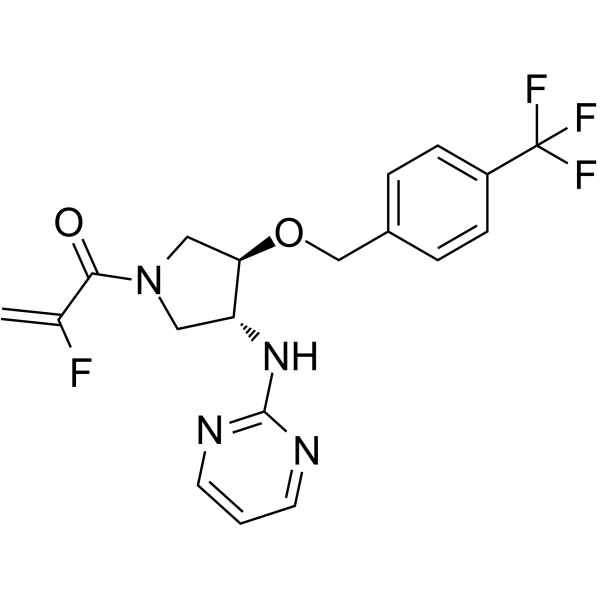
MYF-03-176Featured
10mg USD 500MYF-03-176 is an orally active and potent anticancer agent. MYF-03-176 shows strong antitumor efficacy in MPM mouse xenograft model via oral administration[1].
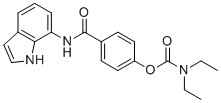
NAB-14Featured
25mg USD 600NAB-14 is a potent, selective negative allosteric modulator of GluN2C/2D-containing NMDA receptors with IC50 of 580 nM, >800-fold selective over GluN2A/GluN2 receptors; inhibits triheteromeric (GluN1/GluN2A/GluN2C) NMDARs with modestly reduced potency and efficacy compared to diheteromeric (GluN1/GluN2C/GluN2C) receptors; inhibits GluN2D-mediated synaptic currents in rat subthalamic neurons and mouse hippocampal interneurons, but has no effect on synaptic transmission in hippocampal pyramidal neurons.
Tianeptine sodium saltFeatured
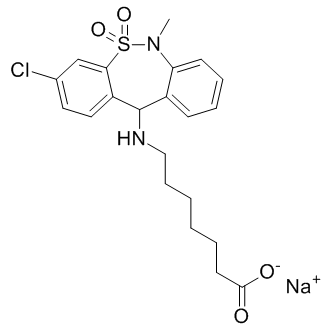
100mg USD 150 · 250mg USD 250 · 1g USD 500Tianeptine sodium salt is a selective facilitator of 5-HT uptake in vitro and in vivo.Tianeptine has no affinity for a wide range of receptors, including 5-HT and dopamine (IC50 > 10 μM) and has no effect on noradrenalin or dopamine uptake. Antidepressant, analgesic and neuroprotective following systemic administration in vivo.
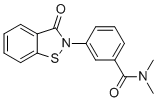
ML 086 (CID-1674999)Featured
50 mg USD 950 · 25 mg USD 600 · 10mg USD 400ML 086 is a potent, specific inhibitor of phosphatase PHOSPHO1 with IC50 of 139 nM, with no activity against TNAP (IC50>100 uM); a useful chemical tool to examine the functional role of this enzyme in skeletal mineralization and soft tissue ossification abnormalities.
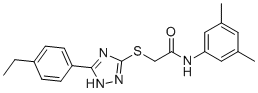
ChoK-α inhibitor CK37Featured
100 mg USD 950 · 25 mg USD 600 · 10mg USD 400A potent, specific, competitive inhibitor of choline kinase-α (Chok-α) by targeting the choline binding site; significantly increases LC3II expression in MCF-7 and MCF-7/TAM cells, increases the size and number of autophagosome, causes MCF-7 and MCF-7/TAM cells to a slight increase in p62; suppresses MAPK and PI3K/AKT signaling, disrupts actin cytoskeletal organization, and reduces plasma membrane ruffling; significantly decreases tumor growth in a lung tumor xenograft mouse model, suppresses tumor phosphocholine, and diminishes activating phosphorylations of ERK and AKT in vivo.
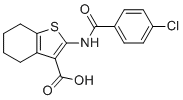
MsbA inhibitor 1Featured
10 mg USD 450MsbA inhibitor 1 is a novel small molecule lipopolysaccharide biogenesis inhibitor, inhibits MsbA, an ATP-dependent flippase that translocates LPS across the inner membrane; causes mislocalization of LPS to the cell interior, inhibits Δ5 strain with MIC of 0.2 ug/ml.
100 mg USD 1,200 · 25mg USD 700 · 10 mg USD 550
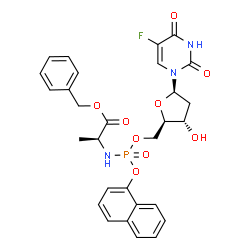
NUC-3373 is a phosphoramidate-based prodrug of the monophosphate form of 5-fluoro-2'-deoxyuridine, the active metabolite of fluorouracil,an antimetabolite fluoropyrimidine analog of the pyrimidine nucleoside, with potential antineoplastic activity.
THIACETAZONEFeatured
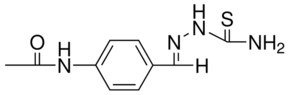
100 mg USD 300 · 250 mg USD 600 · 1 g USD 1,200 · 10 mM * 1 mL in DMSO USD 150Thiacetazone (Thioacetazone) is a thiourea-containing antitubercular agent and is an orally active antibiotic. Thiacetazone has antibacterial action, which inhibits growth of Mycobacterium tuberculosis H37Rv with a MIC value of 0.1 μg/mL[1].
Ciprofloxacin (Cipro)Featured
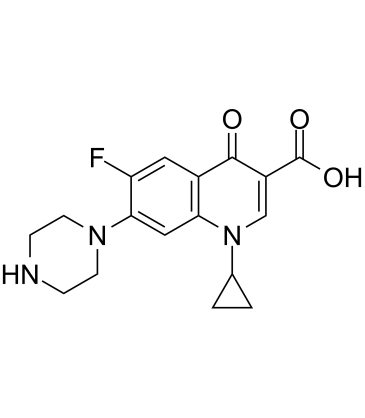
100 mg USD 250 · 250 mg USD 500 · 1 g USD 1,000 · 10 mM * 1 mL in DMSO USD 150Ciprofloxacin is a fluoroquinolone antibiotic, exhibiting potent antibacterial activity.
UU-T03Featured
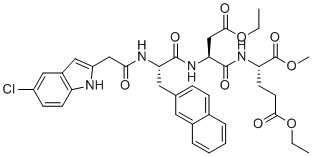
5mg USD 700 · 10mg USD 1,050 · 25mg USD 1,950UU-T03 is the ethyl ester derivative of UU-T02, which is a potent, selective inhibitor of β-catenin/Tcf4 interaction with Ki of 1.36 uM; exhibits growth inhibition of SW480 cells with IC50 of 10.77 uM; downregulates the transcription of AXIN2, LGR5, cyclin D1, and c-Myc in dose-dependent manners in SW480 cells.
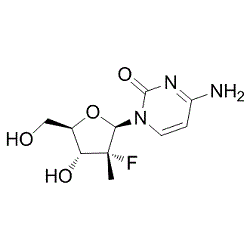
PSI6130Featured
100 mg USD 450 · 250 mg USD 800 · 1 g USD 1,600 · 10 mM * 1 mL in DMSO USD 220PSI-6130 is a potent and selective inhibitor of HCV NS5B polymerase, and inhibits HCV replication with a mean IC50 of 0.6 μM.
LDC195943(IMT1)Featured
10mg USD 500 · 25mg USD 750 · 100mg USD 1,200LDC195943(IMT1) is a highly specific inhibitor of human mitochondrial RNA polymerase (POLRMT).
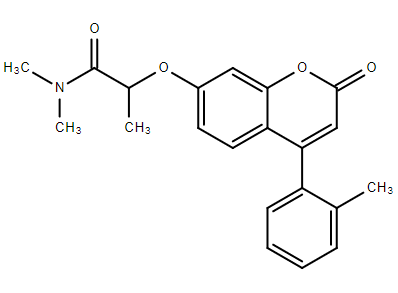
BC1618Featured
100 mg USD 500 · 250 mg USD 800 · 1 g USD 1,600BC1618 is a novel Fbxo48 inhibitor and prevent pAmpkα degradation with MEC (minimal efficacious concentration) of 0.6 μM.
No products match this search.
Page 137 of 184 · Browse all 3666 products