
Research lipid catalog
Ionizable Lipid Products
Explore 848 lipid and RNA delivery products. Search the full catalog or browse by research category.
Search covers product name, catalog number, synonyms, available CAS numbers and categories. Spaces, hyphens and common punctuation are ignored. Duplicate legacy records are consolidated under one canonical product result.
3666 products · Showing 2761–2780 · 20 per page
DC Chemicals lipid expertise
Built for ionizable-lipid discovery and RNA delivery research
DC Chemicals supports formulation and delivery research with a broad, searchable portfolio of cationic and ionizable lipids. The current directory brings together 848 unique research-use products, with product specifications, pricing, chemical structures and literature-linked formulation data added as each record is verified.
Our experience spans complex lipid synthesis, purification, analytical release and process development. For custom molecules or larger-scale requirements, our team can discuss route development, technical specifications and scale-up options for the intended research workflow.
Learn about cationic and ionizable lipids →Proprietary innovation · Co-development · GMP
From proprietary lipid design to GMP-grade custom synthesis
DC Chemicals has independently developed ionizable-lipid structures supported by company-owned intellectual property, and selected proprietary lipid programs have advanced to GMP-stage development.
We welcome joint development with customers—from molecular design and lipid synthesis through route and process development. We can also support custom synthesis of GMP-grade ionizable lipids to agreed technical specifications and quality requirements.
Discuss a co-development project →Proprietary ionizable-lipid structuresCollaborative molecular designCustom lipid synthesisProcess development and scale-upGMP-grade project support
Product quick links
Explore ionizable lipids
Browse specifications, pricing and literature-linked product information.
Cat. No.Product NameField of ApplicationChemical Structure
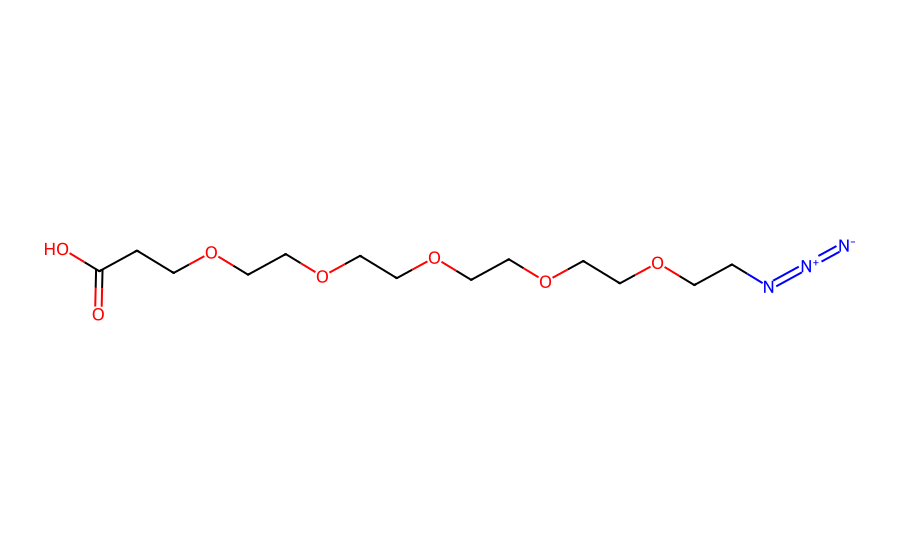
Azido-PEG5-acidFeatured
100mg USD 500 · 250mg USD 950 · 1g USD 1,900 · 10 mM * 1 mL in DMSO USD 150Azido-PEG5-acid is a non-cleavable 5 unit PEG ADC linker used in the synthesis of antibody-drug conjugates (ADCs), such as the conjugate CPT-APO (CPT: Camptothecin).
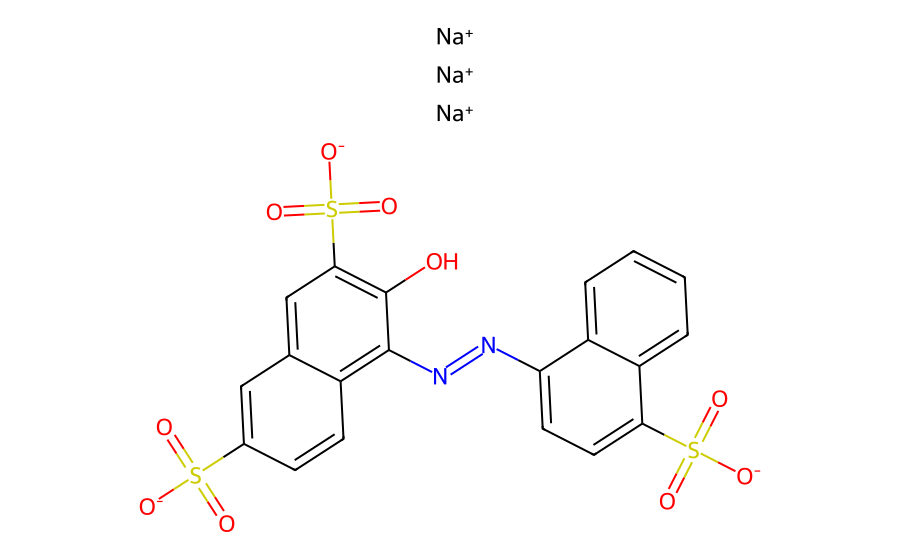
SCB-4380Featured
100 mg USD 850 · 250 mg USD 1,450 · 1 g USD 2,700SCB-4380 (SCB 4380, SCB4380) is the first potent, selective inhibitor for PTPRZ (protein tyrosine phosphatase receptor-type Z) with IC50 of 0.4 uM against human Z-ICR-catalyzed hydrolysis. SCB-4380 also strongly inhibits PTPRG (IC50=0.4 uM), and shows little inhibition on PTPRA, PTPRM, PTPRS, PTPRB, PTPN1 and PTPN6. SCB-4380 inhibites PTPRZ activity in C6 glioblastoma cells, and suppresse cell migration and proliferation in vitro and tumor growth in a rat allograft model.
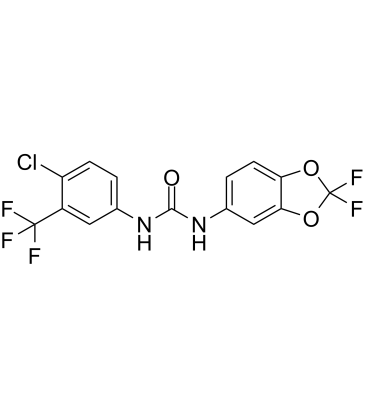
PK150Featured
100mg USD 600 · 250mg USD 1,100 · 1g USD 2,200 · 10 mM * 1 mL in DMSO USD 220PK150, an analogue of Sorafenib, shows oral bioavailability and antibacterial activity against several pathogenic strains at submicromolar concentrations. PK150 inhibits Gram-positive Methicillin-sensitive S. aureus (MSSA), Methicillin-resistant S. aureus (MRSA), Vancomycin intermediate S. aureus (VISA) with MICs of 0.3, 0.3-1, 0.3 µM, respectively[1].
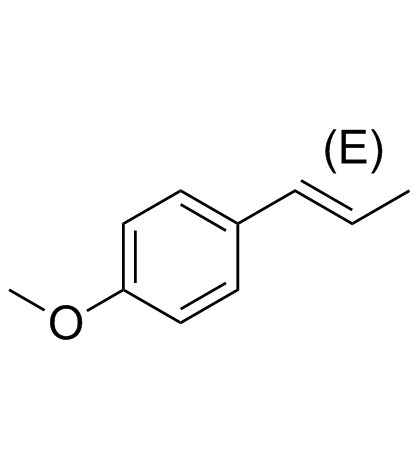
Trans-Anethole ((E)-Anethole)Featured
100 mg USD 150 · 250 mg USD 250 · 1 g USD 500Trans-Anethole ((E)-Anethole), a phenylpropene derivative isolated from Pimpinella, shows estrogenic activity at lower concentrations and cytotoxic at higher concentrations in cancer cell lines. Trans-Anethole ((E)-Anethole) contributes a large component
SMN2 splicing modulator TEC-1Featured
5mg USD 550SMN2 splicing modulator TEC-1 is a novel specific, CNS penetrant small molecule SMN2 splicing modulator, increases the expression level of FL-SMN2 mRNA and decreases the expression level of Δ7 mRNA.TEC-1 showed higher selectively (>60-fold) on galactosylceramidase and huntingtin gene expression compared to previously reported compounds (e.g., SMN-C3) due to off-target effects on cryptic exon inclusion and nonsense-mediated mRNA decay.TEC-1 modulates SMN2 splicing and displays disease-modifying effects in motor neurons derived from SMA patient iPSCs (GM24468).|TEC-1 rescues the phenotype in a murine model of spinal muscular atrophy (SMA).
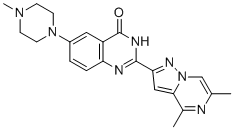
DX308Featured
5mg USD 400DX308 is a potent, selective dual CYP26A1/B1 inhibitor and retinoic acid metabolism blocking agent.DX308 does not interact with off‐target nuclear receptors or CYP450s, is not genotoxic, and is stable in skin, despite vigorous hepatic metabolism.Topical DX308 induces comedolysis and epidermal thickening without apparent adverse effects in vivo.DX308 shows potent modulation of retinoid‐responsive genes by DX308 in both healthy and keratinization disorder keratinocytes (KCs).DX308 may present an improved therapeutic alternative for the treatment of keratinization disorders and other retinoid‐responsive skin ailments.
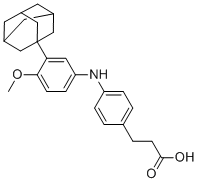
N8279Featured
5mg USD 650GHSR1a agonist with binding IC50 of 1.3 uM.N8279 is nearly an order of magnitude (8.9-fold) more potent than the endogenous ligand ghrelin and is a full agonist.iCa2+ EC50 of N8279 is 41-fold more potent than its GHSR1a binding IC50, suggesting possible allosteric activity, which could be competitively inhibited by GHSR1a antagonists YIL781 and JMV2959.N8279 is a weak activator of GHSR1a-mediated, βarr2-dependent cellular responses relative to ghrelin.N8279 requires receptor sites and/or conformational states driven by the GHSR1a ECD that are distinct from ghrelin.N8279 is brain-penetrant and attenuates aberrant DAergic behavior in mice.
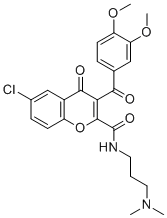
BFL-1 inhibitor 4E14Featured
5mg USD 500BFL-1 inhibitor 4E14 (4E14) is a potent, selective, covalent BFL-1 inhibitor that disrupt BH3-binding activity with IC50 of 1.3 uM, targets a unique C55 residue in the BFL-1 groove.4E14 blocks BFL-1 suppression of BAX-mediated mitochondrial apoptosis.
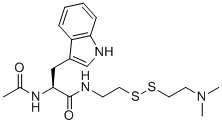
BCI(NSC 150117)Featured
100 mg USD 550 · 250 mg USD 950 · 1 g USD 1,900BCI is an allosteric inhibitor of dual specificity phosphatase (DUSP). BCI specifically inhibits DUSP6 and DUSP1 with EC50s of 13.3 and 8.0 μM in cells, respectively. BCI does not inhibit DUSP5[1].
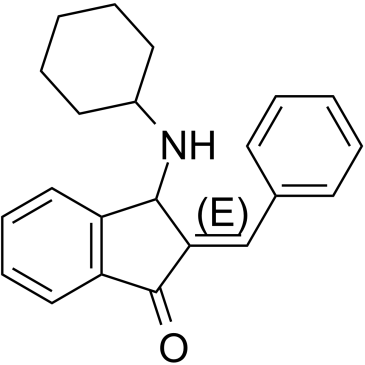
GPS491Featured
10 mg USD 350GPS491 (EC50 = 0.47 μM) suppresses expression of the HIV-1 structural protein Gag and alters HIV-1 RNA accumulation, decreasing the abundance of RNAs encoding the structural proteins while increasing levels of viral RNAs encoding the regulatory proteins.
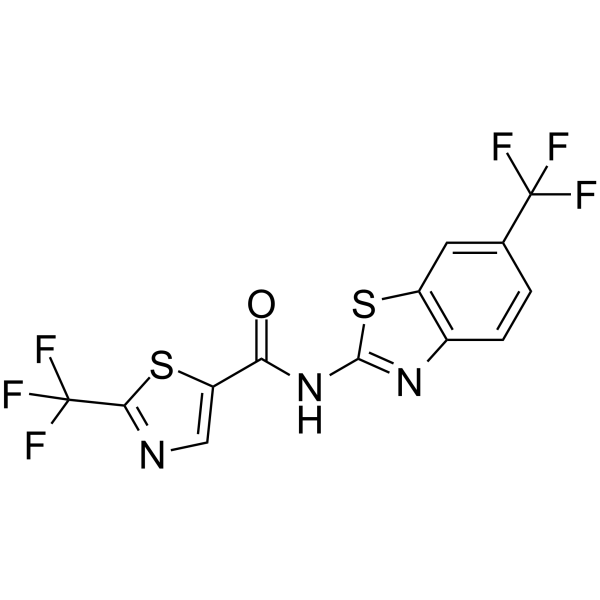
DX314Featured
5mg USD 350DX314 is a potent, specific CYP26B1 inhibitor with IC50 of 108 nM, >15-fold selectivity over CYP26A1.DX314 potentiates all-trans-RA (atRA) gene expression effects in healthy and diseased reconstructed human epidermis (RHE).DX314 potentiates the effects of atRA on the expression and localization of keratin 10 (KRT10), protects barrier function in RHE.DX314 reduces comedonal number, induces epidermal thickening, and increases comedonal profile, while having no effect on transepidermal water loss (TEWL) in treated rhino mice.
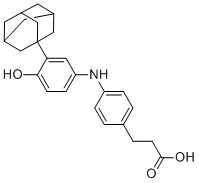
Xeglyze(Abametapir)Featured
100 mg USD 250 · 250 mg USD 450 · 1 g USD 900Abametapir is a metalloproteinase (MMP) inhibitor which is able to target metalloproteinases critical to egg hatching and louse development. Abametapir can inhibit hatching of both head and body louse[1][2].
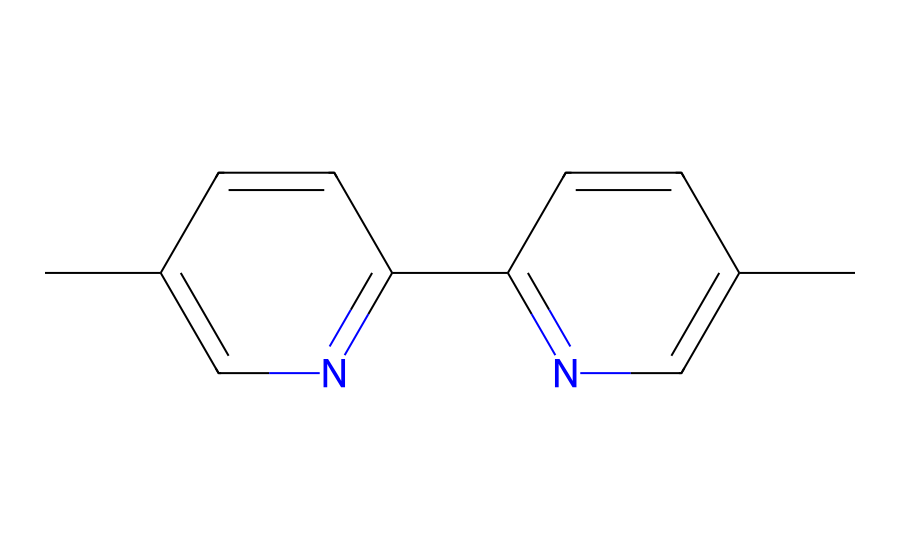
TG8-260Featured
5mg USD 450TG8-260 is a second-generation, potent, selective EP2 antagonist with Schild KB of 13.2 nM.TG8-260 displays 500-fold selectivity to EP2 against other prostanoid receptors.TG8-260 has a plasma half-life of 2.14 h (PO) and excellent oral bioavailability (77.3%), TG8-260 is a potent inhibitor of CYP450 enzymes.TG8-260 displays antagonistic activity on the induction of EP2 receptor-mediated inflammatory gene expression in microglia BV2-hEP2 cells.TG8-260 reduces hippocampal neuroinflammation and gliosis after pilocarpine-induced status epilepticus in rats.TG8-260 is a tool for investigating anti-inflammatory pathways in peripheral inflammatory disease animal models.
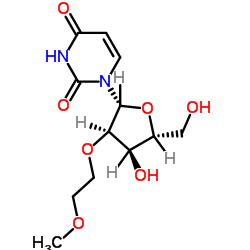
2'-O-(2-Methoxyethyl)-uridineFeatured
1 g USD 500 · 10 mM * 1 mL in DMSO USD 1502'-O-(2-Methoxyethyl)-uridine is a synthetic oligonucleotide conversed from uridine. 2'-O-(2-Methoxyethyl)-uridine has the potential for chemotherapeutic agents development.
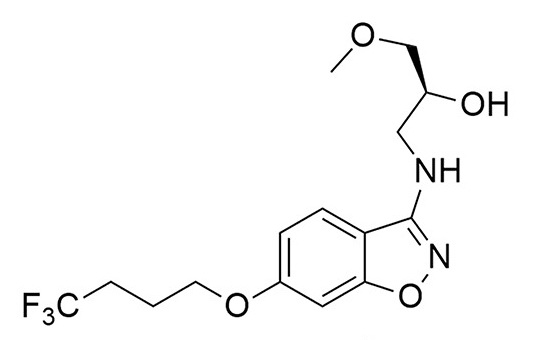
SL25.1188 precursorFeatured
5mg USD 550SL25.1188 Precursor is a key intermediate in the synthesis of SL25.1188, a reversible and selective MAO-B radioligand. The radiolabeled form, ¹¹CSL25.1188, is a promising PET imaging agent for studying MAO-B in the brain, with applications in neurodegenerative disease research and drug development. Its reversible binding and high selectivity make it a valuable tool for understanding MAO-B's role in health and disease.
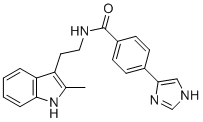
Usp22i-S02Featured
5 mg USD 450Usp22i-S02(USP22-IN-1, compound S02) is a potent inhibitor of ubiquitin specific peptidase 22 (USP22). It showed anticancer activity by suppressing Foxp3 expression in T-regulatory cells.
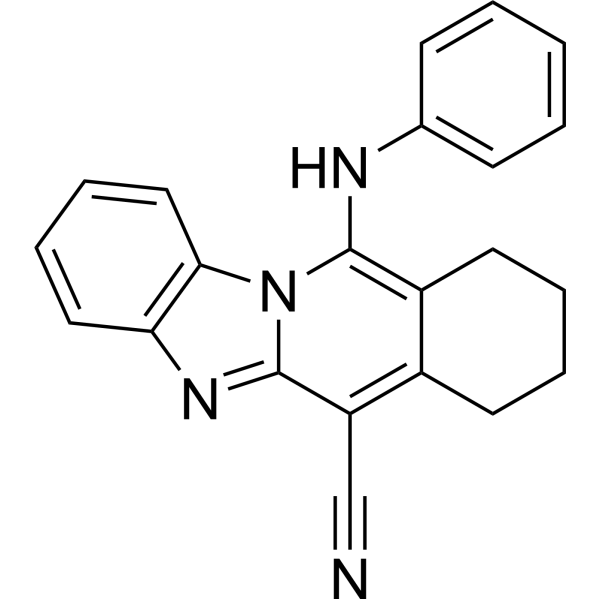
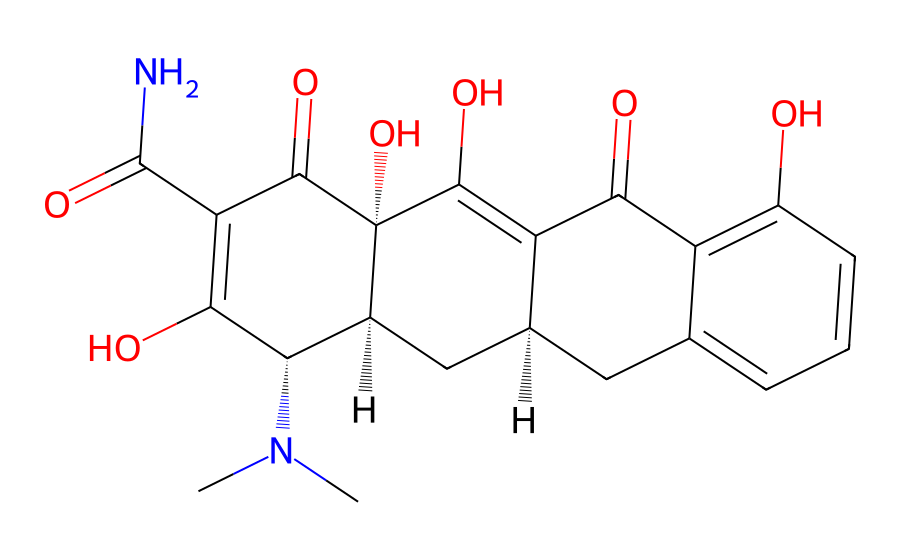
SancyclineFeatured
Pack sizes and prices on requestSancycline is available from DC Chemicals for laboratory research. Contact us for application-specific product information.
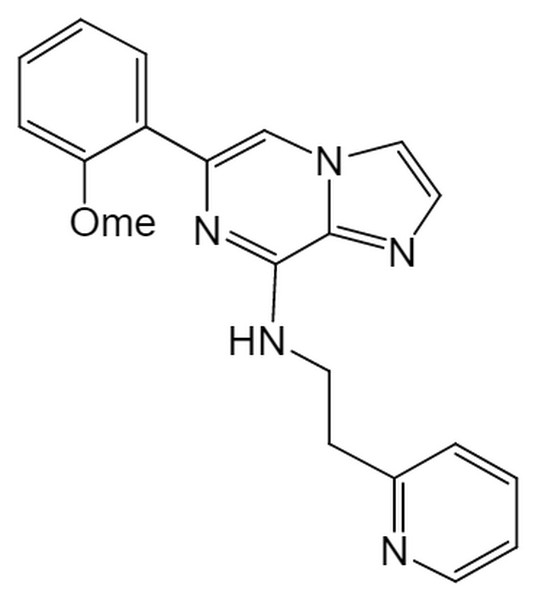
TH7127Featured
5mg USD 350TH7127 is a SAMHD1 inhibitor with IC50 of 4.9 μM/4.5 μM/4.0 μM against dGTP/Cl-F-ara-ATP/ara-CTP, respectively.
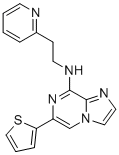
TH7528Featured
5mg USD 350TH7528 is a SAMHD1 inhibitor with IC50 of 4.5 μM/2.8 μM/2.6 μM against dGTP/Cl-F-ara-ATP/ara-CTP, respectively.
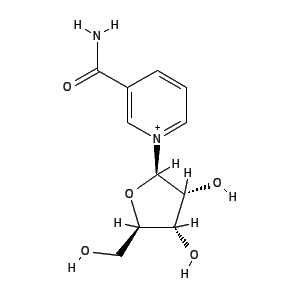
Nicotinamide ribosideFeatured
1g USD 350Nicotinamide riboside is a crystal form of Nicotinamide riboside (NR) chloride. Nicotinamide riboside increases NAD[+] levels and activates SIRT1 and SIRT3, culminating in enhanced oxidative metabolism and protection against high fat diet-induced metabolic abnormalities. Nicotinamide riboside is used in dietary supplements[1].
No products match this search.
Page 139 of 184 · Browse all 3666 products