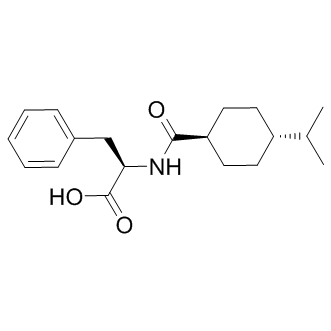
Nateglinide chemical structure
Chemical structureResearch use only
CAT. NO. DC9063Featured

Nateglinide

Pack Sizes & Prices

TotalUS$300
We match the best price and quality on market.
Product overview

Description & Application

Nateglinide is an insulin secretagog agent used for the treatment of non-insulin-dependent diabetes mellitus (NIDDM).Nateglinide is an oral antihyperglycemic agent used for the treatment of non-insulin-dependent diabetes mellitus (NIDDM). It belongs to the meglitinide class of short-acting insulin secretagogues, which act by binding to β cells of the pancreas to stimulate insulin release. Nateglinide is an amino acid derivative that induces an early insulin response to meals decreasing postprandial blood glucose levels. It should only be taken with meals and meal-time doses should be skipped with any skipped meal. Approximately one month of therapy is required before a decrease in fasting blood glucose is seen. Meglitnides may have a neutral effect on weight or cause a slight increase in weight. The average weight gain caused by meglitinides appears to be lower than that caused by sulfonylureas and insulin and appears to occur only in those na?ve to oral antidiabetic agents. Due to their mechanism of action, meglitinides may cause hypoglycemia although the risk is thought to be lower than that of sulfonylureas since their action is dependent on the presence of glucose. In addition to reducing postprandial and fasting blood glucose, meglitnides have been shown to decrease glycosylated hemoglobin (HbA1c) levels, which are reflective of the last 8-10 weeks of glucose control. Meglitinides appear to be more effective at lowering postprandial blood glucose than metformin, sulfonylureas and thiazolidinediones. Nateglinide is extensively metabolized in the liver and excreted in urine (83%) and feces (10%). The major metabolites possess less activity than the parent compound. One minor metabolite, the isoprene, has the same potency as its parent compound.

ParameterValue
CAS No.105816-04-4
FormulaC19H27NO3
M.Wt317.42
SMILESCC(C1CCC(C(N[C@H](CC2=CC=CC=C2)C(=O)O)=O)CC1)C
Purity>98%
Storage2 years -20°C Powder, 2 weeks 4°C in DMSO, 6 months -80°C in DMSO

Biological Activity

Nateglinide is an insulin secretagog agent used for the treatment of non-insulin-dependent diabetes mellitus (NIDDM).Nateglinide is an oral antihyperglycemic agent used for the treatment of non-insulin-dependent diabetes mellitus (NIDDM). It belongs to the meglitinide class of short-acting insulin secretagogues, which act by binding to β cells of the pancreas to stimulate insulin release. Nateglinide is an amino acid derivative that induces an early insulin response to meals decreasing postprandial blood glucose levels. It should only be taken with meals and meal-time doses should be skipped with any skipped meal. Approximately one month of therapy is required before a decrease in fasting blood glucose is seen. Meglitnides may have a neutral effect on weight or cause a slight increase in weight. The average weight gain caused by meglitinides appears to be lower than that caused by sulfonylureas and insulin and appears to occur only in those na?ve to oral antidiabetic agents. Due to their mechanism of action, meglitinides may cause hypoglycemia although the risk is thought to be lower than that of sulfonylureas since their action is dependent on the presence of glucose. In addition to reducing postprandial and fasting blood glucose, meglitnides have been shown to decrease glycosylated hemoglobin (HbA1c) levels, which are reflective of the last 8-10 weeks of glucose control. Meglitinides appear to be more effective at lowering postprandial blood glucose than metformin, sulfonylureas and thiazolidinediones. Nateglinide is extensively metabolized in the liver and excreted in urine (83%) and feces (10%). The major metabolites possess less activity than the parent compound. One minor metabolite, the isoprene, has the same potency as its parent compound.

In Vitro

No in vitro data are provided in the current product source. Contact us for further information.

In Vivo

No in vivo data are provided in the current product source. Contact us for further information.

References & source

DC Chemicals original product information

Published experimental findings depend on the model and assay conditions. They do not guarantee equivalent performance in every application. For laboratory research use only.

Product documentation

Refer to the certificate supplied with your lot for batch-specific release results.

Handling guide

2 years -20°C Powder, 2 weeks 4°C in DMSO, 6 months -80°C in DMSO

Solution calculator

Related research products

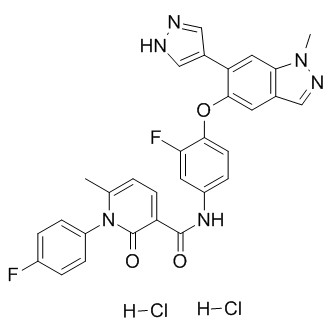
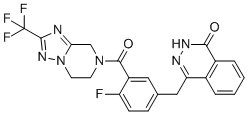
Fluzoparib chemical structureDC22228

Fluzoparib

Fluzoparib (SHR-3162) is a novel, potent and orally available inhibitor of PARP; potently inhibited PARP1 enzyme activity and induced DNA double-strand breaks, G2/M arrest and apoptosis in homologous recombination…

View activity & prices
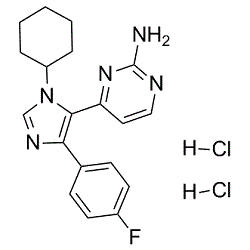
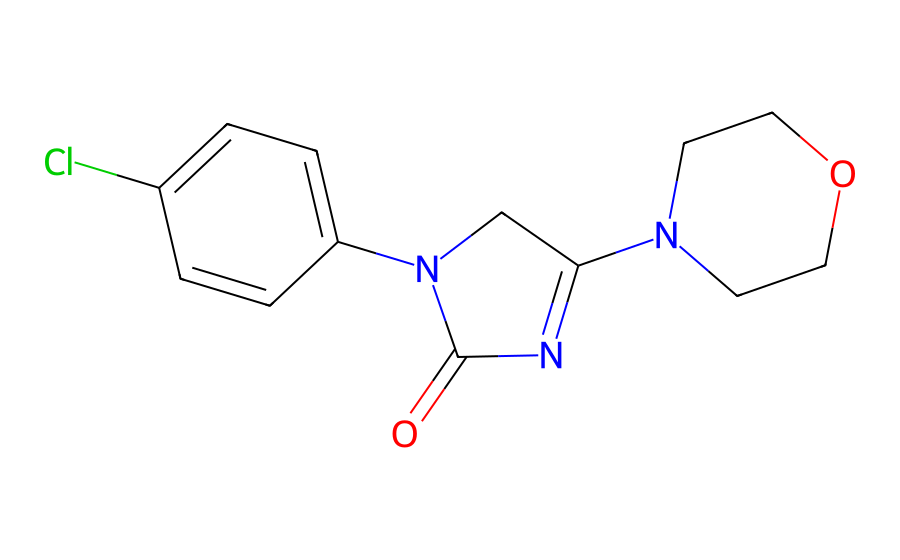
PF-670462 chemical structureDC2086

PF-670462

PF-670462 is a potent and selective inhibitor of casein kinase (CK1ε and CK1δ), with IC50s of 7.7 nM and 14 nM, respectively.

View activity & prices
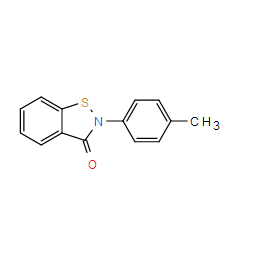
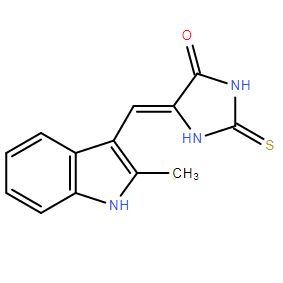
PBIT chemical structureDC7550

PBIT

PBIT is a specific inhibitor of the Jumonji AT-rich Interactive Domain 1(JARID1) enzymes. PBIT inhibits JARID1B (KDM5B or PLU1 ) histone demethylase an IC50 of about 3 μM . PBIT also inhibits JARID1A and JARID1C with…

View activity & prices
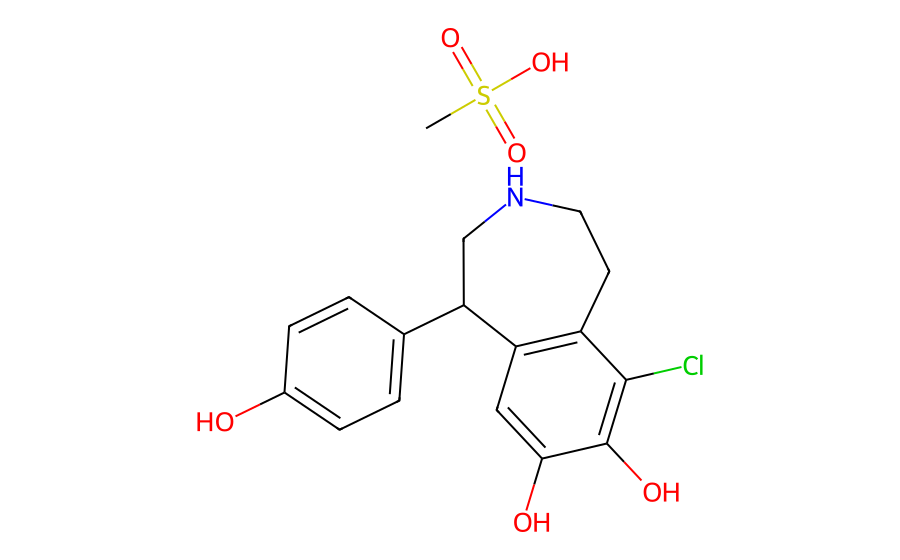
Fenoldopam (mesylate) chemical structureDC9424

Fenoldopam (mesylate)

Fenoldopam(SKF 82526) mesylate is a drug and synthetic benzazepine derivative which acts as a selective D1 receptor partial agonist.Target: D1 ReceptorFenoldopam is a selective dopamine-1 (DA1) agonist with…

View activity & prices
PKG drug G1 chemical structureDC10821

PKG drug G1

PKG drug G1 targets C42 of PKG Iα. PKG drug G1 can couple to vasodilation and blood pressure lowering by a C42 PKG Iα-independent mechanism.

View activity & prices

Cart

Request quotation