
Research lipid catalog
Ionizable Lipid Products
Explore 848 lipid and RNA delivery products. Search the full catalog or browse by research category.
Search covers product name, catalog number, synonyms, available CAS numbers and categories. Spaces, hyphens and common punctuation are ignored. Duplicate legacy records are consolidated under one canonical product result.
3666 products · Showing 2461–2480 · 20 per page
DC Chemicals lipid expertise
Built for ionizable-lipid discovery and RNA delivery research
DC Chemicals supports formulation and delivery research with a broad, searchable portfolio of cationic and ionizable lipids. The current directory brings together 848 unique research-use products, with product specifications, pricing, chemical structures and literature-linked formulation data added as each record is verified.
Our experience spans complex lipid synthesis, purification, analytical release and process development. For custom molecules or larger-scale requirements, our team can discuss route development, technical specifications and scale-up options for the intended research workflow.
Learn about cationic and ionizable lipids →Proprietary innovation · Co-development · GMP
From proprietary lipid design to GMP-grade custom synthesis
DC Chemicals has independently developed ionizable-lipid structures supported by company-owned intellectual property, and selected proprietary lipid programs have advanced to GMP-stage development.
We welcome joint development with customers—from molecular design and lipid synthesis through route and process development. We can also support custom synthesis of GMP-grade ionizable lipids to agreed technical specifications and quality requirements.
Discuss a co-development project →Proprietary ionizable-lipid structuresCollaborative molecular designCustom lipid synthesisProcess development and scale-upGMP-grade project support
Product quick links
Explore ionizable lipids
Browse specifications, pricing and literature-linked product information.
Cat. No.Product NameField of ApplicationChemical Structure
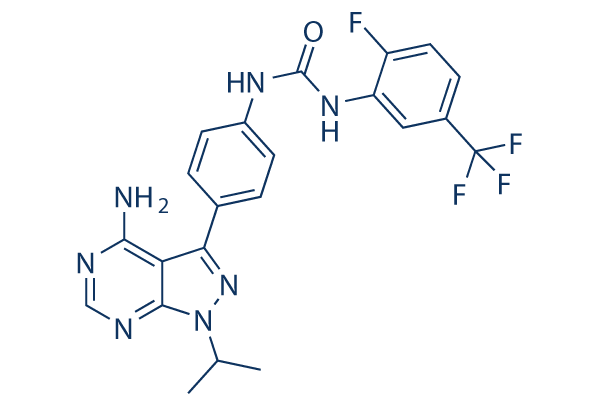
AD80Featured
100 mg USD 600 · 250 mg USD 1,200 · 1 g USD 2,400 · 10 mM * 1 mL in DMSO USD 220AD80, a multikinase inhibitor, inhibits RET, RAF,SRCand S6K, with greatly reduced mTOR activity.
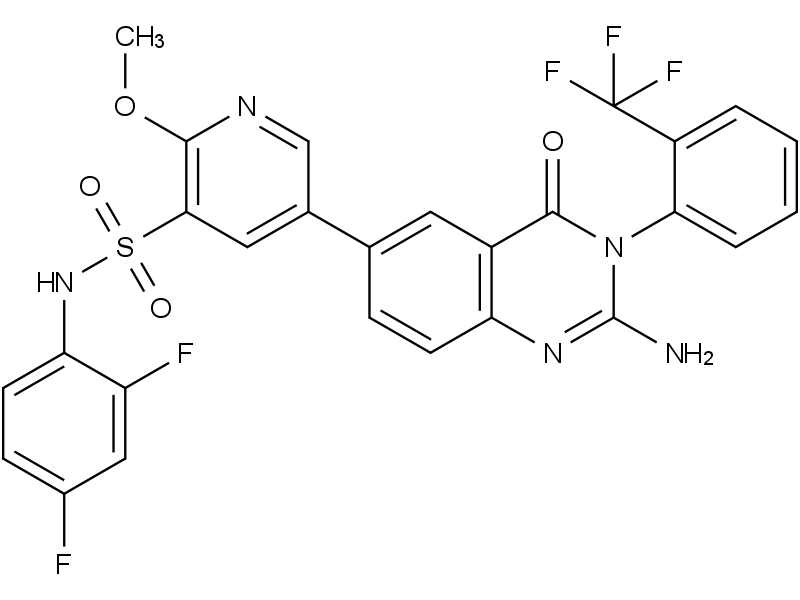
GSK-F1Featured
10 mg USD 300 · 25 mg USD 400 · 100 mg USD 1,000GSK-F1 is a potent inhibitor of PI4KA. It has markedly better pharmacokinetic properties in vivo with respects to GSK-A1 (SYN-1219). GSK-F1 does not cross the blood-brain barrier. Phosphatidylinositol 4-kinase type IIIα (PI4KA) is a host factor essential for hepatitis C virus replication and hence is a target for drug development. RNAi studies have shown that PI4KA is a mandatory host factor in HCV replication. Down-regulation of PI4KA appears to be reasonably tolerated by cultured cell models and results.
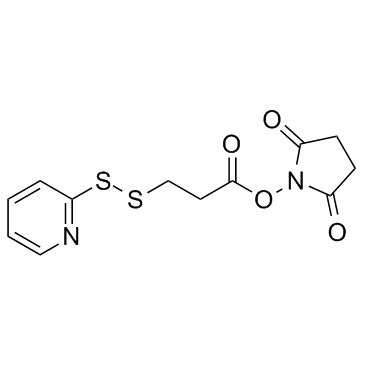
SPDPFeatured
100 mg USD 150 · 250 mg USD 300 · 1 g USD 600 · 10 mM * 1 mL in DMSO USD 150SPDP is a short-chain crosslinker for amine-to-sulfhydryl conjugation via NHS-ester and pyridyldithiol reactive groups that form cleavable (reducible) disulfide bonds with cysteine sulfhydryls. equal amounts of anti-CD11c and anti-CTLA-4 Abs (in borate buffered saline; pH 8.5) were activated using SPDP .
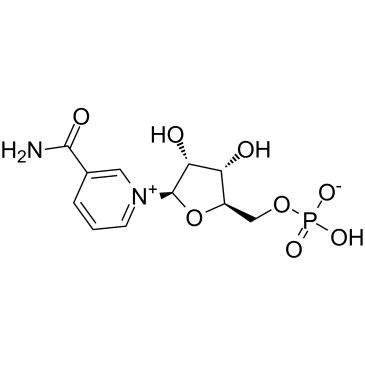
Nicotinamide MononucleotideFeatured
100 mg USD 150 · 250 mg USD 300 · 1g USD 500 · 10 mM * 1 mL in DMSO USD 150β-nicotinamide mononucleotide is an intermediate in NAD+ biosynthesis produced from nicotinamide (NAM) and phosphoribosyl pyrophosphate (PRPP) by nicotinamide phosphoribosyl transferase enzyme.
NUCC-0200590Featured
5mg USD 450NUCC-0200590 is a small-molecule inhibitor of the TRIP8b-HCN interaction with IC50 of 7.0 uM in AlphaScreen assays, effectively disrupts the TRIP8b-HCN interaction in vitro and in vivo.
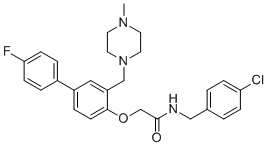
LY2835219(Abemaciclib)Featured
100 mg USD 250 · 250 mg USD 500 · 1 g USD 1,000 · 10 mM * 1 mL in DMSO USD 150Abemaciclib (LY2835219) (methanesulfonate) is a selective CDK4/6 inhibitor with IC50s of 2 nM and 10 nM for CDK4 and CDK6, respectively.
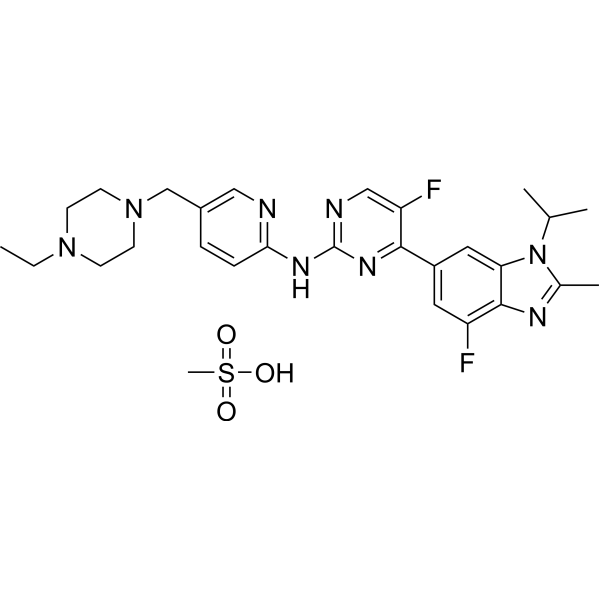
NMDAR/TRPM4 inhibitor 8Featured
100mg USD 800 · 250mg USD 1,400 · 1g USD 2,800NMDAR/TRPM4 inhibitor 8 (Compound 8) is a neuroprotective NMDAR-TRPM4 interaction interface inhibitor but spare the critical healthy NMDAR function.
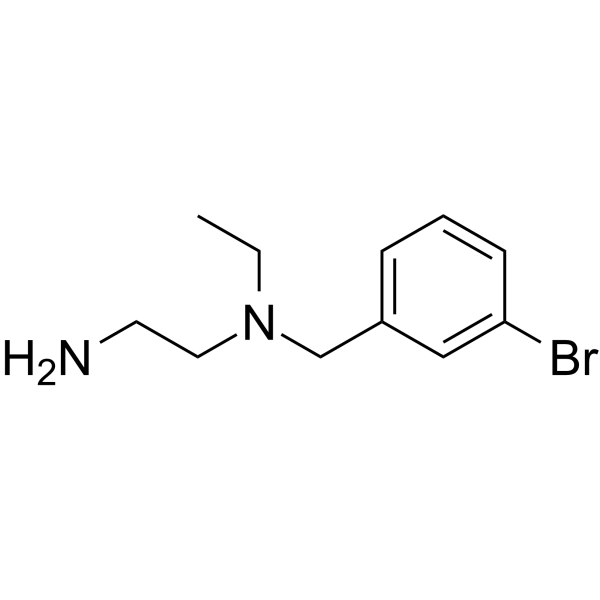
MID-1Featured
100 mg USD 750 · 250mg USD 1,000 · 1g USD 1,900 · 10 mM * 1 mL in DMSO USD 220MID-1 is an inhibitor of MG53-IRS-1 (Mitsugumin 53-Insulin Receptor Substrate-1) interaction. MID-1 disrupts molecular association of MG53 with IRS-1 and abolishes MG53-induced IRS-1 ubiquitination and degradation in skeletal muscle, leading to elevated IRS-1 expression level and increased insulin signaling and glucose uptake[1].
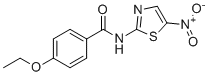
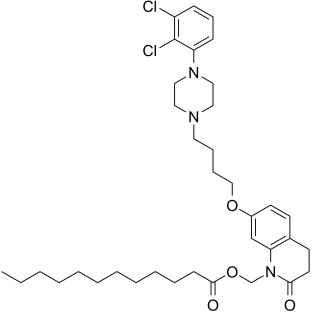
Aripiprazole LauroxilFeatured
100mg USD 250 · 250mg USD 600 · 1g USD 1,200 · 10 mM * 1 mL in DMSO USD 150Aripiprazole lauroxil, an N-acyloxymethyl prodrug of aripiprazole, is a Long-acting injectable (LAI) typical antipsychotic for schizophrenia. Aripiprazole lauroxil is cleaved by body’s enzyme esterase to N-hydroxymethyl aripiprazole (plus lauric acid) and then to aripiprazole (plus formaldehyde), no toxicity[1].
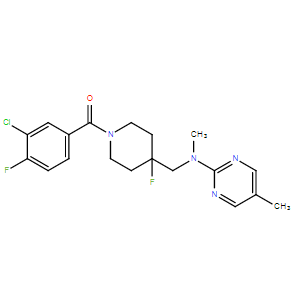
NLX-101(F-15599)Featured
100 mg USD 500 · 250 mg USD 850 · 1 g USD 1,800 · 10 mM * 1 mL in DMSO USD 220F-15599 is a highly selective G-protein biased 5-HT1A receptor agonist, with Ki of 3.4 nM.
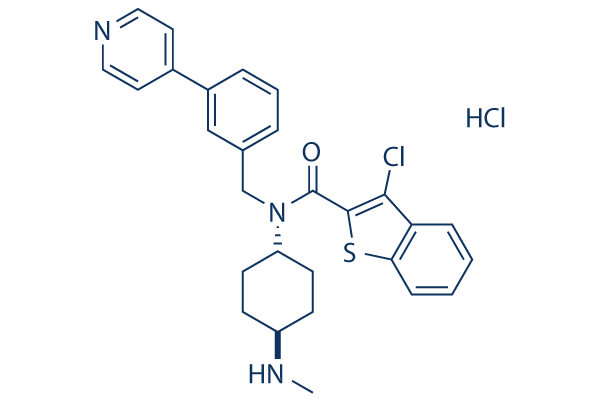
Smoothened Agonist (SAG) HClFeatured
100 mg USD 650 · 250 mg USD 1,300 · 1 g USD 2,500 · 10 mM * 1 mL in DMSO USD 220SAG (hydrochloride) is a potent Smo receptor agonist, and activates the Hedgehog signaling pathway, with a Kd of 59 nM.
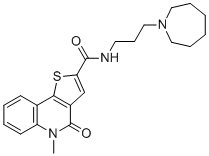
MMV019313Featured
5mg USD 450MMV019313 (MMV 019313, MMV-019313) is a potent, specific malaria bifunctional farnesyl/geranylgeranyl diphosphate synthase (FPPS/GGPPS) inhibitor with IC50 of 330 nM; shows no activity against human FPPS or GGPPS (>200 uM); exhibits distinct modes of inhibition compared with bisphosphonates, inhibits P. falciparum growth with EC50 of 268 nM, overexpression and an S228T variant of PfFPPS/GGPPS confer resistance to MMV 019313.
BAY 2416964Featured
100mg USD 600 · 250mg USD 1,100 · 1g USD 1,950 · 10 mM * 1 mL in DMSO USD 220BAY 2416964 is a 2-heteroaryl-3-oxo-2,3-dihydropyridazine-4-carboxamide compound and an aryl hydrocarbon receptor (AHR) antagonist extracted from patent WO2018146010A1, example 192, has an IC50 of 341 nM. AHR antagonist 3 has anti-cancer effects[1].
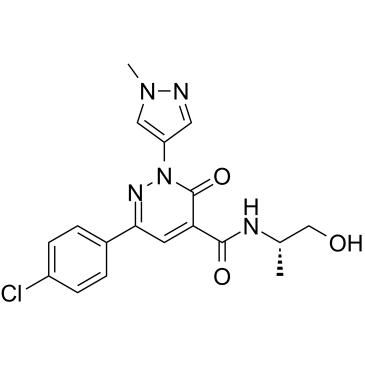
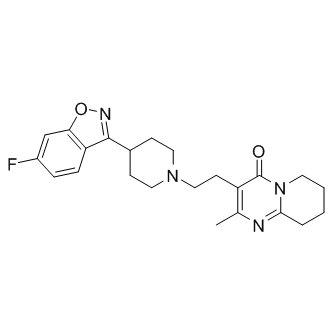
Risperidone(R 64 766)Featured
1 g USD 450 · 10 mM * 1 mL in DMSO USD 150Risperidone(Risperdal) is an atypical antipsychotic used to treat schizophrenia (including adolescent schizophrenia), schizoaffective disorder, the mixed and manic states associated with bipolar disorder, and irritability in children with autism. This drug has more pronounced serotonin antagonism than dopamine antagonism. It has high affinity For D2 dopaminergic receptors. It has actions at several 5-HT (serotonin) receptor subtypesFor the detailed information of Risperidone(R 64 766), the solubility of Risperidone(R 64 766) in water, the solubility of Risperidone(R 64 766) in DMSO, the solubility of Risperidone(R 64 766) in PBS buffer, the animal experiment (test) of Risperidone(R 64 766), the cell expriment (test) of Risperidone(R 64 766), the in vivo, in vitro and clinical trial test of Risperidone(R 64 766), the EC50, IC50,and Affinity of Risperidone(R 64 766), Please contact DC Chemicals.
Quarfloxin (CX-3543)Featured
10 mg USD 450 · 25 mg USD 700 · 100 mg USD 1,350Quarfloxin (CX-3543) is a fluoroquinolone derivative with antineoplastic activity.
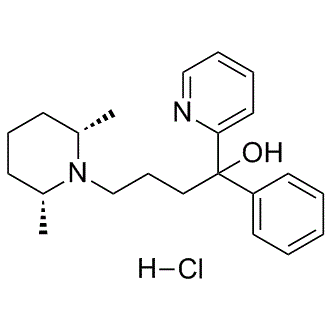
Pirmenol hydrochlorideFeatured
100 mg USD 550 · 250 mg USD 900 · 1 g USD 1,800 · 10 mM * 1 mL in DMSO USD 220Pirmenol hydrochloride inhibits IK.ACh by blocking muscarinic receptors. The IC50 of Pirmenol for inhibition of Carbachol-induced IK.ACh is 0.1 μM.
STD1TFeatured
100mg USD 750 · 250mg USD 1,200 · 1g USD 2,600 · 10 mM * 1 mL in DMSO USD 220STD1T (USP2a inhibitor STD1T) is a hit-to-lead, small-molecule inhibitor of USP2a with IC50 of 3.3 uM in Ub-AMC assays, displays no activity against USP7 at 10 uM.
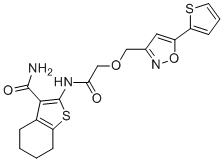
PD 404182Featured
25mg USD 550 · 100mg USD 850PD 404182 is a potent and competitive inhibitor of human dimethylarginine dimethylaminohydrolase 1 (DDAH1), with an IC50 of 9 μM. PD 404182 exhibits antiangiogenic and antiviral activity in vitro[1][2].
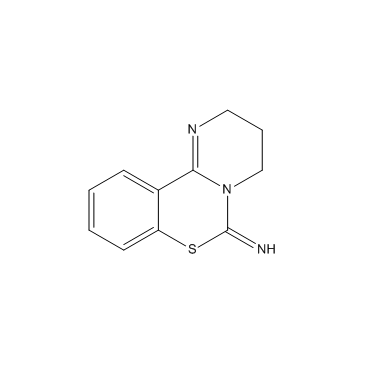
CevidoplenibFeatured
100mg USD 850 · 250mg USD 1,450 · 1g USD 2,900Cevidoplenib (SKI-O-703) is an orally available inhibitor of spleen tyrosine kinase (Syk), with potential anti-inflammatory and immunomodulating activities. Cevidoplenib is also the mesylate form of SKI-O-592. Cevidoplenib and SKI-O-592 inhibits BCR-mediated survival, proliferation, and differentiation of B cells. And SKI-O-592 potently inhibits multiple kinases with IC50s of 6.2 nM (Syk), 1.859 μM (Jak2), 5.807 μM (Jak3), 0.412 μM (RET), 0.687 μM (KOR), 1.783 μM (FLT3), 16.96 μM (FGFR1), 5.662 μM (FGFR3), and 0.709 μM (Pyk2), respectively.
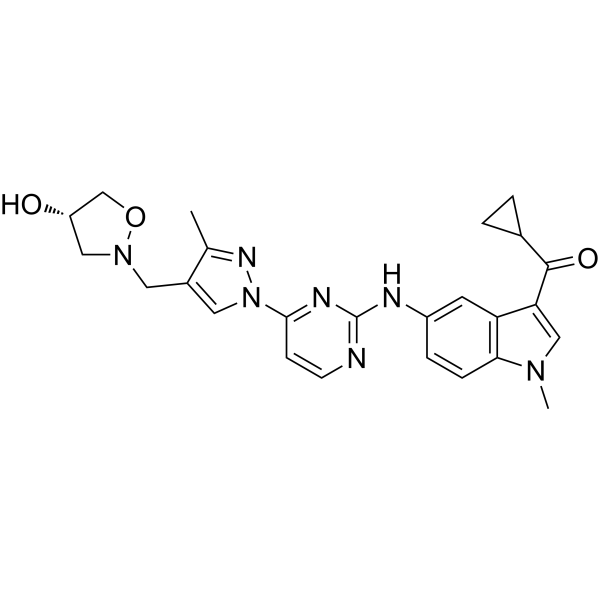
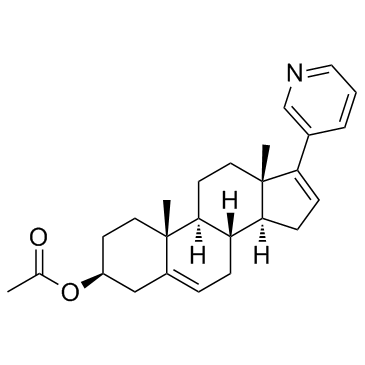
Abiraterone Acetate (CB7630)Featured
100 mg USD 200 · 250 mg USD 400 · 500 mg USD 800Abiraterone acetate is an FDA approved drug, and is an orally active acetate ester of the steroidal compound abiraterone with antiandrogen activity. Abiraterone acetate was approved by the U.S. Food and Drug Administration (FDA) in April 2011. Abiraterone inhibits the enzymatic activity of steroid 17alpha-monooxygenase (17alpha-hydrolase/C17,20 lyase complex), a member of the cytochrome p450 family that catalyzes the 17alpha-hydroxylation of steroid intermediates involved in testosterone synthesis. Administration of this agent may suppress testosterone production by both the testes and the adrenals to castrate-range levels. FDA Approval this drug in May 2011.
No products match this search.
Page 124 of 184 · Browse all 3666 products