
Research lipid catalog
Ionizable Lipid Products
Explore 848 lipid and RNA delivery products. Search the full catalog or browse by research category.
Search covers product name, catalog number, synonyms, available CAS numbers and categories. Spaces, hyphens and common punctuation are ignored. Duplicate legacy records are consolidated under one canonical product result.
3666 products · Showing 2441–2460 · 20 per page
DC Chemicals lipid expertise
Built for ionizable-lipid discovery and RNA delivery research
DC Chemicals supports formulation and delivery research with a broad, searchable portfolio of cationic and ionizable lipids. The current directory brings together 848 unique research-use products, with product specifications, pricing, chemical structures and literature-linked formulation data added as each record is verified.
Our experience spans complex lipid synthesis, purification, analytical release and process development. For custom molecules or larger-scale requirements, our team can discuss route development, technical specifications and scale-up options for the intended research workflow.
Learn about cationic and ionizable lipids →Proprietary innovation · Co-development · GMP
From proprietary lipid design to GMP-grade custom synthesis
DC Chemicals has independently developed ionizable-lipid structures supported by company-owned intellectual property, and selected proprietary lipid programs have advanced to GMP-stage development.
We welcome joint development with customers—from molecular design and lipid synthesis through route and process development. We can also support custom synthesis of GMP-grade ionizable lipids to agreed technical specifications and quality requirements.
Discuss a co-development project →Proprietary ionizable-lipid structuresCollaborative molecular designCustom lipid synthesisProcess development and scale-upGMP-grade project support
Product quick links
Explore ionizable lipids
Browse specifications, pricing and literature-linked product information.
Cat. No.Product NameField of ApplicationChemical Structure
CTOPFeatured
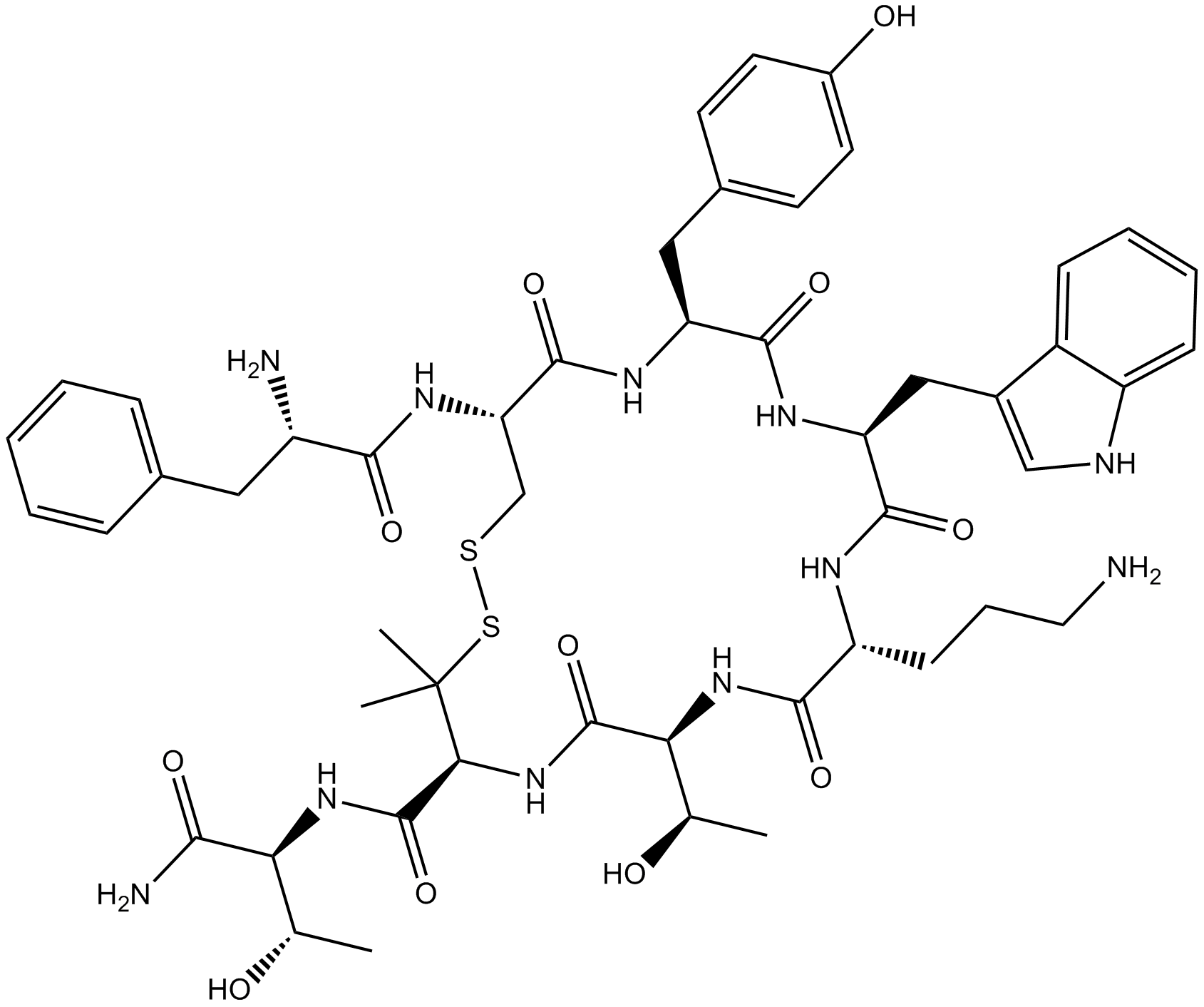
100 mg USD 850 · 250 mg USD 1,500 · 1 g USD 3,000 · 10 mM * 1 mL in DMSO USD 220CTOP is a potent and highly selective μ-opioid receptor antagonist. CTOP antagonizes the acute morphine-induced analgesic effect and hypermotility. CTOP enhances extracellular dopamine levels in the nucleus accumbens. CTOP dose-dependently enhances locomotor activity.
SHP504Featured
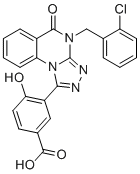
10 mg USD 850SHP504 is a distinct, allosteric site 2 SHP2 inhibitor with IC50 of 21 uM (SHP2 1-525), and selective over the phosphatase domain (SHP2 PTP IC50>100 uM).downregulates DUSP6 mRNA, a downstream MAPK pathway marker, in KYSE-520 cancer cells; enhances pharmacological pathway inhibition in cells combined with SHP099.
UNC-1999Featured
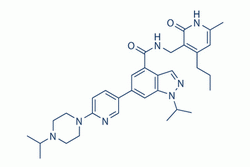
100 mg USD 550 · 250 mg USD 1,100 · 1 g USD 1,900 · 10 mM * 1 mL in DMSO USD 220UNC1999 is a SAM-competitive, potent and selective inhibitor of EZH1/2 with IC50s of 10 nM and 45 nM, repectively.
FludarabineFeatured
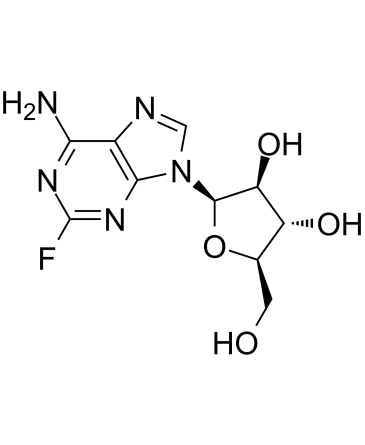
100 mg USD 200 · 250 mg USD 350 · 1 g USD 700 · 10 mM * 1 mL in DMSO USD 150Fludarabine(NSC 118218), a DNA synthesis inhibitor, is a chemotherapy drug used in the treatment of hematological malignancies.Fludarabine or fludarabine ph osphate (Fludara) is a chemotherapy drug used in the treatment of hematological malignancies (cancers of blood cells such as leukemias and lymphomas). It is a purine analog, which interferes with DNA synthesis. Fludarabine is highly effective in the treatment of chronic lymphocytic leukemia, producing higher response rates than alkylating agents such as chlorambucil alone.Fludarabine is a purine analog, and can be given both orally and intravenously. Fludarabine inhibits DNA synthesis by interfering with ribonucleotide reductase and DNA polymerase. It is active against both dividing and resting cells. Being phosphorylated, fludarabine is ionized at physiologic pH and is effectually trapped in blood. This provides some level of specificity for blood cells, both cancerous and healthy. Fludarabine is associated with the development of severe autoimmune hemolytic anemia in a proportion of patients. Difficulties are often encountered when harvesting peripheral blood stem cells from patients previously treated with fludarabine.
ZamicastatFeatured
50mg USD 600 · 100mg USD 1,100 · 250mg USD 1,900Zamicastat is a concentration-dependent dual P-gp and BCRP inhibitor with IC50 values of 73.8±7.2 μM and 17.0±2.7 μM, respectively.
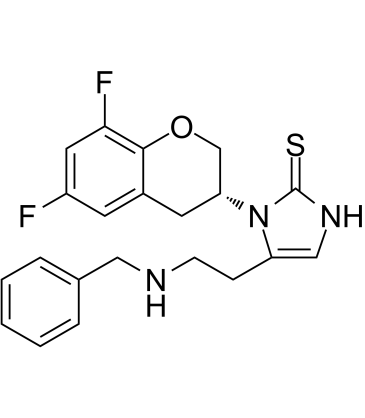
HS-1371Featured
100 mg USD 600 · 250 mg USD 1,100 · 1 g USD 1,950 · 10 mM * 1 mL in DMSO USD 220HS-1371 is a potent and ATP-competitive RIP3 inhibitor with an IC50 of 20.8 nM[1].
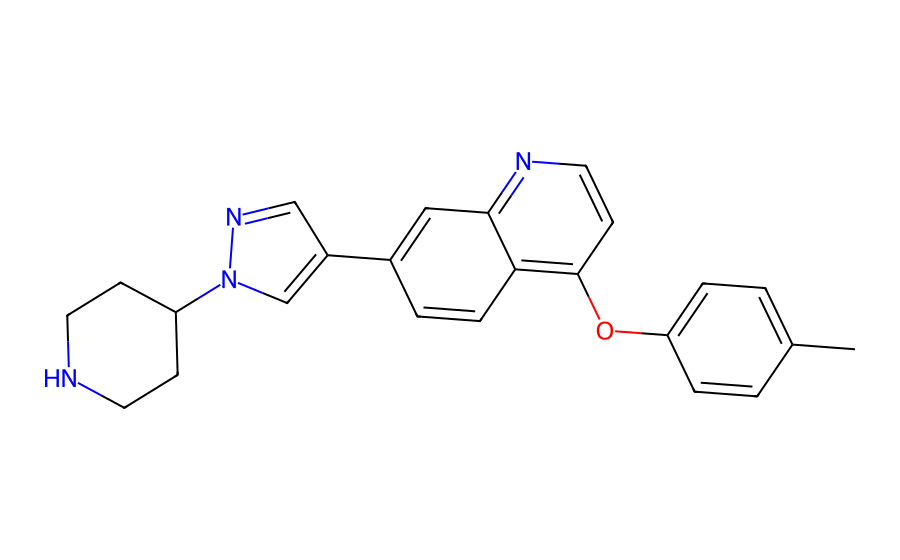
VTP-27999Featured
100 mg USD 750 · 250 mg USD 1,500 · 1 g USD 2,900 · 10 mM * 1 mL in DMSO USD 220VTP-27999 is an alkyl amine Renin inhibitor; VTP-27999 is useful for Hypertension and End-Organ Diseases.
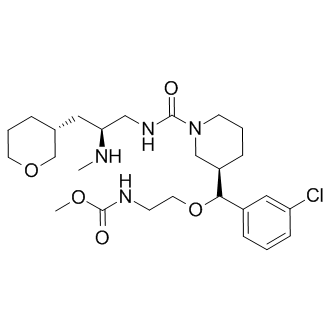
K RAS INHIBITOR-12Featured
100 mg USD 650 · 250 mg USD 1,050 · 1 g USD 2,100 · 10 mM * 1 mL in DMSO USD 220K-Ras(G12C) inhibitor 12 is a K-Ras(G12C) inhibitor, the half-maximum effective concentration (EC50) for K-Ras(G12C) inhibitor 12 in H1792 cells is 0.32 μM.Binding of K-Ras(G12C) inhibitor 12 to K-Ras(G12C) disrupts both switch-I and switch-II, subverting the native nucleotide preference to favour GDP over GTP and impairing binding to Raf. In the absence of K-Ras(G12C) inhibitor 12, K-Ras(G12C) shows a slight preference for GTP (relative affinity 0.6).
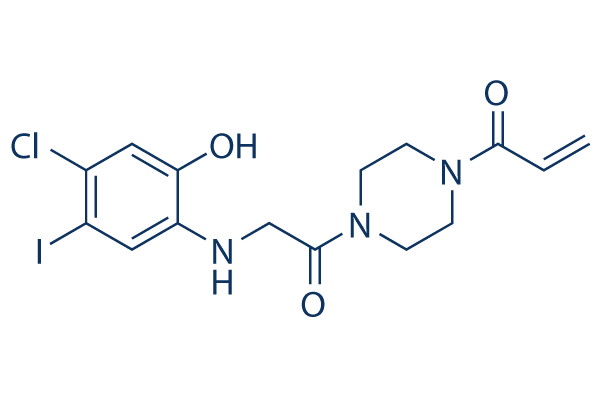
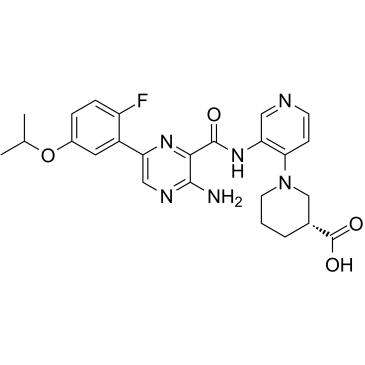
CID 139600315(GNF-4877)Featured
5mg USD 400GNF4877 is a potent DYRK1A and GSK3β inhibitor with IC50s of 6 nM and 16 nM, respectively, which leads to blockade of nuclear factor of activated T-cells (NFATc) nuclear export and increased β-cell proliferation (EC50 of 0.66 μM for mouse β (R7T1) cells)[1].
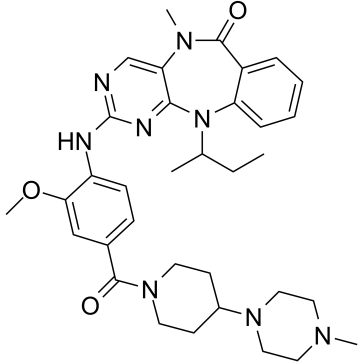
JWG-071Featured
5mg USD 350JWG-071 is the first reported kinase-selective chemical probe for ERK5. JWG-071 improves ERK5 activity and BRD4 selectivity. JWG-071 will be a much-needed chemical probe for deconvoluting ERK5 and BRD4 pharmacology[1].
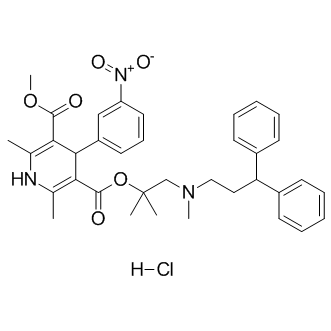
Lercanidipine HClFeatured
1 g USD 300 · 10 mM * 1 mL in DMSO USD 150Lercanidipine hydrochloride is a calcium channel blocker of the dihydropyridine class.Lercanidipine is a calcium channel blocker of the dihydropyridine class, which works by relaxing and opening the blood vessels allowing the blood to circulate more freely around the body. Lercanidipine was effective and well-tolerated in patients with mild-to-moderate hypertension in the daily practice. The effectiveness and safety of the drug were independent of the degree of cardiovascular risk.
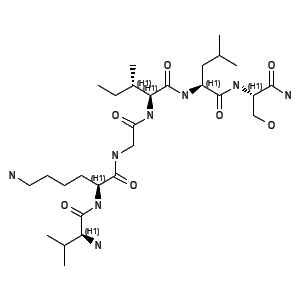
VKGILS-NH2Featured
100 mg USD 550 · 250 mg USD 1,000 · 1 g USD 1,900 · 10 mM * 1 mL in DMSO USD 220VKGILS-NH2 is a reversed amino acid sequence control peptide for SLIGKV-NH2 (protease-activated receptor 2 (PAR2) agonist). VKGILS-NH2 has no effect on DNA synthesis in cells[1][2].
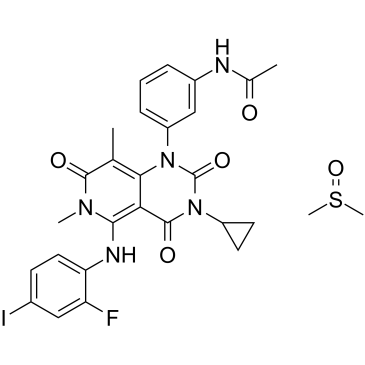
Trametinib DMSO solvateFeatured
100 mg USD 200 · 250 mg USD 400 · 1 g USD 800 · 10 mM * 1 mL in DMSO USD 150Trametinib DMSO solvate is a potent MEK inhibitor that specifically inhibits MEK1/2, with an IC50 value of about 2 nM.
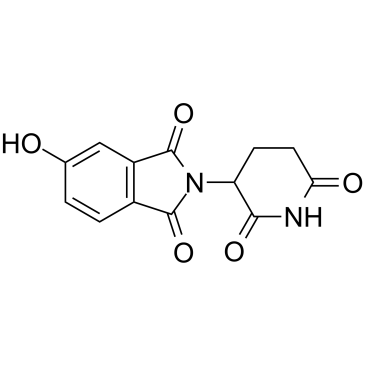
Thalidomide-5-OHFeatured
10g USD 850 · 10 mM * 1 mL in DMSO USD 150Thalidomide-5-OH is the Thalidomide-based cereblon ligand used in the recruitment of CRBN protein. Thalidomide-5-OH can be connected to the ligand for protein by a linker to form PROTACs[1].
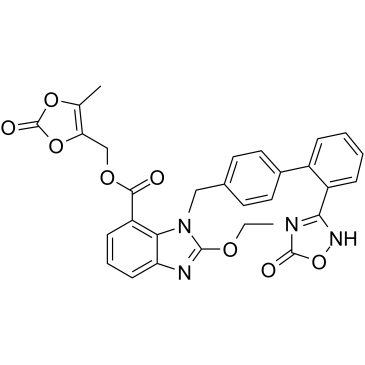
Azilsartan medoxomilFeatured
100 mg USD 350 · 250 mg USD 600 · 1 g USD 1,200 · 10 mM * 1 mL in DMSO USD 150Azilsartan medoxomil(TAK 491) is an orally administered angiotensin II receptor type 1 antagonist with IC50 of 0.62 nM, which used in the treatment of adults with essential hypertension.
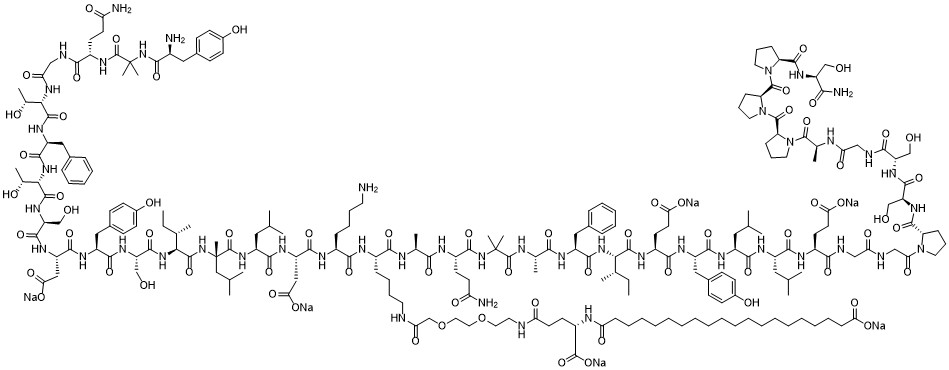
Retatrutide (LY3437943)Featured
100mg USD 600 · 250mg USD 950 · 1g USD 1,950LY3437943 is a triple agonist peptide of the glucagon receptor (GCGR), glucosedependent insulinotropic polypeptide receptor (GIPR), and glucagon-like peptide-1 receptor (GLP-1R). LY3437943 inhibits for human GCGR, GIPR, and GLP-1R with EC50 values of 5.79, 0.0643 and 0.775 nM, respectively. LY3437943 can be used for the research of obesity.
DisaribFeatured
5mg USD 450Disarib is a novel BCL2-specific inhibitor that binds predominantly to the BH1 domain, demonstrates strong affinity to BCL2, but not to other antiapoptotic BCL2 family members(BCL-xL, BCL2A1 etc.); is a novel BCL2 inhibitor with a unique mechanism of BCL2 inhibition.
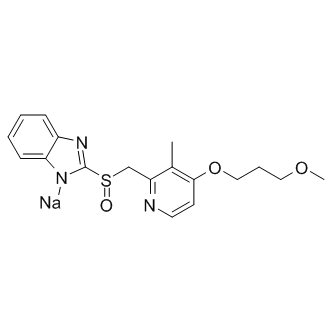
Rebeprazole sodiumFeatured
1 g USD 300 · 10 mM * 1 mL in DMSO USD 150Rabeprazole sodium(LY307640 sodium) is an antiulcer drug in the class of proton pump inhibitors.Rabeprazole belongs to a class of antisecretory compounds (substituted benzimidazole proton-pump inhibitors) that do not exhibit anticholinergic or histamine H2-receptor antagonist properties, but suppress gastric acid secretion by inhibiting the gastric H+/K+ATPase (hydrogen-potassium adenosine triphosphatase) at the secretory surface of the gastric parietal cell. Because this enzyme is regarded as the acid (proton) pump within the parietal cell, rabeprazole has been characterized as a gastric proton-pump inhibitor. Rabeprazole blocks the final step of gastric acid secretion. In gastric parietal cells, rabeprazole is protonated, accumulates, and is transformed to an active sulfenamide. When studied in vitro, rabeprazole is chemically activated at pH 1.2 with a half-life of 78 seconds.
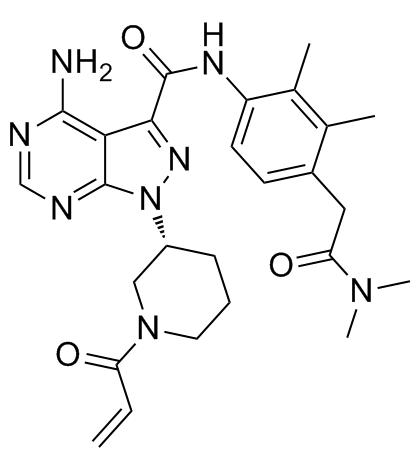
TAS0728Featured
100 mg USD 800 · 250 mg USD 1,400 · 1 g USD 2,700 · 10 mM * 1 mL in DMSO USD 220TAS0728 is a potent, selective, oral active, irreversible and covalent-binding HER2 inhibitor, binds to HER2 at C805, inhibits its kinase activity, with an IC50 of 13 nM. TAS0728 shows IC50s of 4.9, 8.5, 31, 65, 33, 25, 86 and 36 nM for BMX, HER4, BLK, EGFR, JAK3, SLK, LOK and human HER2, respectively. TAS0728 also inhibits the phosphorylation of HER2, HER3, and downstream effectors, shows no obvious effect on EGFR. Antitumor activity[1].
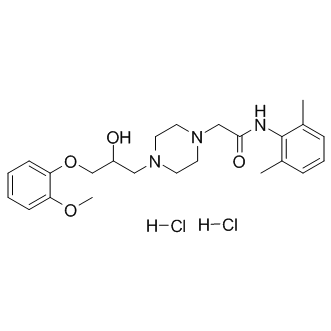
Ranolazine HClFeatured
100 mg USD 250 · 250 mg USD 500 · 1 g USD 1,000Ranolazine(RS-43285) is an antianginal agent with antiarrhythmic properties that achieves its effects via a novel mechanism of action (inhibition of the late phase of the inward sodium current), without affecting heart rate or blood pressure (BP).Ranolazine is currently approved for use in chronic angina. The basis for this use is likely related to inhibition of late sodium channels with resultant beneficial downstream effects. Randomized clinical trials have demonstrated an improvement in exercise capacity and reduction in angina episodes with ranolazine.
No products match this search.
Page 123 of 184 · Browse all 3666 products