Biological Activity
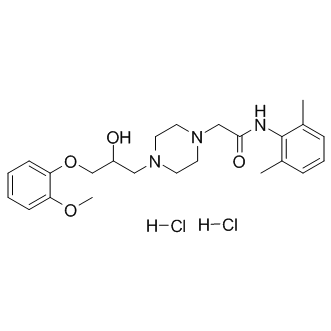
Ranolazine(RS-43285) is an antianginal agent with antiarrhythmic properties that achieves its effects via a novel mechanism of action (inhibition of the late phase of the inward sodium current), without affecting heart rate or blood pressure (BP).Ranolazine is currently approved for use in chronic angina. The basis for this use is likely related to inhibition of late sodium channels with resultant beneficial downstream effects. Randomized clinical trials have demonstrated an improvement in exercise capacity and reduction in angina episodes with ranolazine.
In Vitro
No in vitro data are provided in the current product source. Contact us for further information.
In Vivo
No in vivo data are provided in the current product source. Contact us for further information.
Target
sodium-dependent calcium channel
References & source
[1]. Hawwa N, Menon V. Ranolazine: Clinical Applications and Therapeutic Basis. Am J Cardiovasc Drugs. 2013 Jan 19.
[2]. Keating GM. Ranolazine: A Review of Its Use as Add-On Therapy in Patients with Chronic Stable Angina Pectoris. Drugs. 2013 Jan;73(1):55-73.
[3]. Wang WQ, Robertson C, Dhalla AK, Belardinelli L. Antitorsadogenic effects of ({+/-})-N-(2,6-dimethyl-phenyl)-(4[2-hydroxy-3-(2-methoxyphenoxy)propyl]-1-piperazine (ranolazine) in anesthetized rabbits. J Pharmacol Exp Ther. 2008 Jun;325(3):875-81. doi: 10.1124/jpet.108.137729. Epub 2008 Mar 5.
[4]. Shryock JC, Belardinelli L. Inhibition of late sodium current to reduce electrical and mechanical dysfunction of ischaemic myocardium. Br J Pharmacol. 2008 Mar;153(6):1128-32. Epub 2007 Dec 10.
[5]. Zacharowski K, Blackburn B, Thiemermann C. Ranolazine, a partial fatty acid oxidation inhibitor, reduces myocardial infarct size and cardiac troponin T release in the rat. Eur J Pharmacol. 2001 Apr 20;418(1-2):105-10.
Published experimental findings depend on the model and assay conditions. They do not guarantee equivalent performance in every application. For laboratory research use only.