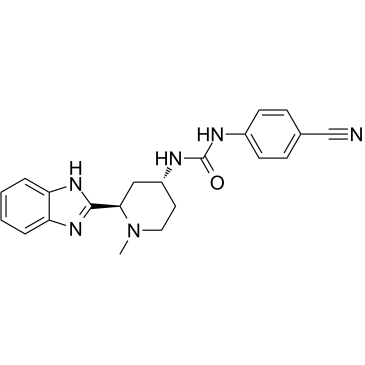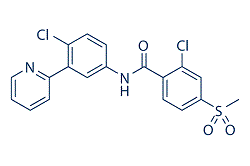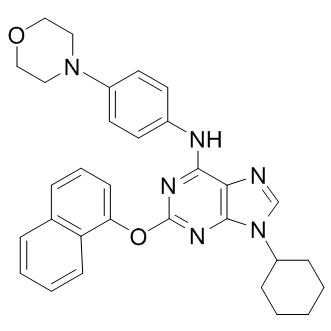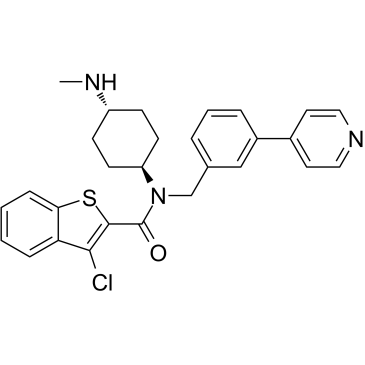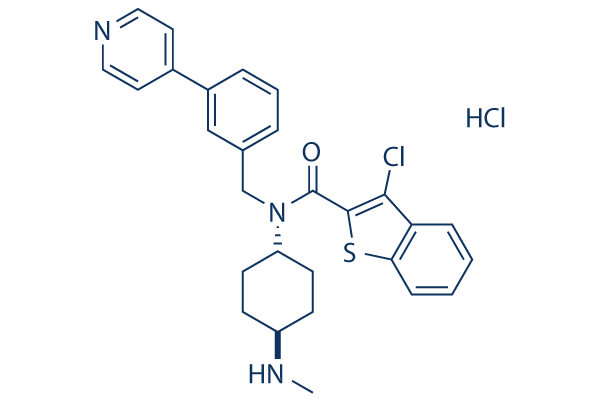
Smoothened Agonist (SAG) HCl chemical structure
Chemical structureResearch use only
CAT. NO. DC8391Featured

Smoothened Agonist (SAG) HCl

Pack Sizes & Prices

TotalUS$650
We match the best price and quality on market.
Product overview

Description & Application

SAG (hydrochloride) is a potent Smo receptor agonist, and activates the Hedgehog signaling pathway, with a Kd of 59 nM.

ParameterValue
Chemical NameSAG HCl
CAS No.2095432-58-7
SynonymsSAG hydrochloride; SAG; SAG (Smo agonist);
FormulaC28H29Cl2N3OS
M.Wt526.52
SMILESCNC1CCC(CC1)N(CC2=CC(=CC=C2)C3=CC=NC=C3)C(=O)C4=C(C5=CC=CC=C5S4)Cl.Cl
Purity>98%
Storage2 years -20°C Powder, 2 weeks 4°C in DMSO, 6 months -80°C in DMSO

Biological Activity

SAG (hydrochloride) is a potent Smo receptor agonist, and activates the Hedgehog signaling pathway, with a Kd of 59 nM.

In Vitro

SAG (hydrochloride) acts downstream of Ptch1 in the Hh pathway and counteracts cyclopamine inhibition of Smo. SAG induces firefly luciferase expression in Shh-LIGHT2 cells with an EC50 of 3 nM and then inhibits expression at higher concentrations. In Smo-expressing Cos-1 cells, SAG yields an apparent dissociation constant (KD) of 59 nM for the SAG/Smo complex[1]. SAG and purmorphamine verride the inhibitory effect of robotnikinin since Smo functions downstream of Shh/Ptc1[2].

In Vivo

In CD-1 mice, SAG (1.0 mM) or NELL-1 (600 μg/ml) alone results in increased bone formation at 4 and 8 weeks, but significantly greater bone formation with both components combined (SAG + NELL-1). The combination of the two compounds exhibits a significant increase in new bone formation, accompanied by increased defect vascularization[3]. SAG (15, 17, or 20 mg/kg, i.p.) induces pre-axial polydactyly prevalently. The highest SAG dose is effective in ca. 80% of the embryos and increased Gli1 and Gli2 mRNA expression in the limb bud, with Gli1 mRNA being the most upregulated[4].

References & source

DC Chemicals original product information

Published experimental findings depend on the model and assay conditions. They do not guarantee equivalent performance in every application. For laboratory research use only.
Product documentation

Refer to the certificate supplied with your lot for batch-specific release results.

Handling guide

2 years -20°C Powder, 2 weeks 4°C in DMSO, 6 months -80°C in DMSO

Solution calculator

Related research products

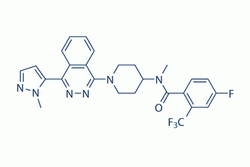
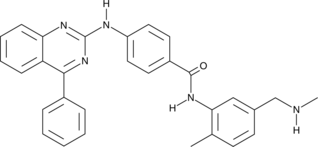
BMS-833923 (XL-139) chemical structureDC7154

BMS-833923 (XL-139)

BMS-833923 (XL-139) is an orally bioavailable small-molecule inhibitor of Smoothened with potential antineoplastic activity; inhibits BODIPY cyclopamine binding to SMO in a dose-dependent manner with an IC50 of 21…

View activity & prices
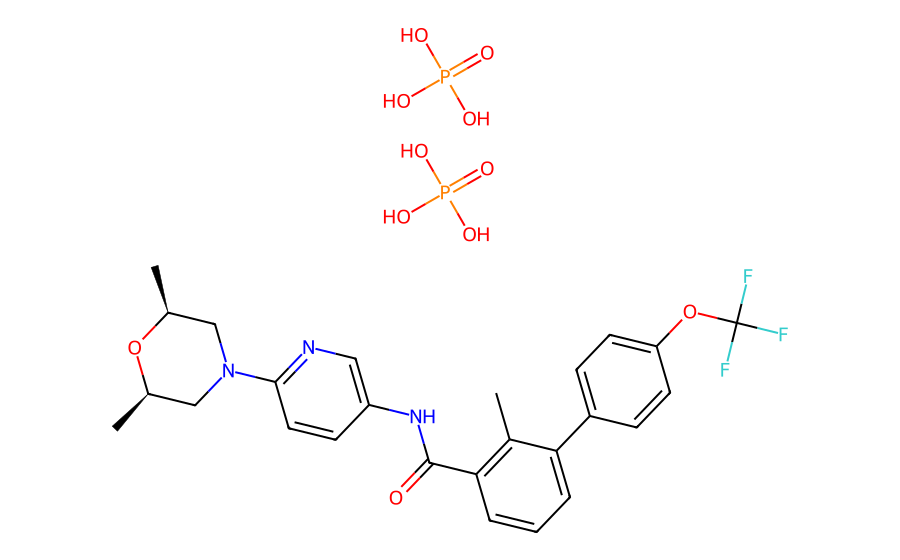
LDE225 Diphosphate chemical structureDC7185

LDE225 Diphosphate

Erismodegib diphosphate (LDE225 diphosphate) is a potent and selective Smo antagonist with IC50 of 1.3 nM and 2.5 nM for mouse and human Smo in binding assay, respectively.

View activity & prices
Vismodegib (GDC-0449) chemical structureDC4232

Vismodegib (GDC-0449)

Vismodegib (GDC-0449) is an orally active hedgehog pathway inhibitor with an IC50 of 3 nM. It also inhibits P-gp, ABCG2 with IC50 values of 3.0 μM and 1.4 μM, respectively.

View activity & prices
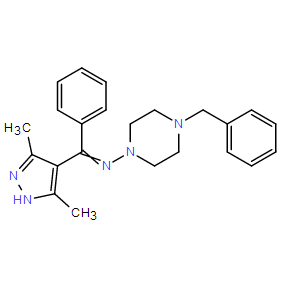
SANT-1 chemical structureDC8327

SANT-1

SANT-1 is a potent Smo antagonist, inhibits Hedgehog signaling, with IC50s of 20 nM and 30 nM in Shh-LIGHT2 and SmoA1-LIGHT2 assay, respectively[1].

View activity & prices
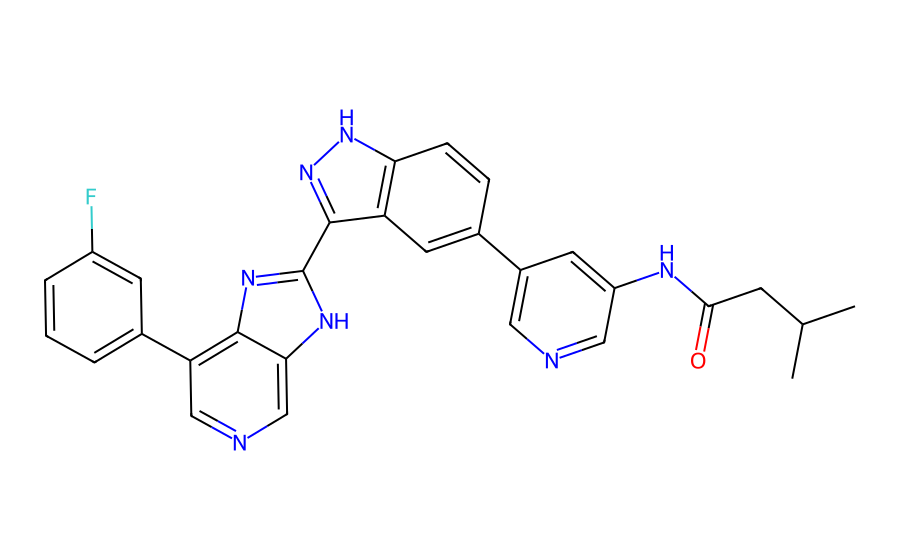
Adavivint chemical structureDC11886

Adavivint

Adavivint is a potent and selective inhibitor of canonical Wnt signaling, with an EC50 of 19.5 nM via a high-throughput TCF/LEF-reporter assay in SW480 colon cancer cells.

View activity & prices
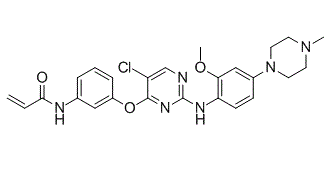
WZ4002 chemical structureDC5090

WZ4002

WZ4002 is a mutant selective EGFR inhibitor with IC50s of 2, 8, 3 and 2 nM for EGFRL858R, EGFRL858R/T790M, EGFRE746_A750 and EGFRE746_A750/T790M, respectively.

View activity & prices

Cart

Request quotation