Biological Activity
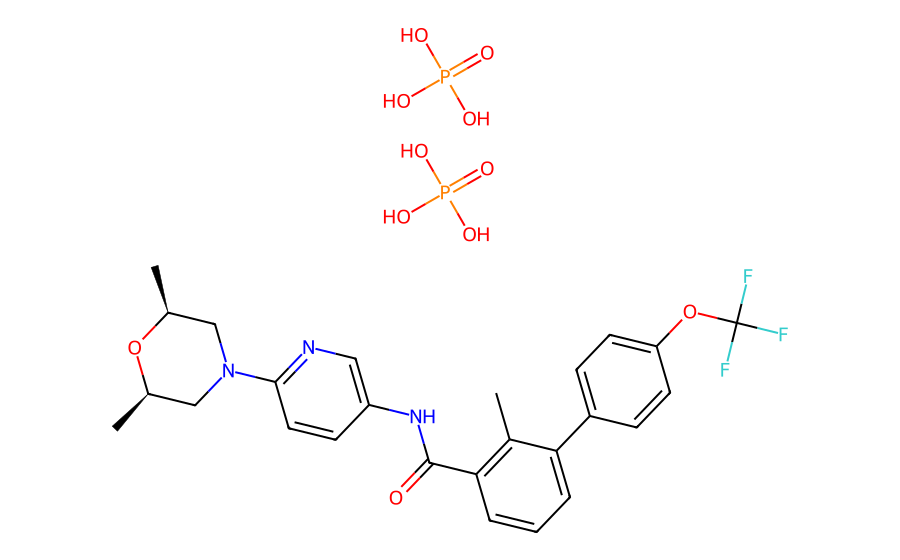
Erismodegib diphosphate (LDE225 diphosphate) is a potent and selective Smo antagonist with IC50 of 1.3 nM and 2.5 nM for mouse and human Smo in binding assay, respectively.
In Vitro
The IC50 values for Erismodegib (NVP-LDE225) for the major human CYP450 drug metabolizing enzymes is greater than 10 μM[1]. Erismodegib (LDE225), a small molecule, clinically investigated SMO inhibitor, used alone and in combination with Nilotinib, inhibits the Hh pathway in CD34+ chronic phase (CP)-chronic myeloid leukaemia (CML) cells, reducing the number and self-renewal capacity of CML leukaemia stem cell (LSC). Erismodegib interacts directly with SMO, in a similar fashion to cyclopamine, to reduce expression of downstream Hh signaling targets. Primary CD34+ CP-CML cells are cultured in serum free media (SFM)±Erismodegib for 6, 24 and 72 hours (h). At 72 h, while there is variability between the biological samples, GLI1 is significantly downregulated following exposure to Erismodegib (10 nM; 0.78-fold and 100 nM; 0.73-fold, respectively (p<0.01)[2].
In Vivo
Erismodegib (NVP-LDE225) is a weak base with a measured pKa of 4.2 and exhibits relatively poor aqueous solubility. In the subcutaneous Ptch+/-p53-/- medulloblastoma allograft mouse model, Erismodegib demonstrates dose-related antitumor activity after 10 days of oral administration of a suspension of the diphosphate salt. At a dose of 5 mg/kg/day qd, Erismodegib significantly inhibits tumor growth, corresponding to a T/C value of 33% (p<0.05 as compared to vehicle controls). When dosed at 10 and 20 mg/kg/day qd, Erismodegib affords 51 and 83% regression, respectively[1]. Bone marrow cells and spleen cells from a subset of treated mice are transplanted into secondary recipient mice. Transplantation of either bone marrow (BM) or spleen cells from mice treated with Erismodegib (LDE225)+ Nilotinib results in reduced white cell count (WCC) and reduces leukaemia development in secondary recipients compared to Erismodegib or Nilotinib alone[2].
References & source
Published experimental findings depend on the model and assay conditions. They do not guarantee equivalent performance in every application. For laboratory research use only.