
Research lipid catalog
Ionizable Lipid Products
Explore 848 lipid and RNA delivery products. Search the full catalog or browse by research category.
Search covers product name, catalog number, synonyms, available CAS numbers and categories. Spaces, hyphens and common punctuation are ignored. Duplicate legacy records are consolidated under one canonical product result.
3666 products · Showing 2561–2580 · 20 per page
DC Chemicals lipid expertise
Built for ionizable-lipid discovery and RNA delivery research
DC Chemicals supports formulation and delivery research with a broad, searchable portfolio of cationic and ionizable lipids. The current directory brings together 848 unique research-use products, with product specifications, pricing, chemical structures and literature-linked formulation data added as each record is verified.
Our experience spans complex lipid synthesis, purification, analytical release and process development. For custom molecules or larger-scale requirements, our team can discuss route development, technical specifications and scale-up options for the intended research workflow.
Learn about cationic and ionizable lipids →Proprietary innovation · Co-development · GMP
From proprietary lipid design to GMP-grade custom synthesis
DC Chemicals has independently developed ionizable-lipid structures supported by company-owned intellectual property, and selected proprietary lipid programs have advanced to GMP-stage development.
We welcome joint development with customers—from molecular design and lipid synthesis through route and process development. We can also support custom synthesis of GMP-grade ionizable lipids to agreed technical specifications and quality requirements.
Discuss a co-development project →Proprietary ionizable-lipid structuresCollaborative molecular designCustom lipid synthesisProcess development and scale-upGMP-grade project support
Product quick links
Explore ionizable lipids
Browse specifications, pricing and literature-linked product information.
Cat. No.Product NameField of ApplicationChemical Structure
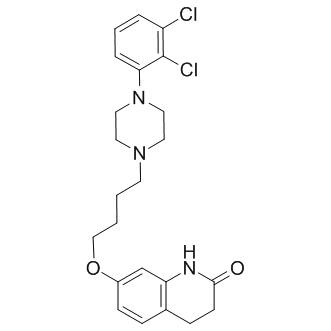
AripiprazoleFeatured
1 g USD 300Aripiprazole(Abilify) is a human 5-HT1A receptor partial agonist with a Ki of 4.2 nM.Aripiprazole is an atypical antipsychotic medication used for the treatment of schizophrenia. It has also recently received FDA approval for the treatment of acute manic and mixed episodes associated with bipolar disorder. Aripiprazole appears to mediate its antipsychotic effects primarily by partial agonism at the D2 receptor. In addition to partial agonist activity at the D2 receptor, aripiprazole is also a partial agonist at the 5-HT1A receptor, and like the other atypical antipsychotics, aripiprazole displays an antagonist profile at the 5-HT2A receptor. Aripiprazole has moderate affinity for histamine and alpha adrenergic receptors, and no appreciable affinity for cholinergic muscarinic receptors.
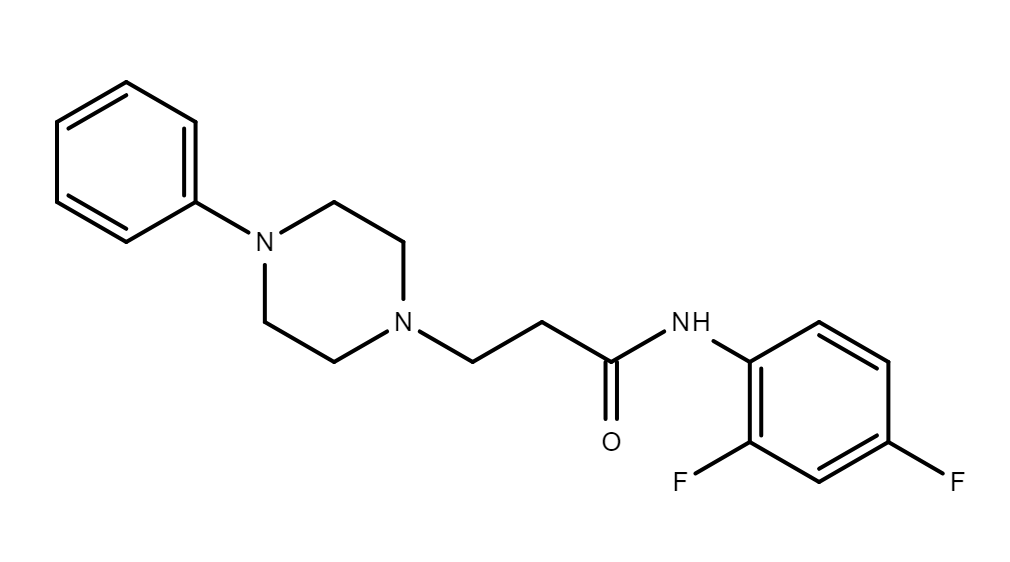
TRPC6 activator compound 2Featured
5mg USD 350TRPC6 activator compound 2 is selective activator of TRPC6 that does not potentiate TRPC3 and mTRPC7. Comp2 is able to cross BBB.
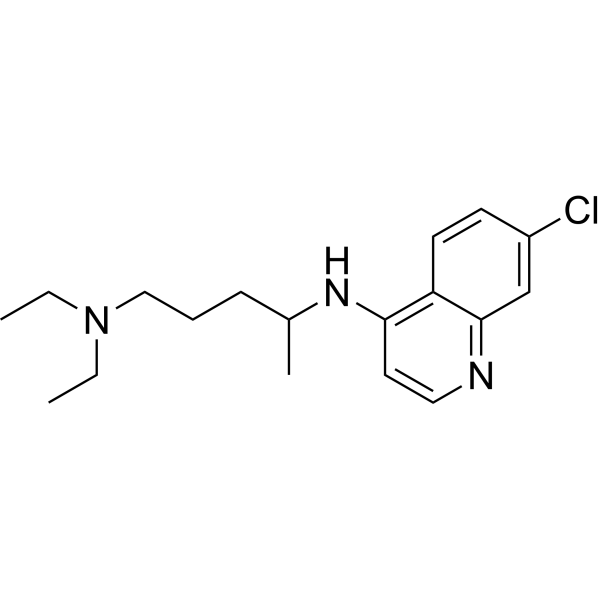
ChloroquineFeatured
100 mg USD 250 · 250 mg USD 500 · 1 g USD 800Chloroquine is a medication used to prevent and to treat malaria in areas where malaria is known to be sensitive to its effects. Certain types of malaria, resistant strains, and complicated cases typically require different or additional medication. It is also occasionally used for amebiasis that is occurring outside the intestines, rheumatoid arthritis, and lupus erythematosus. Chloroquine enters the red blood cell, inhibiting the parasite cell and digestive vacuole by simple diffusion. Chloroquine then becomes protonated (to CQ2+), as the digestive vacuole is known to be acidic (pH 4.7); chloroquine then cannot leave by diffusion. Chloroquine caps hemozoin molecules to prevent further biocrystallization of heme, thus leading to heme buildup.
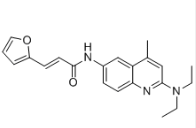
DP308Featured
5mg USD 450DP308 is a novel and effective 53BP1 tandem Tudor domain (TTD) inhibitor, disrupts the binding between 53BP1 and H4K20me2 peptide with IC50 of 1.69 uM.
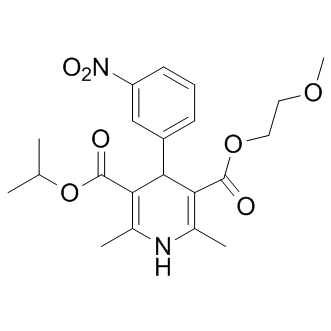
NimodipineFeatured
1 g USD 300Nimodipine(Nimotop) is a dihydropyridine derivative and an analogue of the calcium channel blocker nifedipine, with antihypertensive activity.Nimodipine decreases intracellular free Ca2+,Beclin-1 and autophagy.Nimodipine is main use is in the prevention of cerebral vasospasm and resultant ischemia, a complication of subarachnoid hemorrhage (a form of cerebral bleed), specifically from ruptured intracranial berry aneurysms irrespective of the patient's post-ictus neurological condition. Its administration begins within 4 days of a subarachnoid hemorrhage and is continued for three weeks. If blood pressure drops by over 5%, dosage is adjusted. There is still controversy regarding the use of intravenous nimodipine on a routine basis.
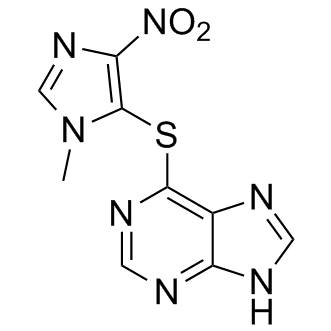
Azathioprine (Azasan, Imuran)Featured
100 mg USD 250 · 250 mg USD 500 · 1 g USD 1,000For the detailed information of Azathioprine (Azasan, Imuran), the solubility of Azathioprine (Azasan, Imuran) in water, the solubility of Azathioprine (Azasan, Imuran) in DMSO, the solubility of Azathioprine (Azasan, Imuran) in PBS buffer, the animal experiment(test) (test) of Azathioprine (Azasan, Imuran), the cell expriment (test) of Azathioprine (Azasan, Imuran), the in vivo, in vitro and clinical trial test of Azathioprine (Azasan, Imuran), the EC50, IC50,and Affinity of Azathioprine (Azasan, Imuran),, please contact DC Chemicals.
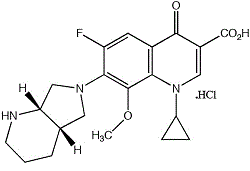
Moxifloxacin hydrochlorideFeatured
100 mg USD 300 · 250 mg USD 600 · 1 g USD 1,200For the detailed information about the solubility of Moxifloxacin hydrochloride in water, the solubility of Moxifloxacin hydrochloride in DMSO, the solubility of Moxifloxacin hydrochloride in PBS buffer, the animal experiment(test) of Moxifloxacin hydrochloride, the in vivo,in vitro and clinical trial test of Moxifloxacin hydrochloride, the cell experiment(test) of Moxifloxacin hydrochloride, the IC50, EC50 and Affinity of Moxifloxacin hydrochloride , please contact DC Chemicals.
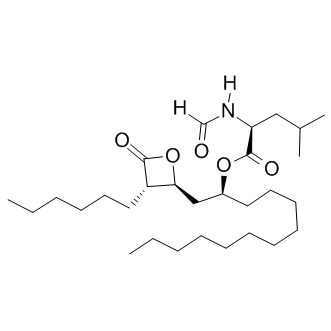
Orlistat (Alli, Xenical)Featured
100 mg USD 250 · 250 mg USD 500 · 1 g USD 1,000For the detailed information of Orlistat (Alli, Xenical), the solubility of Orlistat (Alli, Xenical) in water, the solubility of Orlistat (Alli, Xenical) in DMSO, the solubility of Orlistat (Alli, Xenical) in PBS buffer, the animal experiment(test) (test) of Orlistat (Alli, Xenical), the cell expriment (test) of Orlistat (Alli, Xenical), the in vivo, in vitro and clinical trial test of Orlistat (Alli, Xenical), the EC50, IC50,and Affinity of Orlistat (Alli, Xenical),, please contact DC Chemicals.
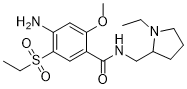
AmisulprideFeatured
100 mg USD 250 · 250 mg USD 500 · 1g USD 1,000Amisulpride is an atypical antipsychotic used to treat psychosis in schizophrenia and episodes of mania in bipolar disorder. In Italy, it is also used as a treatment for dysthymia. It was introduced by Sanofi-Aventis in the 1990s. Its patent had expired by 2008 and hence generic formulations are now available.Amisulpride function primarily as a D2 and D3 receptor antagonist. It has high affinity for these receptors with dissociation constants of 2.2 nM and 2.4 nM, respectively. Although standard doses used to treat psychosis inhibit dopaminergic neurotransmission, low doses preferentially block inhibitory pre-synaptic autoreceptors.
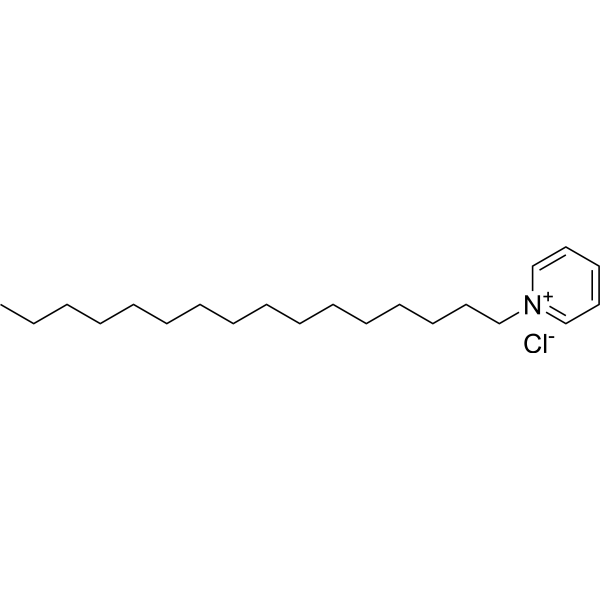
Cetylpyridinium chlorideFeatured
100 mg USD 300 · 250 mg USD 600 · 1 g USD 1,000Cetylpyridinium chloride is a Germicide, Bactericide, and Disinfectant.
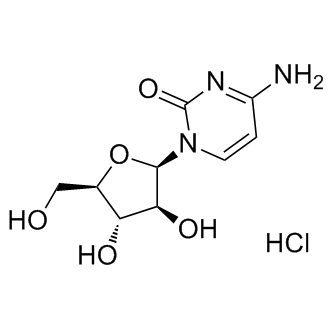
Cytarabine hydrochlorideFeatured
1 g USD 300For the detailed information of Cytarabine hydrochloride, the solubility of Cytarabine hydrochloride in water, the solubility of Cytarabine hydrochloride in DMSO, the solubility of Cytarabine hydrochloride in PBS buffer, the animal experiment(test) (test) of Cytarabine hydrochloride, the cell expriment (test) of Cytarabine hydrochloride, the in vivo, in vitro and clinical trial test of Cytarabine hydrochloride, the EC50, IC50,and Affinity of Cytarabine hydrochloride,, please contact DC Chemicals.
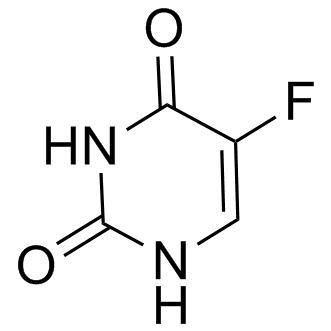
5-FluorouracilFeatured
1 g USD 3005-Fluorouracil is a potent antitumor agent that affects pyrimidine synthesis by inhibiting thymidylate synthetase thus depleting intracellular dTTP pools.5-Fluorouracil is metabolized to ribonucleotides and deoxyribonucleotides, which can be incorporated into RNA and DNA. Treatment of cells with 5-Fluorouracil leads to an accumulation of cells in S-phase and has been shown to induce p53 dependent apoptosis.
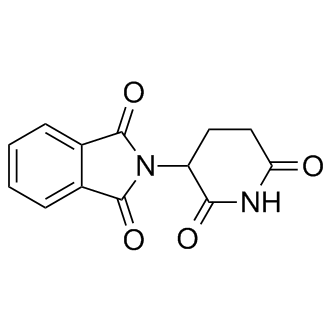
ThalidomideFeatured
1 g USD 300Thalidomide can directly inhibit angiogenesis induced by bFGF or VEGF in vivo.Thalidomide was commonly used therapeutically in the late 1950's; however, it was withdrawn from the market when it was discovered to cause birth defects. More recent research has found Thalidomide to affect key biochemical pathways yielding antiangiogenic and immunomodulatory activities. This compound has been shown to: selectively inhibit tumor necrosis factor-alpha (TNF alpha) biosynthesis and basic fibroblast growth factor (bFGF)-induced angiogenesis, induce apoptosis in human monocytes via a cytochrome c-dependent pathway, and to inhibit HIV-1 replication in a monocytoid (U1) line. These new found uses make Thalidomide an extremely valuable research tool.
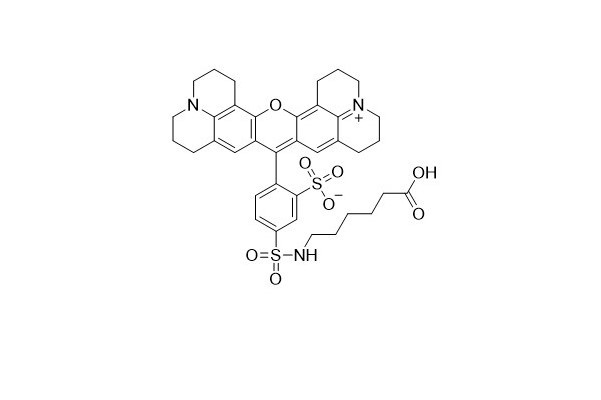
Tex Red-X AcidFeatured
25mg USD 600 · 50mg USD 950 · 100mg USD 1,500Tex Red-X dye is an innovative alternative to Tex Red. A key difference lies in its chemical structure - it features an additional seven - atom aminocaproyl spacer ("X") between the fluorophore and the carboxyl group. This spacer plays a crucial role in separating the fluorophore from its attachment point. By doing so, it effectively minimizes the interaction between the fluorophore and the conjugated biomolecule. One of the standout features of Tex Red - X is that it exists as a single 5 - isomer. This characteristic significantly enhances the reproducibility of results, which is a highly desirable trait in scientific research and biological applications. In terms of optical properties, Tex Red - X shares the same spectral characteristics as Texas Red. It can be utilized to create bright red fluorescent bioconjugates with excitation and emission maxima at approximately 595/615 nm. These bioconjugates are valuable tools in various biological and biochemical studies, enabling researchers to visualize and analyze biological processes with high precision.
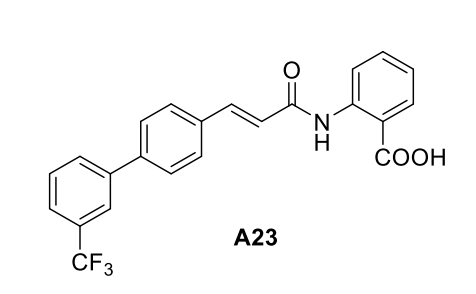
Trpm2 Inhibitor A23Featured
10mg USD 550Novel selective inhibitor of the transient receptor potential melastatin 2 (TRPM2) channel, exhibiting TRPM2 selectivity over TRPM8 and TRPV1 channels as well as phospholipase A2 and showing neuroprotective activity in vitro, and significantly reducing ce
AH001Featured
2mg USD 500AH001 is a orally active RhoA inhibitor, which binds a cryptic pocket proximate to GDP within RhoA with a KD of 73.16 nM. AH001 interacts with GDP, stabilizing RhoA’s interaction with its endogenous inhibitor, RhoGDIα. AH001 reduces the downstream MRTFA nuclear translocation and downregulates fibrosis/hypertrophy proteins. AH001 mitigates myocardial remodeling in multiple HF animal models, and in the 3D myocardial tissue model. AH001 exerts its cardioprotective effects through the RhoA-RhoGDIα axis, effectively inhibiting downstream RhoA activation signaling.
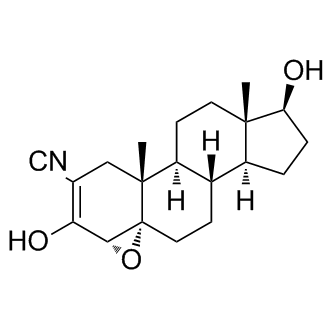
100 mg USD 280 · 250 mg USD 550 · 1 g USD 1,100
Trilostane(Win 24540; Modrastane) is an inhibitor of 3 β-hydroxysteroid dehydrogenase used in the treatment of Cushing's syndrome.Trilostane is an inhibitor of 3 β-hydroxysteroid dehydrogenase (3-β-HSD or delta 5-delta 4-isomerase), an essential enzyme for the biosynthesis of all classes of hormonal steroids. It has been used in the treatment of Cushing′s syndrome for stopping the production of cortisol, and is currently approved for dogs in the US, but is still a human drug in the UK and other countries. It is being investigated as a possible treatment for both breast cancer and prostate cancer to prevent the synthesis of estrogens and androgens from endogenous precursors. It has also been used to inhibit endogenous production of progesterone in research studies.
5mg USD 300
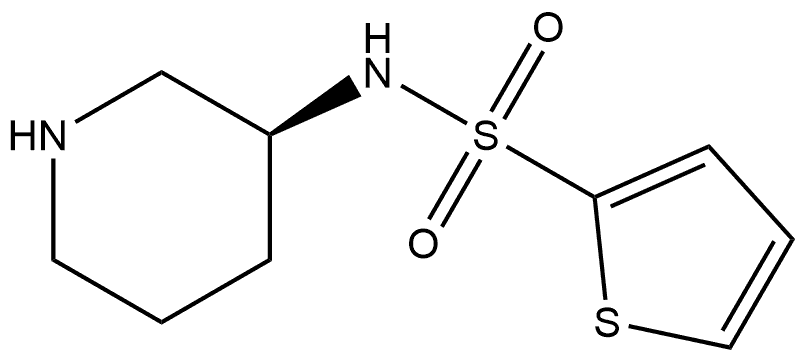
N-(3S)-3-Piperidinyl-2-thiophenesulfonamide is available from DC Chemicals for laboratory research. Contact us for application-specific product information.
5mg USD 300
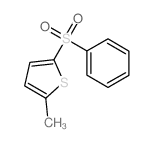
Thiophene, 2-methyl-5-(phenylsulfonyl)- is available from DC Chemicals for laboratory research. Contact us for application-specific product information.
5mg USD 300
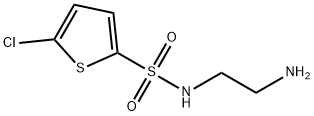
N-(2-aminoethyl)-5-chlorothiophene-2-sulfonamide is available from DC Chemicals for laboratory research. Contact us for application-specific product information.
No products match this search.
Page 129 of 184 · Browse all 3666 products