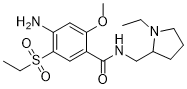
Amisulpride is an atypical antipsychotic used to treat psychosis in schizophrenia and episodes of mania in bipolar disorder. In Italy, it is also used as a treatment for dysthymia. It was introduced by Sanofi-Aventis in the 1990s. Its patent had expired by 2008 and hence generic formulations are now available.Amisulpride function primarily as a D2 and D3 receptor antagonist. It has high affinity for these receptors with dissociation constants of 2.2 nM and 2.4 nM, respectively. Although standard doses used to treat psychosis inhibit dopaminergic neurotransmission, low doses preferentially block inhibitory pre-synaptic autoreceptors.
Parameter
Value
Chemical Name
Amisulpride
CAS No.
71675-85-9
Synonyms
Amisulpride;AMINOSULTOPRIDE;SOLIAN;3-Amino-6-isopropylpyridine;4-amino-N-[(1-ethylpyrrolidin-2-yl)methyl]-5-ethylsulfonyl-2-methoxybenzamide;: Amisulpride;4-amino-N-[(1-ethyl-2-pyrrolidin-yl)methyl]-5-(ethyl-sulfonyl)-2--methoxybenzamide;Amisulpiride;Amisulprida;Amisulpridum;Amisulpridum [INN-Latin];DAN 2163;DAN-2163;Deniban;Socian;4-Amino-N-[(1-ethyl-2-pyrrolidinyl)methyl]-5-(ethylsulfonyl)-2-methoxybenzamide;4-Amino-N-[(1-ethyl-2-pyrrolidinyl)methyl]-5-ethylsulfonyl-2-methoxybenzamide;NCGC00092310-06;CCG-100860;PS24 - Amisulpride;A837282;Amisulpride, 1mg/ml in Methanol;NC00110;Amisulpride- Bio-X;AMISULPRIDE [ORANGE BOOK];AB00639933-09;Deniban (TN);EINECS 275-831-7;APD-421;71675-85-9 (free base);HMS3263D07;HMS3657E11;Amisulpride for system suitability;Amisulpride [INN];SW197490-3;AKOS005567252;Amisulprida [INN-Spanish];DTXCID3022613;HB1879;HMS3413G07;4-Amino-N-[(1-Ethyl-2-pyrrolidinyl)methyl]-5-(ethylsulfonyl)- 2-methoxybenzamide;AB00639933-07;SMR000449309;N05AL05;UNII-8110R61I4U;HMS2051K10;NCGC00092310-02;NCGC00092310-04;NTJOBXMMWNYJFB-UHFFFAOYSA-N;BCPP000404;NCGC00092310-16;MLS000758258;D07310;Barhemsys (TN);AMISULPRIDE [WHO-DD];NSC760085;HMS3393K10;Sulpitac;AB00639933_10;SDCCGSBI-0633795.P001;AMISULPRIDE [EP MONOGRAPH];Amisulpride, European Pharmacopoeia (EP) Reference Standard;C17H27N3O4S;CCG-222437;4-Amino-N-[(1-ethyl-2-pyrrolidinyl) methyl]-5-(ethylsulfonyl)-2-benzamide;CHEMBL243712;BDBM81790;Q418785;EN300-18166870;NSC-760085;NS00000416;SY052770;4-Amino-N-[(1-ethyl-2-pyrrolidinyl)methyl]-5-(ethylsulfonyl)-2-benzamide;SL-91.1077;S1280;Amisulpride; 4-Amino-N-[[(2RS)-1-ethylpyrrolidin-2-yl]methyl]-5-(ethylsulfonyl)-2-methoxybenzamide;Barhemsys;MFCD00866691;DB06288;HMS3677G07;HMS3713N06;GTPL963;HMS3268L09;Tox21_501133;NSC_2159;71675-85-9;AMISULPRIDE (EP MONOGRAPH);NCGC00092310-03;SR-01000759303;W-104511;NCGC00261818-01;LP01133;CS-1791;BRD-A60197193-001-05-4;Amisulpridum (INN-Latin);Benzamide, 4-amino-N-((1-ethyl-2-pyrrolidinyl)methyl)-5-(ethylsulfonyl)-2-methoxy-;Amisulpride free base;Amisulpride, >=98% (HPLC);CAS_71675-85-9;4-amino-N-((1-ethylpyrrolidin-2-yl)methyl)-5-(ethylsulfonyl)-2-methoxybenzamide;4-azanyl-N-[(1-ethylpyrrolidin-2-yl)methyl]-5-ethylsulfonyl-2-methoxy-benzamide;HMS3369K09;Tox21_113392;AC-6820;MLS000759450;BCP9000294;4-Amino-N-((1-ethyl-2-pyrrolidinyl)methyl)-5-(ethylsulfonyl)-2-anisamid;4-Amino-N-((1-ethyl-2-pyrrolidinyl)methyl)-5-(ethylsulfonyl)-2-methoxybenzamide;HMS2235M16;Amisulpride 100 microg/mL in Acetonitrile;Amisulpride [INN:BAN];BA164158;HY-14545;BCP02089;MLS001424039;AS-13890;CHEBI:64045;Amisulpride (INN);(+-)-amisulpride;Pharmakon1600-01502285;Solian (TN);HMS3884A09;AMISULPRIDE [MART.];SCHEMBL34126;Sulamid;Tox21_113392_1;8110R61I4U;NCGC00092310-01;Amisulprida (INN-Spanish);(S)-Amisulpride?;CAS-71675-85-9;FT-0630805;SR-01000759303-5;4-amino-5-ethanesulfonyl-n-(1-ethyl-pyrrolidin-2-ylmethyl)-2-m...
Formula
C17H27N3O4S
M.Wt
369.48
SMILES
CCN1C(CNC(C2=CC(S(=O)(CC)=O)=C(N)C=C2OC)=O)CCC1
Purity
>98%
Storage
2 years -20°C Powder, 2 weeks 4°C in DMSO, 6 months -80°C in DMSO
Biological Activity
Amisulpride is an atypical antipsychotic used to treat psychosis in schizophrenia and episodes of mania in bipolar disorder. In Italy, it is also used as a treatment for dysthymia. It was introduced by Sanofi-Aventis in the 1990s. Its patent had expired by 2008 and hence generic formulations are now available.Amisulpride function primarily as a D2 and D3 receptor antagonist. It has high affinity for these receptors with dissociation constants of 2.2 nM and 2.4 nM, respectively. Although standard doses used to treat psychosis inhibit dopaminergic neurotransmission, low doses preferentially block inhibitory pre-synaptic autoreceptors.
In Vitro
No in vitro data are provided in the current product source. Contact us for further information.
In Vivo
No in vivo data are provided in the current product source. Contact us for further information.
Published experimental findings depend on the model and assay conditions. They do not guarantee equivalent performance in every application. For laboratory research use only.
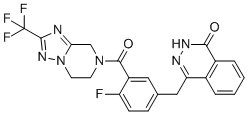
Fluzoparib (SHR-3162) is a novel, potent and orally available inhibitor of PARP; potently inhibited PARP1 enzyme activity and induced DNA double-strand breaks, G2/M arrest and apoptosis in homologous recombination…
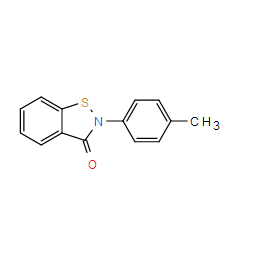
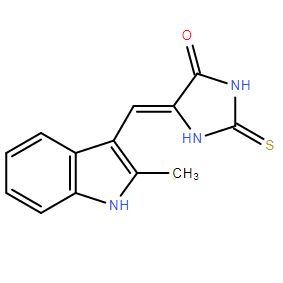
PBIT is a specific inhibitor of the Jumonji AT-rich Interactive Domain 1(JARID1) enzymes. PBIT inhibits JARID1B (KDM5B or PLU1 ) histone demethylase an IC50 of about 3 μM . PBIT also inhibits JARID1A and JARID1C with…
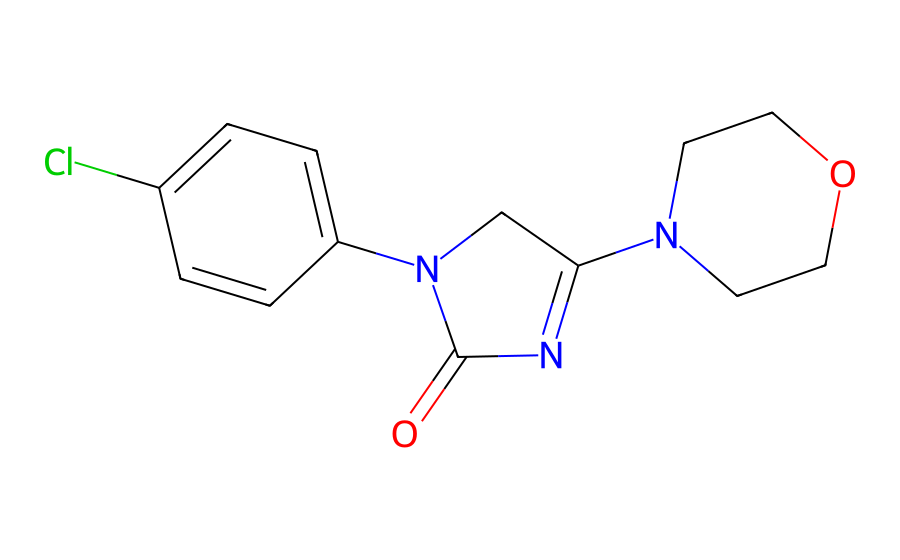
AWD 131-138(Imepitoin) is a new low-affinity partial benzodiazepine receptor agonist with potent anticonvulsant and anxiolytic properties in rodent models.
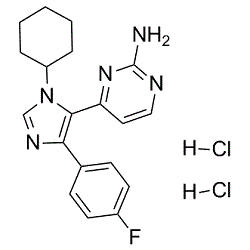
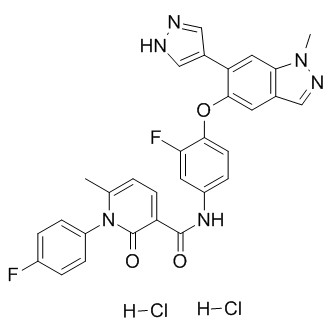
Merestinib dihydrochloride (LY2801653 dihydrochloride) is a type-II ATP competitive, slow-off inhibitor of MET tyrosine kinase with a dissociation constant (Ki) of 2 nM.
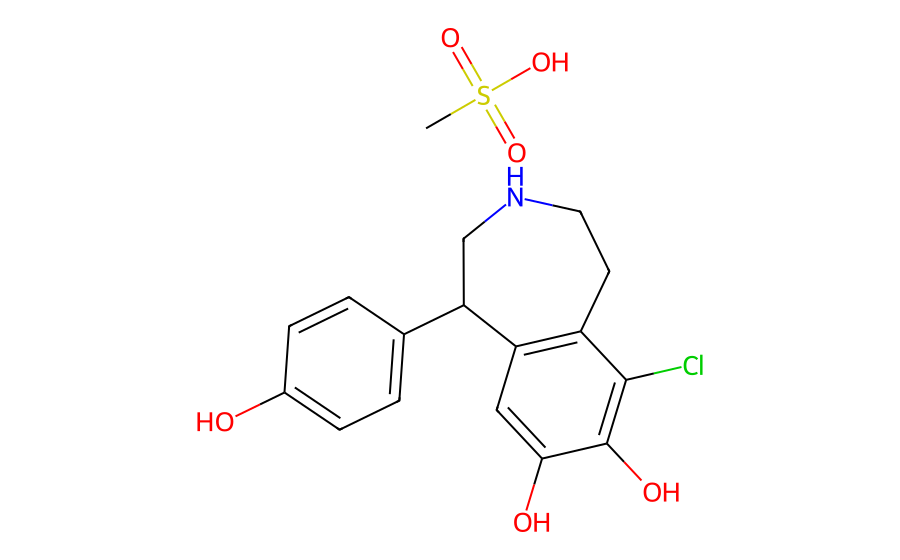
Fenoldopam(SKF 82526) mesylate is a drug and synthetic benzazepine derivative which acts as a selective D1 receptor partial agonist.Target: D1 ReceptorFenoldopam is a selective dopamine-1 (DA1) agonist with…