
Research lipid catalog
Ionizable Lipid Products
Explore 848 lipid and RNA delivery products. Search the full catalog or browse by research category.
Search covers product name, catalog number, synonyms, available CAS numbers and categories. Spaces, hyphens and common punctuation are ignored. Duplicate legacy records are consolidated under one canonical product result.
3666 products · Showing 2381–2400 · 20 per page
DC Chemicals lipid expertise
Built for ionizable-lipid discovery and RNA delivery research
DC Chemicals supports formulation and delivery research with a broad, searchable portfolio of cationic and ionizable lipids. The current directory brings together 848 unique research-use products, with product specifications, pricing, chemical structures and literature-linked formulation data added as each record is verified.
Our experience spans complex lipid synthesis, purification, analytical release and process development. For custom molecules or larger-scale requirements, our team can discuss route development, technical specifications and scale-up options for the intended research workflow.
Learn about cationic and ionizable lipids →Proprietary innovation · Co-development · GMP
From proprietary lipid design to GMP-grade custom synthesis
DC Chemicals has independently developed ionizable-lipid structures supported by company-owned intellectual property, and selected proprietary lipid programs have advanced to GMP-stage development.
We welcome joint development with customers—from molecular design and lipid synthesis through route and process development. We can also support custom synthesis of GMP-grade ionizable lipids to agreed technical specifications and quality requirements.
Discuss a co-development project →Proprietary ionizable-lipid structuresCollaborative molecular designCustom lipid synthesisProcess development and scale-upGMP-grade project support
Product quick links
Explore ionizable lipids
Browse specifications, pricing and literature-linked product information.
Cat. No.Product NameField of ApplicationChemical Structure
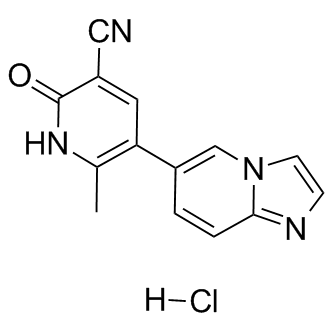
Olprinone (Hydrochloride)Featured
100 mg USD 450 · 250 mg USD 900 · 1 g USD 1,800 · 10 mM * 1 mL in DMSO USD 220Olprinone Hcl(Loprinone Hcl) is a selective phosphodiesterase 3 (PDE3) inhibitor. Olprinone is used as cardiotonic agent with positive inotropic and vasodilating effects. Olprinone has been reported to improve microcirculation and attenuate inflammation. Olprinone is often used to increase cardiac output after cardiopulmonary bypass (CPB). Olprinone was infused at a rate of 0.2 μg/kg/min when weaning from CPB was started. Olprinone has also shown potent antioxidative and anti-inflammatory effects in the meconium-induced oxidative lung injury.
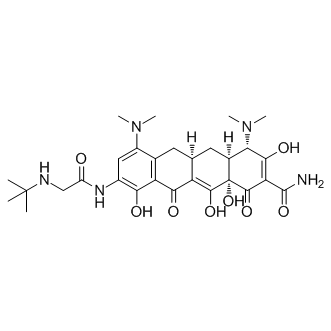
TigecyclineFeatured
1 g USD 450 · 10 mM * 1 mL in DMSO USD 150Tigecycline is a first-in-class, broad spectrum antibiotic with activity against antibiotic-resistant organisms.Tigecycline is active against a broad range of gram-negative and gram-positive bacterial species including clinically important multidrug-resistant nosocomial and community-acquired bacterial pathogens. Tigecycline has been shown to inhibit the translation elongation step by binding to the ribosome 30S subunit and preventing aminoacylated tRNAs to accommodate in the ribosomal A site [1]. Tigecycline has also been found to be effective for the treatment of community- as well as hospital-acquired and ventilator-associated pneumonia and bacteremia, sepsis with shock and urinary tract infections. Tigecycline appears to be a valuable treatment option for the management of superbugs, especially where conventional therapy has failed [2].Fifteen patients received tigecycline for 16 episodes of CPKP infection. The main infections were pneumonia (31%), urinary tract infection (31%), peritonitis (20%), catheter-related bacteraemia (12%), and meningitis (6%). Most infections were complicated with severe sepsis (44%), septic shock (12%), and/or bacteraemia (19%). The daily maintenance dose of tigecycline was 200 mg in 10 episodes and 100 mg in 6 episodes. The overall 30-day mortality rate was 25%. Univariate analysis showed that mortality was significantly associated (p < 0.01) with mean APACHE II and SOFA scores and the presence of immunosuppression, but not with the tigecycline dose [3].
Bi 2536Featured
100 mg USD 450 · 250 mg USD 900 · 1 g USD 1,900 · 10 mM * 1 mL in DMSO USD 220BI 2536 is a dual PLK1 and BRD4 inhibitor with IC50s of 0.83 and 25 nM, respectively.
Structure information available on request
Seclidemstat(SP-2577)Featured
100 mg USD 500 · 250 mg USD 850 · 1 g USD 1,600 · 10 mM * 1 mL in DMSO USD 220Seclidemstat (SP-2577) is a potent LSD1 inhibitor, with a mean IC50 of 127 nM.
RolipramFeatured
100 mg USD 200 · 250 mg USD 400 · 1 g USD 800 · 10 mM * 1 mL in DMSO USD 150Rolipram is a selective phosphodiesterases PDE4 inhibitor with IC50s of 3 nM, 130 nM and 240 nM for PDE4A, PDE4B, and PDE4D, respectively.

Belizatinib(TSR-011)Featured
100 mg USD 600 · 250 mg USD 1,100 · 1 g USD 2,100 · 10 mM * 1 mL in DMSO USD 220Belizatinib is an oral, dual, potent inhibitor of ALK and TRKA, TRKB, and TRKC, with IC50 of 0.7 nM for wild-type recombinant ALK kinase.
Structure information available on request
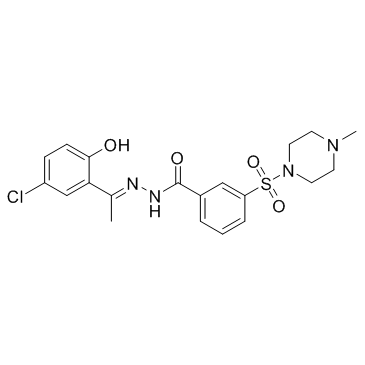
ml335Featured
100 mg USD 550 · 250 mg USD 900 · 1 g USD 1,750 · 10 mM * 1 mL in DMSO USD 220ML335 is a selective activator of both TREK-1 and TREK-2.
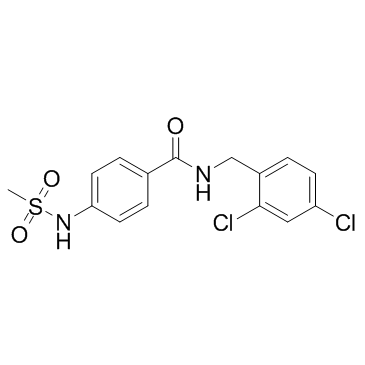
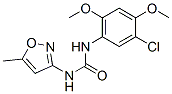
PNU120596Featured
100 mg USD 300 · 250 mg USD 600 · 1 g USD 1,300 · 10 mM * 1 mL in DMSO USD 150PNU-120596 (NSC 216666 ) is a potent and selective positive allosteric α7 nAChR modulator with an EC50 of 0.2 μM.
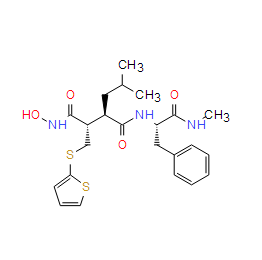
Batimastat(BB-94)Featured
100 mg USD 850 · 250 mg USD 1,600 · 1 g USD 3,200 · 10 mM * 1 mL in DMSO USD 220Batimastat is a potent broad spectrum MMP inhibitor with IC50 of 3, 4, 4, 6, and 20 nM for MMP-1, MMP-2, MMP-9, MMP-7 and MMP-3, respectively.
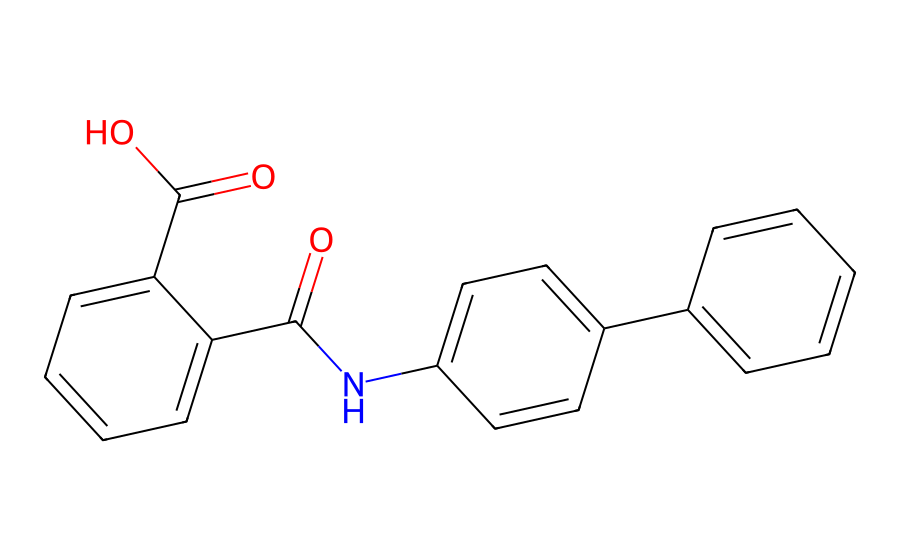
Kartogenin (KGN)Featured
100 mg USD 300 · 250 mg USD 550 · 1 g USD 1,100 · 10 mM * 1 mL in DMSO USD 150Kartogenin is an inducer of differentiation of human mesenchymal stem cells into chondrocytes.
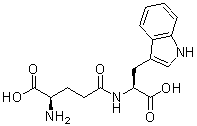
Golotimod (SCV-07)Featured
100 mg USD 400 · 250 mg USD 700 · 1 g USD 1,300 · 10 mM * 1 mL in DMSO USD 150Golotimod (SCV-07), an immunomodulating peptide with antimicrobial activity, significantly increases the efficacy of antituberculosis therapy, stimulates thymic and splenic cell proliferation, and improves macrophage function. Golotimod (SCV-07) inhibits STAT3 signaling and modulates the duration and severity of oral mucositis in animal models that received radiation or a combination of radiation and Cisplatin. Golotimod (SCV-07) is a potential therapeutic for recurrent genital herpes simplex virus type 2 (HSV-2)[1][2][3].
Tariquidar (XR9576)Featured
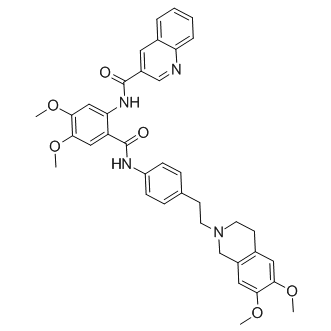
100 mg USD 450 · 250 mg USD 900 · 1 g USD 1,900 · 10 mM * 1 mL in DMSO USD 220Description of Tariquidar: Tariquidar is a P-glycoprotein inhibitor undergoing research as an adjuvant against multidrug resistance in cancer. Tariquidar non-competitively binds to the p-glycoprotein transporter, thereby inhibiting transmembrane transport of anticancer drugs. Inhibition of transmembrane transport may result in increased intracellular concentrations of an anticancer drug, thereby augmenting its cytotoxicity. Check For active clinical trials or closed clinical trials using this agent. (NCI Thesaurus). For the detailed information about the solubility of Tariquidar in water, the solubility of Tariquidar in DMSO, the solubility of Tariquidar in PBS buffer, the animal experiment(test) of Tariquidar,the in vivo,in vitro and clinical trial test of Tariquidar,the cell experiment(test) of Tariquidar,the IC50, EC50 and Affinity of Tariquidar, please contact DC Chemicals.
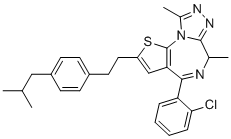
IsrapafantFeatured
5 mg USD 650Israpafant (Y24180) is a specific antagonist of PAF receptor that inhibits PAF-induced rabbit platelet aggregation in vitro (IC50=3.84 nM), with little effect on adenosine diphosphate- or arachidonic acid-induced aggregation.
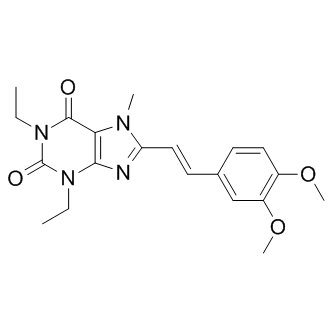
Istradefylline (KW-6002)Featured
100 mg USD 250 · 250 mg USD 500 · 1 g USD 1,000 · 10 mM * 1 mL in DMSO USD 150Istradefylline is a very potent, selective and orally active adenosine A2A receptor antagonist with Ki of 2.2 nM in experimental models of Parkinson's disease.
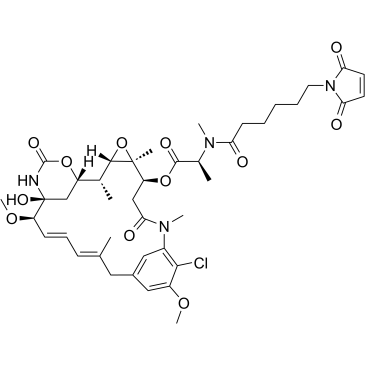
MC-DM1Featured
5mg USD 1,000 · 10 mg USD 1,700MC-DM1 is a drug-linker conjugate composed of a potent microtubule-disrupting agent DM1 and a linker MC to make antibody drug conjugate (ADC)[1].
PFK158Featured
100 mg USD 400 · 250 mg USD 700 · 1 g USD 1,350 · 10 mM * 1 mL in DMSO USD 150PFK-158 is a potent and selective inhibitor of PFKFB3 that is currently being investigated in a phase I study in patients with advanced solid malignancies.
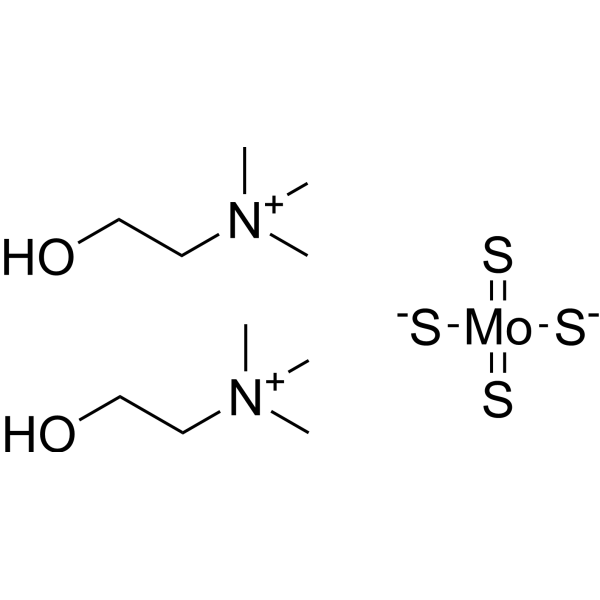
ATN-224Featured
100 mg USD 550 · 250 mg USD 900 · 1 g USD 1,800ATN-224 is an oral Cu2+/Zn2+-superoxide dismutase 1 (SOD1) inhibitor. ATN-224 inhibits SOD1 activity in endothelial cells, an effect that is dose dependent with an IC50 of 17.5±3.7 nM.
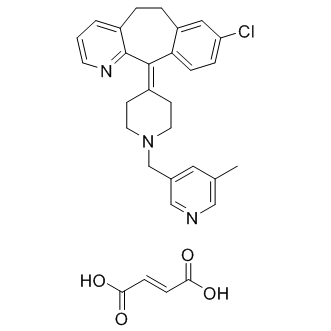
RupatadineFeatured
100 mg USD 200 · 250 mg USD 400 · 1 g USD 800 · 10 mM * 1 mL in DMSO USD 150Rupatadine Fumarate (UR-12592 Fumarate) is a potent dual PAF/H1 antagonist with Ki of 0.55/0.1 uM(rabbit platelet membranes/guinea pig cerebellum membranes).
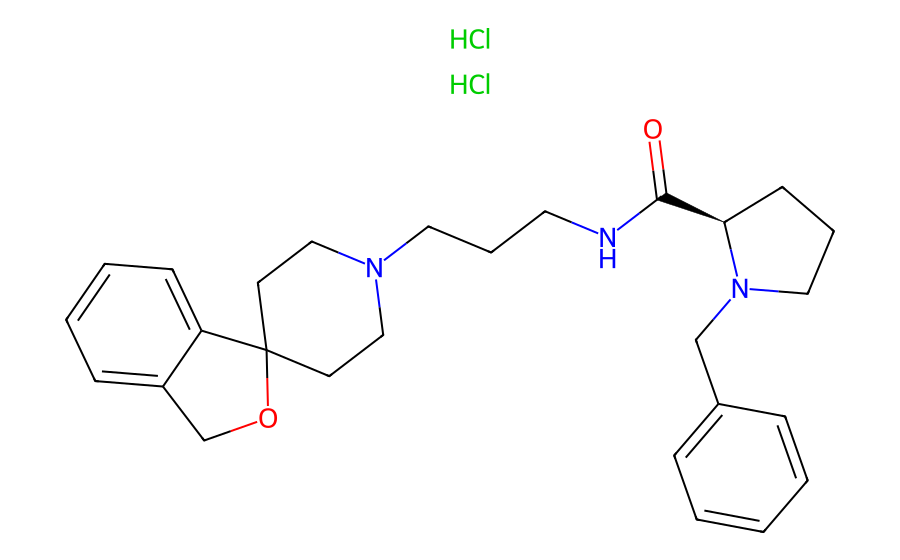
BAN ORL 24Featured
100 mg USD 550 · 250 mg USD 1,000 · 1 g USD 1,900 · 10 mM * 1 mL in DMSO USD 220BAN ORL 24 is a potent and selective NOP receptor antagonist. (IC50 values are 0.27, 2500, 6700 and > 10000 nM for NOP, κ-, μ- and δ-receptors respectively).
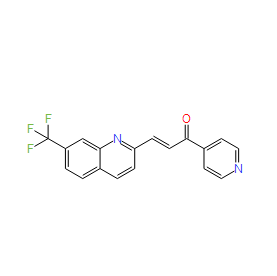
TC-2153Featured
100 mg USD 950 · 250 mg USD 1,700 · 1 g USD 3,900 · 10 mM * 1 mL in DMSO USD 220TC-2153 is a specific, small moelcule inhibitor of neuron-specific tyrosine phosphatase STEP with IC50 of 24.6 nM; increases tyrosine phosphorylation of STEP substrates ERK1/2, Pyk2, and GluN2B, and exhibits no toxicity in cortical cultures, shows specificity towards STEP compared to several other tyrosine phosphatases; improves cognitive deficits in 3xTg-AD mice, with no change in beta amyloid and phospho-tau levels.
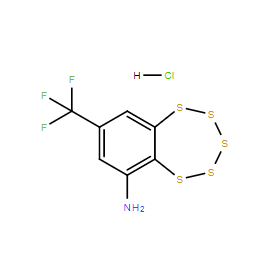
No products match this search.
Page 120 of 184 · Browse all 3666 products