Rolipram chemical structure
Chemical structureResearch use only
CAT. NO. DC22625Featured

Rolipram

Pack Sizes & Prices

TotalUS$200
We match the best price and quality on market.
Product overview

Description & Application

Rolipram is a selective phosphodiesterases PDE4 inhibitor with IC50s of 3 nM, 130 nM and 240 nM for PDE4A, PDE4B, and PDE4D, respectively.

ParameterValue
Chemical Name2-Pyrrolidinone, 4-[3-(cyclopentyloxy)-4-methoxyphenyl]-
CAS No.61413-54-5
SynonymsSB95952;ZK62711;(R,S)-Rolipram;SB 95952;ZK 62711;SB-95952;ZK-62711
FormulaC16H21NO3
M.Wt275.3428
SMILESC1(OC2=C(OC)C=CC(C3CNC(=O)C3)=C2)CCCC1
Purity>98%
Storage2 years -20°C Powder, 2 weeks 4°C in DMSO, 6 months -80°C in DMSO

Biological Activity

Rolipram is a selective phosphodiesterases PDE4 inhibitor with IC50s of 3 nM, 130 nM and 240 nM for PDE4A, PDE4B, and PDE4D, respectively.

In Vitro

The PDE4 selective inhibitor, Rolipram, inhibits immunopurified PDE4B and PDE4D activities similarly, with IC50s of approx. 130 nM and 240 nM respectively. In contrast, Rolipram inhibits immunopurified PDE4A activity with a dramatically lower IC50 of around 3 nM. Rolipram increases phosphorylation of cAMP-response-element-binding protein (CREB) in U937 cells in a dose-dependent fashion, which implies the presence of both high affinity (IC50 approx. 1 nM) and low affinity (IC50 approx. 120 nM) components. Rolipram dose-dependently inhibits the IFN-gamma-stimulated phosphorylation of p38 MAPK in a simple monotonic fashion with an IC50 of approx. 290 nM[1]. Rolipram is a selective PDE4 inhibitor that inhibits all PDE4 isoforms A, B, C and D. Rolipram inhibits LPS-induced TNF production in a dose-dependent manner (IC50 25.9 nM), and maximal/submaximal inhibition is observed with 2 μM drug concentration in J774 cells[2].

In Vivo

TNF mRNA and protein expression is induced by LPS in peritoneal macrophages (PM) from WT mice, and that is clearly (by 74 and 63% for TNF mRNA and TNF protein, respectively) inhibited by Rolipram. LPS-induced TNF production is enhanced in PM from MKP-1(-/-) mice as compared to that in PM from WT mice, which is in line with the published results. Interestingly, the inhibition of TNF mRNA and protein expression by Rolipram is markedly attenuated in PM from MKP-1(-/-) mice and does not reach statistical significance[2]. Repeated administration of Rolipram (1.25 mg/kg, i.p.) reduces the number of escape failures in learned helplessness rats[3].

References & source

DC Chemicals original product information

Published experimental findings depend on the model and assay conditions. They do not guarantee equivalent performance in every application. For laboratory research use only.

Product documentation

Refer to the certificate supplied with your lot for batch-specific release results.

Handling guide

2 years -20°C Powder, 2 weeks 4°C in DMSO, 6 months -80°C in DMSO

Solution calculator

Related research products

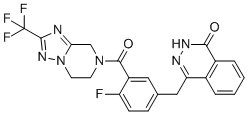
Fluzoparib chemical structureDC22228

Fluzoparib

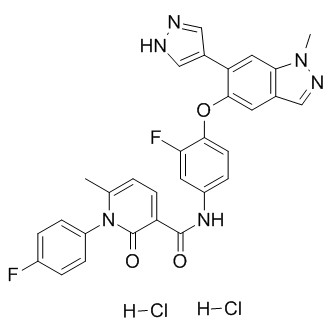
Fluzoparib (SHR-3162) is a novel, potent and orally available inhibitor of PARP; potently inhibited PARP1 enzyme activity and induced DNA double-strand breaks, G2/M arrest and apoptosis in homologous recombination…

View activity & prices
PF-670462 chemical structureDC2086

PF-670462

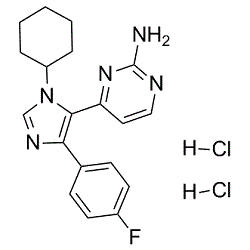
PF-670462 is a potent and selective inhibitor of casein kinase (CK1ε and CK1δ), with IC50s of 7.7 nM and 14 nM, respectively.

View activity & prices
PBIT chemical structureDC7550

PBIT

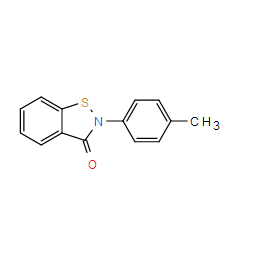
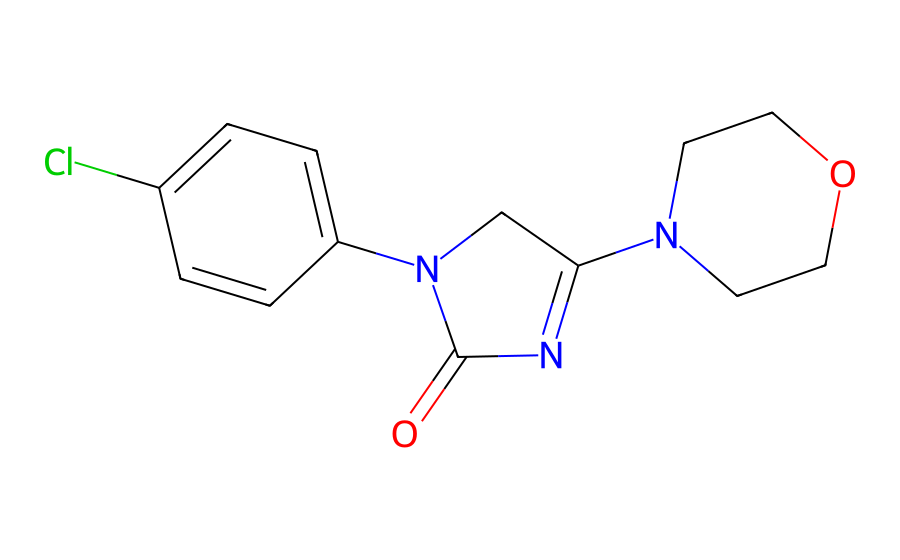
PBIT is a specific inhibitor of the Jumonji AT-rich Interactive Domain 1(JARID1) enzymes. PBIT inhibits JARID1B (KDM5B or PLU1 ) histone demethylase an IC50 of about 3 μM . PBIT also inhibits JARID1A and JARID1C with…

View activity & prices
Fenoldopam (mesylate) chemical structureDC9424

Fenoldopam (mesylate)

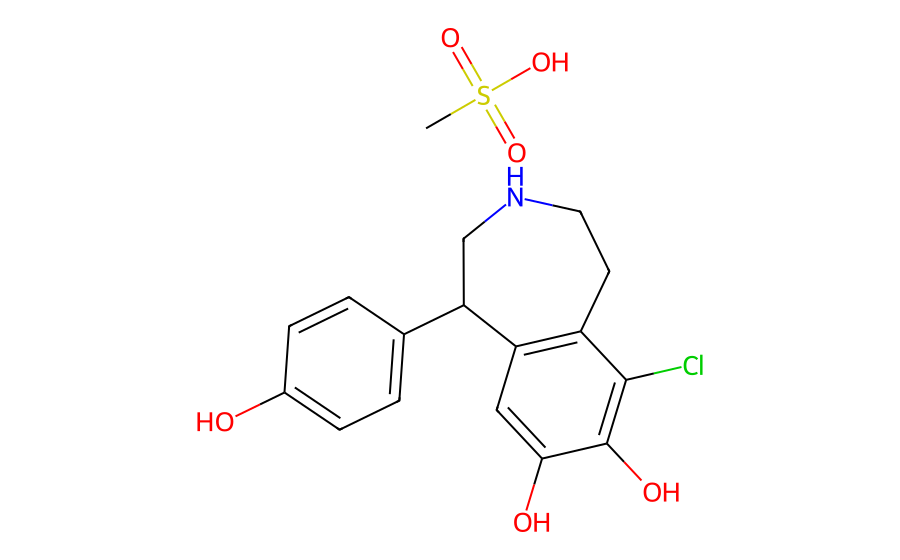
Fenoldopam(SKF 82526) mesylate is a drug and synthetic benzazepine derivative which acts as a selective D1 receptor partial agonist.Target: D1 ReceptorFenoldopam is a selective dopamine-1 (DA1) agonist with…

View activity & prices
PKG drug G1 chemical structureDC10821

PKG drug G1

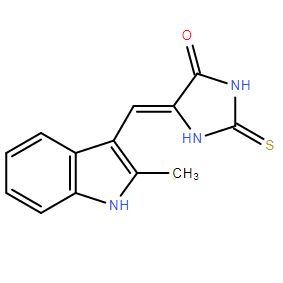
PKG drug G1 targets C42 of PKG Iα. PKG drug G1 can couple to vasodilation and blood pressure lowering by a C42 PKG Iα-independent mechanism.

View activity & prices

Cart

Request quotation