
Research lipid catalog
Ionizable Lipid Products
Explore 848 lipid and RNA delivery products. Search the full catalog or browse by research category.
Search covers product name, catalog number, synonyms, available CAS numbers and categories. Spaces, hyphens and common punctuation are ignored. Duplicate legacy records are consolidated under one canonical product result.
3666 products · Showing 2121–2140 · 20 per page
DC Chemicals lipid expertise
Built for ionizable-lipid discovery and RNA delivery research
DC Chemicals supports formulation and delivery research with a broad, searchable portfolio of cationic and ionizable lipids. The current directory brings together 848 unique research-use products, with product specifications, pricing, chemical structures and literature-linked formulation data added as each record is verified.
Our experience spans complex lipid synthesis, purification, analytical release and process development. For custom molecules or larger-scale requirements, our team can discuss route development, technical specifications and scale-up options for the intended research workflow.
Learn about cationic and ionizable lipids →Proprietary innovation · Co-development · GMP
From proprietary lipid design to GMP-grade custom synthesis
DC Chemicals has independently developed ionizable-lipid structures supported by company-owned intellectual property, and selected proprietary lipid programs have advanced to GMP-stage development.
We welcome joint development with customers—from molecular design and lipid synthesis through route and process development. We can also support custom synthesis of GMP-grade ionizable lipids to agreed technical specifications and quality requirements.
Discuss a co-development project →Proprietary ionizable-lipid structuresCollaborative molecular designCustom lipid synthesisProcess development and scale-upGMP-grade project support
Product quick links
Explore ionizable lipids
Browse specifications, pricing and literature-linked product information.
Cat. No.Product NameField of ApplicationChemical Structure
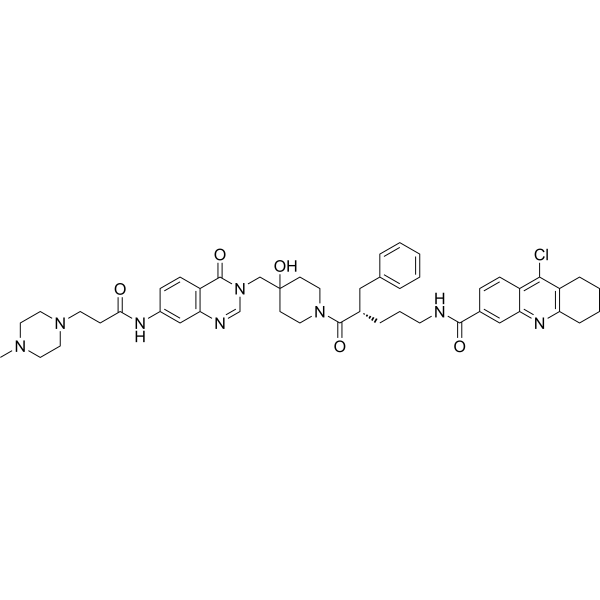
XL177AFeatured
100mg USD 2,400 · 10mg USD 450 · 25mg USD 700 · 50mg USD 1,300XL177A is a potent USP7 inhibitor. XL177A irreversibly inhibits USP7 with sub-nM potency and selectivity across the human proteome. Evaluation of the cellular effects of XL177A reveals that selective USP7 inhibition suppresses cancer cell growth predominantly through a p53-dependent mechanism: XL177A specifically upregulates p53 transcriptional targets transcriptome-wide, hotspot mutations in TP53 but not any other genes predict response to XL177A across a panel of ~500 cancer cell lines, and TP53 knockout rescues XL177A-mediated growth suppression of TP53 wild-type (WT) cells.
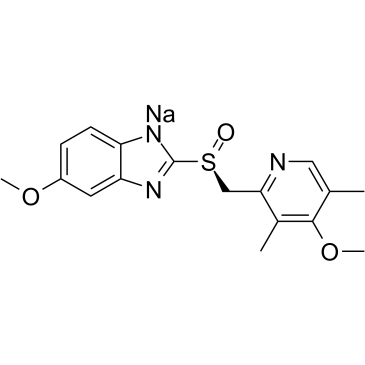
Esomeprazole sodiumFeatured
100mg USD 200 · 250 mg USD 350 · 1g USD 600 · 10 mM * 1 mL in DMSO USD 150Esomeprazole sodium is a proton pump inhibitor which reduces acid secretion through inhibition of the H+ / K+ ATPase in gastric parietal cells.Esomeprazole sodium (Nexium) is the S-isomer of omeprazole and acts as a proton pump inhibitor and gastric antisecretory agent indicated for the short-term treatment of gastroesophageal reflux disease in patients with a history of erosive esophagitis. Esomeprazole 0.4 and 0.8 mg/mL as the sodium salt in the infusion solutions tested is chemically and physically stable for at least 2 days at room temperature and 5 days under refrigeration.
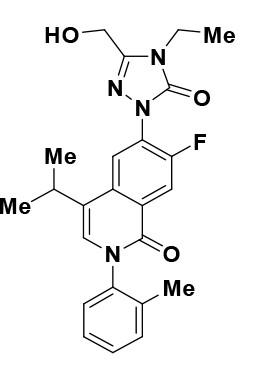
JNJ-74856665Featured
5mg USD 550JNJ-74856665 is an orally bioavailable, potent, and selective DHODH inhibitor with IC50 of 0.40 nM. JNJ-74856665 shows favorable physicochemical properties and has been selected for clinical development in patients with AML and myelodysplastic syndromes (MDS).
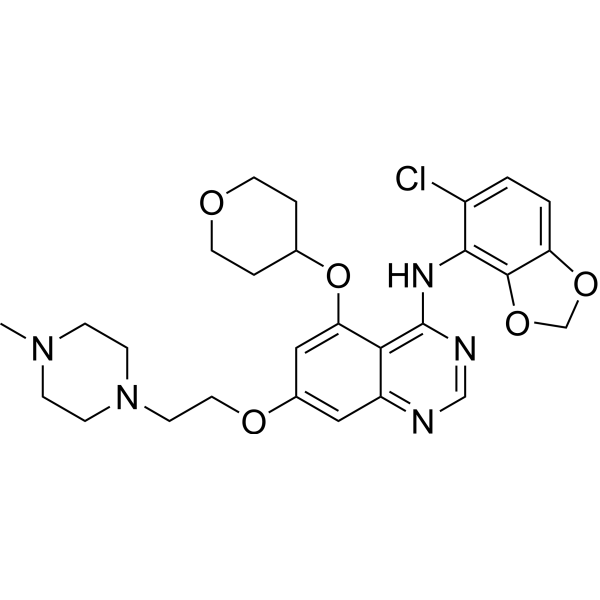
Saracatinib (AZD0530)Featured
100 mg USD 350 · 250 mg USD 600 · 1 g USD 1,300Saracatinib (AZD0530) is a potent Src family inhibitor with IC50s of 2.7 to 11 nM for c-Src, Lck, c-YES, Lyn, Fyn, Fgr, and Blk and shows high selectivity over other tyrosine kinases.
IsradipineFeatured
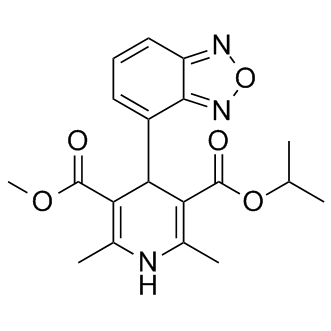
100 mg USD 200 · 250 mg USD 360 · 1 g USD 800Isradipine(Dynacirc) is a calcium channel blocker with an IC50 of 34±8 μM.Isradipine(Dynacirc) is a calcium channel blocker with an IC50 of 34±8 μM.It is usually prescribed for the treatment of high blood pressure in order to reduce the risk of stroke and heart attack. Isradipine belongs to the dihydropyridine (DHP) class of calcium channel blockers (CCBs), the most widely used class of CCBs. It is structurally related to felodipine, nifedipine, and nimodipine and is the most potent calcium-channel blocking agent of the DHP class. Isradipine binds to calcium channels with high affinity and specificity and inhibits calcium flux into cardiac and arterial smooth muscle cells. It exhibits greater selectivity towards arterial smooth muscle cells owing to alternative splicing of the alpha-1 subunit of the channel and increased prevalence of inactive channels in smooth muscle cells. Isradipine may be used to treat mild to moderate essential hypertension.
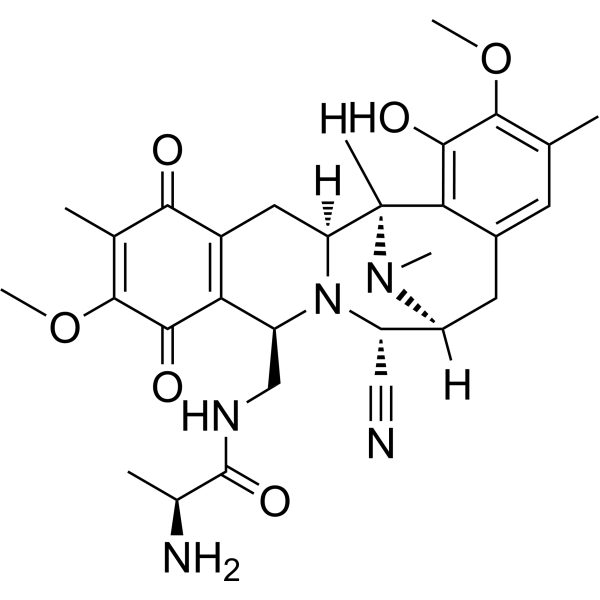
Cyanosafracin BFeatured
100 mg USD 550 · 250 mg USD 900 · 1 g USD 1,800Cyanosafracin B is a starting material for synthesis of Ecteinascidin ET-743 and Phthalascidin Pt-650.
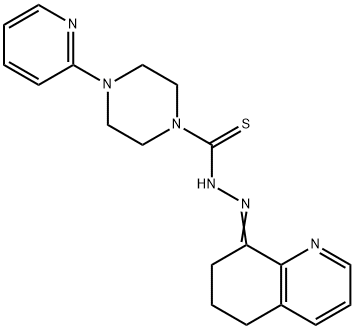
COTI-2Featured
100 mg USD 600 · 250 mg USD 950 · 1 g USD 1,850COTI-2 is a small molecule candidate anti-cancer drug which can convert mutant p53 to wild-type conformation.
GSK682753AFeatured
100 mg USD 700 · 250 mg USD 1,400 · 1 g USD 2,800GSK682753 is a selective and highly potent inverse agonist for murine as well as human EBI2 with inhibition of G protein-dependent signals as well as signals that are probably G protein-independent. In cAMP-response element-binding protein-based reporter and guanosine5'-3-O-(thio)-triphosphate (GTPγS) binding assays, the potency of this compound is 2.6-53.6 nM, and its inhibitory efficacy is 75%. GSK682753A dose-dependently inhibits EBI2 with an IC50of 53.6 nM. GSK682753A inhibits ERK phosphorylation, GTPγS binding, and cAMP-response element-binding protein activation with similar potency.
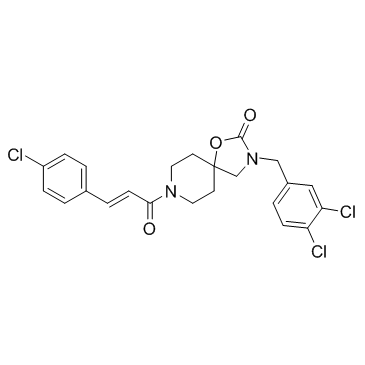
TRPM4 inhibitor 5Featured
100 mg USD 650 · 250 mg USD 1,200 · 1 g USD 2,400TRPM4 inhibitor 5 is a potent and selective inhibitor of TRPM4 with IC50 of 1.5 uM (Na+ influx); selectively inhibits TRPM4 overexpressed in HEK293 cells (IC50=1.8 uM) using classical patch-clamp electrophysiology recordings, shows no significant effect on the TRPM5 current, as well as other TRP family members including TRPM7, TRPM8, TRPV1 and TRPV6.
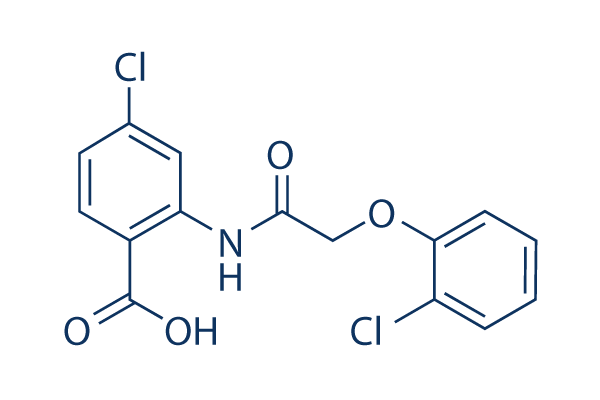
TRPM4-IN-2Featured
100mg USD 750 · 250mg USD 1,250 · 1g USD 2,500TRPM4-IN-2 (NBA) is a potent transient receptor potential melastatin 4 (TRPM4) inhibitor with an IC50 value of 0.16 μM. TRPM4-IN-2 can be used for researching prostate cancer and colorectal cancer[1][2].
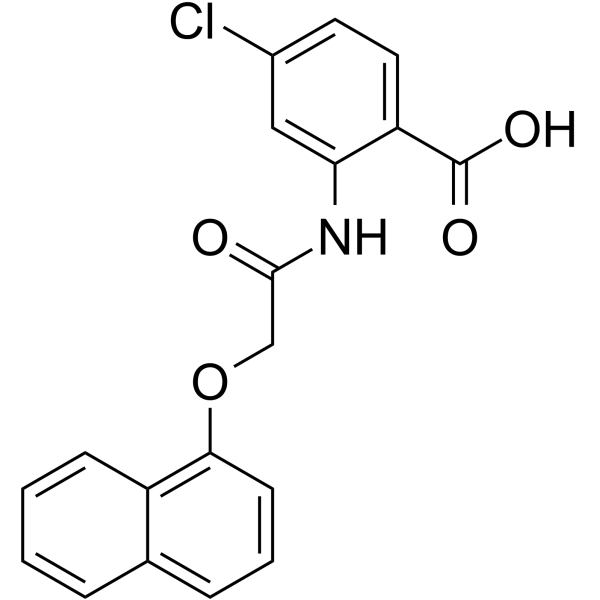
2-NitrosopyridineFeatured
250 mg USD 1,100 · 100 mg USD 600 · 1 g USD 2,2002-Nitrosopyridine is a nitroso compound can be used to synthesize antibiotics.
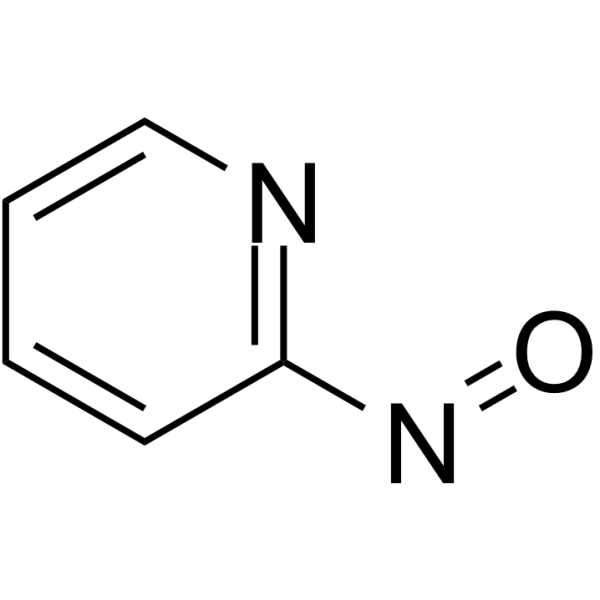
HydrofurimazineFeatured
5mg USD 450 · 10mg USD 600 · 25mg USD 900 · 50mg USD 1,450 · 100mg USD 1,990Hydrofurimazine is a NanoLuc substrate whose enhanced aqueous solubility allows delivery of higher doses to mice. Hydrofurimazine enables sensitive bioluminescence imaging for either prolonged light production of high sensitivity.
MS8815Featured
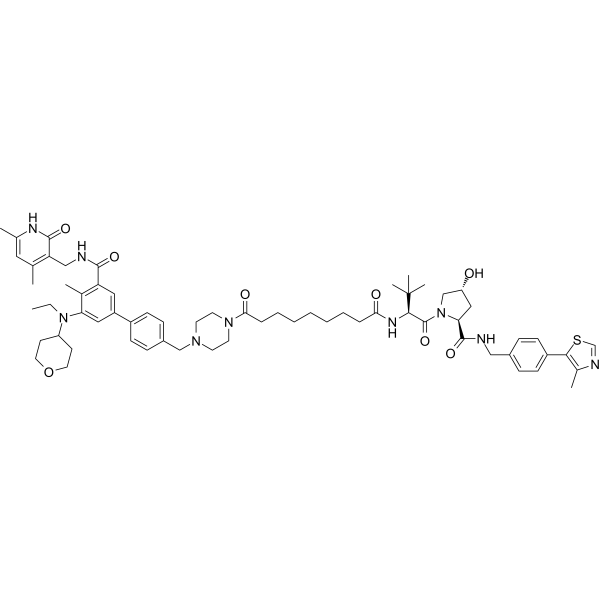
100 mg USD 1,100 · 250 mg USD 1,950 · 1 g USD 3,950MS8815 is a selective enhancer of zeste homolog 2 (EZH2) PROTAC degrader. MS8815 has inhibition activity for EZH2 with an IC50 value of 8.6 nM. MS8815 can be used for the research of triple-negative breast cancer (TNBC).
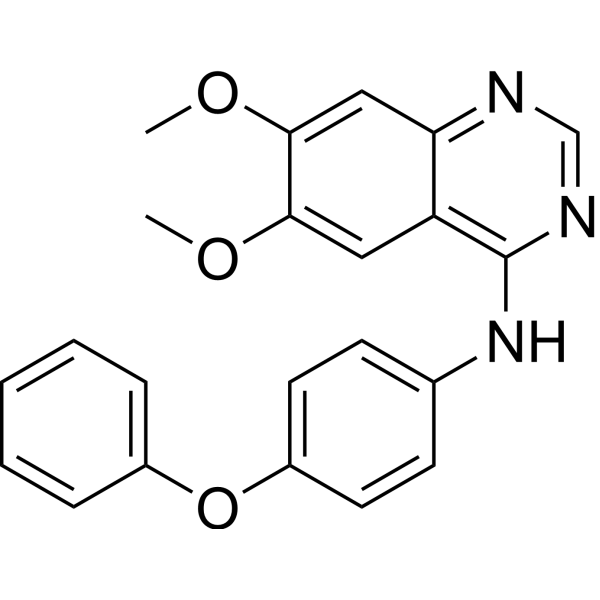
Src kinase inhibitor IFeatured
100 mg USD 300 · 250 mg USD 500 · 1 g USD 1,100Src Inhibitor 1 is a potent and selective dual site Src tyrosine kinase inhibitor with IC50 values of 44 nM for Src and 88nM for Lck.
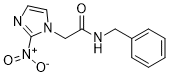
100 mg USD 250 · 250 mg USD 500 · 1 g USD 1,000
In Vivo Benznidazole (100 mg/kg/day, p.o., 30 days) produces a decrease in electrocardiographic alterations, fewer modifications in the affinity and density of cardiac-receptors, and few isolated areas of fibrosis in the heart, in mice infected with Trypanosoma cruzi Tulahuen strain or SGO-Z12 isolate and treated at 180 days post infection (p.i.) (i.e. chronic phase) with Benznidazole.
AZ-960Featured
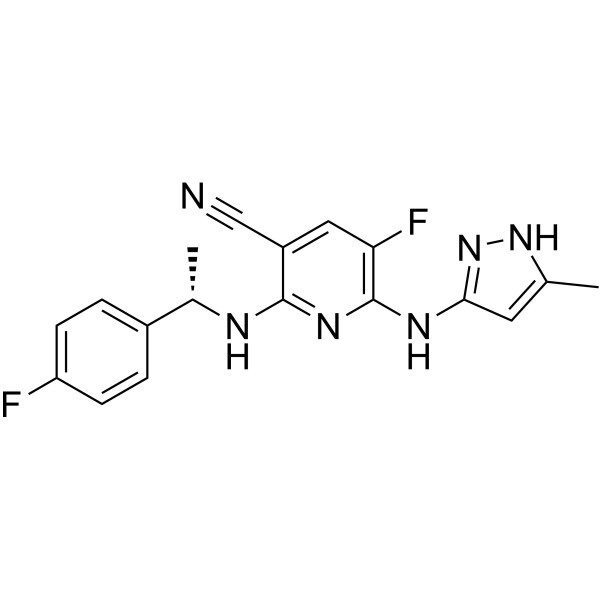
100 mg USD 450 · 250 mg USD 900 · 1 g USD 2,200AZ960 also inhibits many kinases less than 50% at a concentration of 0.1 μM such as JAK3 (IC50=9 nM), TrkA, Aurora, and ARK5. In cells, AZ 960 inhibits the phosphorylation of STAT5 in TEL-JAK2 cells with an average IC50 of 15 nM and exhibits 15-30 -fold sensitivity For TEL-JAK2-driven STAT5 phosphorylation compared with cell lines driven by other JAK kinase family members (TEL-JAK1, -JAK3, and -TYK2). AZ 960 shows potent activity in inhibiting the proliferation of the TEL-JAK2, -JAK1, -JAK3, and -Tyk2 cell lines with GI50 values of 25 nM, 230 nM, 279 nM, and 214 nM, respectively. Moreover, AZ 960 also potently inhibits SET-2 cell proliferation with an average GI50 of 33 nM by reducing both STAT3 and STAT5 phosphorylation levels. AZ 960 causes growth arrest and apoptosis of human T-cell lymphotropic virus type 1, HTLV-1pe 1, HTLV-1LV-1osis of human T-cSET-2 cell proliferation witBcl-xL by small interfering RNA potentiates anti-proliferative effects of AZ 960 in MT-1 cells. A recent study shows that AZ 960 leads to significant inhibition of the clonogenic growth and induction of apoptosis of freshly isolated AML cells from patients. For the detailed information of AZ-960, the solubility of AZ-960 in water, the solubility of AZ-960 in DMSO, the solubility of AZ-960 in PBS buffer, the animal experiment (test) of AZ-960, the cell expriment (test) of AZ-960, the in vivo, in vitro and clinical trial test of AZ-960, the EC50, IC50,and Affinity of AZ-960, Please contact DC Chemicals.
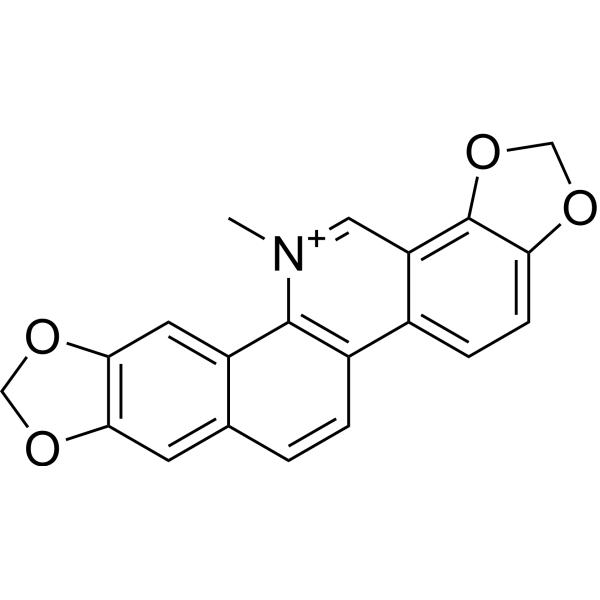
SanguinarineFeatured
100 mg USD 350 · 250 mg USD 650 · 1 g USD 1,350For the detailed information of Sanguinarine, the solubility of Sanguinarine in water, the solubility of Sanguinarine in DMSO, the solubility of Sanguinarine in PBS buffer, the animal experiment(test) (test) of Sanguinarine, the cell expriment (test) of Sanguinarine, the in vivo, in vitro and clinical trial test of Sanguinarine, the EC50, IC50,and Affinity of Sanguinarine,, please contact DC Chemicals.
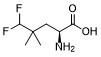
NV-5138Featured
100mg USD 1,050 · 250mg USD 1,800 · 1g USD 3,600NV-5138, a leucine analog, is the first selective and orally active brain mTORC1 activator, binding to Sestrin2. NV-5138 possesses rapid antidepressant effects[1][2].
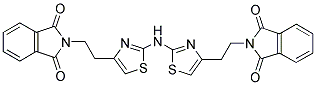
ADAM9iFeatured
5 mg USD 550 · 25 mg USD 1,000 · 10 mg USD 750ADAM9i is a specific small molecule inhibitor of ADAM9 protein with binding KD of 5.9 uM and enzyme IC50 of 5.2 uM, promotes the selective degradation of KRAS and sensitizes pancreatic cancers to chemotherapy.
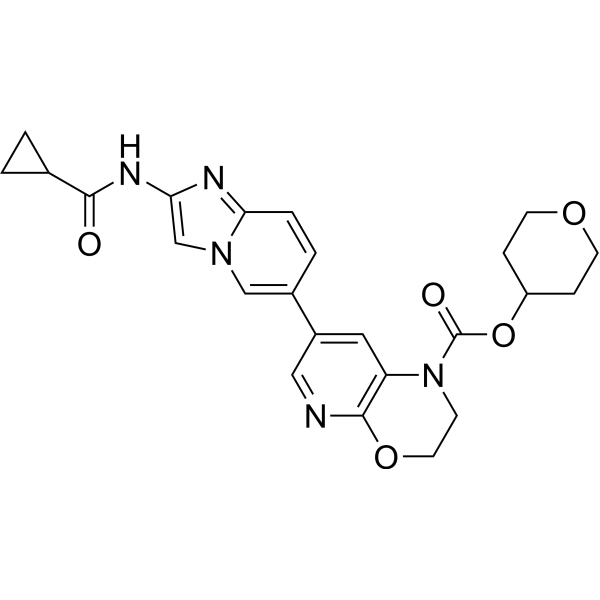
AC-003Featured
5mg USD 400AC-003 is a novel, orally administered small-molecule inhibitor targeting receptor-interacting protein kinase 1 (RIPK1), demonstrating therapeutic potential for the treatment of idiopathic pulmonary fibrosis (IPF).
No products match this search.
Page 107 of 184 · Browse all 3666 products