
Research lipid catalog
Ionizable Lipid Products
Explore 848 lipid and RNA delivery products. Search the full catalog or browse by research category.
Search covers product name, catalog number, synonyms, available CAS numbers and categories. Spaces, hyphens and common punctuation are ignored. Duplicate legacy records are consolidated under one canonical product result.
3666 products · Showing 2141–2160 · 20 per page
DC Chemicals lipid expertise
Built for ionizable-lipid discovery and RNA delivery research
DC Chemicals supports formulation and delivery research with a broad, searchable portfolio of cationic and ionizable lipids. The current directory brings together 848 unique research-use products, with product specifications, pricing, chemical structures and literature-linked formulation data added as each record is verified.
Our experience spans complex lipid synthesis, purification, analytical release and process development. For custom molecules or larger-scale requirements, our team can discuss route development, technical specifications and scale-up options for the intended research workflow.
Learn about cationic and ionizable lipids →Proprietary innovation · Co-development · GMP
From proprietary lipid design to GMP-grade custom synthesis
DC Chemicals has independently developed ionizable-lipid structures supported by company-owned intellectual property, and selected proprietary lipid programs have advanced to GMP-stage development.
We welcome joint development with customers—from molecular design and lipid synthesis through route and process development. We can also support custom synthesis of GMP-grade ionizable lipids to agreed technical specifications and quality requirements.
Discuss a co-development project →Proprietary ionizable-lipid structuresCollaborative molecular designCustom lipid synthesisProcess development and scale-upGMP-grade project support
Product quick links
Explore ionizable lipids
Browse specifications, pricing and literature-linked product information.
Cat. No.Product NameField of ApplicationChemical Structure
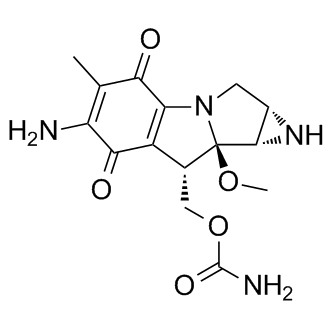
Mitomycin CFeatured
100 mg USD 200 · 250 mg USD 400 · 1 g USD 800 · 10 mM * 1 mL in DMSO USD 150Mitomycin C is an antitumor drug and antibiotic that shows extraordinary ability to inhibit DNA synthesis.
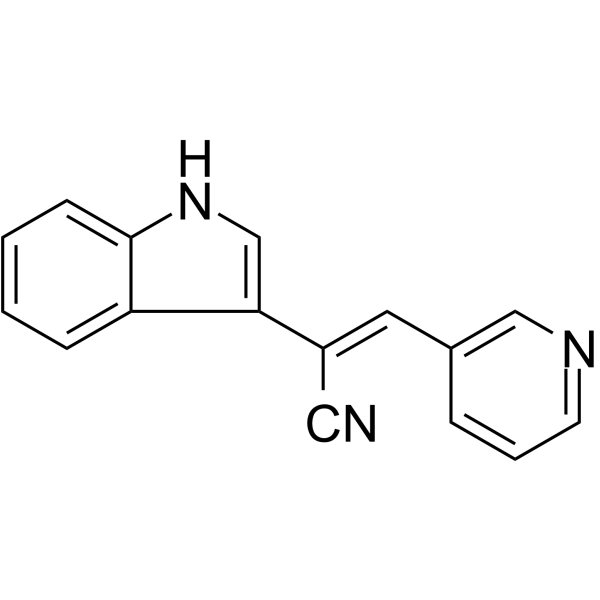
PaprotrainFeatured
100 mg USD 400 · 250 mg USD 700 · 1 g USD 1,350Reversible, non-ATP competitive inhibitor of mitotic kinesin-like protein 2 (MKLP-2)
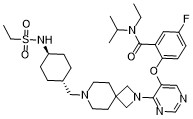
RevumenibFeatured
100 mg USD 700 · 250 mg USD 1,200 · 1 g USD 2,500SNDX-5613 is a potent and specific Menin-MLL inhibitor with a binding Ki of 0.149 nM and a cell based IC50 of 10-20 nM. SNDX-5613 can be used for the research of MLL-rearranged (MLL-r) acute leukemias, including acute lymphoblastic leukemia (ALL) and acute myeloid leukemia (AML)[1].
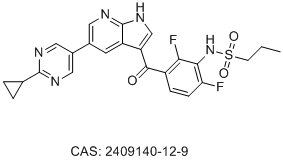
HRX-0233Featured
5mg USD 450HRX-0233 (HRX0233) is a potent and selective inhibitor of MAP2K4 (MKK4), a kinase involved in the stress-activated protein kinase (SAPK) signaling pathway. MAP2K4 plays a role in regulating cellular responses to stress, apoptosis, and tumorigenesis. HRX-0233 has shown particular promise in KRAS-mutant cancers, where it exhibits synergistic effects with RAS inhibitors, making it a potential candidate for combination therapy in these difficult-to-treat cancers.
ART812Featured
100mg USD 700 · 250mg USD 1,200 · 1g USD 2,400ART812 is a DNA polymerase Polθ inhibitor with an IC50 value of 7.6 nM. ART812 has an IC50 value of 240 nM for cell based microhomology-mediated end joining (MMEJ)[1][2].
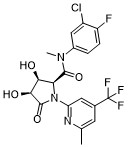
Laninamivir (CS-8958)Featured
100 mg USD 600 · 250 mg USD 950 · 1 g USD 1,900Laninamivir (R 125489) is a potent influenza neuraminidase (NA) inhibitor with IC50s of 0.90 nM, 1.83 nM and 3.12 nM for avian H12N5 NA (N5), pH1N1 N1 NA (p09N1) and A/RI/5+/1957 H2N2 N2 (p57N2), respectively[1].
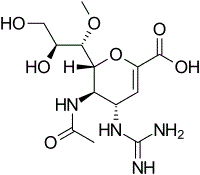
NSC319726Featured
100 mg USD 500 · 250 mg USD 900 · 1 g USD 1,900NSC319726 is a mutant p53R175 reactivator; inhibits growth of fibroblasts expressing the p53R175 mutation (IC50 = 8 nM); shows no inhibition for p53 wild-type cells.in vitro: For NSC319726, the effect was even greater as the IC50 for the 175 mutant was 8 nM while the IC50 of the WT was not reached. NSC319726 did not induce WT p53 protein levels or transcriptional activity as common cytotoxic agents such as etoposide do in vitro. NSC319726 exhibited a much higher sensitivity for the MEF-p53R172H/R172H cell line as compared to the p53+/+ and p53-/- controls. NSC319726 treatment of a MEF cell line derived from p53R172H/R172H mice resulted in a loss of PAB240 immunoflouresence staining. in vivo: At a dose of 1mg/kg, tumor growth of the H460 (p53+/+) and MDAMB468 (p53R273W) xenografts was not inhibited relative to the vehicle control whereas tumor growth was significantly inhibited in the TOV112D (p53R175H) xenografts. When we lowered the dose ten-fold to 0.1 mg/kg in the TOV112D mice, we observed only a small difference in tumor growth inhibition demonstrating both a dosage effect of the drug and a larger therapeutic window.Taken together, these findings provide in vivo evidence for allele specific p53 mutant reactivation.
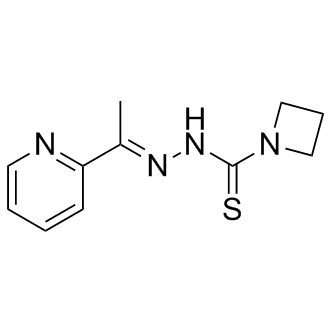
VU0364739Featured
100mg USD 800 · 250mg USD 1,450 · 1g USD 2,800VU0364739 is a selective inhibitor of phospholipase D2 (PLD2) with an IC50 value of 22 nM. Phospholipase D (PLD) enzymes, including PLD1 and PLD2, are involved in various cellular processes, such as signal transduction, membrane trafficking, and cytoskeletal reorganization. PLD2, in particular, has been implicated in cancer cell proliferation, survival, and metastasis, making it a potential target for anticancer therapies.
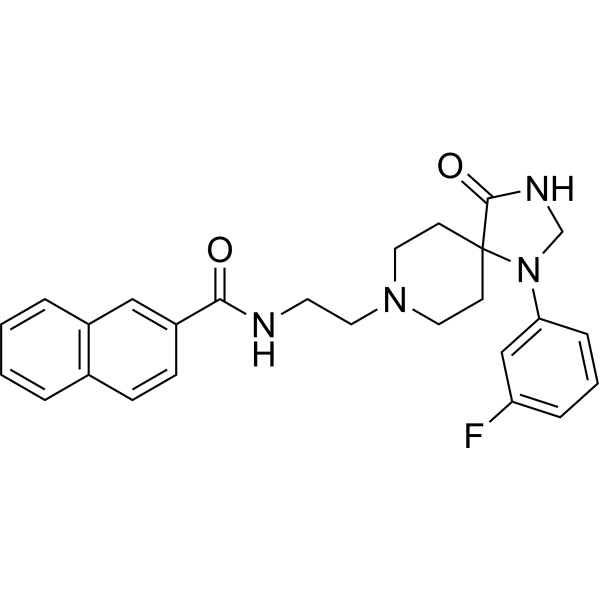
(R)-GNE-140Featured
100 mg USD 600 · 250 mg USD 1,200 · 1 g USD 2,400(R)-GNE-140 (GNE-140) is a novel potent, selective lactate dehydrogenase (LDH) inhibitor with IC50 of 3, 5, and 5 nM for LDHA, LDHB, and LDHC, respectively; displays no inhibition on malate MDH-1, MDH-2 (IC50>10 uM for both enzymes), and no appreciable inhibition against a panel of 301 kinases (<50% inhibition at 1 uM); perturbs glycolysis and inhibits proliferation in MIA PaCa-2 cells (IC50=0.43 uM), decreases glucose uptake (IC50=0.47 uM); pancreatic cell lines that utilize oxidative OXPHOS rather than glycolysis are inherently resistant to GNE-140, which can be resensitized to GNE-140 with the OXPHOS inhibitor phenformin. Pancreatic Cancer Phase 1 Clinical
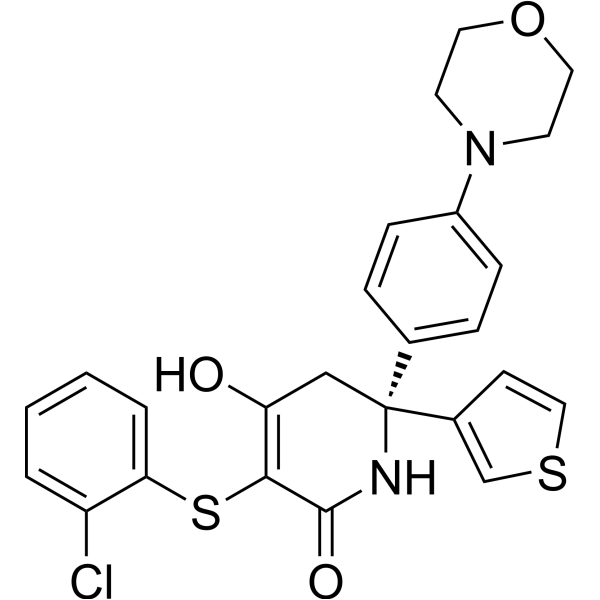
LSN3318839Featured
100 mg USD 850 · 250 mg USD 1,300 · 1 g USD 2,900LSN3318839 is an orally efficacious positive allosteric modulator of the glucagon-like peptide-1 receptor (GLP-1R).
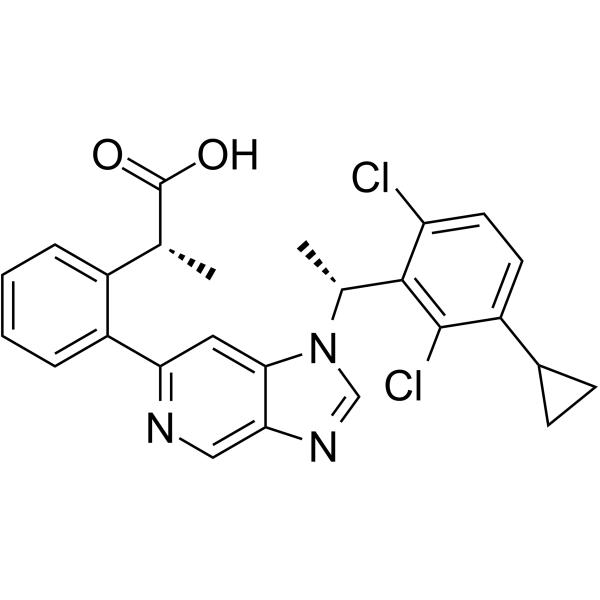
JP-11646Featured
2mg USD 550JP-11646 is a novel potent, selective, non-ATP competitive Pim2 inhibitor with IC50 of 0.5/1/24 nM for Pim2/3/1, respectively; shows less potency for other kinases in a kinase selectivity panel; exhibits 4-760-fold greater suppression of MM proliferation and viability than ATP-competitive PIM inhibitors; significant reduces tumor burden and increases median survival in xenogeneic myeloma murine models.
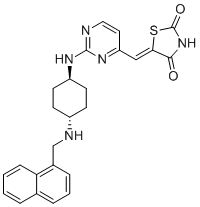
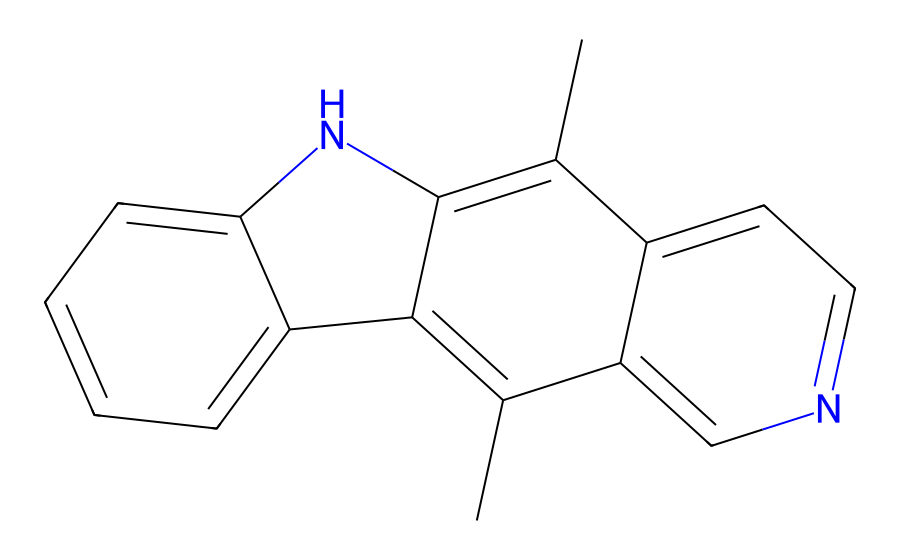
EllipticineFeatured
100 mg USD 380 · 250 mg USD 700 · 1 g USD 1,500 · 10 mM * 1 mL in DMSO USD 150Ellipticine hydrochloride is a potent antineoplastic agent; inhibits DNA topoisomerase II activities.
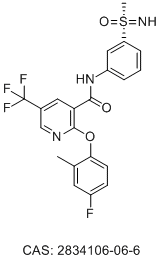
LTGO-33Featured
100mg USD 750 · 250mg USD 1,200 · 1g USD 2,700LTGO-33 is a potent, selective inhibitor of voltage-gated sodium channel NaV1.8 with IC50 of 44 nM (hNaV1.8), 600-fold selectivity against NaV1.1-NaV1.7 and NaV1.9.
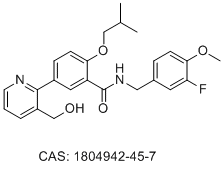
AD-5591Featured
5mg USD 450AD-5591 (AD5591) is a potent, selective, new generation small molecule ALDH2 activator, has the improved biological activities and pharmacological properties compared to Alda-1. AD-5591 (100 μM) significantly increases the enzymatic activity of recombinant WT and mutant human ALDH2 proteins. AD-5591 is the active form of AD-9308.
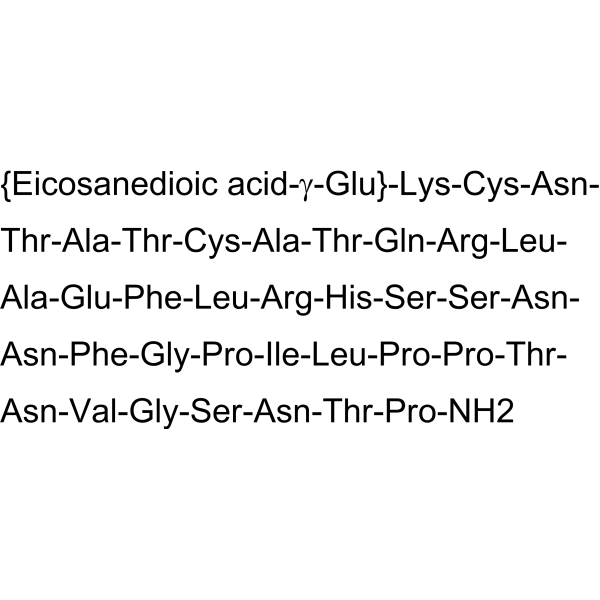
CagrilintideFeatured
100mg USD 550 · 250mg USD 950 · 1g USD 1,900Cagrilintide is an investigational novel long-acting acylated amylin analogue, acts as nonselective amylin receptors (AMYR) and calcitonin G protein-coupled receptor (CTR) agonist. Cagrilintide induces significant weight loss and reduces food intake. Cagrilintide has the potential for the research of obesity.
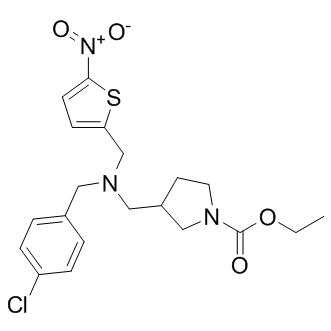
Stenabolic (SR9009)Featured
100 mg USD 200 · 250 mg USD 400 · 1 g USD 800 · 10 mM * 1 mL in DMSO USD 150SR9009 is a REV-ERBα/β agonist with IC50s of 670 nM and 800 nM for REV-ERBα and REV-ERBβ, respectively.
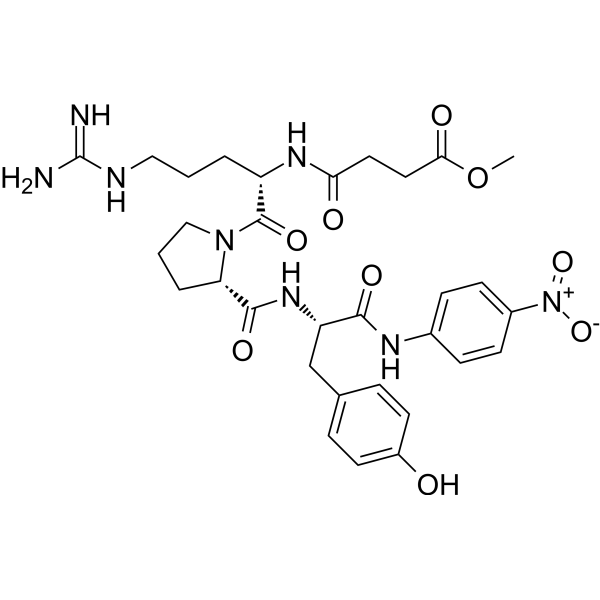
MeO-Suc-Arg-Pro-Tyr-pNAFeatured
100 mg USD 850 · 250 mg USD 1,700 · 1 g USD 3,100 · 10 mM * 1 mL in DMSO USD 220S-2222 is chromogenic substrate for factor Xa. When catalyzed by factor Xa, it releases a free pNA which could be detected by a spectrophotometer at 405 nm wavelength.Chromogenic substrate S-2222 can be used in many applications. For example, it is a key
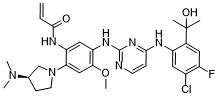
SunvozertinibFeatured
100 mg USD 450 · 250 mg USD 850 · 1 g USD 1,700Sunvozertinib is a potent inhibitor targeting the ErbB family of receptor tyrosine kinases, including EGFR (Epidermal Growth Factor Receptor) and Her2 (Human Epidermal Growth Factor Receptor 2), as well as BTK (Bruton's Tyrosine Kinase). It exhibits particularly strong activity against mutant forms of these kinases, which are often associated with resistance to existing therapies in cancers such as non-small cell lung cancer (NSCLC). The IC50 values (half-maximal inhibitory concentr.
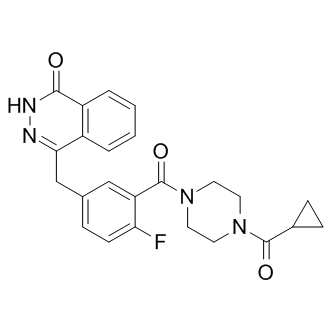
AZD-2281 (Olaparib)Featured
100 mg USD 150 · 250 mg USD 300 · 1 g USD 500 · 10 mM * 1 mL in DMSO USD 150Olaparib (AZD2281;KU0059436) is a potent and oral PARP inhibitor with IC50s of 5 and 1 nM for PARP1 and PARP2, respectively.
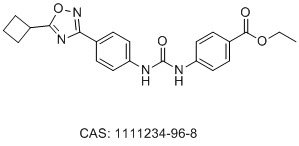
UT-59Featured
5mg USD 500UT-59 is a specific inhibitor that targets the cholesterol-sensing membrane protein Scap (SREBP cleavage-activating protein). It functions by binding to Scap's cholesterol-binding site, which prevents Scap from interacting with SREBPs (sterol regulatory element-binding proteins). This inhibition blocks the activation of SREBPs, which are key transcription factors involved in lipid and cholesterol biosynthesis. As a result, UT-59 effectively suppresses lipid synthesis, making it a potential therapeutic candidate for conditions associated with dysregulated lipid metabolism, such as hyperlipidemia, atherosclerosis, or metabolic disorders.
No products match this search.
Page 108 of 184 · Browse all 3666 products