
Research lipid catalog
Ionizable Lipid Products
Explore 848 lipid and RNA delivery products. Search the full catalog or browse by research category.
Search covers product name, catalog number, synonyms, available CAS numbers and categories. Spaces, hyphens and common punctuation are ignored. Duplicate legacy records are consolidated under one canonical product result.
3666 products · Showing 2081–2100 · 20 per page
DC Chemicals lipid expertise
Built for ionizable-lipid discovery and RNA delivery research
DC Chemicals supports formulation and delivery research with a broad, searchable portfolio of cationic and ionizable lipids. The current directory brings together 848 unique research-use products, with product specifications, pricing, chemical structures and literature-linked formulation data added as each record is verified.
Our experience spans complex lipid synthesis, purification, analytical release and process development. For custom molecules or larger-scale requirements, our team can discuss route development, technical specifications and scale-up options for the intended research workflow.
Learn about cationic and ionizable lipids →Proprietary innovation · Co-development · GMP
From proprietary lipid design to GMP-grade custom synthesis
DC Chemicals has independently developed ionizable-lipid structures supported by company-owned intellectual property, and selected proprietary lipid programs have advanced to GMP-stage development.
We welcome joint development with customers—from molecular design and lipid synthesis through route and process development. We can also support custom synthesis of GMP-grade ionizable lipids to agreed technical specifications and quality requirements.
Discuss a co-development project →Proprietary ionizable-lipid structuresCollaborative molecular designCustom lipid synthesisProcess development and scale-upGMP-grade project support
Product quick links
Explore ionizable lipids
Browse specifications, pricing and literature-linked product information.
Cat. No.Product NameField of ApplicationChemical Structure
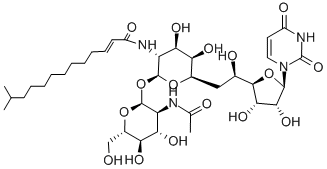
TunicamycinFeatured
5mg USD 400Antibiotic, inhibiting the first step in the N-linked glycosylation in eukaryotes and inducing ER stress to activate the unfolded protein response (UPR)
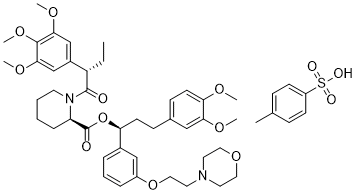
Shield-1Featured
100 mg USD 800 · 250 mg USD 1,350 · 1 g USD 2,700Shield-1 is a specific, cell-permeant and high-affinity ligand of FK506-binding protein-12 (FKBP), and reverses the instability by binding to mutated FKBP (mtFKBP), allowing conditional expression of mtFKBP-fused proteins. Shield-1 can stabilize the entire fusion protein[1][2].
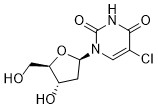
Uridine,5-chloro-2'-deoxy-Featured
100mg USD 150 · 250mg USD 250 · 1g USD 5005-Chloro-2'-deoxyuridine, a thymine analog, is to study the potential of hypochlorous acid damage to DNA and DNA precursors.
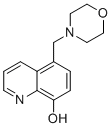
5M-8OH-QFeatured
10mg USD 350 · 50mg USD 500 · 100mg USD 9505M-8OH-Q is a specific small molecule inhibitor of UDP-glucose glycoprotein glucosyltransferase (UGGT), binds a CtUGGTGT24 “WY” conserved surface motif conserved across UGGTs (Kd=47 uM) but not present in other GT24 family glycosyltransferases.
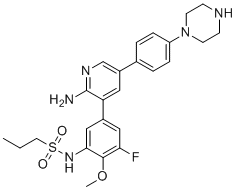
CSLP37Featured
10mg USD 500 · 5mg USD 350CSLP37 (RIPK2 inhibitor CSLP37) is a novel potent, ATP pocket-binding RIPK2 inhibitor with IC50 of 16.3 nM in ADPGlo assay, demonstrates inhibition of both the RIPK2-XIAP interaction, and of cellular and in vivo NOD2 signaling; exhibits inhibition of TNF release from RAW264.7 cells with EC50 of 12.6 nM, inhibits NF-κB reporter activity with IC50 of 22.5 nM; antagonizes NOD2 signaling by interfering with the XIAP-RIPK2 interaction, selectively inhibits NOD responses in cells (HEKBlue NOD2 IC50=26.3 nM) and displays potent activity in vivo, does not attenuates the TNF release following an unrelated pro-inflammatory stimulation mediated through TLR4 activation by LPS at 1 uM.
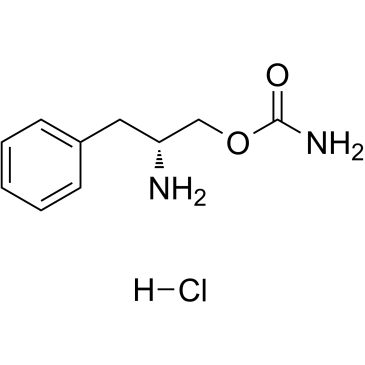
Solriamfetol hydrochlorideFeatured
100 mg USD 650 · 250 mg USD 950 · 1 g USD 1,700Solriamfetol (JZP-110) is a selective dopamine and norepinephrine reuptake inhibitor with robust wake-promoting effects. Solriamfetol binds to dopamine and norepinephrine transporters, so it can inhibit reuptake of dopamine and norepinephrine. Solriamfetol treatment significantly improves the ability to stay awake and subjective symptoms of excessive sleepiness in adults with narcolepsy.
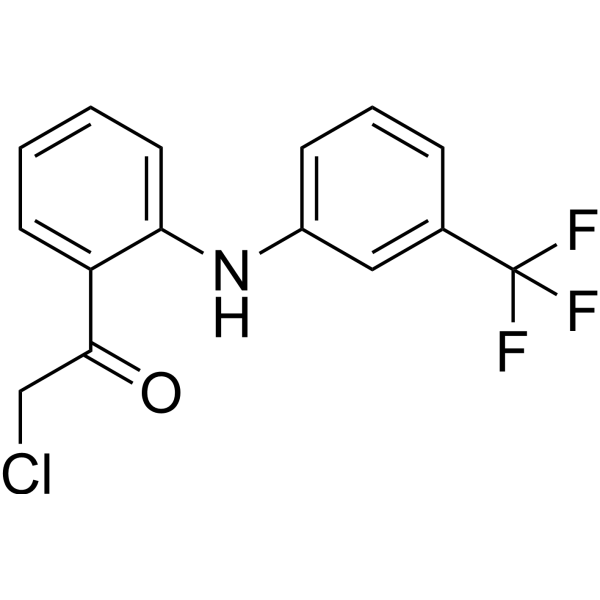
TED-347Featured
100 mg USD 700 · 250 mg USD 1,200 · 1 g USD 2,400TED-347 (TED347) is an irreversible inhibitor of TEAD4-Yap1 protein-protein interaction (EC50=5.9 uM in FP asssays) via covalent modification of conserved cysteine (Cys367, Ki=1.3 uM), inhibits its binding to Yap1, blocked its transcriptional activity; inhibits TEAD transcriptional activity and protein interactions in cells at 5 uM resulted in over 70% reduction in reporter activity; inhibits GBM43 cancer cell viability by 30% at 10 uM, also inhibits TEAD4 transcriptional activity in GBM43 cells.
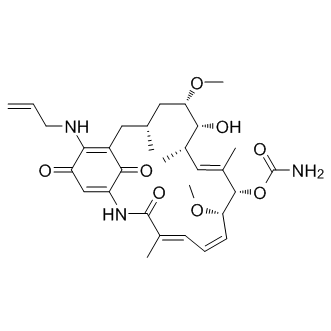
17-AAGFeatured
1 g USD 1,200 · 100 mg USD 300 · 250 mg USD 60017-AAG is a potent HSP90 inhibitor with an IC50 of 5 nM, having a 100-fold higher binding affinity for tumour cell derived HSP90 than normal cell derived HSP90.
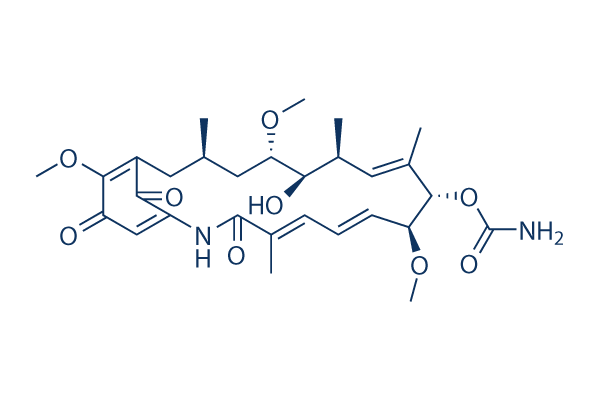
Geldanamycin (NSC122750)Featured
100 mg USD 300 · 250 mg USD 500 · 1 g USD 1,200Geldanamycin binds in the ATP-binding site in the N-terminus domain of Hsp90s (residues 1-220). Geldanamycin inhibits the ATPase activity of Hsp90 in a dose-dependent manner. Geldanamycin causes a dose-dependent G2 arrest and reversible inhibiton o f entry into the S phase in A2780 human ovarian cell line. This inhibition is accompanied by p53 increase and finally demonstrated to be p53 dependent. Geldanamycin causes polyubiquitination and proteasomal degradation of the p185 receptor protein-tyrosin kinase and shows a IC50 with 70 nM. [3, 4] Geldanamycin is a typical anti-tumor reagent, shows a mean GI50 with 0.18 μM against the panel of 60 human tumor cell lines. [5] Geldanamycin (50 mg//kg) shows 30% inhibition on pl85-associated phosphotyrosine levels in FRE/erbB-2 mice. [6]. For the detailed information of Geldanamycin (NSC122750), the solubility of Geldanamycin (NSC122750) in water, the solubility of Geldanamycin (NSC122750) in DMSO, the solubility of Geldanamycin (NSC122750) in PBS buffer, the animal experiment (test) of Geldanamycin (NSC122750), the cell expriment (test) of Geldanamycin (NSC122750), the in vivo, in vitro and clinical trial test of Geldanamycin (NSC122750), the EC50, IC50,and affinity,of Geldanamycin (NSC122750), Please contact DC Chemicals.
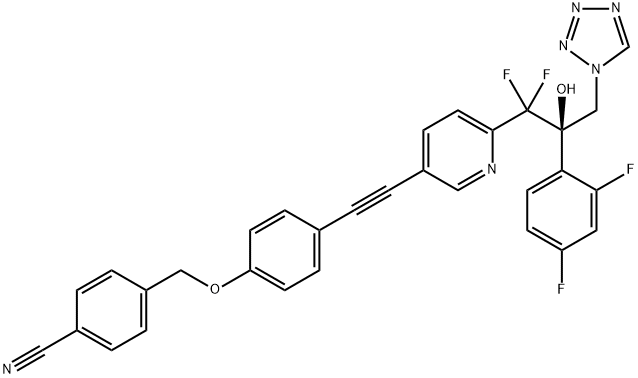
VT-1598Featured
10mg USD 600 · 5mg USD 450VT-1598 is a potent, high-affinity, oral inhibitor of fungal sterol 14α-demethylase (CYP51B) with Kd of 13 nM; is more selective for fungal CYP51 than related human CYP enzymes such as CYP3A4; exhibits excellent potency against yeast, dermatophyte, and mold fungal pathogens.
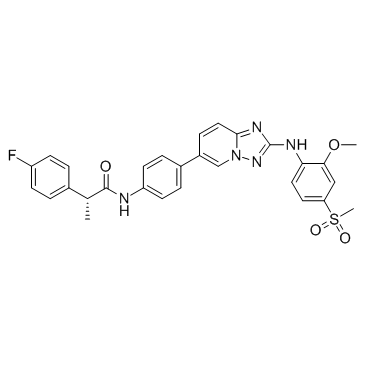
Empesertib(BAY 1161909)Featured
100 mg USD 500 · 250 mg USD 1,000 · 1 g USD 2,000Empesertib(BAY 1161909) is a potent Mps1 inhibitor, with an IC50 of < 1 nM.
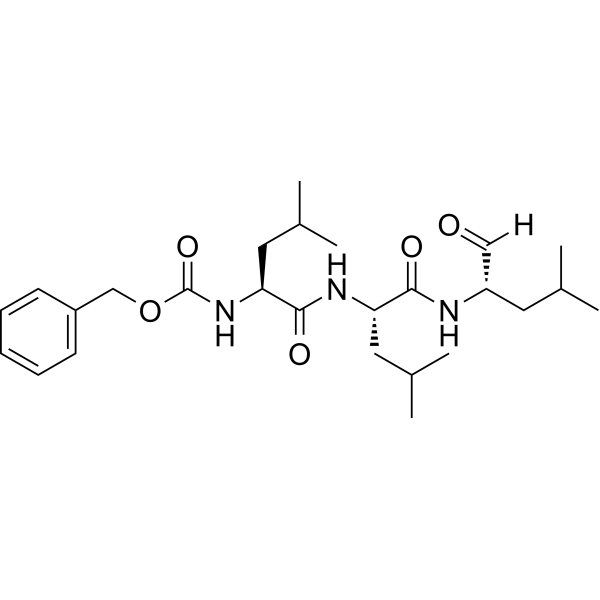
MG-132Featured
100 mg USD 250 · 250 mg USD 500 · 1 g USD 1,000 · 10 mM * 1 mL in DMSO USD 150MG-132 is a potent, reversible, and cell-permeable 20S proteasome inhibitor which inhibits proteasomal chymotrypsin-like peptidase activity with an IC50 of 24.2 nM.
(R)-RP-6306Featured
100 mg USD 700 · 250 mg USD 1,200 · 1 g USD 2,500(R)-RP-6306 (183) can be used for the research of Myt1 mediated diseases and kinds of cancer for slowing the progression of cancer.
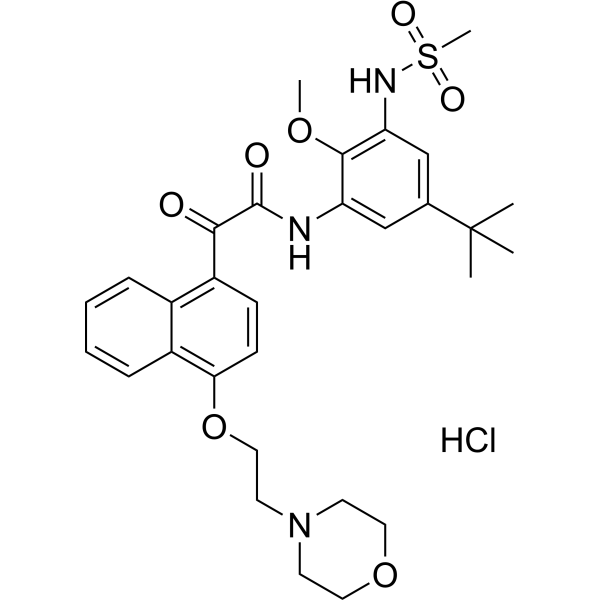
ITX-5061 hydrochlorideFeatured
100 mg USD 700 · 250 mg USD 1,200 · 1 g USD 2,400ITX-5061 is a scavenger receptor B1 antagonist that promotes high-density lipoprotein (HDL) levels; inhibits SR-BI-dependent uptake of HDL-CE in transfected cells, decreases the fractional catabolic rate of HDL-CE and reduced its hepatic uptake in mice; inhibits HCVcc and HCVpp infection of primary human hepatocytes and/or human hepatoma cell lines and has minimal effects on HCV RNA replication. HCV Infection Phase 2 Clinical
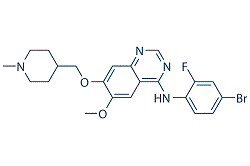
Vandetanib (ZD6474)Featured
100 mg USD 200 · 250 mg USD 400 · 1 g USD 800 · 10 mM * 1 mL in DMSO USD 150Vandetanib is a potent inhibitor of VEGFR2 with an IC50 of 40 nM.
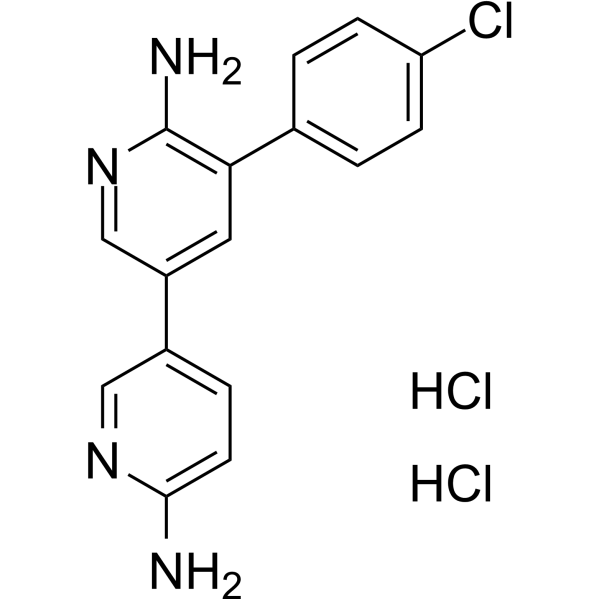
PF 6260933 dihydrochlorideFeatured
100 mg USD 500 · 250 mg USD 1,000 · 1 g USD 2,000PF 6260933 is a potent, selective and orally bioavailable MAP4K4 inhibitor with kinase IC50 of 3.7 nM, cell IC50 of 160 nM; possesses excellent kinome selectivity and suitable properties for in vivo pharmacological characterization; significantly improves fasting hyperglycemia (44% reduction in blood glucose, 10 mg/kg, bid); also markedly reduces atherosclerotic lesion area in mice.
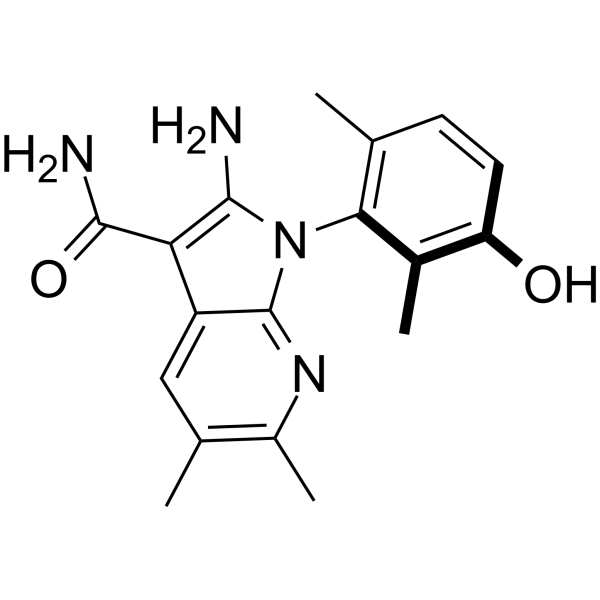
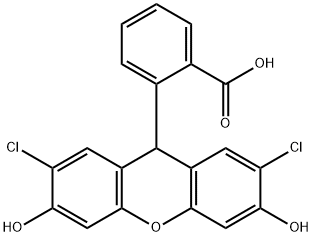
DCFHFeatured
100mg USD 600 · 250mg USD 1,100 · 1g USD 2,200DCFH, also known as 2',7'-dichlorodihydrofluorescein, is a fluororescent agent. It is a key chemcial for the dichlorofluorescin (DCFH) oxidation assay.
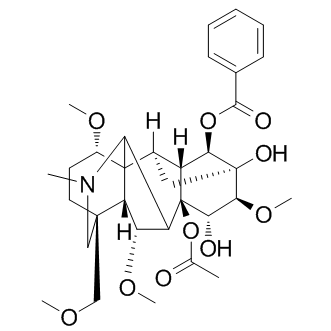
HypaconitineFeatured
20 mg USD 280For the detailed information of Hypaconitine, the solubility of Hypaconitine in water, the solubility of Hypaconitine in DMSO, the solubility of Hypaconitine in PBS buffer, the animal experiment(test) (test) of Hypaconitine, the cell expriment (test) of Hypaconitine, the in vivo, in vitro and clinical trial test of Hypaconitine, the EC50, IC50,and Affinity of Hypaconitine,, please contact DC Chemicals.
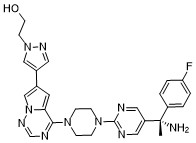
ElenestinibFeatured
100 mg USD 1,100 · 250 mg USD 1,950 · 1 g USD 3,900Elenestinib (BLU-263) is a potent and orally active tyrosine kinase inhibitor. Elenestinib has the potential for the research of systemic mastocytosis (SM).
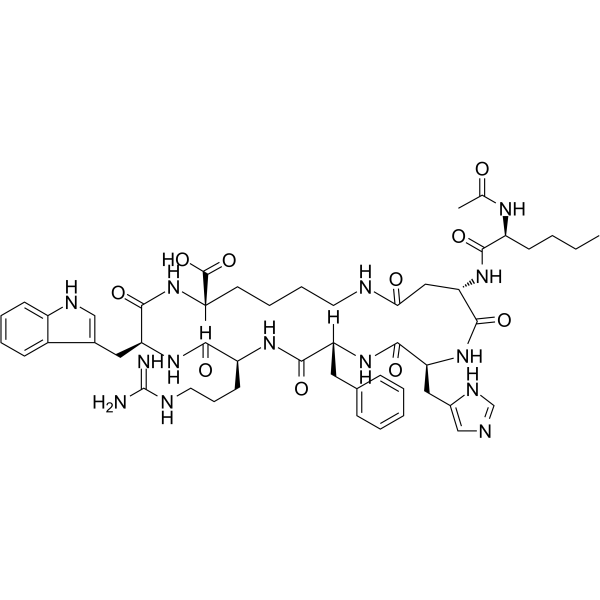
BremelanotideFeatured
100 mg USD 300 · 250 mg USD 600 · 1 g USD 1,200A peptide, non-selective melanocortin receptor agonist for treatment for female sexual dysfunction; selectively stimulates solicitational behaviors in the female rat, without affecting lordosis, pacing, or other sexual behaviors, does not cause generalized motor activation; a peptide analogue of α-MSH.
No products match this search.
Page 105 of 184 · Browse all 3666 products