Biological Activity
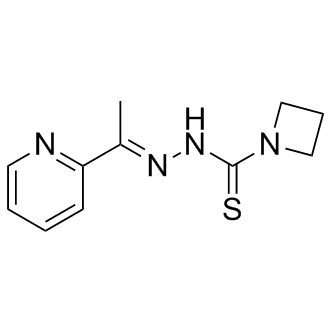
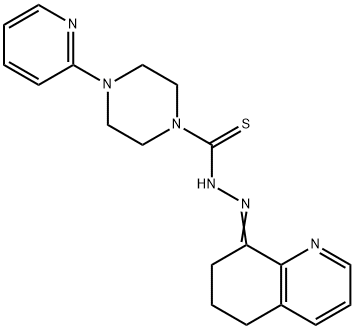
COTI-2 is a small molecule candidate anti-cancer drug which can convert mutant p53 to wild-type conformation.
In Vitro
COTI-2 efficiently inhibits the proliferation rate of all the tested cell lines following 72 h of treatment. COTI-2 is significantly effective at inhibiting tumor cell proliferation in all three cell lines (COLO-205, HCT-15, and SW620). Relatively low concentrations of COTI-2 are active against all human glioblastoma cell lines tested (U87-MG, SNB-19, SF-268, and SF-295). COTI-2 treatment of SHP-77 cells with approximate IC50 concentrations results in the induction of early apoptosis among 40 to 47% of total cells[2].
In Vivo
COTI-2 significantly inhibits tumor growth in the HT-29 human colorectal tumor xenografts at a dose of 10 mg/kg. In addition to reducing tumor volumes at specific times post-treatment, COTI-2 also delays the time required for tumors to reach specified volumes. COTI-2 also significantly inhibits tumor growth in the SHP-77 SCLC xenograft model at a dose as low as 3 mg/kg. COTI-2 treatment both reduces U87-MG tumor volumes at specific times post-treatment and lengthens the time required for U87-MG xenografts to grow in nude mice. Control tumors in mice treated with vehicle alone take only 5 days to reach an average volume of 828 mm3 while tumors in animals treated with COTI-2 take double that time (10 days) to reach a similar mean volume (857 mm3). COTI-2 treatment effectively inhibits OVCAR-3 xenograft growth regardless of the route of administration[2].
Kinase Assay
The interaction of COTI-2 with 227 kinases is tested using the AMBIT BIOSCIENCES KINOMESCAN assay. In brief, streptavidin-coated magnetic beads are treated with biotinylated small molecule ligands for 30 min at 25°C to generate affinity resins for kinase assays. The liganded beads are blocked with excess biotin and washed with blocking buffer (1% BSA, 0.05% Tween 20, 1 mM DTT) to remove unbound ligand and to reduce non-specific binding. Binding reactions are assembled by combining phage lysates, liganded affinity beads, and COTI-2 in 1× binding buffer (20% SeaBlock, 0.17× PBS, 0.05% Tween 20, 6 mM DTT). All reactions are carried out in polystyrene 96-well plates that have been pre-treated with blocking buffer in a final volume of 0.1 mL[2].
Cell Assay
SHP-77 cells are cultured with various concentrations of COTI-2 for 48 h. Cells are then washed twice with 1× cold PBS and stained with Annexin V and 7AAD according to the manufacturer's instructions. Briefly, 5 μL of Annexin V and 7AAD are added to 1×10⁵ cells and incubated for 15 min at room temperature in the dark. Then 400 μL of the 1× binding buffer (100 mM HEPES, pH 7.4, 140 mM NaCl, 2.5 mM CaCl2) is added to the cells. Finally, cells are analyzed using a flow cytometer[2].
Animal Administration
SHP-77 and HT-29 cells are injected in 50% matrigel into flanks of NCr-nu mice (2×10⁶ cells per injection site) (n=5 mice per group). In the case of SHP-77 xenografts, treatment with COTI-2 begins prior to the appearance of palpable tumors. One day after injection of SHP-77 cells, animals receive 3 mg/kg of COTI-2 (once every two days, up to 38 days). Tumor sizes are estimated at 5, 10, 17, 24, and 38 days, by standard caliper measurements. In the case of HT-29 xenografts, the capacity of COTI-2 to suppress growth of established tumors is assessed. HT-29 xenografts are allowed to grow to 200 mm3 before starting IP treatment with COTI-2 (10 mg/kg, 5 days a week for 7 weeks) or saline IP. Tumor growth is measured every 4 days by caliper measurement[2].
References & source
[1]. Duffy MJ, et al. Mutant p53 as a target for cancer treatment. Eur J Cancer. 2017 Sep;83:258-265.
[2]. Salim KY, et al. COTI-2, a novel small molecule that is active against multiple human cancer cell lines in vitro and in vivo. Oncotarget. 2016 Jul 5;7(27):41363-41379.
Published experimental findings depend on the model and assay conditions. They do not guarantee equivalent performance in every application. For laboratory research use only.