ALC-0315
DC42537
Recommended because it shares a closely related research category or delivery context. Formulation and performance are product- and study-specific.
View product →
Components are supplied separately; this is not a premixed LNP. RNA/cargo, buffer and formulation service are not included.
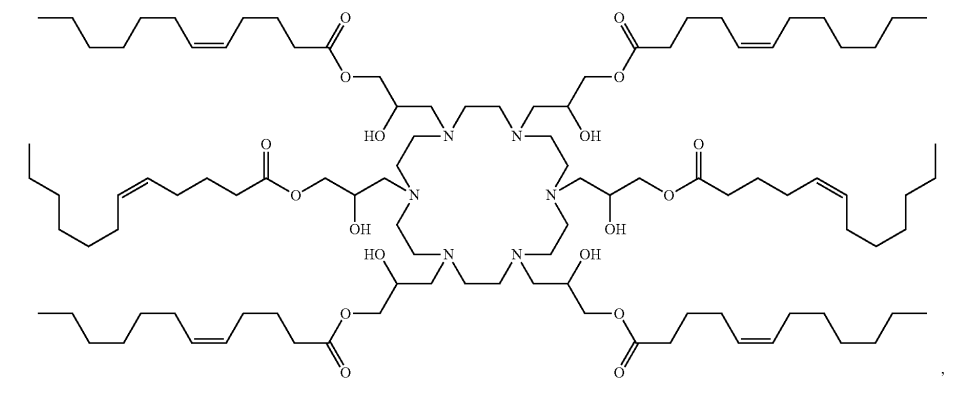
AMG1541 is a degradable cyclic amino alcohol ionizable lipid studied for intramuscular mRNA delivery and influenza vaccine research. Its reported LNP formulation increased local reporter expression and antibody responses relative to the tested SM-102 formulation, while reducing liver reporter expression.
Open full Formulation & Performance →
Reporter delivery, influenza antibody responses and short-term inflammatory measurements are presented as separate endpoints. Antibody dose-sparing is not a viral-challenge efficacy result.
The results below describe the cited research formulations. Product specifications and commercial pack options are shown in the Specifications and ordering sections.
| Component | DC Chemicals product | Molecular weight | Molar ratio | Mass at 1 µmol total lipid (mg) |
|---|---|---|---|---|
| AMG1541 | DC67558 | 1783.38 | 35 | 0.624183 |
| DOPE | DC33634 | 744.03 | 16 | 0.119045 |
| Cholesterol | DCD-041 | 386.65 | 46.5 | 0.179792 |
| DMG-PEG2000 | DC40169 | 2507 | 2.5 | 0.062675 |
AMG1541/DOPE/cholesterol/DMG-PEG2000 = 35:16:46.5:2.5 mol%. Ionizable lipid:mRNA = 10:1 by weight; the authors separately report N/P = 11.4:1. Source: Supplementary Table 1 (PDF p. 3). Component-mass calculations use the catalog molecular weights shown here; the reported N/P is not recalculated from them.
Prefilled proportions follow the source specified above. Molecular weights and ratios are editable. Results are calculated, not measured study data. No N/P or RNA dose is inferred.
| Component | MW | Molar ratio | Mass (mg) | Mass % |
|---|---|---|---|---|
| AMG1541 | ||||
| DOPE | ||||
| Cholesterol | ||||
| DMG-PEG2000 |
| Parameter | AMG1541 LNP result | Source / context |
|---|---|---|
| Diameter / PDI | 85 nm / 0.107 | Supplementary Table 3, PDF p. 18; representative data, no SD or replicate count in the table. |
| Encapsulation efficiency | 67% | Supplementary Table 3; do not substitute values from neighbouring AMG lipids. |
| Apparent LNP pKa | Approximately 6.5 | TNS assay at 25 °C; formulation-dependent measurement. |
| Loading ratios | N/P 11.4:1; ionizable lipid:RNA weight ratio 10:1 | Supplementary Table 1; the two ratios are distinct quantities. |
| Experiment | Conditions | Reported result |
|---|---|---|
| Mouse muscle FLuc | BALB/cJ mice; 1 µg mRNA IM; 6 h | 3.5-fold above the SM-102/DSPC comparator and 1.7-fold above cKK-E12 (Main Fig. 2c). |
| Liver reporter expression | Matched reporter comparison | 8.3-fold lower than the SM-102 formulation (Main Fig. 2f). This is expression, not measured lipid accumulation. |
| Human PBMC expression | Three donor lots; FLuc readout at 24 h | AMG1541 exceeded the SM-102 comparator across the reported RNA-input range (Supplementary Fig. 11). |
| Comparison | Study design | Result / boundary |
|---|---|---|
| Low-dose AMG1541 versus SM-102 | HA mRNA; IM days 0 and 21; day-35 antibody readout; female BALB/c mice, n = 5 | 0.01 µg AMG1541-LNP and 1 µg SM-102-LNP produced comparable binding and HAI responses in the reported comparison (Main Fig. 3). |
| Matched 1 µg mRNA dose | Day-35 HA-specific antibody measurements | Reported increases over SM-102: 15.8-fold in male BALB/c, 6.8-fold in female BALB/c and 5.8-fold in female C57BL/6 mice (Main Fig. 3). |
| Endpoint scope | Binding antibodies and haemagglutination inhibition | The dose difference does not establish equivalent protection in a viral-challenge or clinical study. |
| Setting | Observed result | Interpretation |
|---|---|---|
| Post-boost mouse cytokines | Most measured cytokines were comparable; female-mouse IL-2 was approximately fivefold higher | Six-hour post-boost sampling. Do not summarize all cytokines as unchanged. |
| Human PBMC cytokines | With HA mRNA, measured cytokines were broadly comparable to the SM-102 comparator at 24 h | In vitro donor-cell evidence, not a clinical tolerability assessment. |
| Pharmacokinetic boundary | No AMG1541-specific half-life is assigned in this review | An earlier source-data label referred to AMG1041; those values are not transferred to AMG1541. |
Original Figures 2–4 and Supplementary Information — Original source figures.
| CAS No. | Not available |
| Chemical Name | AMG1541 |
| Synonyms | AMG-1541,AMG 1541 |
| SMILES | CCCCCC/C=C\CCCC(=O)OCC(O)CN1CCN(CC(O)COC(=O)CCC/C=C\CCCCCC)CCN(CC(O)COC(=O)CCC/C=C\CCCCCC)CCN(CC(O)COC(=O)CCC/C=C\CCCCCC)CCN(CC(O)COC(=O)CCC/C=C\CCCCCC)CCN(CC(O)COC(=O)CCC/C=C\CCCCCC)CC1 |
| Formula | C102H186O18N6 |
| M.Wt | 1783.38 |
| Purity | >95% by ELSD-HPLC |
| Storage | Pure form: −20 °C, 1 year; In solvent: −80 °C, 6 months; −20 °C, 1 month. Sealed and protected from light. |
| Shipping condition | Ships from Shanghai. Pure lipid is stable during ice-pack transport. |
| Publication |
The product molecular weight is prefilled when available and remains editable. Confirm solvent compatibility and solubility before preparation.
Calculators use the listed value 1783.38 g/mol, based on the neutral monoisotopic mass. The calculated average formula mass is 1784.63 g/mol; the MW inputs are editable to match your material and calculation convention.
Solvent volumes update from the molecular weight above.
| Mass | 1 mM | 5 mM | 10 mM |
|---|---|---|---|
| 10 mg | 5.6073 mL | 1.1215 mL | 560.73 μL |
| 25 mg | 14.0183 mL | 2.8037 mL | 1.4018 mL |
| 50 mg | 28.0366 mL | 5.6073 mL | 2.8037 mL |
| 100 mg | 56.0733 mL | 11.2147 mL | 5.6073 mL |
| 250 mg | 140.1832 mL | 28.0366 mL | 14.0183 mL |
Contact our team with the catalog number and requested quantity.