
Research lipid catalog
Ionizable Lipid Products
Explore 848 lipid and RNA delivery products. Search the full catalog or browse by research category.
Search covers product name, catalog number, synonyms, available CAS numbers and categories. Spaces, hyphens and common punctuation are ignored. Duplicate legacy records are consolidated under one canonical product result.
3666 products · Showing 1721–1740 · 20 per page
DC Chemicals lipid expertise
Built for ionizable-lipid discovery and RNA delivery research
DC Chemicals supports formulation and delivery research with a broad, searchable portfolio of cationic and ionizable lipids. The current directory brings together 848 unique research-use products, with product specifications, pricing, chemical structures and literature-linked formulation data added as each record is verified.
Our experience spans complex lipid synthesis, purification, analytical release and process development. For custom molecules or larger-scale requirements, our team can discuss route development, technical specifications and scale-up options for the intended research workflow.
Learn about cationic and ionizable lipids →Proprietary innovation · Co-development · GMP
From proprietary lipid design to GMP-grade custom synthesis
DC Chemicals has independently developed ionizable-lipid structures supported by company-owned intellectual property, and selected proprietary lipid programs have advanced to GMP-stage development.
We welcome joint development with customers—from molecular design and lipid synthesis through route and process development. We can also support custom synthesis of GMP-grade ionizable lipids to agreed technical specifications and quality requirements.
Discuss a co-development project →Proprietary ionizable-lipid structuresCollaborative molecular designCustom lipid synthesisProcess development and scale-upGMP-grade project support
Product quick links
Explore ionizable lipids
Browse specifications, pricing and literature-linked product information.
Cat. No.Product NameField of ApplicationChemical Structure
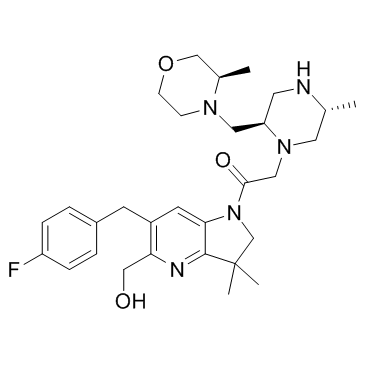
ASTX660(Tolinapant)Featured
100 mg USD 850 · 250 mg USD 1,450 · 1 g USD 2,800 · 10 mM * 1 mL in DMSO USD 220ASTX660 is an orally bioavailable dual antagonist of cellular inhibitor of apoptosis protein (cIAP) and X-linked inhibitor of apoptosis protein (XIAP).
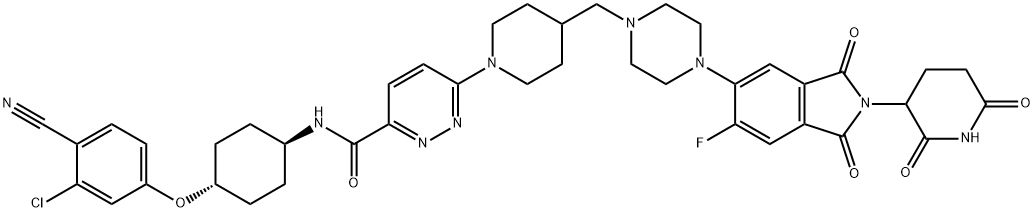
ARV-110Featured
100 mg USD 600 · 250 mg USD 1,100 · 1 g USD 2,000 · 10 mM * 1 mL in DMSO USD 220ARV-110 is an orally active, specific androgen receptor (AR) PROTAC degrader. ARV-110 promotes ubiquitination and degradation of AR. ARV-110 can be used for the research of prostate cancer.
Rineterkib(ERK-IN-1;compound B)Featured
25mg USD 850Rineterkib(ERK-IN-1;compound B) is a RAF and ERK1/2 inhibitor in the treatment of a proliferative disease characterized by activating mutations in the MAPK pathway. The activity is particularly related to the treatment of KRAS-mutant NSCLC (non-small celllung cancer), BRAF-mutant NSCLC, KRAS-mutant pancreatic cancer, KRAS-mutant colorectal cancer (CRC) and KRAS-mutant ovanan cancer[1].

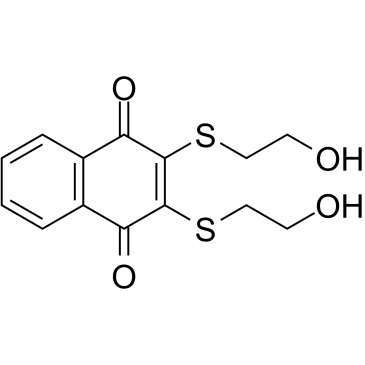
NSC95397Featured
100mg USD 500 · 250mg USD 900 · 1g USD 1,800 · 10 mM * 1 mL in DMSO USD 220NSC 95397 is an inhibitor for dual-specificity phosphatases, including mitogen-activated protein kinase phosphatase-1 (MKP-1). NSC 95397 suppresses proliferation and induces apoptosis in colon cancer cells through MKP-1 and ERK1/2 pathway[1].
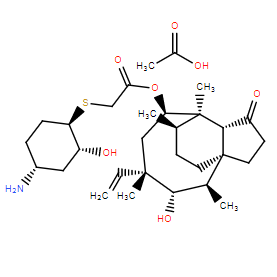
Lefamulin acetateFeatured
50 mg USD 750 · 100 mg USD 1,100 · 250 mg USD 1,900 · 25 mg USD 500Lefamulin acetate (BC-3781 acetate) is an orally active antibiotic for community-acquired bacterial pneumonia (CABP) treatment. Lefamulin acetate (BC-3781 acetate) is the first semi-synthetic pleuromutilin for systemic treatment of bacterial infections in humans. Lefamulin acetate (BC-3781 acetate) inhibits protein synthesis by binding to the peptidyl transferase center of the 50S bacterial ribosome, preventing the binding of transfer RNA for peptide transfer[1].
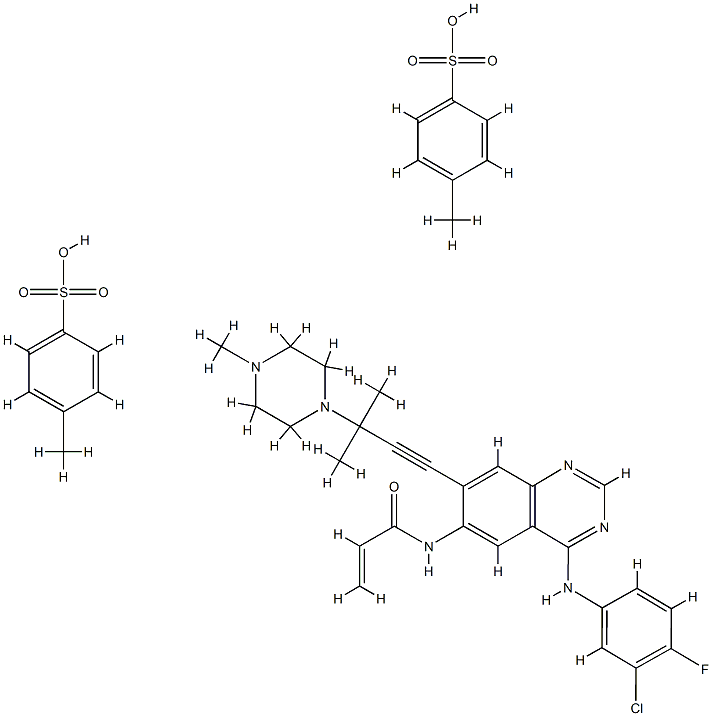
AV-412Featured
10 mg USD 120 · 50 mg USD 360A potent dual inhibitor of EGFR and ErbB2; inhibits EGFR/EGFR L858R/EGFR T790M/EGFR L858R, T790M/ErbB2 with IC50 of 1.5/0.5/0.8/2.3/19 nM respectively; also inhibits Abl (IC50=41 nM), weakly inhibits Flt3 and Src; inhibits autophosphorylation of EGFR and ErbB2 with IC50 of 43 and 282 nM; inhibits EGF-dependent cell proliferation with IC50 of 100 nM; active in cancer xenograft models.Solid TumorsPhase 1 Discontinued
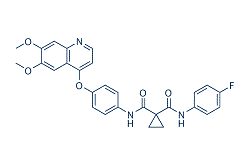
XL-184 (Cabozantinib,BMS907351)Featured
100 mg USD 200 · 250 mg USD 400 · 1 g USD 800 · 10 mM * 1 mL in DMSO USD 150Cabozantinib is a potent multiple receptor tyrosine kinases inhibitor that inhibits VEGFR2, c-Met, Kit, Axl and Flt3 with IC50s of 0.035, 1.3, 4.6, 7 and 11.3 nM, respectively.
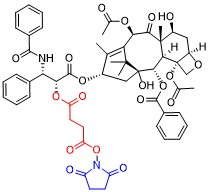
Paclitaxel succinate NHS esterFeatured
10 mg USD 200 · 100mg USD 900 · 500mg USD 2,700DCN10809, also known as Paclitaxel succinate NHS ester, is a paclitaxel derivative with a succinic acid linker, in which the carboxy group is activated with an NHS ester. The NHS ester group is highly reactive to amino group or hydroxy group, and can be used to conjugate with other molecules such as peptides, proteins, antibodies or enzymes, or polymers. Paclitaxel-Succinic acid is a useful agent to make Paclitaxel-conjugate for drug delivery, nanodrug research.
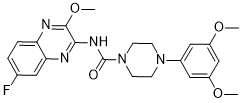
SupinoxinFeatured
100 mg USD 700 · 250 mg USD 1,200 · 1g USD 2,400Supinoxin (RX-5902) is an orally active inhibitor of phosphorylated-p68 RNA helicase (P-p68) and a potent first-in-class anti-cancer agent. Supinoxin interacts with Y593 phosphorylated-p68 and attenuates the nuclear shuttling of β-catenin. Supinoxin induces cell apoptosis and inhibits growth of TNBC cancer cell lines with IC50s ranging from 10 nM to 20 nM[1][2].
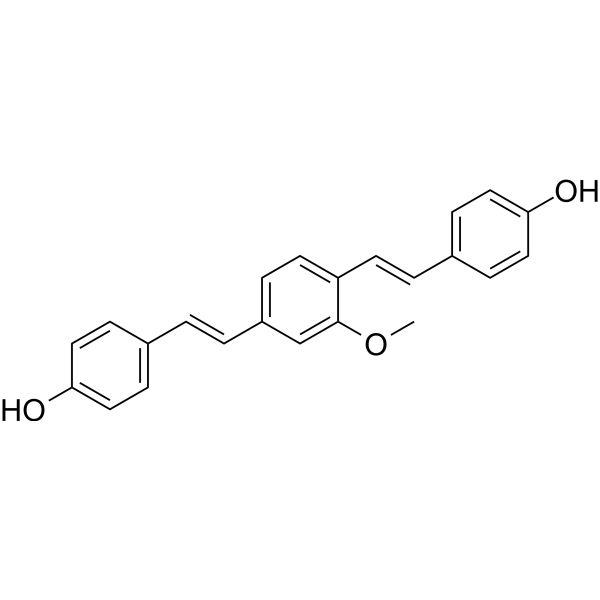
Methoxy-X04Featured
100mg USD 550 · 250mg USD 950 · 1g USD 1,900Methoxy-X04 is a fluorescent dye that crosses the blood-brain barrier and selectively binds to beta-pleated sheets found in dense core amyloid Aβ plaques.
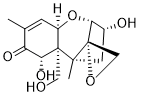
DEOXYNIVALENOLFeatured
5mg USD 750Deoxynivalenol, a mycotoxin of the trichothecenes family, crosses the intestinal mucosa by a paracellular pathway through the tight junctions. The Deoxynivalenol transport is not affected by P-glycoprotein (PgP) or multidrug resistance-associated proteins (MRPs) inhibitors[1].
LinaclotideFeatured
100 mg USD 750 · 250 mg USD 1,400 · 1 g USD 2,700 · 10 mM * 1 mL in DMSO USD 220Linaclotide is a potent and selective guanylate cyclase C agonist; developed for the treatment of constipation-predominant irritable bowel syndrome (IBS-C) and chronic constipation.
Structure information available on request
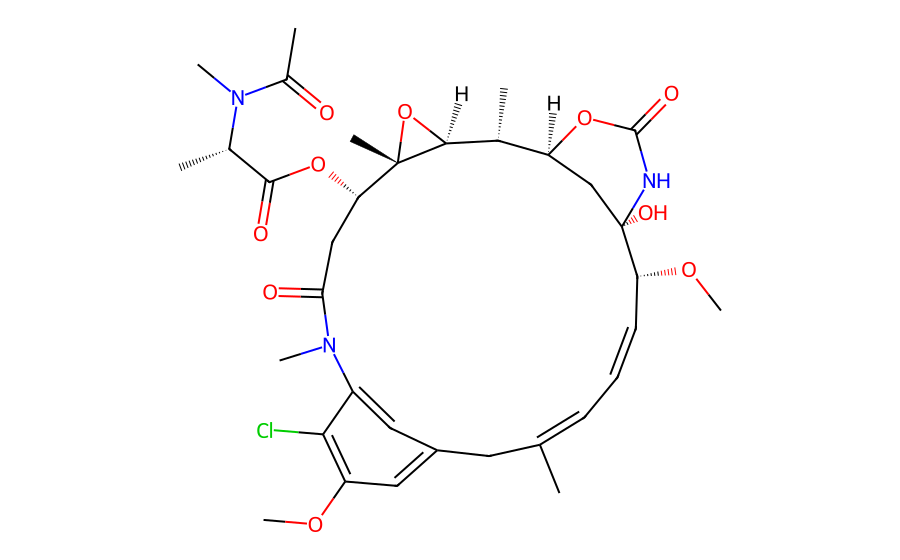
MaytansineFeatured
100mg USD 1,100 · 250mg USD 1,950 · 1g USD 3,900 · 10 mM * 1 mL in DMSO USD 220Maytansine is a highly potent microtubule-targeted compound that induces mitotic arrest and kills tumor cells at subnanomolar concentrations[1].
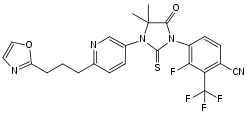
ProxalutamideFeatured
25 mg USD 950 · 100 mg USD 1,800 · 250 mg USD 2,800Proxalutamide (GT0918) is a potent androgen receptor (AR) antagonist.
T0070907Featured
100 mg USD 200 · 250 mg USD 400 · 1 g USD 800 · 10 mM * 1 mL in DMSO USD 150T0070907 is a potent PPARγ antagonist with a Ki of 1 nM.
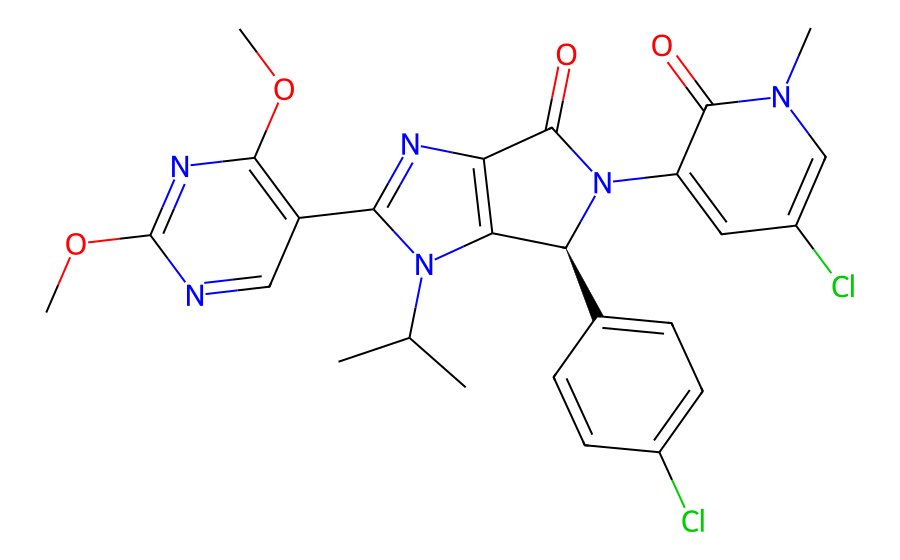
NVP-HDM201(Siremadlin )Featured
100 mg USD 700 · 250 mg USD 1,200 · 1 g USD 2,500 · 10 mM * 1 mL in DMSO USD 220NVP-HDM201 (HDM201) is a potent and highly specific MDM-2/p53 inhibitor currently under phase I clinical trial.
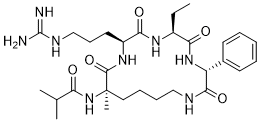
MM-401Featured
25 mg USD 1,550A potent inhibitor of MLL1/WDR5 protein-protein interaction with IC50 of 0.9 nM.
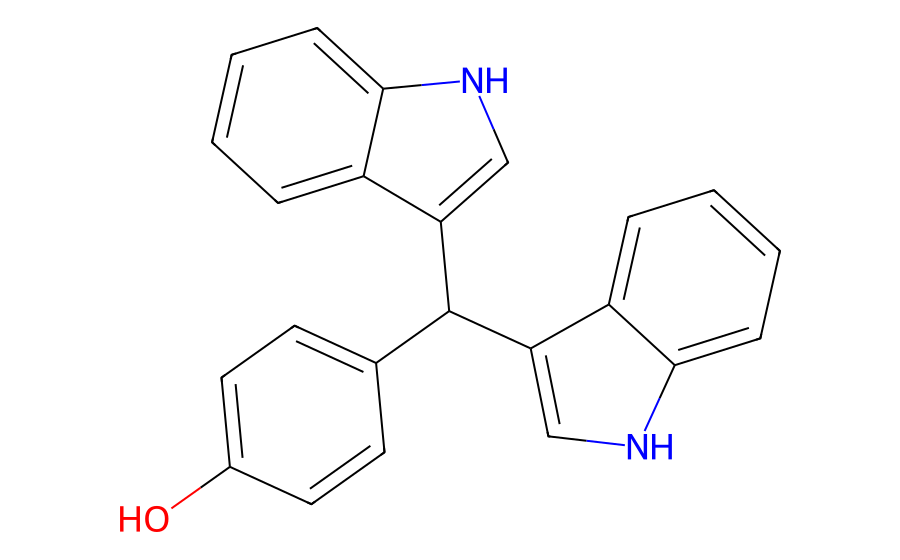
DIM-C-pPhOH(CDIM8)Featured
100 mg USD 400 · 250 mg USD 700 · 1 g USD 1,350 · 10 mM * 1 mL in DMSO USD 150DIM-C-pPhOH is a nuclear receptor 4A1 (NR4A1) antagonist. DIM-C-pPhOH inhibits cancer cell growth and mTOR signaling, induce apoptosis and cellular stress. DIM-C-pPhOH reduces cell proliferation with IC50 values of 13.6 μM and 13.0 μM for ACHN cells and 786-O cells, respectively[1].
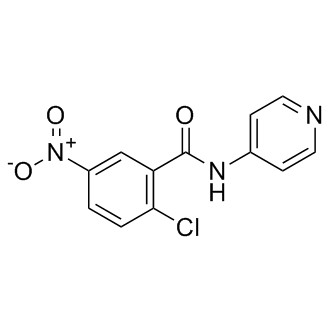
TegatrabetanFeatured
100 mg USD 650 · 250 mg USD 1,200 · 1 g USD 2,500 · 10 mM * 1 mL in DMSO USD 220Tegatrabetan (BC2059) is a β-Catenin antagonist. Tegatrabetan disrupts the binding of β-catenin with the scaffold protein transducin β-like 1 (TBL1)[1].
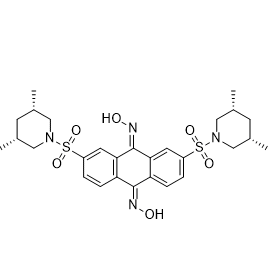
HS220Featured
100 mg USD 700 · 250 mg USD 1,200 · 500mg USD 1,900 · 10 mM * 1 mL in DMSO USD 220HS220 (HS-220) is a Plasmodium-selective takinib analog that targets atypical P. falciparum protein kinase 9 (PfPK9, Kd=4.1 uM) but does not inhibit HsTAK1, decreases K63-linked ubiquitination in P. falciparum; inhibits P. berghei parasite load in HuH7 cells with EC50 of 43 uM, with no significant change on HuH7 viability; induce a unique phenotype where parasite size in hepatocytes increases.
No products match this search.
Page 87 of 184 · Browse all 3666 products