
Research lipid catalog
Ionizable Lipid Products
Explore 848 lipid and RNA delivery products. Search the full catalog or browse by research category.
Search covers product name, catalog number, synonyms, available CAS numbers and categories. Spaces, hyphens and common punctuation are ignored. Duplicate legacy records are consolidated under one canonical product result.
3666 products · Showing 3621–3640 · 20 per page
DC Chemicals lipid expertise
Built for ionizable-lipid discovery and RNA delivery research
DC Chemicals supports formulation and delivery research with a broad, searchable portfolio of cationic and ionizable lipids. The current directory brings together 848 unique research-use products, with product specifications, pricing, chemical structures and literature-linked formulation data added as each record is verified.
Our experience spans complex lipid synthesis, purification, analytical release and process development. For custom molecules or larger-scale requirements, our team can discuss route development, technical specifications and scale-up options for the intended research workflow.
Learn about cationic and ionizable lipids →Proprietary innovation · Co-development · GMP
From proprietary lipid design to GMP-grade custom synthesis
DC Chemicals has independently developed ionizable-lipid structures supported by company-owned intellectual property, and selected proprietary lipid programs have advanced to GMP-stage development.
We welcome joint development with customers—from molecular design and lipid synthesis through route and process development. We can also support custom synthesis of GMP-grade ionizable lipids to agreed technical specifications and quality requirements.
Discuss a co-development project →Proprietary ionizable-lipid structuresCollaborative molecular designCustom lipid synthesisProcess development and scale-upGMP-grade project support
Product quick links
Explore ionizable lipids
Browse specifications, pricing and literature-linked product information.
Cat. No.Product NameField of ApplicationChemical Structure
Lipid VII is a novel ionizable cationic lipid developed by Sanofi.Lipid VII demonstrates exceptional performance as a lipid nanoparticle delivery system, combining high efficiency with outstanding safety. Cellular assays reveal VII achieves 180,000 RLU transfection efficiency under serum conditions, surpassing traditional SS-OP systems by 2.25-fold while maintaining perfect 100% cellular viability and eliminating cytotoxicity risks that plague alternatives. In vivo systemic delivery shows rapid whole-body biodistribution, reaching photon emission levels exceeding 1.00E+10 photons/sec within 48 hours. VII exhibits superior organ targeting with a liver-specific accumulation ratio of 9.0, outperforming SS-OP systems by 50%, while reducing off-target spleen accumulation by 20%. Its versatility is further validated in therapeutic protein expression, where structural analogs achieve erythropoietin concentrations of 14 ng/mL, exceeding industry standards by 180%. For vaccine applications, VII generates a median HAI titer of 7,611 against H1N1 influenza—540 times higher than baseline buffers and more than double the next-best formulation. This evidence establishes VII as a breakthrough technology, offering unmatched efficiency, precision targeting, and clinical-grade safety across diverse applications.
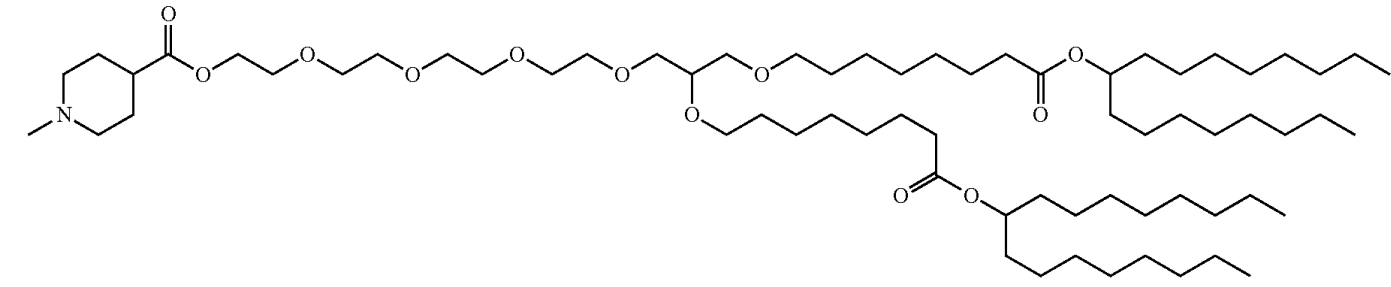
A1-28 is a redox-responsive ionizable lipid featuring a disulfide linkage, designed for CRISPR component delivery. Its LNP formulations effectively package both Cas9 mRNA and sgRNA, enabling efficient genome editing in cultured cells.

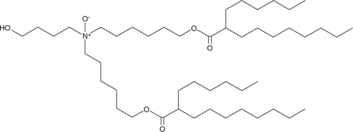
ALC-0315 N-oxide represents a potential oxidative degradation product that may be present in formulated batches of the cationic lipid ALC-0315.
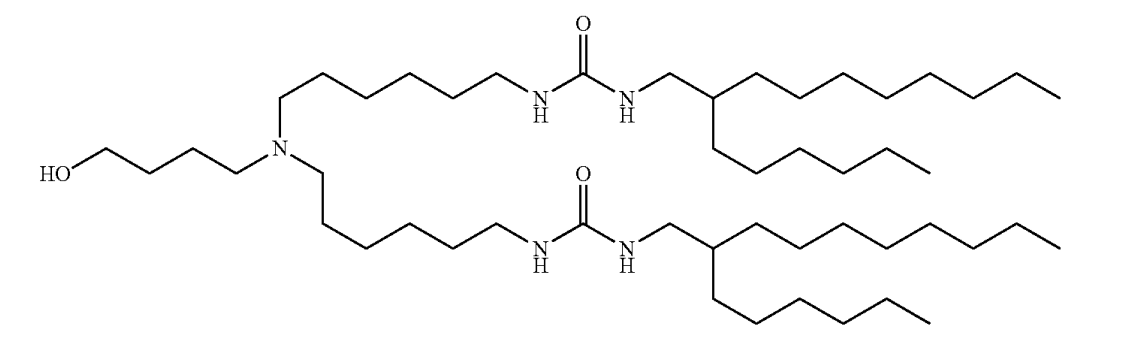
Westgene lipid 8 is a cationic lipid featuring a tertiary amine core with three alkyl chains (C1-C15) and two unsaturated C18 linoleate-like tails. Its ionizable amine enables pH-dependent charge for mRNA encapsulation in LNPs. Key structural elements include branched alkyl groups (X1/X2: C4, X3: C2) and ester-linked unsaturated R1/R2 chains, enhancing membrane fusion and endosomal escape. N Used in lipid nanoparticles (LNPs) with DOPE, cholesterol, and PEG-DMG, it demonstrates low cytotoxicity, high mRNA delivery efficiency, and spleen-targeted immune activation, making it suitable for vaccine/therapeutic delivery.
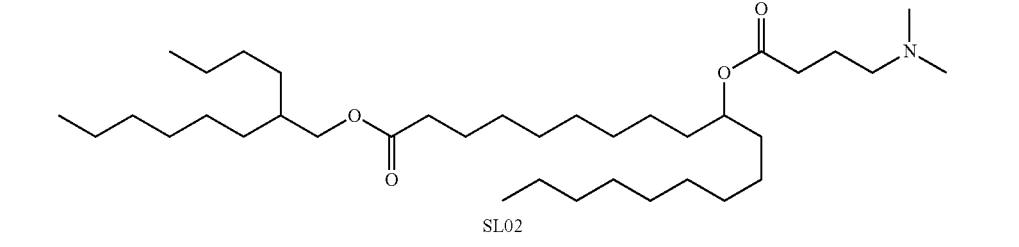
SL02 is a next-generation ionizable lipid featuring a unique branched hydrophobic domain and a pH-sensitive dimethylaminoethyl headgroup(pKa 6.25)developed by Seqirus. Its asymmetric lipid tails, combining unsaturated and saturated chains, enhance LNP fusogenicity and endosomal membrane disruption. With a slightly lower pKa than SL01, SL02 achieves efficient mRNA binding at acidic pH while maintaining neutral charge in circulation, reducing nonspecific interactions. In vitro, SL02-LNPs show superior transfection potency in BHK-V cells, attributed to improved cellular uptake and endosomal escape kinetics. In vivo, it elicits high neutralizing antibody titers (comparable to MF59-adjuvanted vaccines) and robust CD8+ T-cell activation. The lipid’s ester-based design ensures biodegradability, while PEGylation compatibility enhances colloidal stability. SL02’s tailored balance of hydrophobicity and ionization enables precise control over nanoparticle size (70–120 nm) and low polydispersity, positioning it as a leading candidate for saRNA-based vaccines and gene therapies.
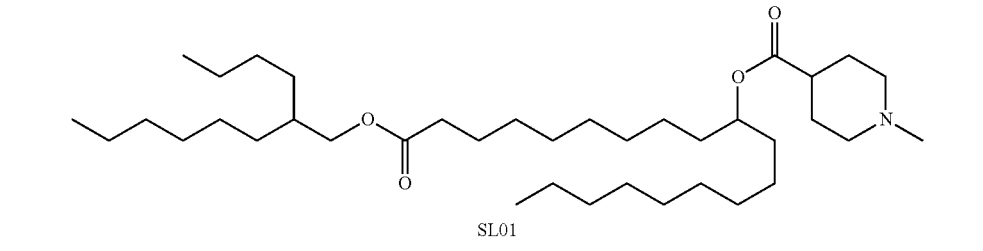
SL01 is an ionizable cationic lipid compound pKa 6.31)developed by Seqirus, characterized by a biodegradable ester backbone and tertiary amine headgroup, enabling pH-dependent charge modulation. Its structure incorporates twin hydrophobic tails with unsaturated carbon chains, enhancing membrane fluidity and promoting endosomal escape. The lipid’s pKa (~6.5–7.0) optimizes nucleic acid complexation at physiological pH while minimizing cytotoxicity. SL01 demonstrates robust mRNA encapsulation efficiency (~90%) in lipid nanoparticles (LNPs) and facilitates intracellular delivery via endocytosis. Preclinical studies highlight its efficacy in inducing potent humoral and cellular immune responses, particularly in influenza mRNA vaccines. Its ester linkages ensure gradual metabolic clearance, reducing long-term toxicity. SL01-based LNPs exhibit stability in serum and compatibility with scalable manufacturing processes, making it a versatile candidate for therapeutic mRNA delivery.
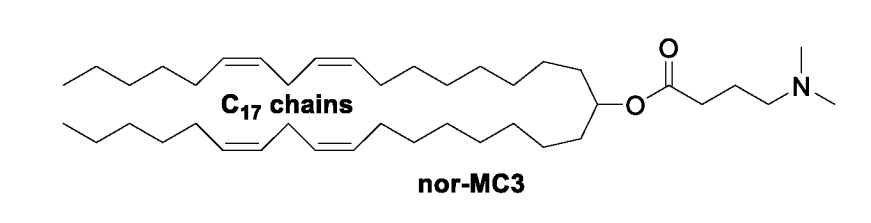
nor-MC3 is a novel ionizable lipid develoed by Nanovation, derived from the MC3 structural framework, characterized by two C17 alkyl chains (each containing two Z-geometry double bonds) conjugated to a 4-(dimethylamino)butanoate headgroup. Synthesized via a streamlined route involving Claisen condensation of methyl linoleate, hydrolysis/decarboxylation to generate a C17 ketone, reduction to the corresponding alcohol, and final esterification with 4-(dimethylamino)butanoic acid, nor-MC3 retains the ionizable amine functionality critical for pH-dependent nucleic acid binding and endosomal escape. Compared to the benchmark lipid MC3 (C18 chains), nor-MC3 demonstrates superior mRNA delivery efficiency in vitro (2-fold higher luciferase expression at 10 μg/mL mRNA) and enhanced in vivo biodistribution (higher liver and spleen targeting in mice). Notably, its shortened C17 chains challenge conventional assumptions about optimal hydrophobic chain length, offering improved synthetic scalability while maintaining or exceeding MC3's encapsulation efficiency (~95%), nanoparticle size (~80 nm), and low polydispersity (PDI ~0.08). For siRNA delivery, nor-MC3 achieves comparable EC₅₀ values (0.1644 μg/mL vs. MC3’s 0.1308 μg/mL), highlighting its versatility as a next-generation lipid nanoparticle (LNP) component for nucleic acid therapeutics.
ATX-129 is a novel ionizable lipid used in the formulation of lipid nanoparticles (LNPs) for the delivery of RNA developed by Arcturus.
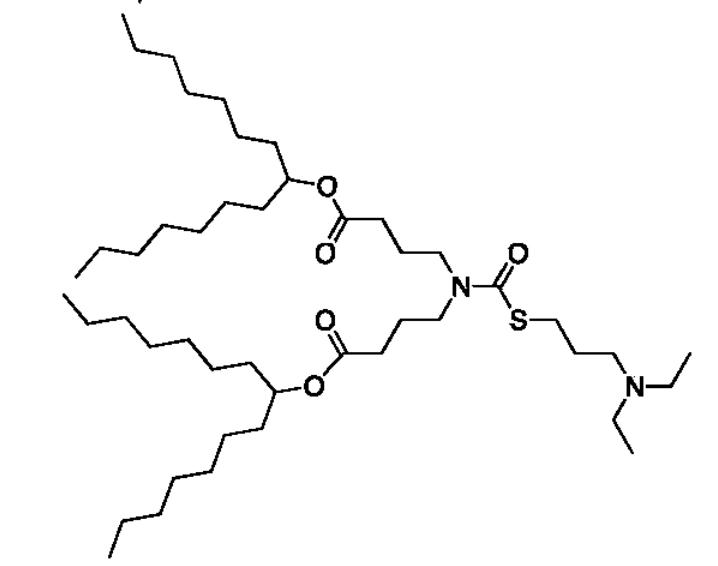
ATX-111 is a novel ionizable lipid used in the formulation of lipid nanoparticles (LNPs) for the delivery of RNA developed by Arcturus.
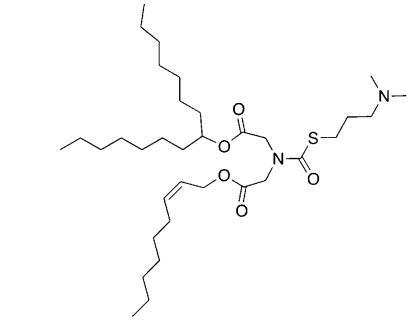
ATX-132 is a novel ionizable lipid used in the formulation of lipid nanoparticles (LNPs) for the delivery of RNA developed by Arcturus.
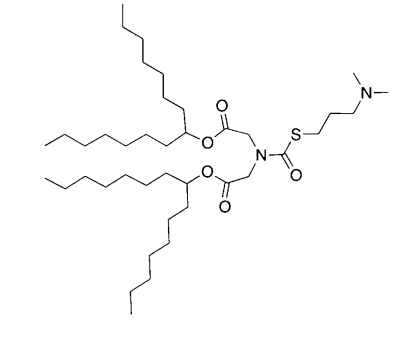
ATX-100 is a novel ionizable lipid used in the formulation of lipid nanoparticles (LNPs) for the delivery of RNA developed by Arcturus.
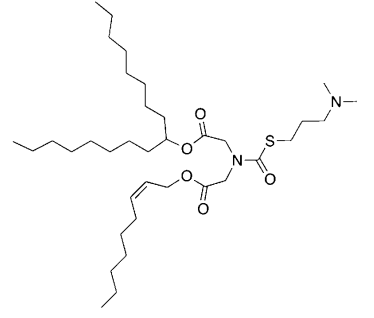
ATX-106 is a novel ionizable lipid used in the formulation of lipid nanoparticles (LNPs) for the delivery of RNA developed by Arcturus.
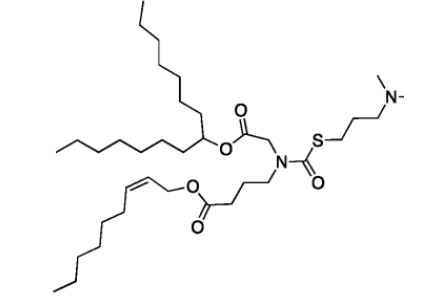
Yoltech lipid 4, a highly efficient ionizable lipid disclosed in patent PCT/CN2023/116607, features a central tertiary amine group flanked by hydrophobic tails—specifically, a bis(2-ethylhexyl) core and a linoleyl (C18:2) chain linked via ester bonds. This structure enables pH-responsive behavior critical for mRNA/LNP delivery: neutral in circulation (reducing toxicity) but protonated in endosomes to facilitate membrane disruption and payload release. In murine studies targeting liver PCSK9, Compound 4 achieved ~90% gene-editing efficiency. Its optimized formulation yields LNPs of 70–150 nm with >90% encapsulation, ideal for hepatocyte-specific delivery.
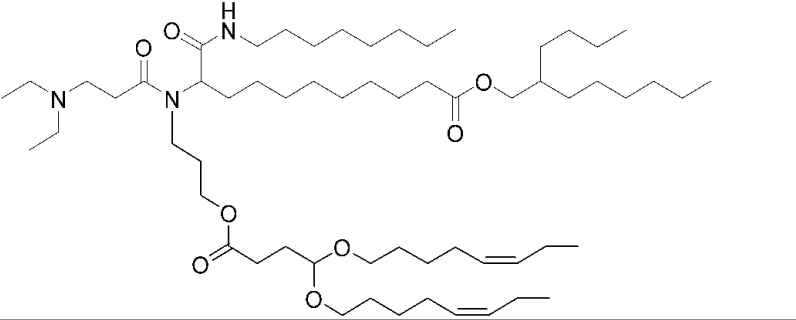
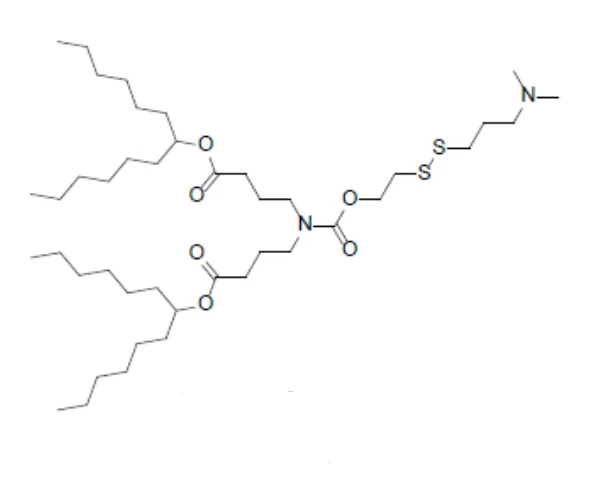
L2 is a redox-responsive lipid engineered for ultra-potent siRNA delivery. With shorter hexyl (C6) tails and a carbamate linker, it demonstrates the fastest biodegradation (liver half-life: 2.6 days) among tested lipids. L2 achieves >80% FVII gene knockdown at just 0.01 mg/kg—surpassing both L1 and MC3 in siRNA potency. Its higher apparent pKa (6.90) enhances endosomal disruption, correlating with strong in vitro hEPO expression. While slightly less effective for mRNA than L1, L2’s unmatched siRNA silencing efficiency, rapid cytosolic self-immolation, and low cytotoxicity position it as a leading candidate for RNAi therapeutics targeting hepatic diseases.
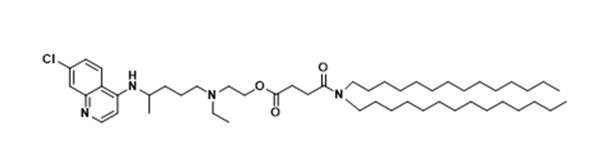
HCQ-4 is a rationally engineered ionizable lipid derived from hydroxychloroquine (HCQ), featuring a ditetradecylamine-derived twin-C14 saturated hydrocarbon tail linked to the HCQ headgroup via a succinic acid spacer. Synthesized through a three-step route involving HCQ deprotonation, ditetradecylamine carboxylation, and EDC/DMAP-mediated amidation, this lipid forms the core of optimized lipid nanoparticles (LNPs) at a molar ratio of 60:10:40:0.5 (HCQ-4:DOPE:cholesterol:DMG PEG 2000 ). The structure enables dual functionality: (1) Spleen-selective mRNA delivery (2.3-fold higher splenic vs. hepatic transfection) via 80-100 nm particle size, near-neutral charge (-3 mV), and low PEG density, facilitating immune cell uptake; (2) Tumor microenvironment modulation through HCQ-mediated repolarization of M2 macrophages to antitumor M1 phenotype (iNOS + cells ↑2.5-fold, CD206 + cells ↓60%). This bifunctional design synergistically enhances mRNA cancer vaccine efficacy, demonstrating superior prophylactic/therapeutic antitumor activity and antimetastatic effects compared to clinical benchmarks like MC-3 LNP.
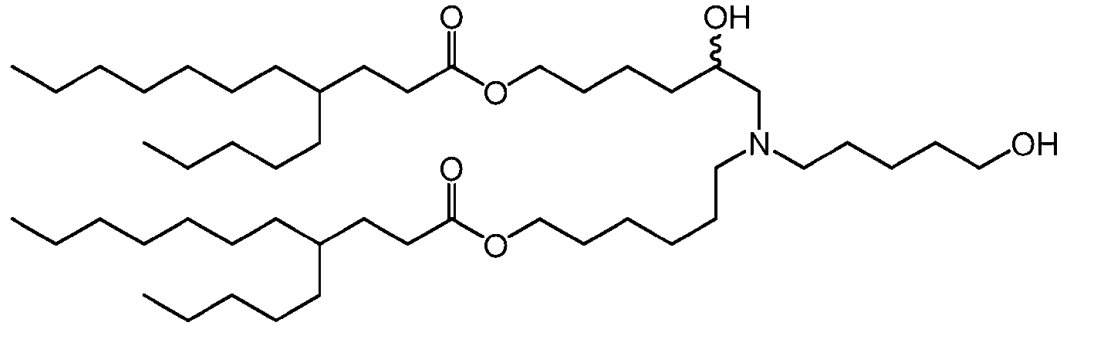
ORNA lipid 144 is a novel ionizable lipid engineered for splenic RNA delivery developed by ORNA Therapeutics, featuring a biodegradable structure with a protonatable tertiary amine headgroup and ester-linked branched C14 alkyl chains. This design enables exceptional spleen-targeting capability, demonstrated by 3-fold higher luciferase expression in the spleen compared to benchmark lipids and near-complete B-cell depletion when delivering anti-CD19 CAR circRNA. It forms highly stable lipid nanoparticles maintaining homogeneous size (60–80 nm) and low polydispersity across diverse manufacturing conditions and buffer systems. Rapid clearance from the liver and spleen minimizes off-target accumulation, while high circRNA encapsulation efficiency (>90%) and pH-dependent endosomal escape make it ideal for immunotherapies and vaccines requiring precise splenic bioavailability and sustained efficacy.
CDL9 is an original cyclic disulfide lipid first designed, synthesized, and functionally validated in the study "In Vivo Demonstration of Enhanced mRNA Delivery by Cyclic Disulfide-Containing Lipid Nanoparticles for Facilitating Endosomal Escape" published in RSC Medicinal Chemistry (DOI: 10.1039/D5MD00084J).Its molecular architecture—featuring a C18:2 di-unsaturated alkyl chain linked to a tertiary amine headgroup modified with an α-lipoic acid-derived cyclic disulfide unit—was explicitly detailed in the paper's lipid library. Experimental data from this study demonstrated CDL9’s capacity to boost mRNA delivery efficiency by 6-fold in vitro and 5-fold in vivo when integrated into SM102-based LNPs, leveraging thiol-disulfide exchange for enhanced endosomal escape.

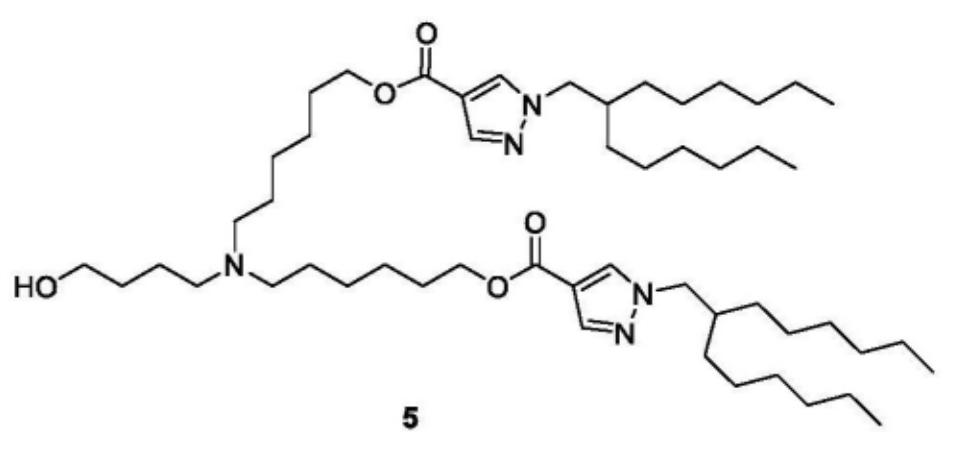
MeTis Lipid 5 is an ionizable lipid featuring a pyrazole-based headgroup and biodegradable C8-ester twin tails developed by MeTis Pharmaceuticals (Patent CN118290339B). It demonstrated breakthrough in vivo efficacy (7.08E+10 photons, luciferase assay), surpassing MC3 lipid by 8.8-fold in systemic mRNA delivery. The molecule achieves optimal safety-profile (96.4% cell viability) and encapsulation efficiency (96.4%), forming LNPs of 108.9 nm (PDI 0.17) at N/P 6. Its ester-enabled rapid metabolization and balanced hydrophobicity position lipid 5 as a candidate for next-gen mRNA therapeutics.
MeTis Lipid 1 is an ionizable lipid featuring a pentacyclic core with geminal dimethyl groups and symmetrical C9 alkyl chains developed by Metis Pharm. According to Patent WO 2025/140421 A1, Lipid 1 demonstrated exceptional biological performance including: the highest SARS-CoV-2 neutralization titer (NT50 1:2146, 5.7-fold higher than ALC0315), potent humoral immunity with COVID-19 IgG titers reaching 1:1,000,000 post-boost and exclusive validation for VZV-gE IgG (1:1,000,000), favorable biophysical properties (124.5 nm LNP diameter, 0.2 PDI, 85% encapsulation efficiency), and excellent safety profile (hERG IC₅₀ >30 μM, Mini-Ames negative), establishing it as the lead compound in nucleic acid vaccine delivery.
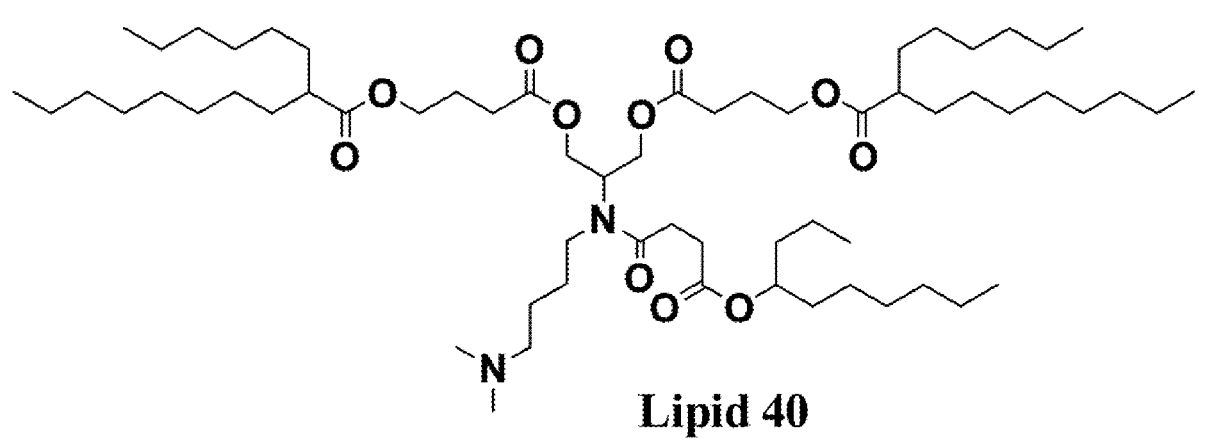
Tidal Lipid 40is an ionizable cationic lipid engineered to deliver RNA with high precision to immune cells like macrophages. Based on Tidal Therapeutics' patent US 20250205169A1, Its pH-responsive design shifts from a +8 mV charge at pH 5.5 (enabling endosomal escape) to near-neutral at pH 7.4 (reducing off -target binding), ensuring efficient intracellular release while maintaining blood stability. In lipid nanoparticles, Lipid 40 achieves 65% transfection efficiency in human macrophages—surpassing benchmarks like ALC-0315—and protects >95% of RNA payloads from degradation. Critically, it maintains particle integrity after freeze-thaw cycles with minimal size drift (<5 nm) and excels in in vivo targeting, driving potent gene expression in tumor-associated macrophages while avoiding liver/spleen accumulation. This combination of precision delivery, stability, and low toxicity makes it ideal for immunotherapies, such as reprogramming M2 macrophages to anti-tumor M1 states.
No products match this search.
Page 182 of 184 · Browse all 3666 products