
Research lipid catalog
Ionizable Lipid Products
Explore 848 lipid and RNA delivery products. Search the full catalog or browse by research category.
Search covers product name, catalog number, synonyms, available CAS numbers and categories. Spaces, hyphens and common punctuation are ignored. Duplicate legacy records are consolidated under one canonical product result.
3666 products · Showing 3641–3660 · 20 per page
DC Chemicals lipid expertise
Built for ionizable-lipid discovery and RNA delivery research
DC Chemicals supports formulation and delivery research with a broad, searchable portfolio of cationic and ionizable lipids. The current directory brings together 848 unique research-use products, with product specifications, pricing, chemical structures and literature-linked formulation data added as each record is verified.
Our experience spans complex lipid synthesis, purification, analytical release and process development. For custom molecules or larger-scale requirements, our team can discuss route development, technical specifications and scale-up options for the intended research workflow.
Learn about cationic and ionizable lipids →Proprietary innovation · Co-development · GMP
From proprietary lipid design to GMP-grade custom synthesis
DC Chemicals has independently developed ionizable-lipid structures supported by company-owned intellectual property, and selected proprietary lipid programs have advanced to GMP-stage development.
We welcome joint development with customers—from molecular design and lipid synthesis through route and process development. We can also support custom synthesis of GMP-grade ionizable lipids to agreed technical specifications and quality requirements.
Discuss a co-development project →Proprietary ionizable-lipid structuresCollaborative molecular designCustom lipid synthesisProcess development and scale-upGMP-grade project support
Product quick links
Explore ionizable lipids
Browse specifications, pricing and literature-linked product information.
Cat. No.Product NameField of ApplicationChemical Structure
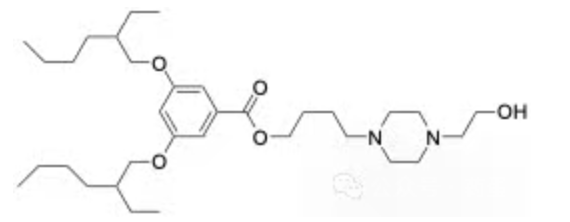
IAJD 294 is a single-component ionizable amphiphilic Janus dendrimer that autonomously coassembles with mRNA via simple injection into uniform monodisperse dendrimersome nanoparticles (DNPs, 85 nm diameter, PDI<0.2), eliminating complex multi-component formulations. Its optimized 3,5-benzoyl ester linkage and symmetric hydrophobic tails enable dual-organ targeting: Spleen: 2.97 × 10⁷ RLU (50% of total activity) Lymph nodes: 10⁶ RLU (10× higher than IAJD 87) through partial hydrophobic interdigitation (stabilizing DNPs for enhanced lymphatic uptake) and pKa ~6.5 (facilitating endosomal escape), validating constitutional isomerism for precision delivery.
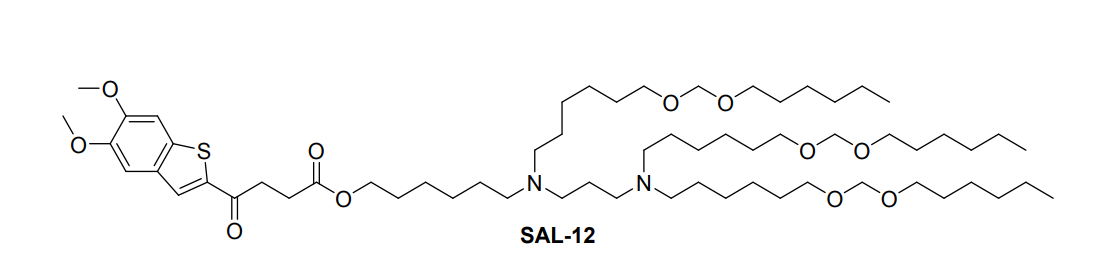
SAL12 is a novel ionizable lipid derivative that integrates a non-nucleotide STING agonist (agonist 6) with an amino lipid tail through an ester bond, forming the core component of specialized lipid nanoparticles (SAL12-LNPs). These nanoparticles are designed for dual functionality: they efficiently encapsulate and deliver mRNA into dendritic cells while concurrently activating the STING pathway to stimulate innate immunity.
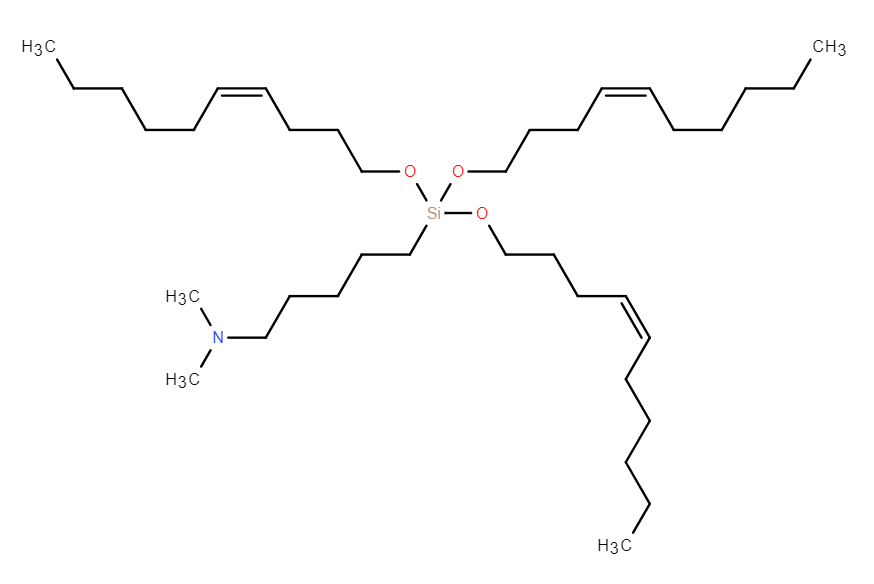
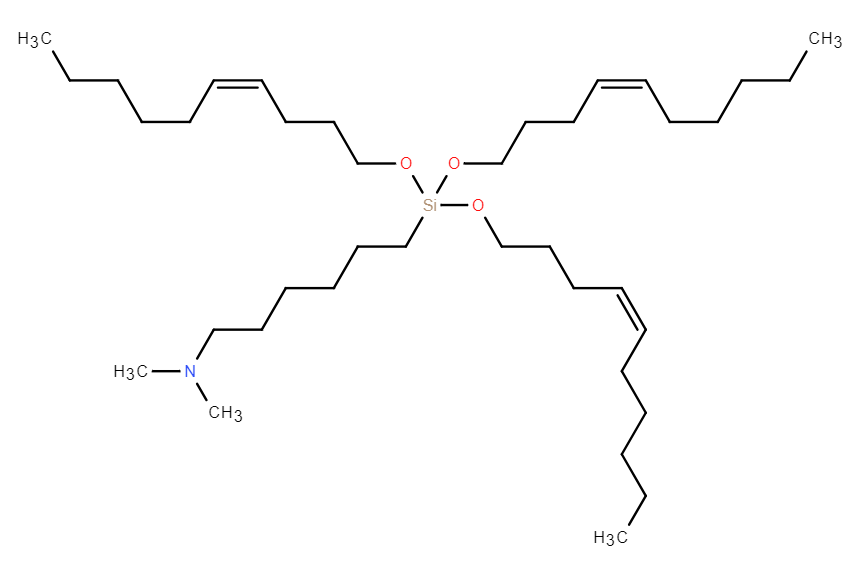
GVS-18-B34 is a highly potent, silicon ether-based ionizable lipid that enables efficient mRNA delivery via lipid nanoparticles (LNPs). Its key advantage lies in a biodegradable silyl ether linkage, which undergoes rapid, non-enzymatic hydrolysis, leading to near-complete clearance from the liver within 24 hours in both mice and non-human primates (NHPs). This degradation mechanism is species-agnostic, overcoming the variability associated with esterase-dependent lipids. In vivo, GVS-18-B34 LNPs demonstrated superior liver-specific protein expression and a high liver-to-spleen signal ratio, indicating minimal off-target accumulation and reduced immune stimulation compared to benchmarks like MC3 and SM-102. The LNPs exhibited excellent stability when stored frozen at -80°C, maintaining integrity over multiple freeze-thaw cycles. With its optimal pKa (~6.3) and efficient endosomal escape profile, GVS-18-B34 represents a promising candidate for therapeutic applications requiring frequent dosing, combining high potency with a favorable safety profile derived from its rapid clearance.
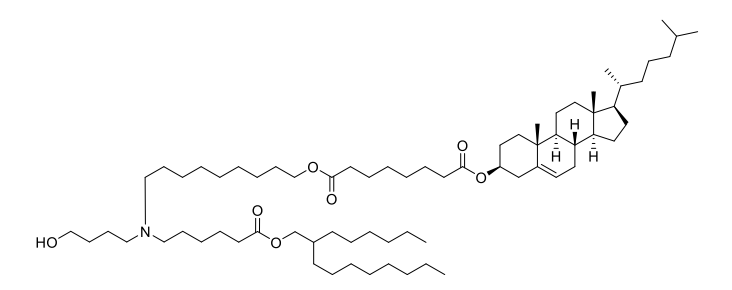
iChol15-C4A2 is a groundbreaking ionizable cholesteryl lipid, expertly designed to overcome the primary challenge of liver-centric accumulation in mRNA therapeutics. Its innovative "two-in-one" structure seamlessly integrates cholesterol with an ionizable headgroup, enabling the formation of stable, three-component Lipid Nanoparticles (Tc-LNPs).The key advantage of Tc-LNPs formulated with iChol15-CA2 is their significantly reduced adsorption of Apolipoprotein E (ApoE).This unique property directly attenuates ApoE/LDLR-mediated uptake by liver cells, dramatically shifting biodistribution toward extrahepatic tissues. Peer-validated research demonstrates a remarkable 20-50 fold increase in the spleen-to-liver mRNA expression ratio compared to standard LNPs like ALC-0315, unlocking unparalleled potential for targeting the immune system. Beyond its superior targeting capability, iChol15-C4A2 ensures high mRNA encapsulation efficiency, excellent colloidal stability, and proven biocompatibility. It offers a powerful, off-the-shelf solution to advance next-generation mRNA applications, from innovative vaccines and cancer immunotherapies to treatments for splenic disorders. Discover how iChol15-C4A2 can transform your delivery platform.
GVS-18-B35 is a leading silicon ether-based ionizable lipid that demonstrates exceptional performance in mRNA delivery. It features a biodegradable silyl ether linkage, which undergoes rapid, non-enzymatic hydrolysis, enabling near-complete clearance from the liver within 24 hours in both mice and non-human primates (NHPs). This degradation mechanism is independent of variable enzymatic activity, ensuring consistent pharmacokinetics across species. In vivo, GVS-18-B35 lipid nanoparticles (LNPs) achieve superior liver-specific protein expression with minimal off-target accumulation in the spleen, resulting in a high liver-to-spleen signal ratio and reduced immune stimulation. The LNPs exhibit excellent stability under frozen storage (-80°C) and maintain critical quality attributes, including particle size, polydispersity, and encapsulation efficiency, through multiple freeze-thaw cycles. With an optimal pKa (~6.3) and enhanced endosomal escape capability, GVS-18-B35 represents a robust and versatile platform for mRNA therapeutics, particularly suited for applications requiring frequent dosing due to its unique combination of high potency and rapid clearance profile.
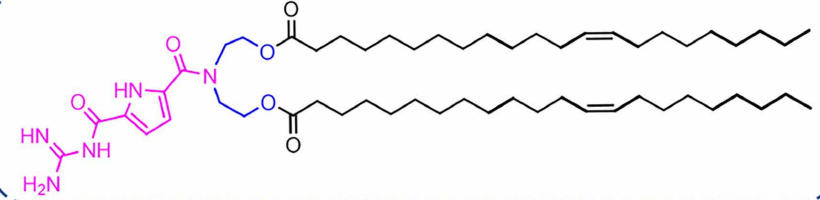
GL5 is an ionizable guanidine-based lipid nanoparticle (G-LNP) designed for superior mRNA delivery. Its guanidinocarbonyl-pyrrole (GCP) headgroup enables pH-responsive behavior and strong mRNA binding via bidentate hydrogen bonds. The cholesterol-free GL5-3 formulation forms compact, stable nanoparticles (~90-120 nm) that exhibit excellent spleen-targeting capability after intravenous injection.GL5-LNPs efficiently deliver mRNA to antigen-presenting cells (APCs), enhancing antigen presentation and T cell activation. In cancer immunotherapy models, GL5-based mRNA vaccines provided complete tumor protection and induced durable immune memory. The platform also enables mRNA delivery to other organs like the pancreas via different administration routes, demonstrating remarkable versatility and therapeutic potential.
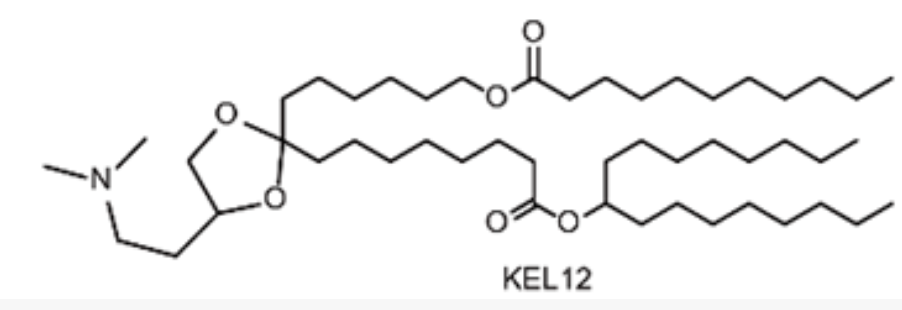
(4S)-KEL12 is a novel, biodegradable ionizable lipid developed for advanced mRNA vaccine delivery. It was rationally designed by incorporating both a ketal group in the linker and ester segments in the hydrophobic tails, a dual-degradable strategy aimed at enhancing its safety profile. Through iterative optimization, (4S)-KEL12 was identified as a lead candidate with an optimal pKa value of approximately 6.78, which is crucial for efficient mRNA encapsulation and endosomal release.
Based on the data from patent US 20250127728A1, CICL-238 emerges as a highly promising ionizable lipid candidate, demonstrating notable advantages for targeted delivery applications. It achieves exceptional transfection efficiency—reaching approximately 90% of CICL-207's performance in splenic T-cells even at a reduced lipid ratio of 50% in LNP formulations. Additionally, CICL-238 exhibits minimal off-target expression in hepatocytes (<8%, comparable to CICL-207), underscoring its enhanced specificity for immune cells over liver tissues. Its optimized structure likely contributes to efficient endosomal escape and reduced Kupffer cell uptake, making it ideal for liver-related therapies (e.g., siRNA silencing for metabolic diseases) and potentially broadening applications to genetic medicine where precision and safety are paramount. Further validation in disease models could solidify its role as a versatile, low-toxicity alternative to benchmark lipids.
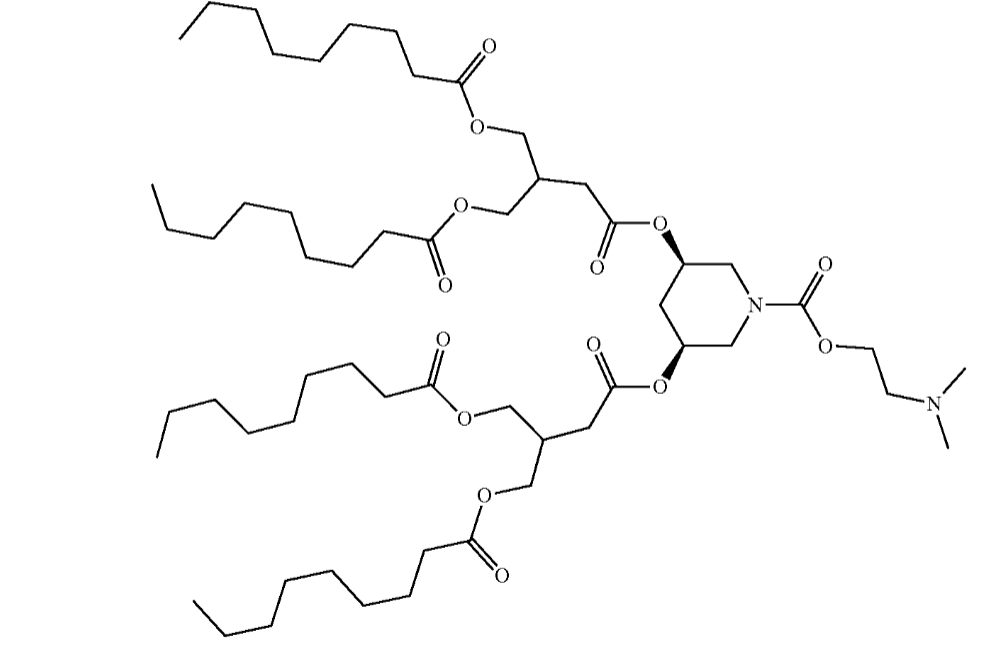
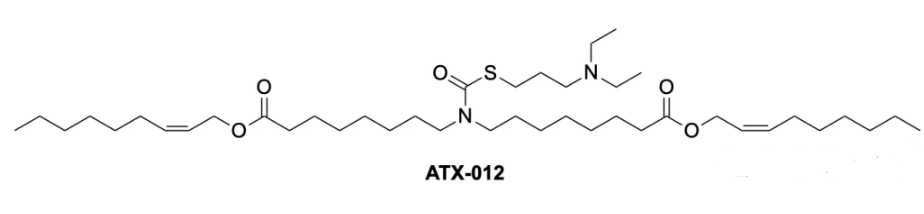
ATX-012 is an ionizable cationic lipid specifically designed for mRNA delivery systems. Its unique chemical structure enables key functions in lipid nanoparticle (LNP) formulations, such as facilitating mRNA encapsulation and enhancing endosomal escape for efficient intracellular delivery.
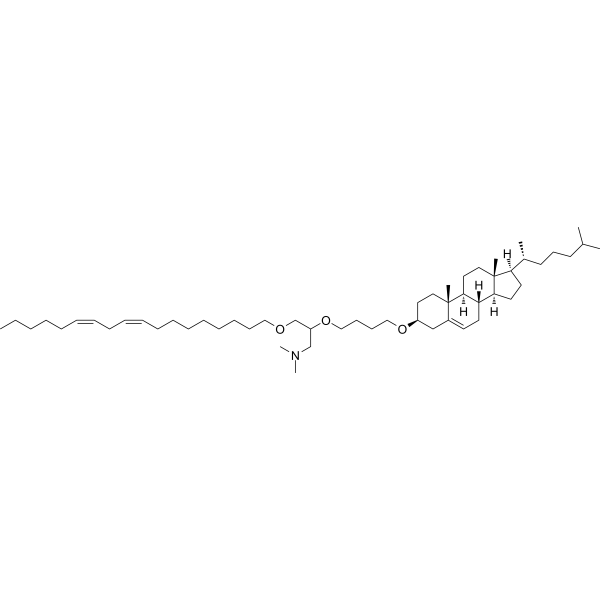
CLinDMA, a cationic lipid known to potentially trigger inflammatory responses, is utilized in the synthesis of LNP201. This liposome-based assembly is specifically designed for the systemic delivery of siRNA.
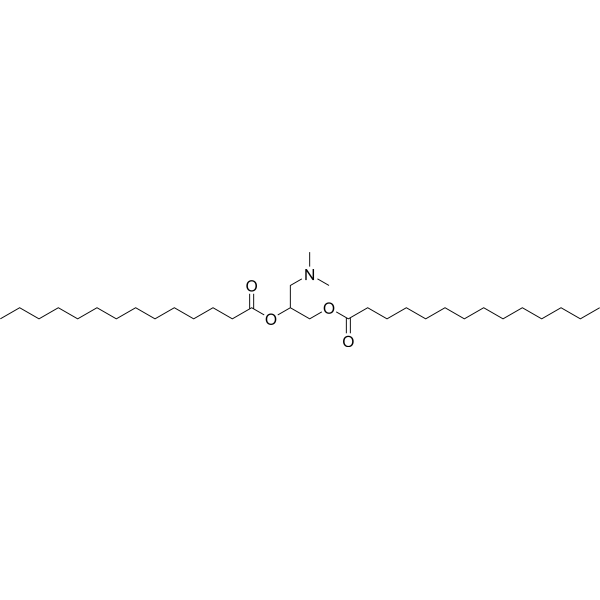
14:0 DAP (1,2-dimyristoyl-3-dimethylammonium-propane ) is a cationic lipid that can be used for drug delivery.
Fluorescent DOTAP, a cationic lipid, can be used for the research of nucleic acid and protein delivery.
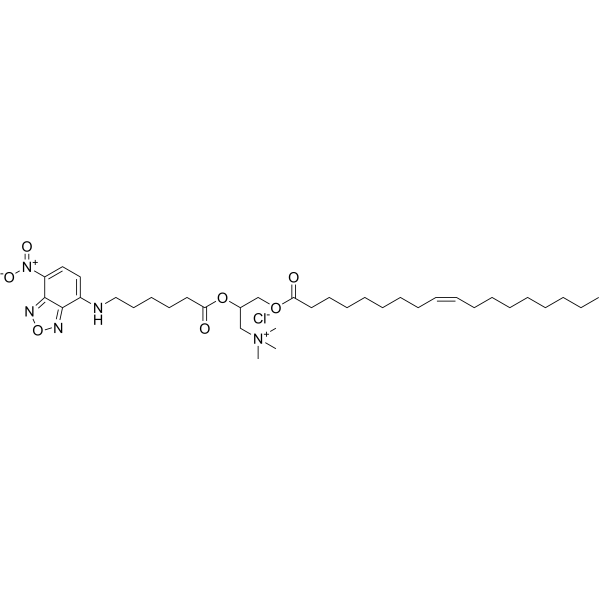
Transfectam is a cationic lipid able to interact with DNA to form complexes that mediate efficient gene transfer into various eukaryotic cells.
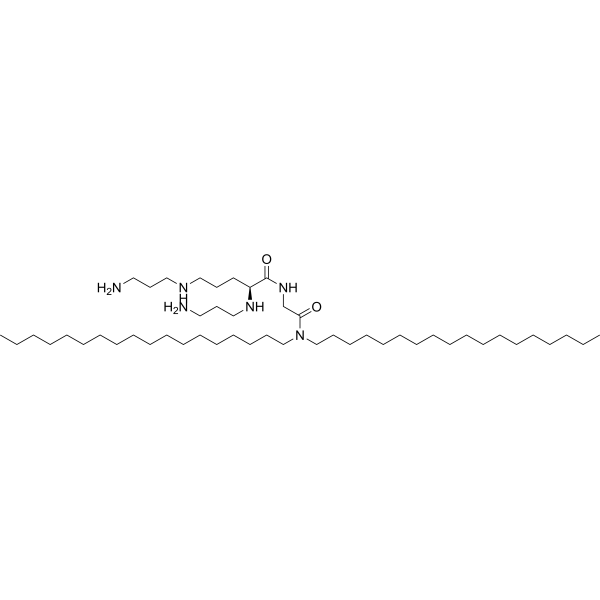
mono-Pal-MTO is a palm oil-based lipid produced by combining the anticancer drug mitoxantrone (MTO) with palmitoleic acid. When nanoparticles of mono-Pal-MTO and di-Pal-MTO are combined in a molar ratio of 1:1, they show effective siRNA cell delivery and enhance anticancer activity.
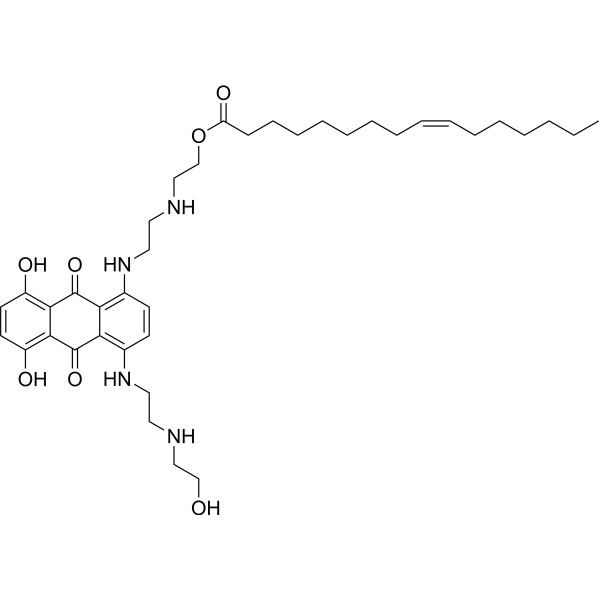
di-Pal-MTO is a palm oil-based lipid produced by combining the anticancer drug mitoxantrone (MTO) with palmitoleic acid. When nanoparticles of mono-Pal-MTO and di-Pal-MTO are combined in a molar ratio of 1:1, they show effective siRNA cell delivery and enhance anticancer activity.
PL1 is a novel biomimetic phospholipid.
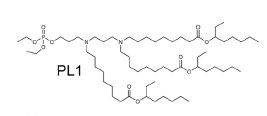
Lipid A1-D1-5 is an ionizable lipid-like substance used for RNA interference therapy in heat-stable ionizable lipid-like nanoparticles (iLAND) for the treatment of hyperlipidemia.
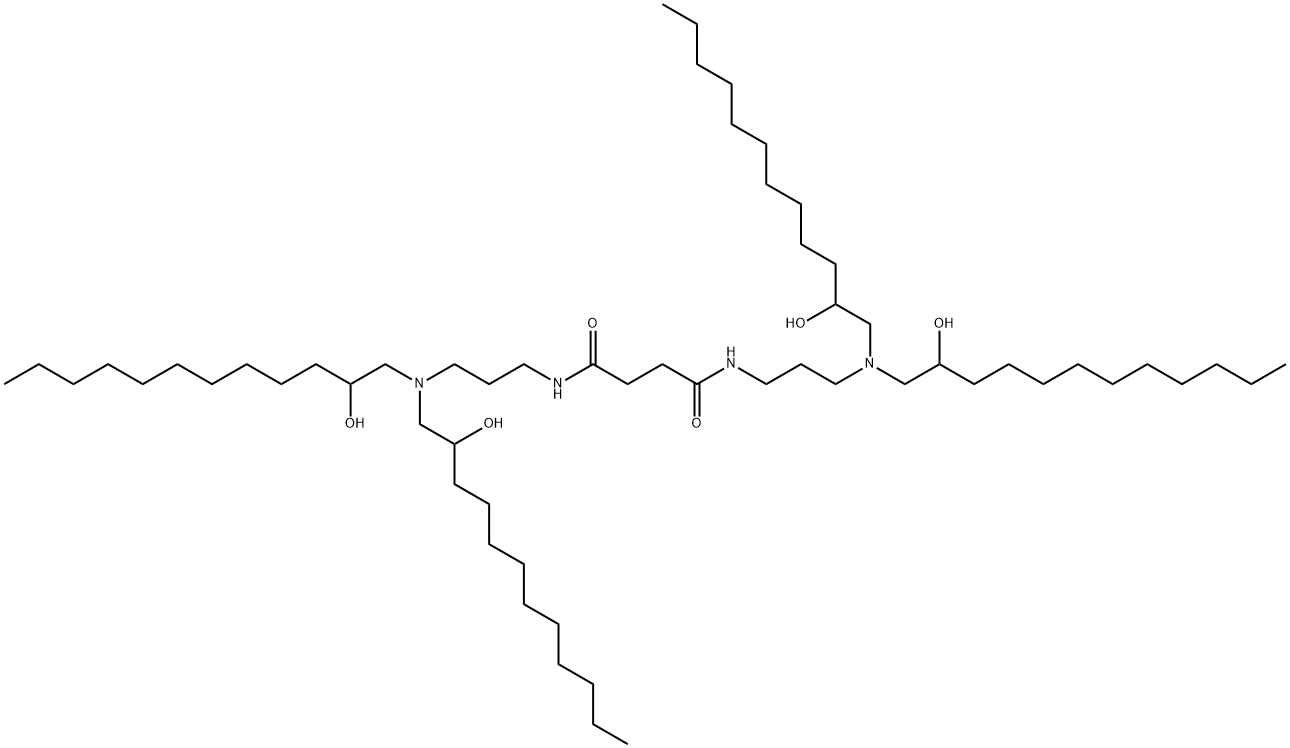
DMAP-BLP is a lipid for RNA and vaccine delivery.DMAP-BLP exhibits optimized bilayer destabilizing and pKa properties leading to highly potent gene silencing in hepatocytes following IV administration that is similar to “gold standard” lipids such as DLinMC3-DMA.
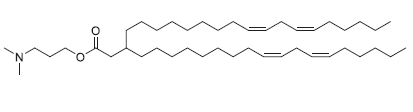
ATX-081 is listed as a ionizable lipid for laboratory research use.
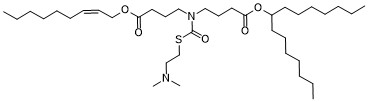
ATX-083 is listed as a ionizable lipid for laboratory research use.
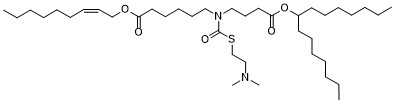
No products match this search.
Page 183 of 184 · Browse all 3666 products