
Research lipid catalog
Ionizable Lipid Products
Explore 848 lipid and RNA delivery products. Search the full catalog or browse by research category.
Search covers product name, catalog number, synonyms, available CAS numbers and categories. Spaces, hyphens and common punctuation are ignored. Duplicate legacy records are consolidated under one canonical product result.
3666 products · Showing 2641–2660 · 20 per page
DC Chemicals lipid expertise
Built for ionizable-lipid discovery and RNA delivery research
DC Chemicals supports formulation and delivery research with a broad, searchable portfolio of cationic and ionizable lipids. The current directory brings together 848 unique research-use products, with product specifications, pricing, chemical structures and literature-linked formulation data added as each record is verified.
Our experience spans complex lipid synthesis, purification, analytical release and process development. For custom molecules or larger-scale requirements, our team can discuss route development, technical specifications and scale-up options for the intended research workflow.
Learn about cationic and ionizable lipids →Proprietary innovation · Co-development · GMP
From proprietary lipid design to GMP-grade custom synthesis
DC Chemicals has independently developed ionizable-lipid structures supported by company-owned intellectual property, and selected proprietary lipid programs have advanced to GMP-stage development.
We welcome joint development with customers—from molecular design and lipid synthesis through route and process development. We can also support custom synthesis of GMP-grade ionizable lipids to agreed technical specifications and quality requirements.
Discuss a co-development project →Proprietary ionizable-lipid structuresCollaborative molecular designCustom lipid synthesisProcess development and scale-upGMP-grade project support
Product quick links
Explore ionizable lipids
Browse specifications, pricing and literature-linked product information.
Cat. No.Product NameField of ApplicationChemical Structure
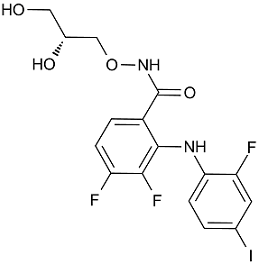
PD0325901 (Mirdametinib)Featured
100 mg USD 300 · 250 mg USD 500 · 1 g USD 1,000 · 10 mM * 1 mL in DMSO USD 150PD0325901 is a selective and cell permeable MEK inhibitor with an IC50 of 0.33 nM.
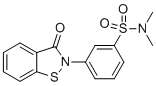
MLS 0263839Featured
10 mg USD 550MLS 0263839 is a potent, specific inhibitor of the phosphatase PHOSPHO1 with IC50 of 0.14 uM, shows minimal cross-inhibition of TNAP and no inhibition of ENPP1 activity; suppresses vascular smooth muscle cell calcification in cimbined with MLS 0038949.
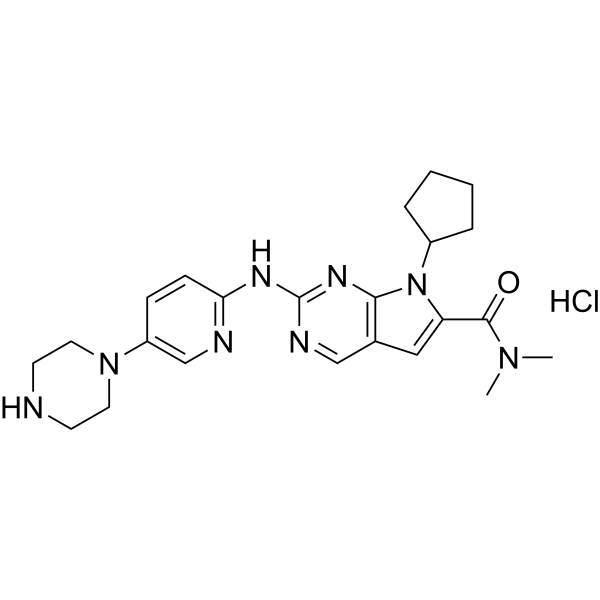
LEE011 hydrochlorideFeatured
100 mg USD 300 · 250 mg USD 600 · 1 g USD 1,200Ribociclib hydrochloride (LEE011 hydrochloride) is a highly specific CDK4/6 inhibitor with IC50 values of 10 nM and 39 nM, respectively, and is over 1,000-fold less potent against the cyclin B/CDK1 complex.
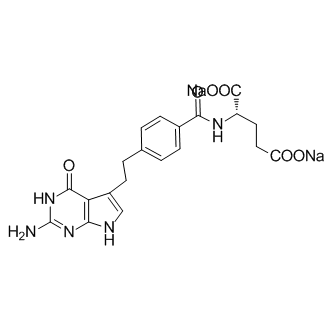
Pemetrexed disodiumFeatured
100 mg USD 300 · 250 mg USD 600 · 1 g USD 1,000 · 10 mM * 1 mL in DMSO USD 150Pemetrexed disodium is a novel antifolate that inhibits the folatedependent enzymes thymidylate synthase, dihydrofolate reductase, and glycinamide ribonucleotide formyltransferase with Kis of 1.3, 7.2, and 65 nM, respectively.
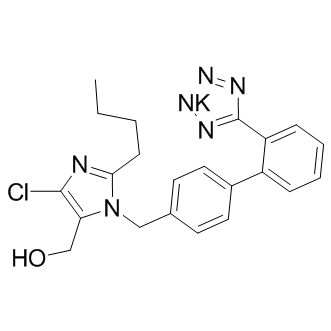
Losartan PotassiumFeatured
1 g USD 300 · 10 mM * 1 mL in DMSO USD 150Losartan (potassium) is an angiotensin II receptor type 1 (AT1) antagonist, competing with the binding of angiotensin II to AT1 with an IC50 of 20 nM.
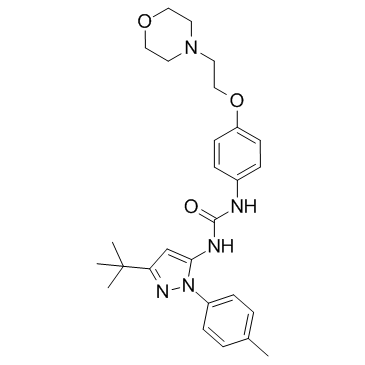
p38-α MAPK-IN-1Featured
100 mg USD 650 · 250 mg USD 1,100 · 1 g USD 2,200 · 10 mM * 1 mL in DMSO USD 220p38-α MAPK-IN-1 is an inhibitor of MAPK14 (p38-α), with IC50 of 2300 nM in EFC displacement assay, and 5500 nM in HTRF assay.
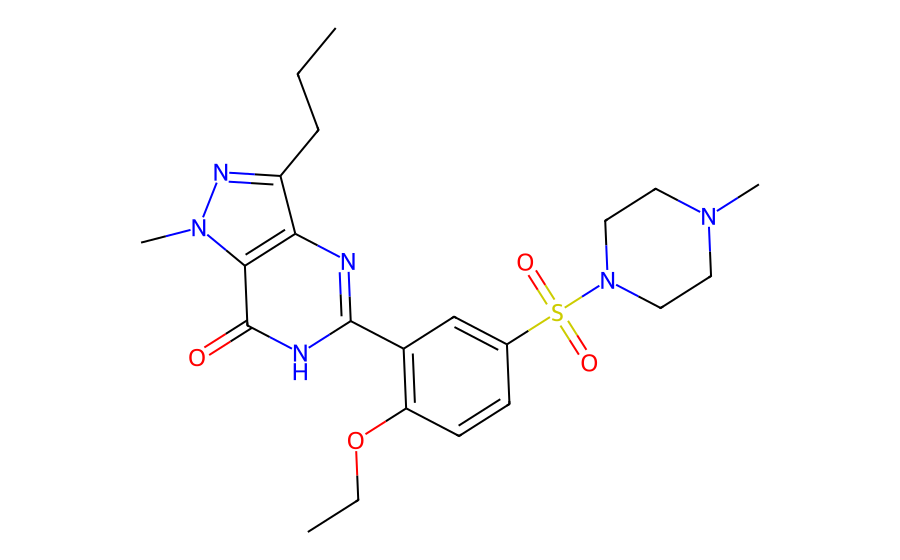
SildenafilFeatured
100 mg USD 100 · 250 mg USD 200 · 1 g USD 400 · 10 mM * 1 mL in DMSO USD 150Sildenafil is a potent phosphodiesterase type 5 (PDE5) inhibitor with IC50 of 5.22 nM.
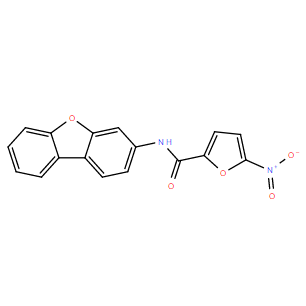
STING inhibitor C-178Featured
100 mg USD 450 · 250 mg USD 700 · 1 g USD 1,300 · 10 mM * 1 mL in DMSO USD 220C-178, a covalent inhibitor of STING, binds to Cys91, potently and selectively suppresses the STING responses elicited by distinct bona fide activators in mouse but not human. C-178 significantly reduces STING-, but not RIG-I- or TBK1-, mediated IFN-β reporter activity. C-178 blocks palmitoylation (PMA)-induced clustering of STING; inhibits the CMA-induced phosphorylation of TBK1 (downstream protein kinase of STING)[1].
AC-263093Featured
10 mg USD 500 · 25 mg USD 800 · 50 mg USD 1,100AC-263093 (AC263093) is a potent, functionally selective neuropeptide FF receptor type 2 (NPFFR2) agonist with pKi of 6.9; shows equal affinity for NPFFR1 and NPFFR2, and functionally inactivated NPFFR1; attenuates morphine tolerance in vivo.
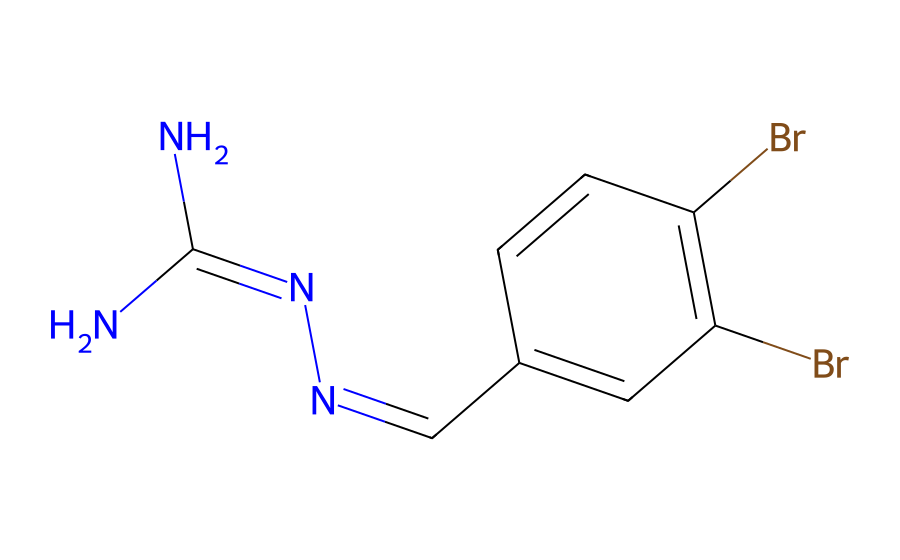
GLS1 InhibitorFeatured
100 mg USD 900 · 250 mg USD 1,500 · 1 g USD 2,800 · 10 mM * 1 mL in DMSO USD 220GLS1 inhibitor is an inhibitor of glutaminase 1
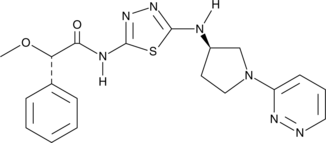
100 mg USD 550 · 250 mg USD 1,000 · 1 g USD 1,900 · 10 mM * 1 mL in DMSO USD 220
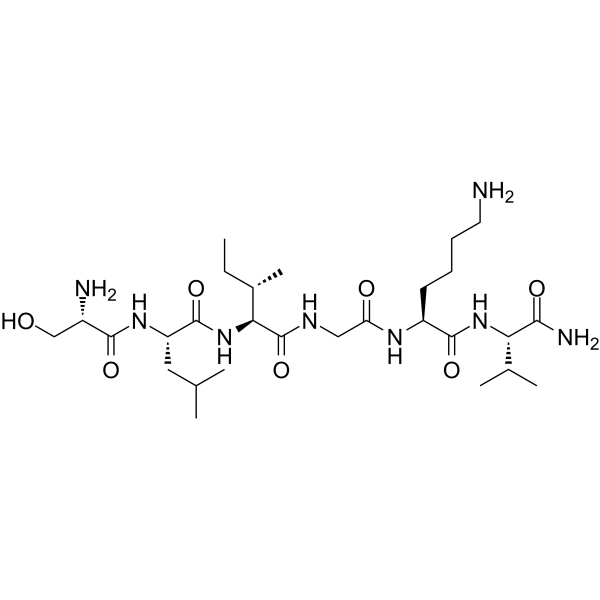
Protease-Activated Receptor-2, amide (SLIGKV-NH2) is a highly potent protease-activated receptor-2 (PAR2) activating peptide.
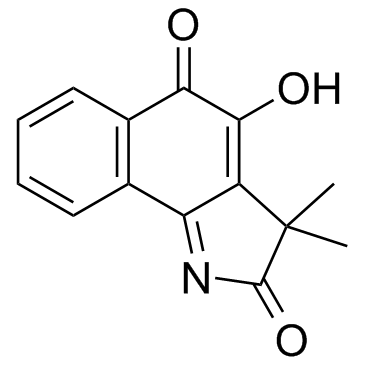
BVT-948Featured
100 mg USD 800 · 250 mg USD 1,300 · 1 g USD 2,700 · 10 mM * 1 mL in DMSO USD 220BVT948 is a protein tyrosine phosphatase (PTP) inhibitor which can also inhibit several cytochrome P450 (P450) isoforms and lysine methyltransferase SETD8.
MF-766Featured
5mg USD 500MF-766 (MF766) is a highly potent and selective EP(4) antagonist with binding Ki of 0.23 nM, displays no significant affinity (>7000-fold selectivity) against other PG receptors (IC50>1500 nM); behaved as a full antagonist with an IC50 of 1.4 nM (shifted to 1.8 nM in the presence of 10% HS) in the functional assay; exhibits blockade of inhibition of TNFa-induced IP10 release by the specific EP4 agonist L-000902688 (IC50=9.5 nM); demonstrates potency and efficacy of in the rat AIA model measuring inhibition of paw swelling.
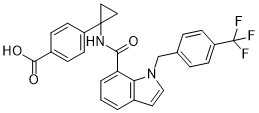
IXA6Featured
10mg USD 350IXA6 is a novel small molecule compound of inducing IRE1 RNase activity.
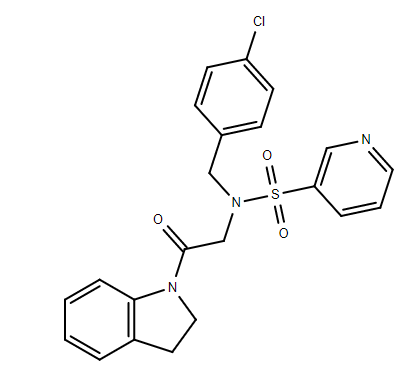
ML372Featured
10 mg USD 450ML372 is a small molecule SMN modulator that increases SMN protein in patient fibroblasts with EC50 of 37 nM; possesses good potency, pharmacokinetics, tolerance, and CNS penetration that are able to increase levels of SMN protein in several model cell lines; increase SMN protein levels in vivo, restore motor function, and prolong survival of SMNΔ7 SMA Mice; improves the righting reflex and extended survival of a severe mouse model of SMA.
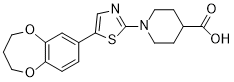
PGN9856Featured
100mg USD 750 · 250mg USD 1,250 · 1g USD 2,600PGN-9856 (PGN9856) is a novel potent, selective prostaglandin EP2 receptor agonist with pKi of > 8.3, shows higi selectivity over EP1 , EP3 , EP4 , DP, FP, IP and TP receptors; displays a potency (pEC50 >8.5) and a maximal response (increase in cAMP) comparable to that of the endogenous agonist PGE2 in cells over-expressing human recombinant EP2 receptors; exhibited tocolytic, anti-inflammatory, and long-acting ocular hypotensive properties consistent with its potent EP2 agonist properties.
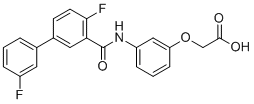
IXA4Featured
100mg USD 650 · 250mg USD 990 · 1g USD 1,990 · 10 mM * 1 mL in DMSO USD 220IXA4 is the most selective for the IRE1–XBP1s signaling pathway.IXA4 selectively activate IRE1–XBP1s signaling and reduces secretion of APP through IRE1 activation.
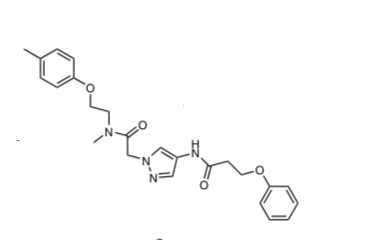
ApraglutideFeatured
5mg USD 350A peptidic glucagon like peptide 2 (GLP-2) analogue for treatment of type2 diabetes.

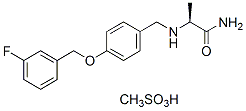
Safinamide mesylateFeatured
100 mg USD 400 · 250 mg USD 700 · 1 g USD 1,300 · 10 mM * 1 mL in DMSO USD 150Safinamide mesylate mesylate (FCE 26743 mesylate; EMD 1195686 mesylate) is a potent, selective, and reversible monoamine oxidase B (MAO-B) inhibitor (IC50=0.098 µM) over MAO-A (IC50=580 µM)[1]. Safinamide mesylate also blocks sodium channels and modulates glutamate (Glu) release, showing a greater affinity at depolarized (IC50=8 µM) than at resting (IC50=262 µM) potentials. Safinamide mesylate has neuroprotective and neurorescuing effects and can be used for the study of parkinson disease, ischemia stroke etc.al[2][3].
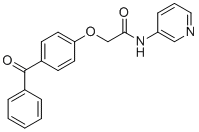
ML-T531Featured
25 mg USD 750 · 5mg USD 350ML-T531 is a potent, selective hERG potassium channel (Kv11.1) activator with EC50 of 3.13 uM; exhibits no potentiation for KCNQ1 and KCNE1, and no noticeable effects on other cardiac channels including Cav1.2, Kir2.1, Nav1.5, and Kv4.3; significantly potentiates hERG steady-state currents and tail currents in CHO cells at 10 uM, enhances voltage-dependent potassium current amplitudes in the presence of an Iks-specific inhibitor chromanol 293B; potentiates native potassium currents in iPSC-derived cardiomyocytes, shortens the APD90 of LQT1 cardiomyocytes with EC50 of 5.71 uM, normalizes the disease phenotype of cardiomycytes derived from a patient with LQT1.
No products match this search.
Page 133 of 184 · Browse all 3666 products