
Research lipid catalog
Ionizable Lipid Products
Explore 848 lipid and RNA delivery products. Search the full catalog or browse by research category.
Search covers product name, catalog number, synonyms, available CAS numbers and categories. Spaces, hyphens and common punctuation are ignored. Duplicate legacy records are consolidated under one canonical product result.
3666 products · Showing 1941–1960 · 20 per page
DC Chemicals lipid expertise
Built for ionizable-lipid discovery and RNA delivery research
DC Chemicals supports formulation and delivery research with a broad, searchable portfolio of cationic and ionizable lipids. The current directory brings together 848 unique research-use products, with product specifications, pricing, chemical structures and literature-linked formulation data added as each record is verified.
Our experience spans complex lipid synthesis, purification, analytical release and process development. For custom molecules or larger-scale requirements, our team can discuss route development, technical specifications and scale-up options for the intended research workflow.
Learn about cationic and ionizable lipids →Proprietary innovation · Co-development · GMP
From proprietary lipid design to GMP-grade custom synthesis
DC Chemicals has independently developed ionizable-lipid structures supported by company-owned intellectual property, and selected proprietary lipid programs have advanced to GMP-stage development.
We welcome joint development with customers—from molecular design and lipid synthesis through route and process development. We can also support custom synthesis of GMP-grade ionizable lipids to agreed technical specifications and quality requirements.
Discuss a co-development project →Proprietary ionizable-lipid structuresCollaborative molecular designCustom lipid synthesisProcess development and scale-upGMP-grade project support
Product quick links
Explore ionizable lipids
Browse specifications, pricing and literature-linked product information.
Cat. No.Product NameField of ApplicationChemical Structure
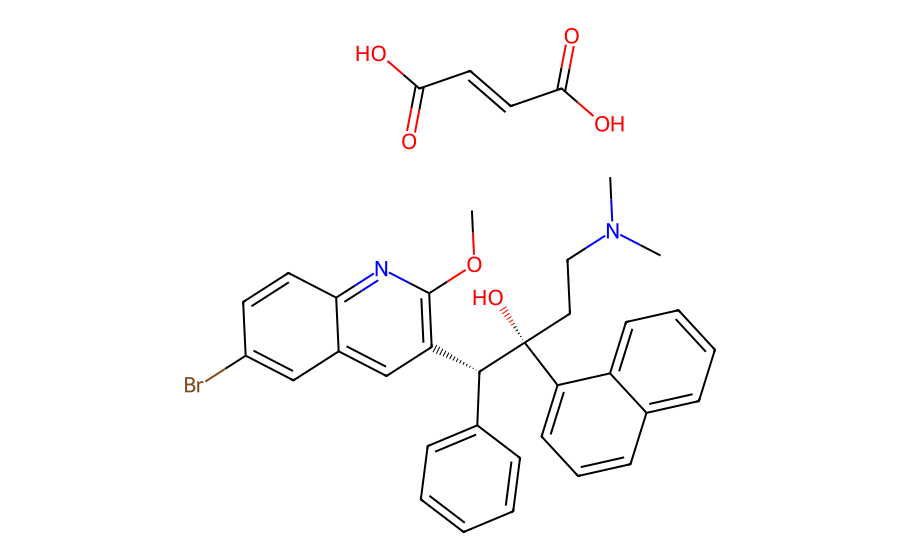
Bedaquiline fumarateFeatured
100 mg USD 250 · 250 mg USD 500 · 1 g USD 1,000 · 10 mM * 1 mL in DMSO USD 150Bedaquiline fumarate, a diarylquinoline antibiotic that targets ATP synthase, is effective for the treatment of Mycobacterium tuberculosis infections.
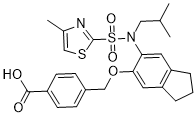
ONO-8130Featured
100 mg USD 650 · 250 mg USD 1,100 · 1g USD 2,200 · 10 mM * 1 mL in DMSO USD 220ONO-8130 is an orally available EP1 receptor antagonist.
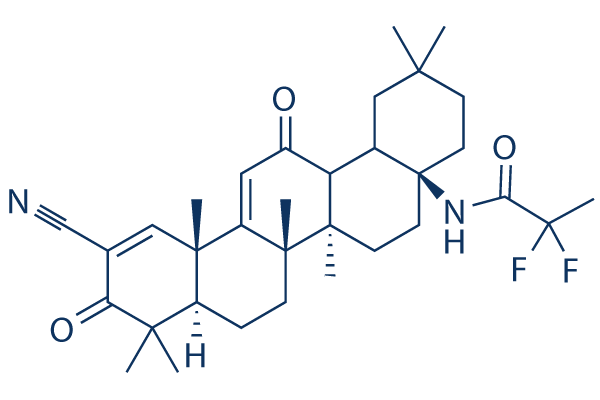
RTA-408(Omaveloxolone)Featured
100 mg USD 500 · 250 mg USD 800 · 1 g USD 1,600RTA-408 is an antioxidant inflammation modulator (AIM), which activates Nrf2 and suppresses nitric oxide (NO).
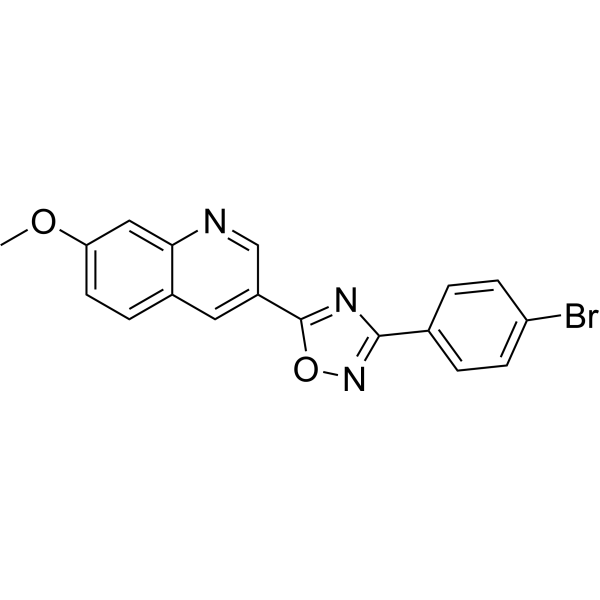
BT173Featured
10 mg USD 350BT173 is a small molecule allosteric inhibitor of HIPK2-Smad3 interaction, specifically inhibits the TGF-β1/Smad3 pathway.BT173 disrupts HIPK2-Smad3 protein-protein interaction (PPI) without significant inhibition of HIPK2 kinase activity or inhibition of p53 activation.BT173 inhibits Smad3 phosphorylation in human kidney cells in vitro.BT173 significantly attenuated renal fibrosis development in the UUO mice, significantly decreased Smad3 phosphorylation and α-SMA expression in the UUO kidneys.Treatment of BT173 ameliorated kidney fibrosis in Tg26 mice.
RHC 80267Featured
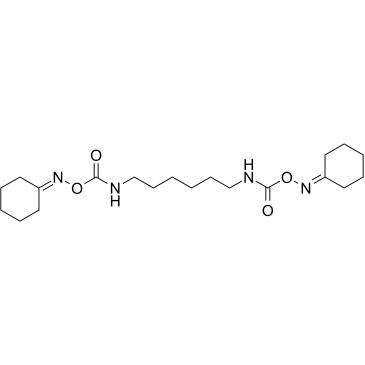
100mg USD 450 · 250mg USD 800 · 1g USD 1,600RHC 80267 (U-57908) is a potent and selective inhibitor of diacylglycerol lipase (DAGL) (with IC50 of 4 μM in canine platelets). RHC-80267 inhibits cholinesterase activity with an IC50 of 4 μM, thereby enhancing the relaxation evoked by acetylcholine. RHC 80267 also inhibits COX and the hydrolysis of phosphatidylcholine (PC)[1][2][3][4].
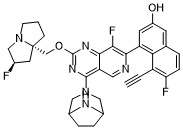
MRTX1133(MRTX-1133)Featured
100mg USD 650 · 250mg USD 1,100 · 1g USD 2,200MRTX1133 is a noncovalent, potent, and selective KRAS G12D inhibitor. MRTX1133 optimally fills the switch II pocket and extends three substituents to favorably interact with the protein, resulting in an estimated KD against KRASG12D of 0.2 pM. MRTX1133 prevents SOS1-catalyzed nucleotide exchange and/or formation of the KRASG12D/GTP/RAF1 complex, thereby inhibiting mutant KRAS-dependent signal transduction. MRTX1133 has picomolar binding affinity, single digit nanomolar activity in cellular assays, and marked in vivo efficacy in tumor models harboring KRASG12D mutations[1].
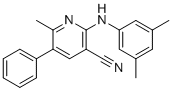
MSU38225Featured
5mg USD 400MSU 38225 (MSU-38225) is a novel small molecule that inhibit the Nrf2 pathway, potentially inhibiting Nrf2 transcriptional activity and cancer cell growth; MSU38225 downregulates Nrf2 transcriptional activity and decreases the expression of Nrf2 downstream targets, including NQO1, GCLC, GCLM, AKR1C2, and UGT1A6. MSU38225 strikingly decreases the protein level of Nrf2, which can be blocked by the proteasome inhibitor MG132. Ubiquitination of Nrf2 is enhanced following treatment with MSU38225. By inhibiting production of antioxidants, MSU38225 increases the level of reactive oxygen species (ROS) when cells are stimulated with tert-butyl hydroperoxide (tBHP). MSU38225 also inhibits the growth of human lung cancer cells in both two-dimensional cell culture and soft agar.
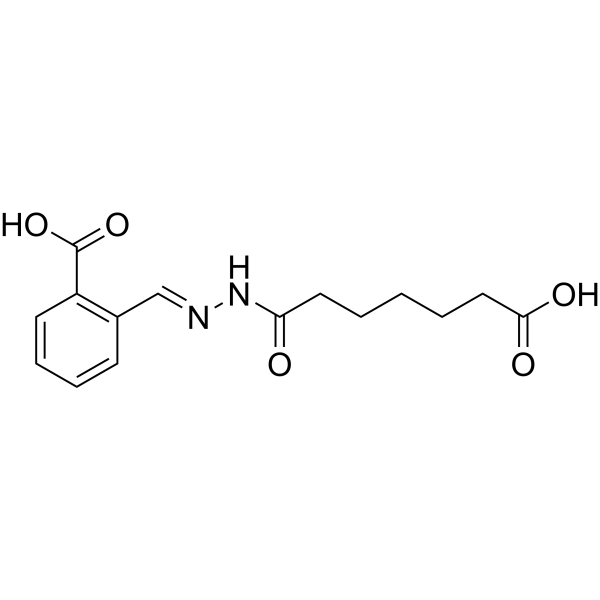
IDE-1Featured
100 mg USD 800 · 250 mg USD 1,300 · 1 g USD 2,600IDE1 is an inducer of definitive endoderm 1 (IDE1).
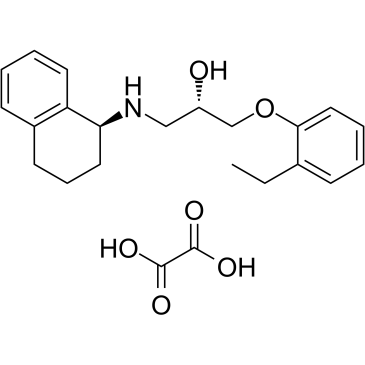
SR59230AFeatured
100mg USD 600 · 250mg USD 1,050 · 1g USD 2,100SR59230A is a potent, selective, and blood-brain barrier penetrating β3-adrenergic receptor antagonist[1] with IC50s of 40, 408, and 648 nM for β3, β1, and β2 receptors, respectively[2].
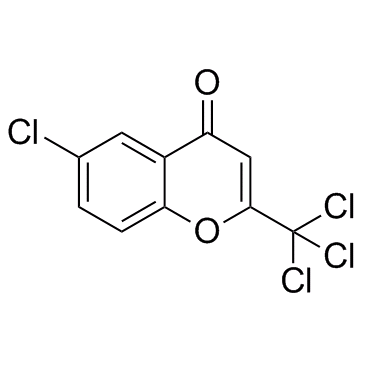
ST034307Featured
100 mg USD 450 · 250 mg USD 900 · 1 g USD 1,710ST034307 is a potent and selective adenylyl cyclase 1 (AC1) inhibitor, with IC50 of 2.3 μM.
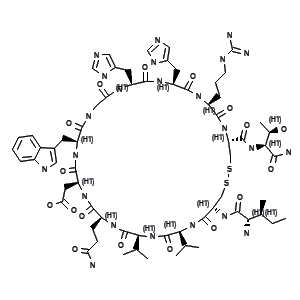
CompstatinFeatured
100 mg USD 550 · 250 mg USD 1,000 · 1 g USD 1,900Compstatinis is a 13-residue cyclic peptide, and a potent inhibitor of the complement system.
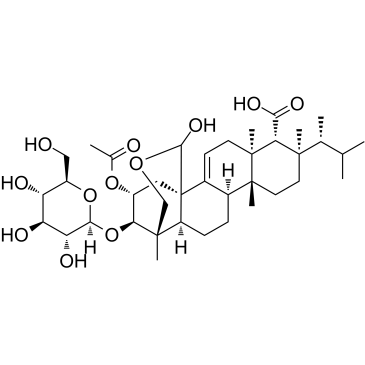
EnfumafunginFeatured
100 mg USD 550 · 250 mg USD 950 · 1 g USD 1,900Enfumafungin, a triterpene glycoside, is isolated from extracts derived from an endophytic species of Hormonema. Enfumafungin is an antifungal compound that is acting on the fungal cell wall, as the (1,3)-beta-D-glucan synthase inhibitor. Enfumafungin is specific for yeasts and fungi (excluding Cryptococcus) and does not inhibit the growth of Bacillus subtilis12.
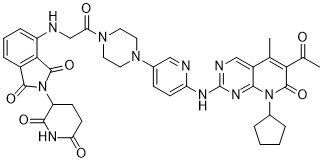
XY028-140 (MS140)Featured
100mg USD 600 · 250mg USD 1,100 · 1g USD 2,200XY028-140 (MS140) is a potent and selective PROTAC-based CDK4/CDK6 kinase degrader. XY028-140 specifically inhibits RB-E2F signaling and reduces CDK4 and CDK6 protein levels in a dose- and time-dependent manner in vitro. In addition, XY028-140 can degrade its targets by linking them with ubiquitin-proteasome mechanism. Further, the degradation of CDK4/6 protein by XY028-140 is specifically mediated by CRBN. Therefore, XY028-140 effectively and selectively inhibits and degrades CDK4/6 kinase by targeting CDK4/6 kinase in CDK4/6i-S (CDK4/6 inhibitor-sensitive) tumor cells to the CRL4-CRBN-E3 ubiquitin complex. Compared with CDK6 wild-type cells, XY028-140 treatment of cells expressing wild-type or mutation-activated CDK6 resulted in a more effective degradation of CDK6 (S178P).
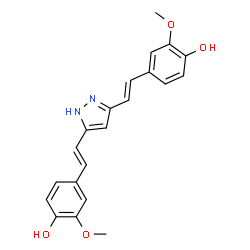
HydrazinocurcuminFeatured
10 mg USD 400Hydrazinocurcumin is a synthetic curcumin derivative that inhibits the proliferation of bovine aortic endothelial cells (BAECs) with IC50 of 520 nM without cytotoxicity, inhibits STAT3 phosphorylation and downregulates an array of STAT3 downstream targets; suppresses cell proliferation, depresses cell migration and invasion, induces cell apoptosis; inhibits the cell cycle progression of colon cancer cells via antagonizing of Ca2+/calmodulin functions.
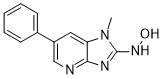
N2-OH-PhIPFeatured
10 mg USD 550N2-OH-PhIP is a PhIP metabolite.
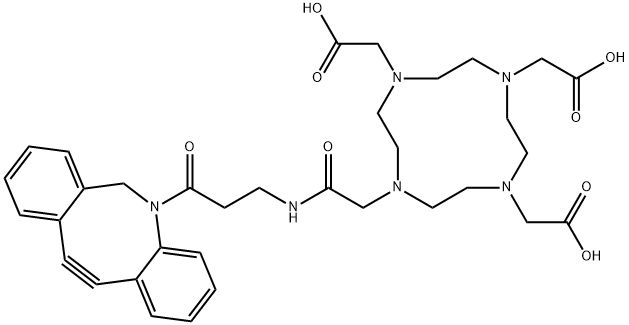
DOTA-ADIBOFeatured
100mg USD 1,200DOTA-ADIBO is a Click Chemistry intermidate used for antibody-drug conjugates.
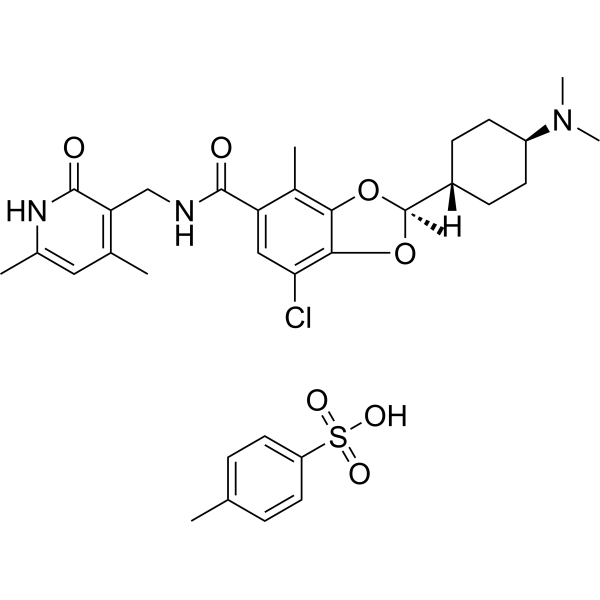
Valemetostat tosylateFeatured
100mg USD 700 · 250mg USD 1,200 · 1g USD 2,600Valemetostat (DS-3201) tosylate, a first-in-class EZH1/2 dual inhibitor with IC50 values <10 nM. Valemetostat tosylate can be used for the research of relapsed/refractory peripheral T-cell lymphoma.
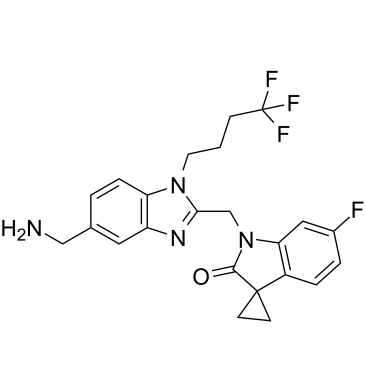
Sisunatovir (Synonyms: RV521)Featured
100mg USD 700 · 250mg USD 1,300 · 1g USD 2,600Sisunatovir (RV521), an orally available inhibitor of the RSV fusion (RSV-F) protein, exhibits potent efficacy against a panel of clinical isolates of RSV-A and RSV-B viruses, with IC50s of 1.4 nM and 1.0 nM, respectively.
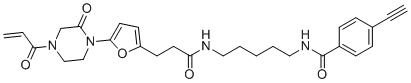
NJH-2-075Featured
5mg USD 650NJH-2-075 is an alkyne-functionalized probe of EN523, retains binding to OTUB1 in vitro.
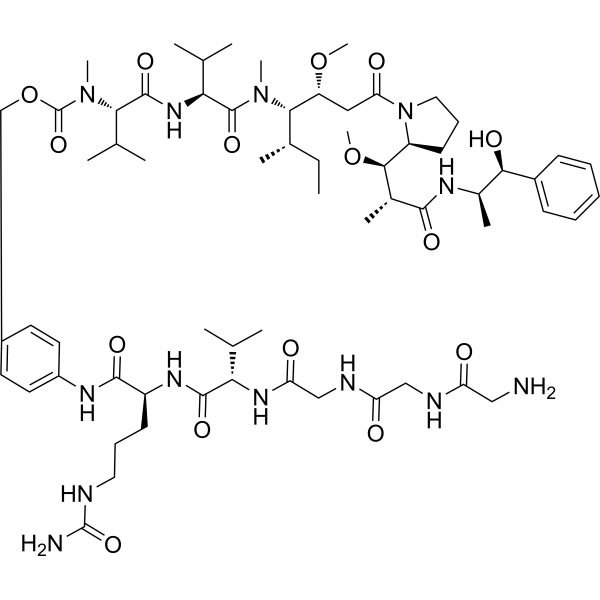
Gly3-VC-PAB-MMAEFeatured
10 mg USD 550Gly3-VC-PAB-MMAE consists a cleavable ADC linker (Gly3-VC-PAB) and a potent tubulin inhibitor (MMAE). Gly3-VC-PAB-MMAE can be used in the synthesis of antibody-drug conjugates (ADCs).
No products match this search.
Page 98 of 184 · Browse all 3666 products