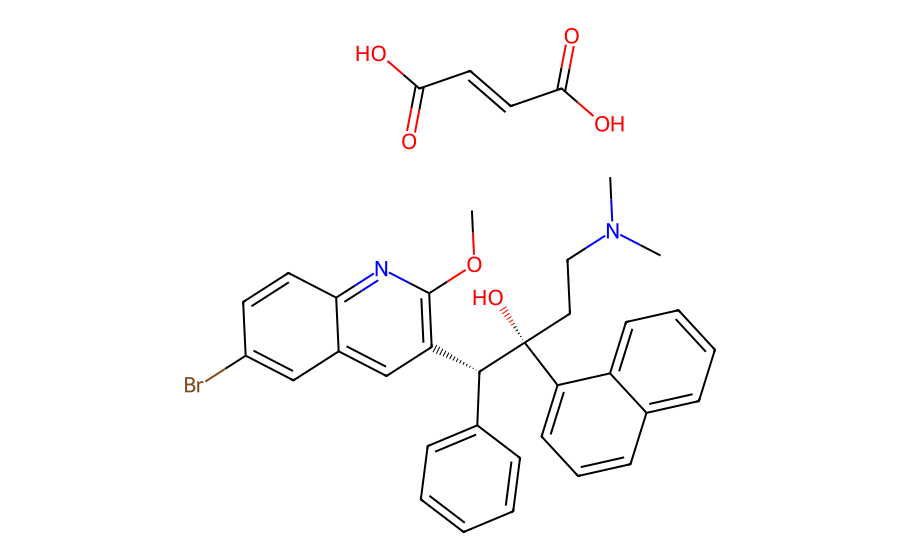
Bedaquiline fumarate chemical structure
Chemical structureResearch use only
CAT. NO. DC8809Featured

Bedaquiline fumarate

Pack Sizes & Prices

TotalUS$250
We match the best price and quality on market.
Product overview

Description & Application

Bedaquiline fumarate, a diarylquinoline antibiotic that targets ATP synthase, is effective for the treatment of Mycobacterium tuberculosis infections.

ParameterValue
Chemical NameBedaquiline Fumarate
CAS No.845533-86-0
SynonymsBedaquiline Fumarate;(1R,2S)-1-(6-bromo-2-methoxyquinolin-3-yl)-4-(dimethylamino)-2-naphthalen-1-yl-1-phenylbutan-2-ol,(E)-but-2-enedioic acid;P04QX2C1A5;R207910 fumarate;R403323;TMC207 fumarate;UNII-P04QX2C1A5;Bedaquiline (fumarate)
FormulaC36H35BrN2O6
M.Wt671.577
SMILESOC(/C=C/C(O)=O)=O.BrC1=CC=C(N=C(OC)C([C@H]([C@@](C2=CC=CC3=C2C=CC=C3)(O)CCN(C)C)C4=CC=CC=C4)=C5)C5=C1
Purity>99%
Storage2 years -20°C Powder, 2 weeks 4°C in DMSO, 6 months -80°C in DMSO

Biological Activity

Bedaquiline fumarate, a diarylquinoline antibiotic that targets ATP synthase, is effective for the treatment of Mycobacterium tuberculosis infections.

In Vitro

Bedaquiline inhibits the growth of TDR M. tuberculosis strains, with MIC values ranging from 0.125 to 0.5 mg/L[1]. Among slowly growing mycobacteria (SGM), bedaquiline exhibits the highest activity against Mycobacterium avium with MIC50 and MIC90 values of 0.03 and 16 mg/L, respectively. Among rapidly growing mycobacteria (RGM), Mycobacterium abscessus subsp. abscessus (M. abscessus) and Mycobacterium abscessus subsp. massiliense (M. massiliense) seem more susceptible to bedaquiline than Mycobacterium fortuitum, with MIC50 and MIC90 values of 0.13 and >16 mg/L, respectively, for both species. Bedaquiline also shows moderate in vitro activity against NTM species[2]. Bedaquiline has an excellent in vitro activity against Mycobacterium tuberculosis, including multidrug resistant M tuberculosis[3].

In Vivo

No in vivo data are provided in the current product source. Contact us for further information.

References & source

DC Chemicals original product information

Published experimental findings depend on the model and assay conditions. They do not guarantee equivalent performance in every application. For laboratory research use only.
Product documentation

Refer to the certificate supplied with your lot for batch-specific release results.

Handling guide

2 years -20°C Powder, 2 weeks 4°C in DMSO, 6 months -80°C in DMSO

Solution calculator

Related research products

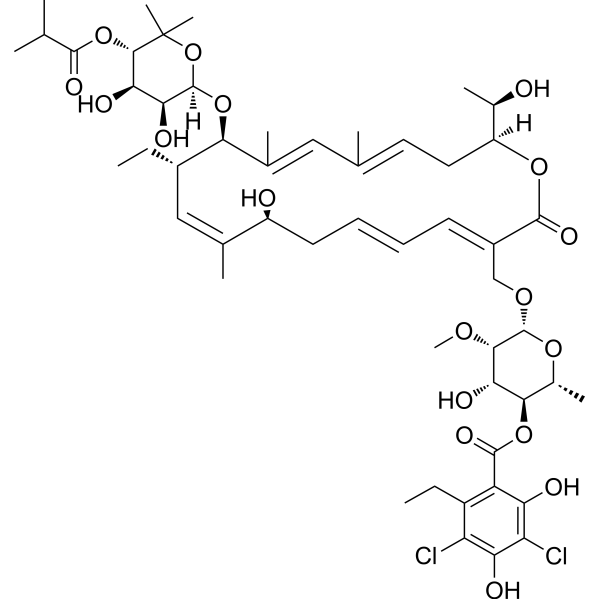
Fidaxomicin (Dificid) chemical structureDC1057

Fidaxomicin (Dificid)

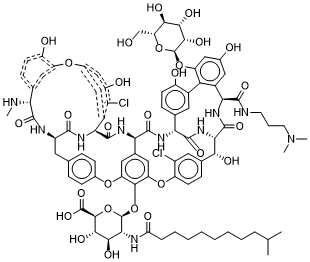
Fidaxomicin(OPT-80; PAR-101) is a new class of narrow spectrum macrocyclic antibiotic drug; selective eradication of pathogenic Clostridium difficile with minimal disruption to the multiple species of bacteria that…

View activity & prices
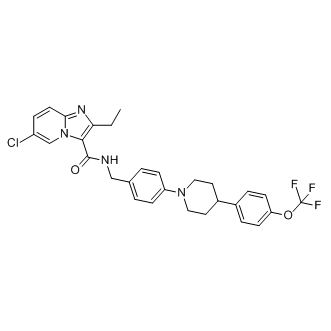
Q203 chemical structureDC10109

Q203

Q203 (IAP6) is a midazopyridine amide compound. Q203 is active against Mycobacterium tuberculosis H37Rv with an MIC50 of 2.7 nM in culture broth medium.

View activity & prices
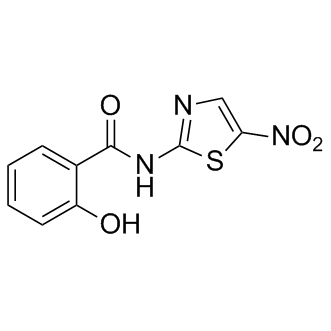
Tizoxanide chemical structureDC8336

Tizoxanide

Tizoxanide is the active metabolite of Nitazoxanide, which is a thiazolide anti-infective compound against anaerobic bacteria, protozoa, and a range of viruses.

View activity & prices
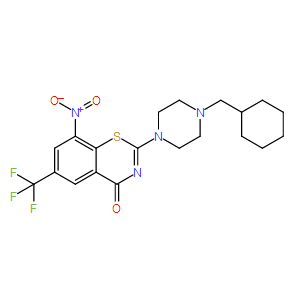
PBTZ169 chemical structureDC9723

PBTZ169

Macozinone is a new drug candicate that inhibits decaprenylphosphoryl-β-d-ribose 2′-oxidase (DprE1), more efficiently than BTZ043target: DprE1In vitro: PBTZ169, inhibit decaprenylphosphoryl-β-d-ribose 2′-oxidase…

View activity & prices
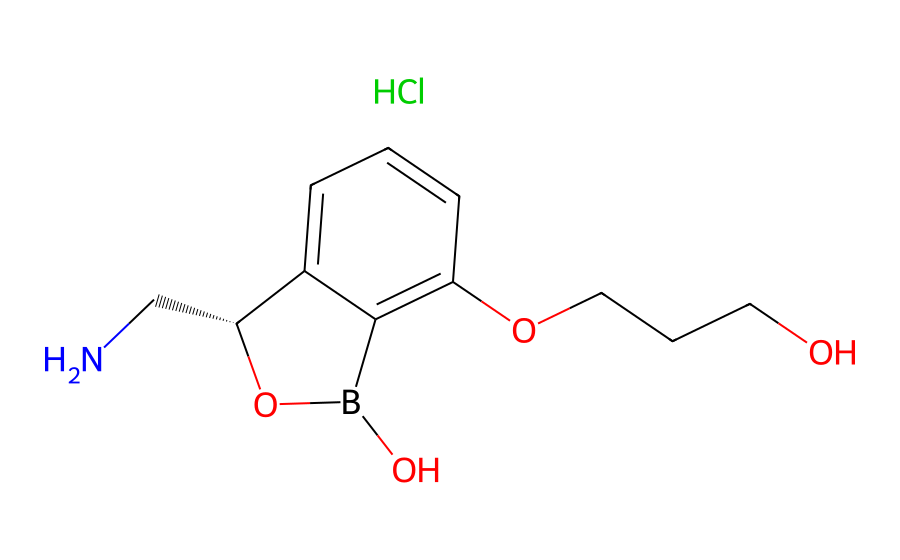
AN3365(Epetraborole) chemical structureDC9827

AN3365(Epetraborole)

Epetraborole hydrochloride is a novel leucyl-tRNA synthetase (LeuRS) inhibitor, which inhibits protein synthesis by binding "to the terminal adenosine ribose (A76) of leucyl-tRNA synthetase". It is intended for the…

View activity & prices
Relebactam chemical structureDC10441

Relebactam

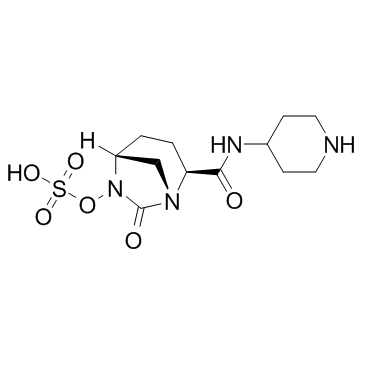
Relebactam is a diazabicyclooctane inhibitor with activity against a wide spectrum of β-lactamases, including class A (extended-spectrum β-lactamases [ESBLs] and KPC) and class C (AmpC) enzymes.Target:…

View activity & prices
CSP1 chemical structureDC41966

CSP1

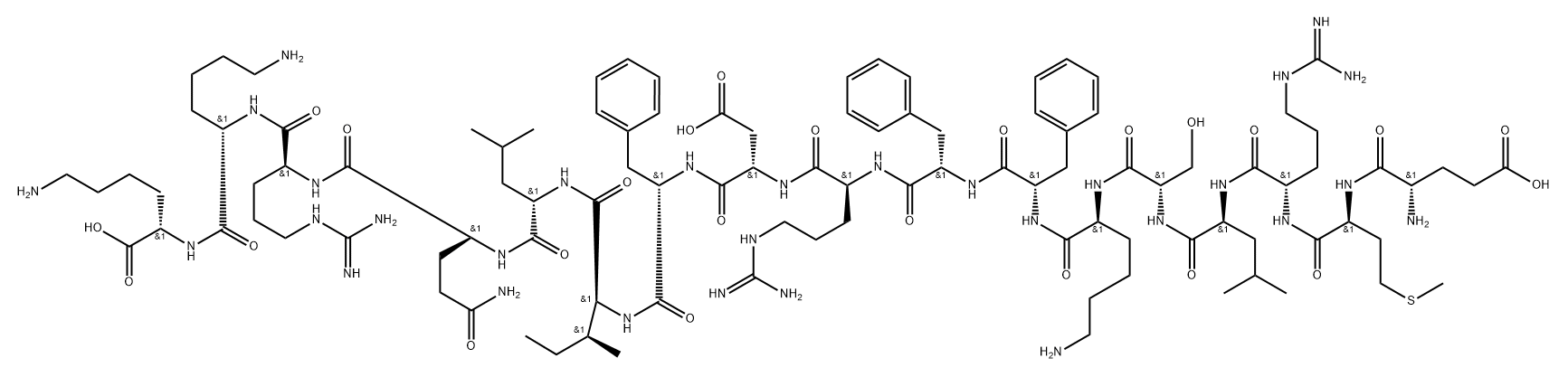
CSP1 is a potent and selective ComD1 receptor agonist, with an IC50 of 10.3 nM. CSP1 is a major variants of competence-stimulating peptide (CSP), and it can regulate genetic transformation of S. pneumonia by modulating…

View activity & prices

Cart

Request quotation