
Research lipid catalog
Ionizable Lipid Products
Explore 848 lipid and RNA delivery products. Search the full catalog or browse by research category.
Search covers product name, catalog number, synonyms, available CAS numbers and categories. Spaces, hyphens and common punctuation are ignored. Duplicate legacy records are consolidated under one canonical product result.
4176 products · Showing 3821–3840 · 20 per page
DC Chemicals lipid expertise
Built for ionizable-lipid discovery and RNA delivery research
DC Chemicals supports formulation and delivery research with a broad, searchable portfolio of cationic and ionizable lipids. The current directory brings together 848 unique research-use products, with product specifications, pricing, chemical structures and literature-linked formulation data added as each record is verified.
Our experience spans complex lipid synthesis, purification, analytical release and process development. For custom molecules or larger-scale requirements, our team can discuss route development, technical specifications and scale-up options for the intended research workflow.
Learn about cationic and ionizable lipids →Proprietary innovation · Co-development · GMP
From proprietary lipid design to GMP-grade custom synthesis
DC Chemicals has independently developed ionizable-lipid structures supported by company-owned intellectual property, and selected proprietary lipid programs have advanced to GMP-stage development.
We welcome joint development with customers—from molecular design and lipid synthesis through route and process development. We can also support custom synthesis of GMP-grade ionizable lipids to agreed technical specifications and quality requirements.
Discuss a co-development project →Proprietary ionizable-lipid structuresCollaborative molecular designCustom lipid synthesisProcess development and scale-upGMP-grade project support
Product quick links
Explore New ionizable lipids
Explore our five most recently added ionizable lipids, with specifications, pricing and literature-linked product information.
DCL0028HX1Brain RNA delivery researchView product →DCL0024A1I4R13C18-2Spleen-targeted RNA delivery researchView product →DCL0023A1I4R2C18-2Spleen-targeted RNA delivery researchView product →DCL0022FS01Local joint RNA delivery researchView product →DCL0020Lipid-392Lung RNA delivery and gene editing researchView product →
Cat. No.Product NameField of ApplicationChemical Structure
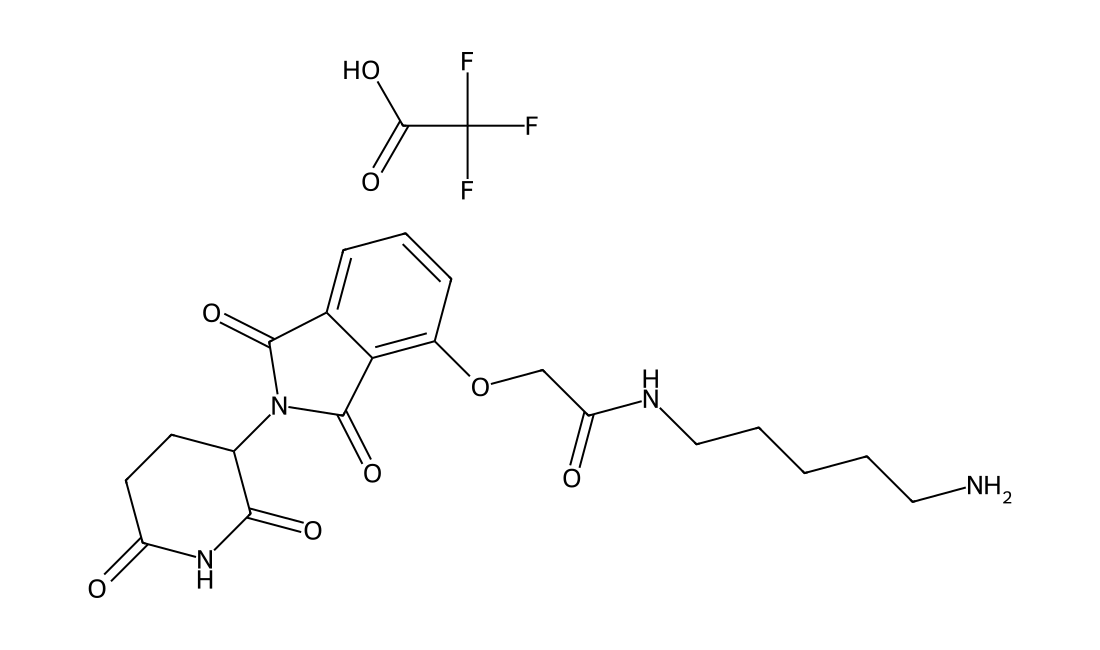
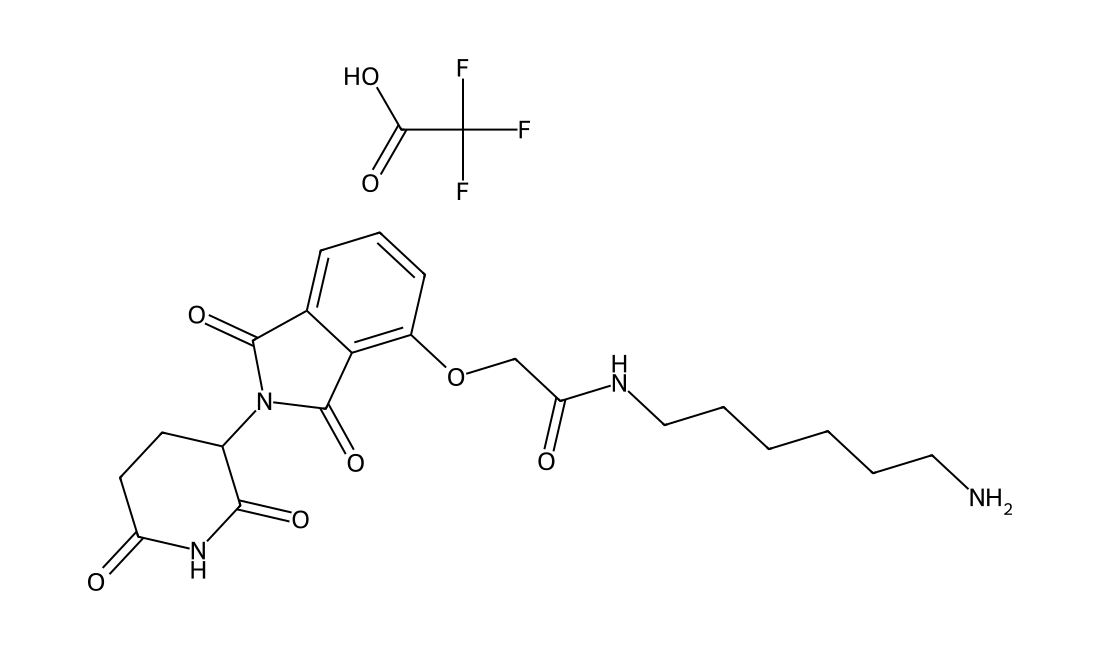
Thalidomide-O-amide-C5-NH2 TFA is a synthesized E3 ligase ligand-linker conjugate that incorporates the Thalidomide based cereblon ligand and a linker used in PROTAC technology.
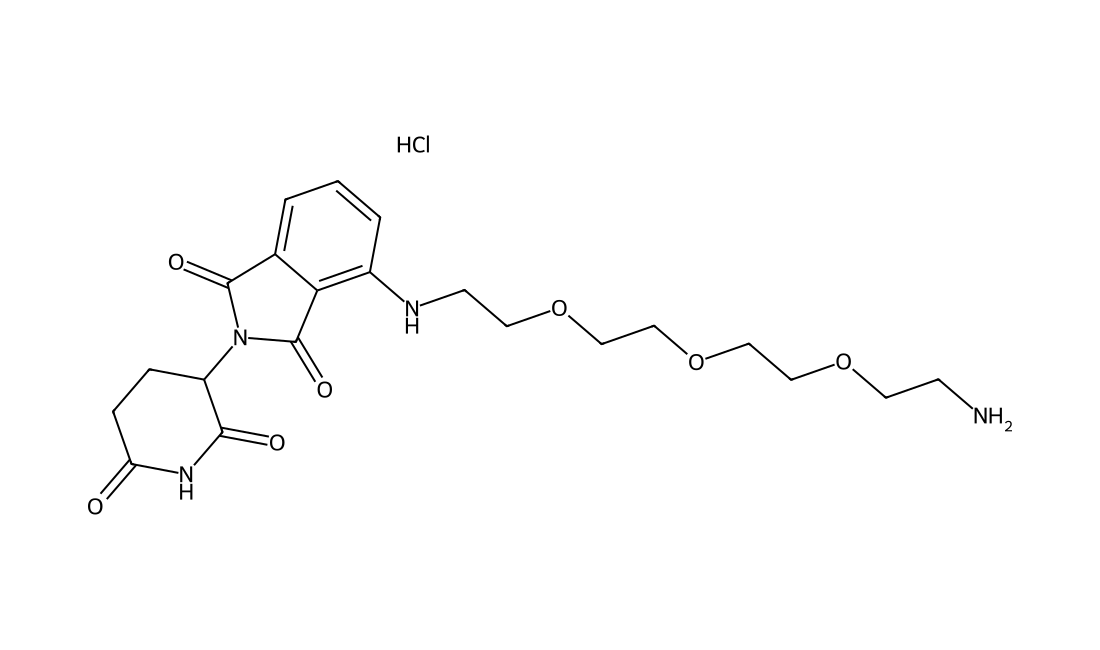
Pomalidomide-PEG3-C2-NH2 (Cereblon Ligand-Linker Conjugates 5) hydrochloride is a synthesized E3 ligase ligand-linker conjugate that incorporates the Pomalidomide based cereblon ligand and a linker used in PROTAC technology.
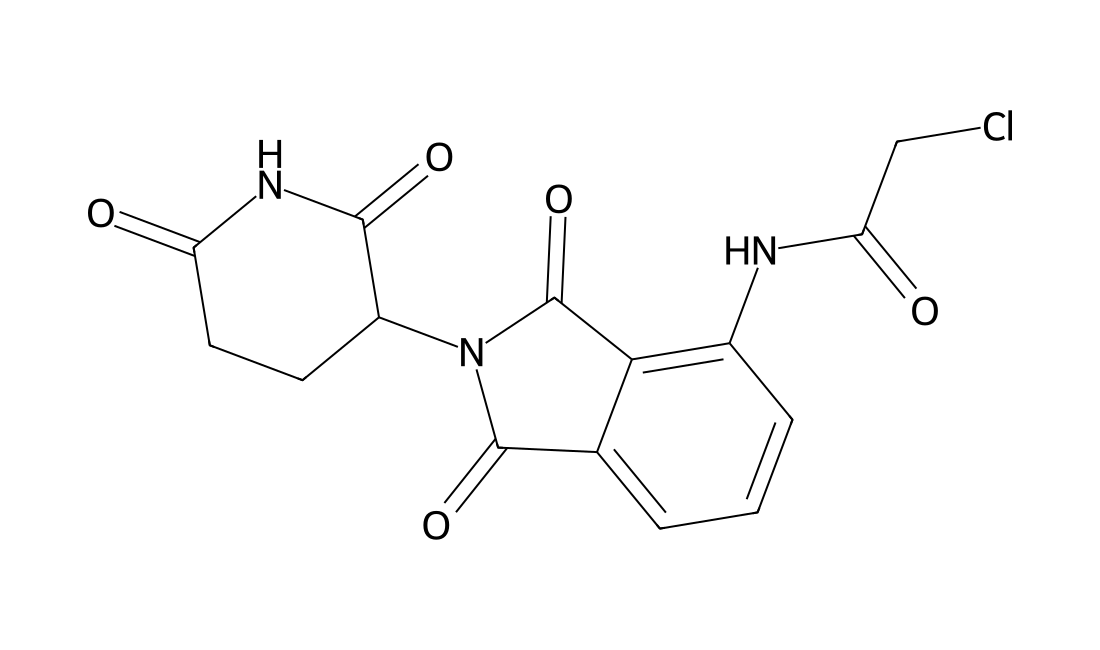
Pomalidomide-COCH2Cl is a pomalidomide derivative bearing a chloroacetamide group.
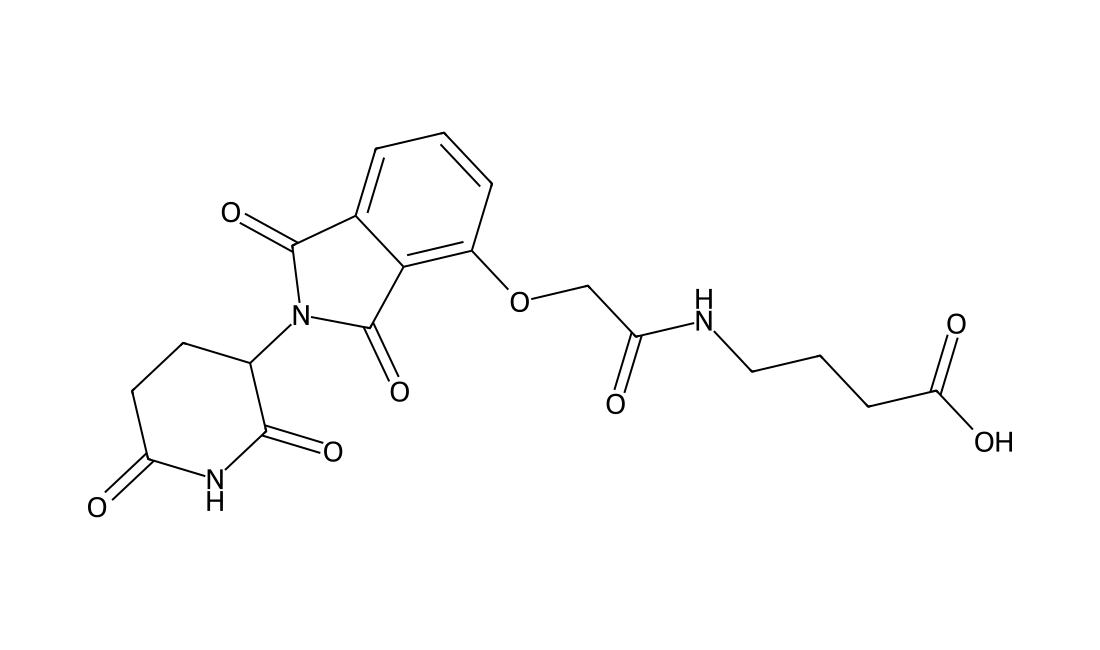
Thalidomide-O-amido-C3-COOH is a synthesized E3 ligase ligand-linker conjugate that incorporates the Thalidomide based cereblon ligand and a linker used in PROTAC technology.
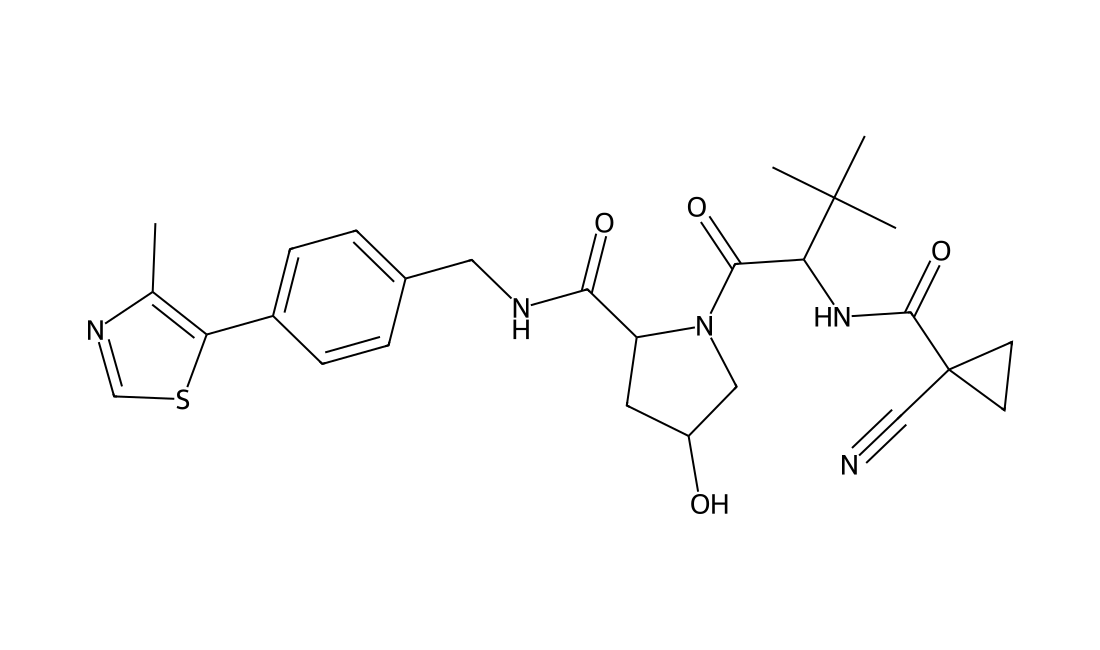
A potent, specific cell-active VHL E3 ubiquitin ligase inhibitor that inhibits VHL/HIF-α interaction with Kd of 90 nM in ITC assays.
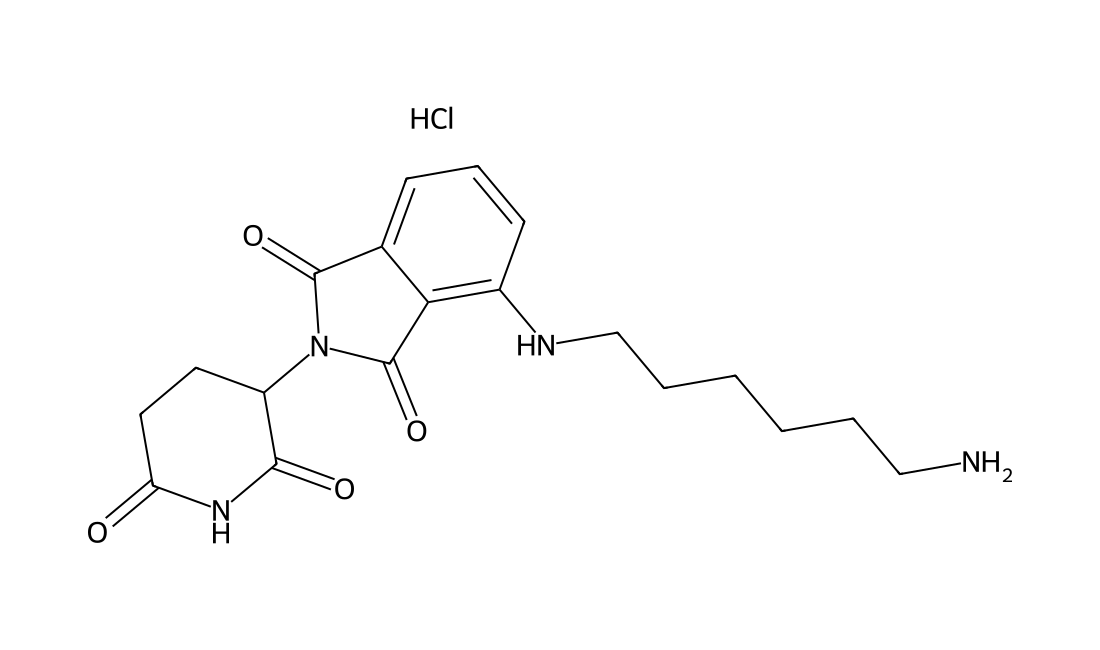
Thalidomide-NH-C6-NH2 hydrochloride is a synthesized E3 ligase ligand-linker conjugate that incorporates the Thalidomide based cereblon ligand and a linker used in PROTAC technology.
E3 Ligase Ligand-Linker Conjugates 25 Trifluoroacetate is a synthesized compound that incorporates an E3 ligase ligand and a linker used in PROTAC technology.
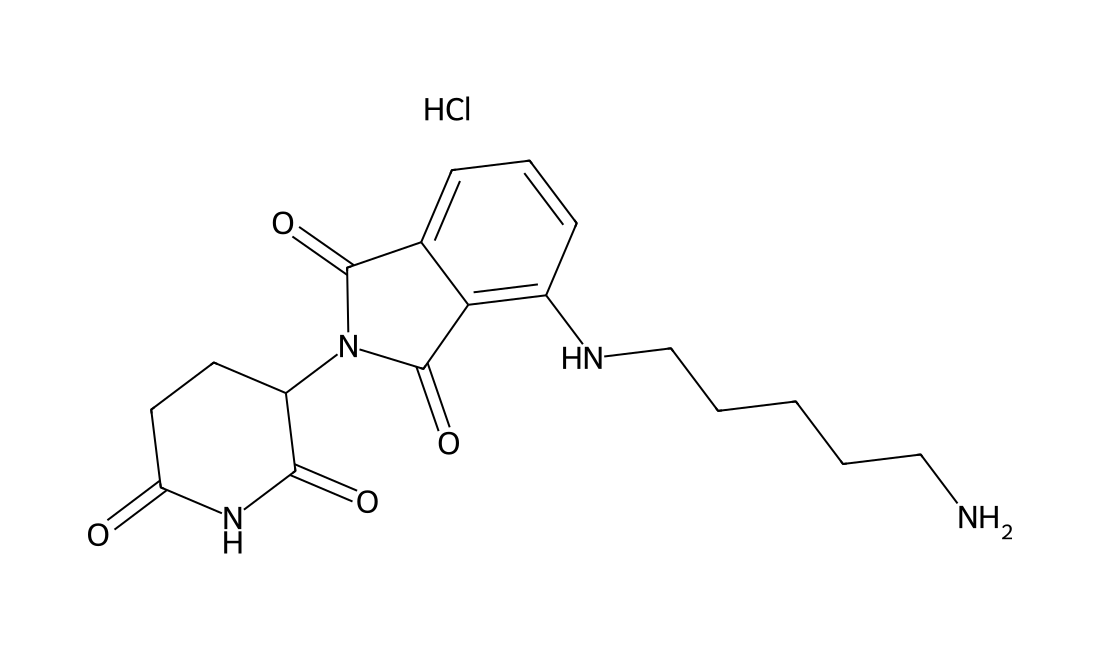
Thalidomide-NH-C5-NH2 hydrochloride is a synthesized E3 ligase ligand-linker conjugate that incorporates the Thalidomide based cereblon ligand and a linker used in PROTAC technology.
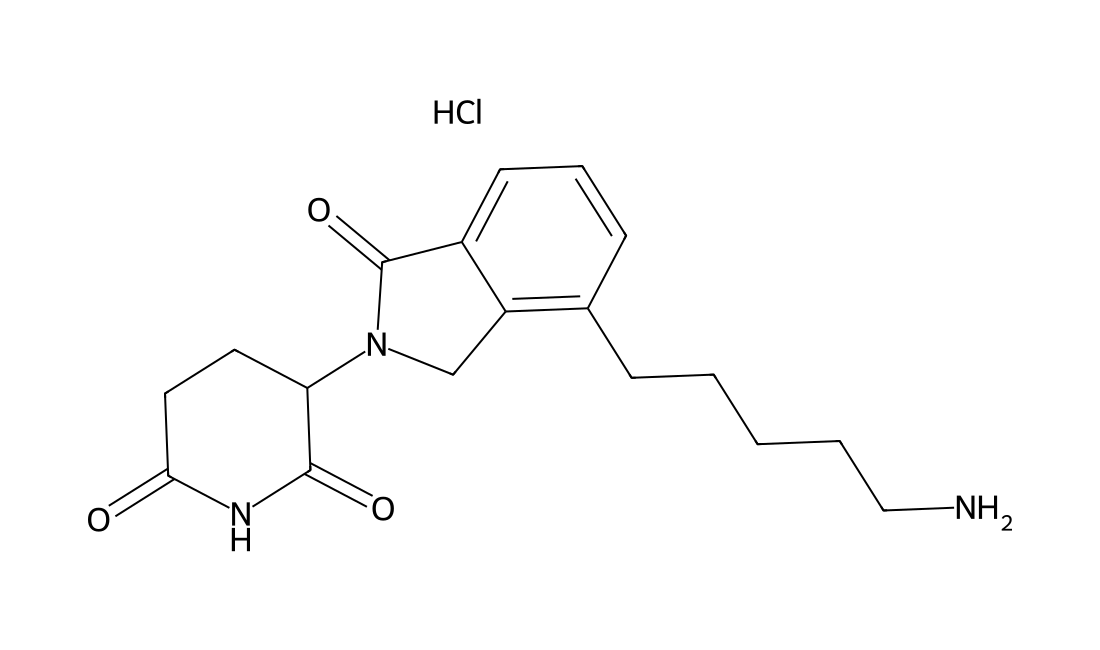
Lenalidomide-C5-NH2 hydrochloride is the Lenalidomide-based Cereblon ligand used in the recruitment of CRBN protein. Lenalidomide-C5-NH2 can be connected to the ligand for protein by a linker to form PROTACs, such as MDM2 PROTAC degrader.
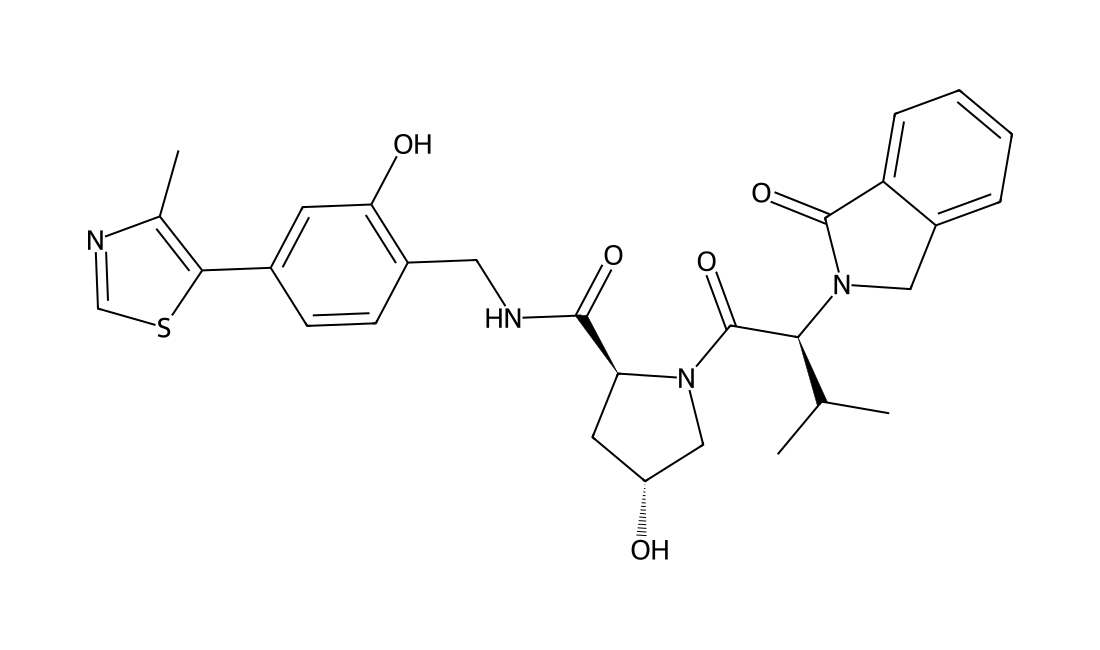
VL285 Phenol is a phenol-based analogue of VL285. The parent compound VL285 is a ligand of the VHL E3 ubiquitin ligase.
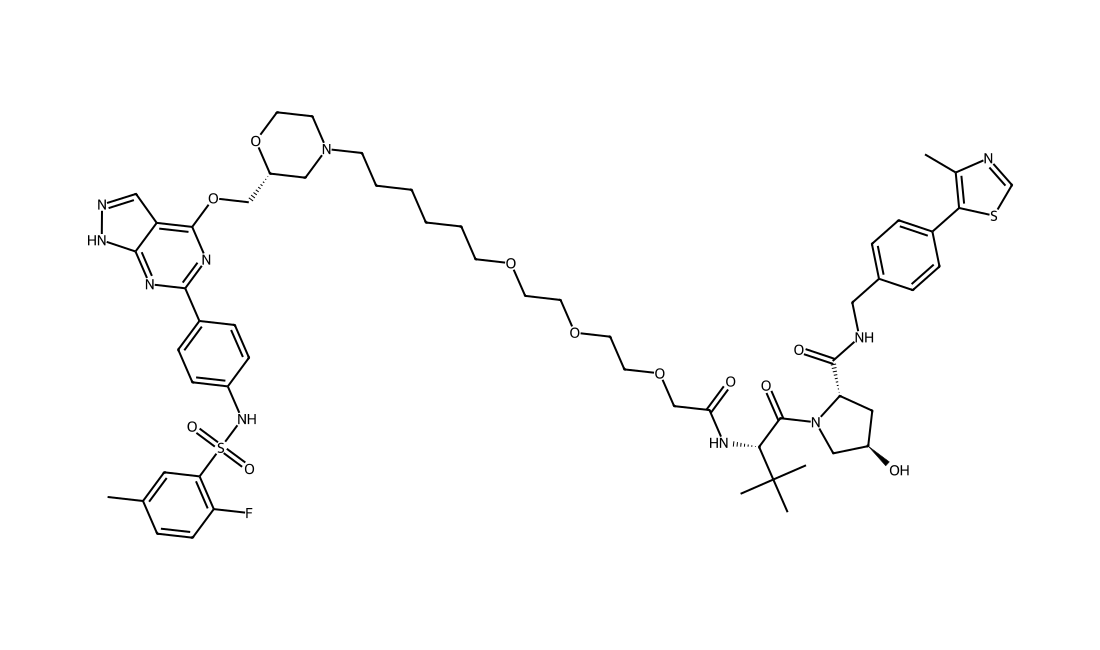
PROTAC SGK3 degrader-1 (SGK3-PROTAC1), is a potent SKG3 degrader based on PROTAC. PROTAC SGK3 degrader-1 (0.3 μM) induces 50% degradation of endogenous SGK3 within 2 hours, with maximal 80% degradation observed within 8 hours, accompanied by a loss of phosphorylation of NDRG1 (an SGK3 substrate).
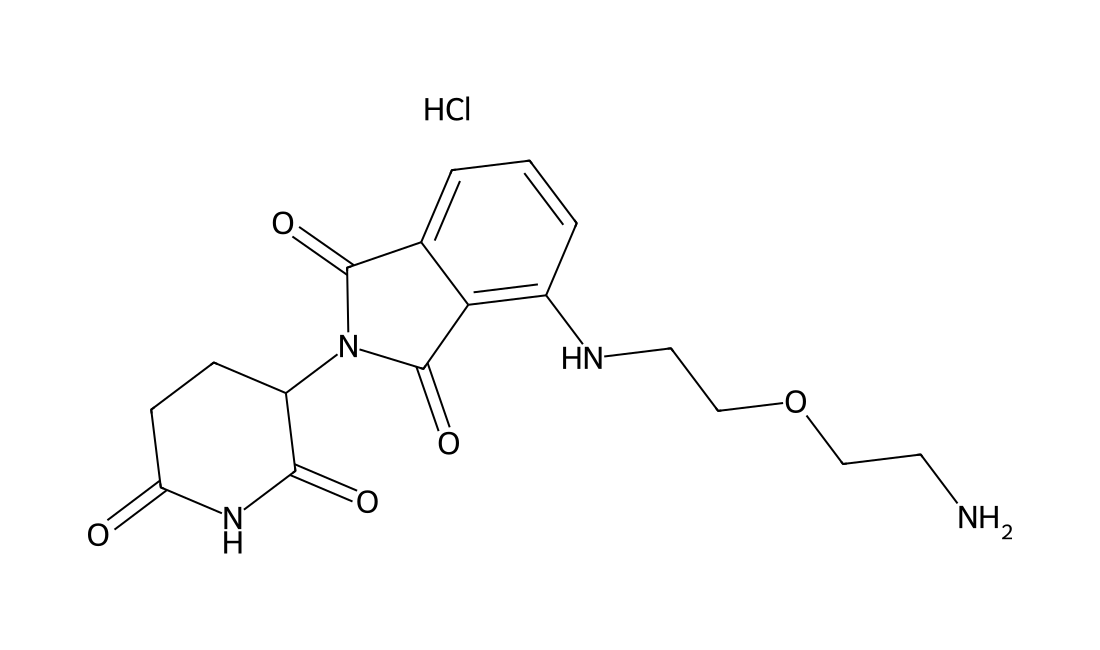
Thalidomide-NH-PEG1-NH2 hydrochloride is a synthesized E3 ligase ligand-linker conjugate that incorporates the Thalidomide based cereblon ligand and a linker used in PROTAC technology.
SJFα is a selective p38α PROTAC degrader with a DC50 of 7.16 nM and Dmax of 97.4%. SJFα is far less effective at degrading p38δ (DC50 = 299 nM). SJFαcan be used for the research of cancer, such as breast cancer.
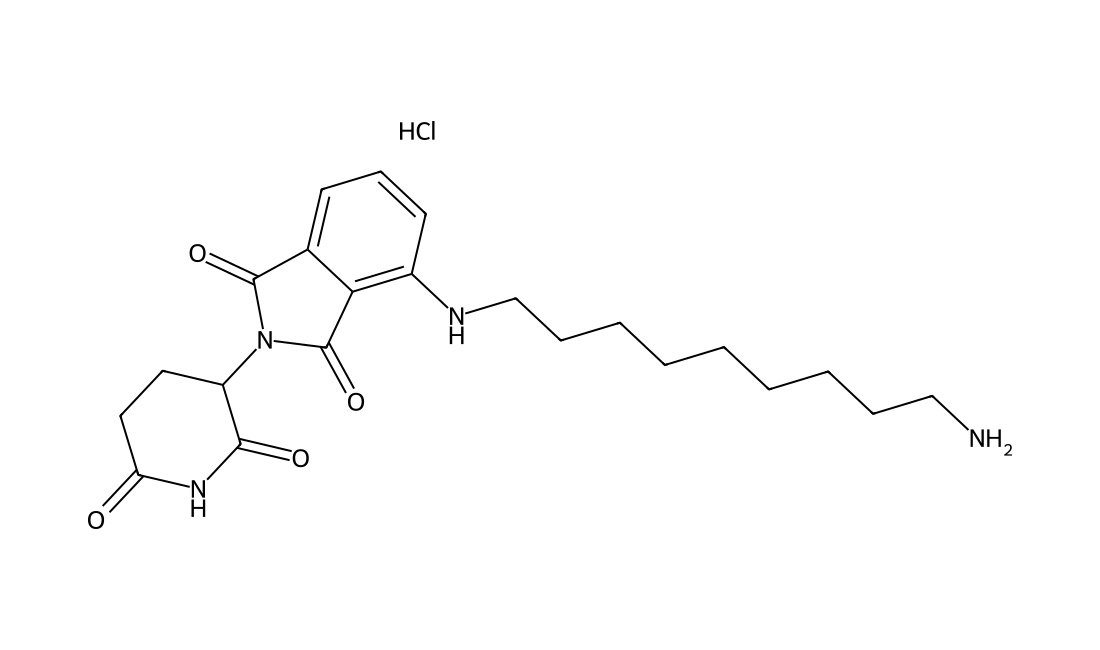
Thalidomide-NH-C9-NH2 hydrochloride is the Thalidomide (HY-10984)-based cereblon ligand used in the recruitment of CRBN protein.Thalidomide-NH-C9-NH2 hydrochloride can be connected to the ligand for protein by a linker to form PROTACs.
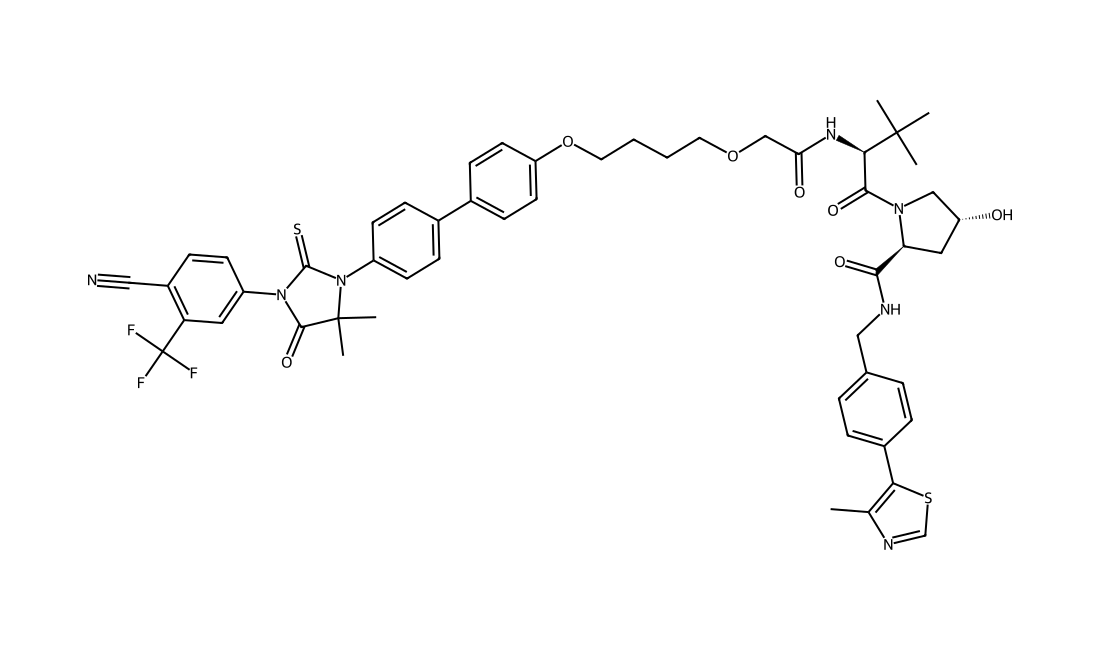
ARCC-4 is a low-nanomolar androgen receptor (AR) degrader based on PROTAC, with a DC50 of 5?nM. ARCC-4 is an enzalutamide-based von Hippel-Lindau (VHL)-recruiting AR PROTAC and outperforms enzalutamide. ARCC-4 effectively degrades clinically relevant AR mutants associated with antiandrogen therapy.
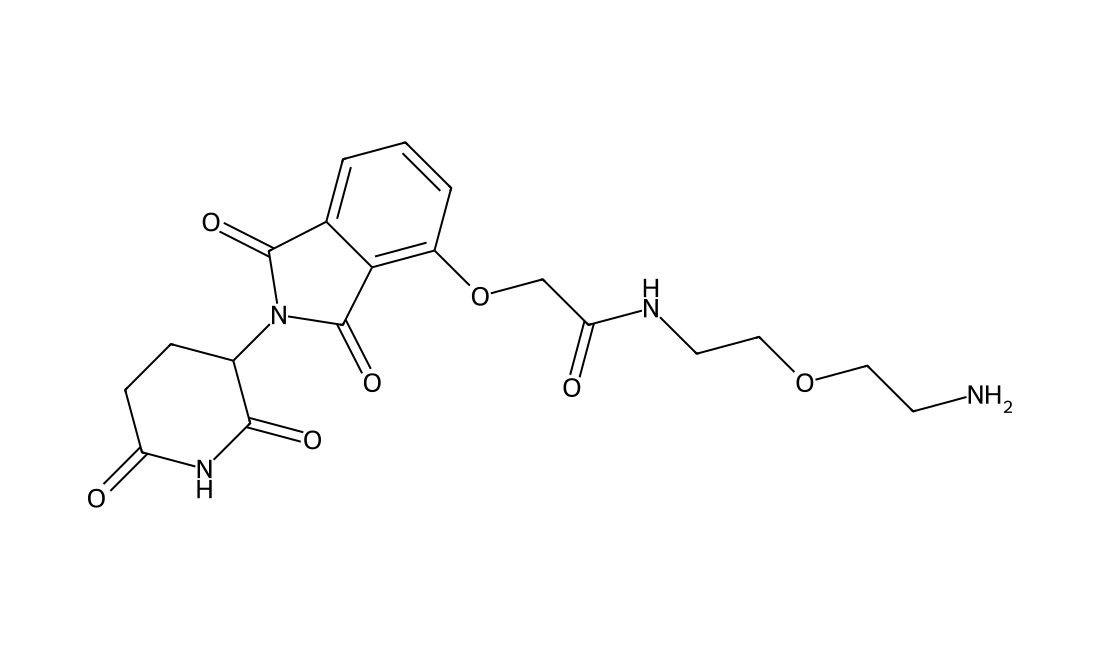
An E3 ligase ligand-linker conjugate for PROTAC..
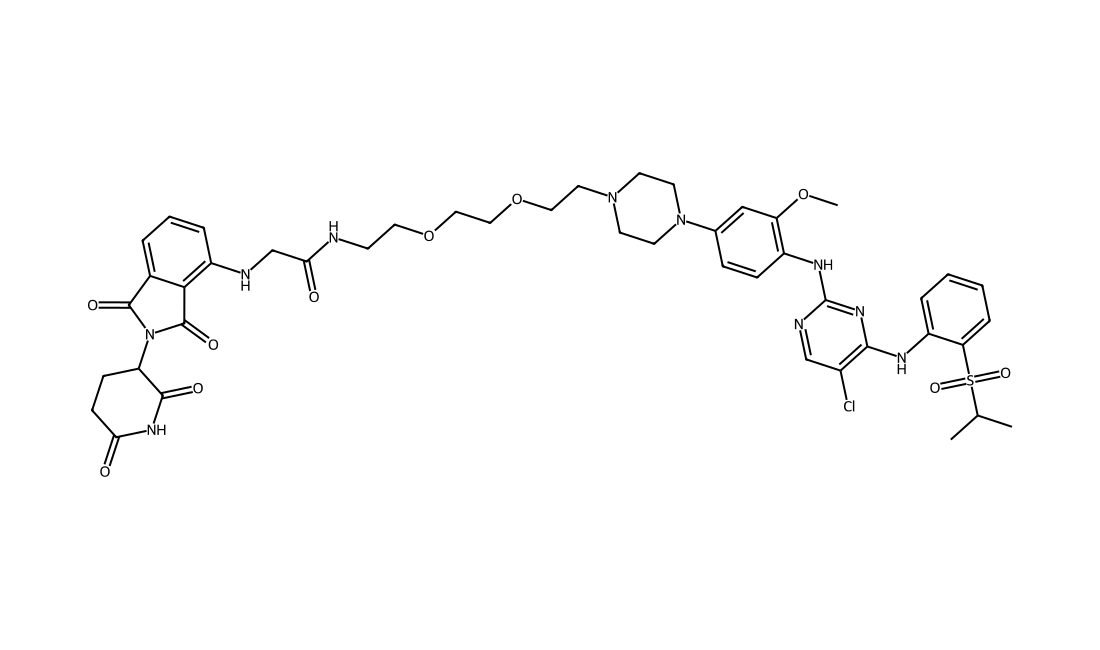
TL13-12 is a novel Anaplastic Lymphoma Kinase (ALK)-PROTAC developed through conjugation of TAE684 and the cereblon ligand pomalidomide.
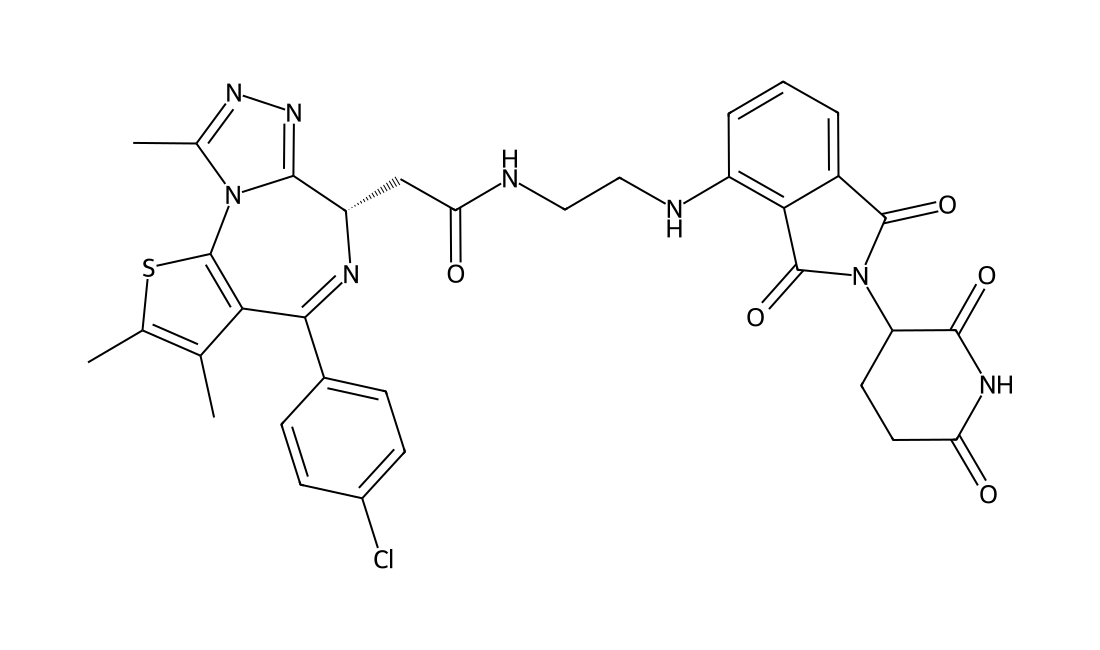
dBET57 is a novel BRD4 heterobifunctional small-molecule ligand (PROTAC), exhibits significant and selective degradation of BRD4 BD1 (DC50/5h=500 nM), but is inactive on BRD4 BD2..
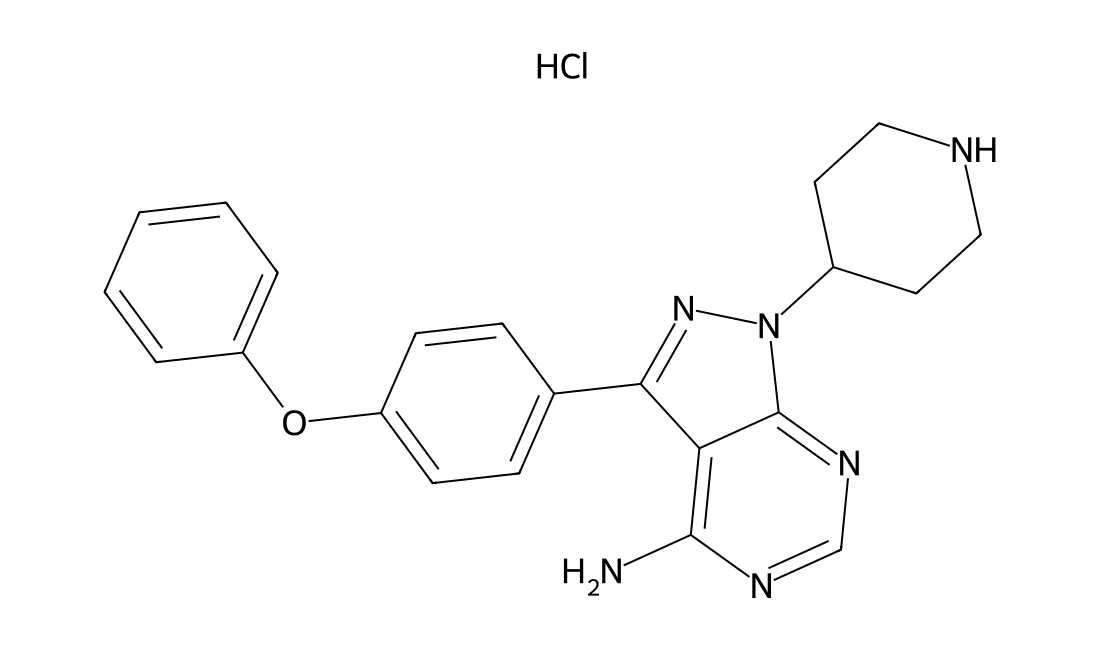
N-piperidine Ibrutinib hydrochloride (Compound 1) is a reversible Ibrutinib derivative. N-piperidine Ibrutinib hydrochloride is a potent BTK inhibitor with IC50s of 51.0 and 30.7 nM for WT BTK and C481S BTK, respectively. N-piperidine Ibrutinib hydrochloride can be used as a BTK ligand in the synthesis of a series of PROTACs, such as SJF620. SJF620 is a potent PROTAC BTK degrader with a DC50 of 7.9 nM.
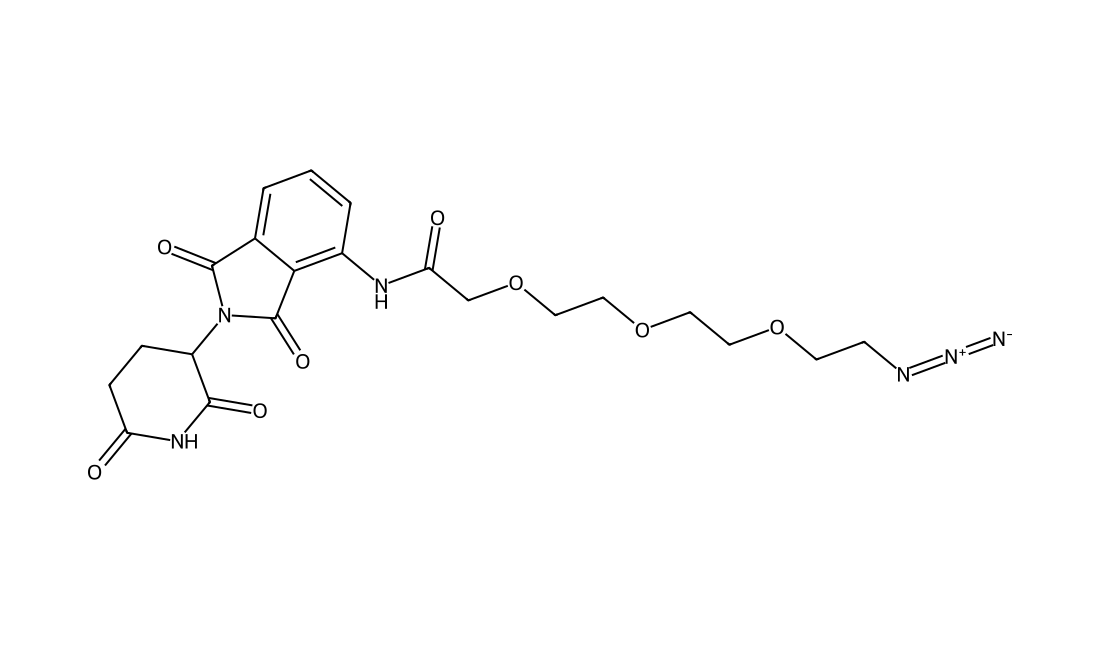
Pomalidomide-PEG3-azide is a synthesized E3 ligase ligand-linker conjugate that incorporates the Pomalidomide based cereblon ligand and 3-unit PEG linker used in PROTAC technology.
No products match this search.
Page 192 of 209 · Browse all 4176 products
Jump to a product page
Featured literature product: HX1 · DCL0028
HX1 is a hydroxyzine-derived ionizable lipid with acetal-containing tails, studied in lipid nanoparticles for brain mRNA delivery and CRISPR–Cas9 delivery. It was the lead in the reported in vivo brain-delivery screen; evidence is preclinical and formulation-dependent.
Read full formulation and performance →