
Research lipid catalog
Ionizable Lipid Products
Explore 848 lipid and RNA delivery products. Search the full catalog or browse by research category.
Search covers product name, catalog number, synonyms, available CAS numbers and categories. Spaces, hyphens and common punctuation are ignored. Duplicate legacy records are consolidated under one canonical product result.
3666 products · Showing 3001–3020 · 20 per page
DC Chemicals lipid expertise
Built for ionizable-lipid discovery and RNA delivery research
DC Chemicals supports formulation and delivery research with a broad, searchable portfolio of cationic and ionizable lipids. The current directory brings together 848 unique research-use products, with product specifications, pricing, chemical structures and literature-linked formulation data added as each record is verified.
Our experience spans complex lipid synthesis, purification, analytical release and process development. For custom molecules or larger-scale requirements, our team can discuss route development, technical specifications and scale-up options for the intended research workflow.
Learn about cationic and ionizable lipids →Proprietary innovation · Co-development · GMP
From proprietary lipid design to GMP-grade custom synthesis
DC Chemicals has independently developed ionizable-lipid structures supported by company-owned intellectual property, and selected proprietary lipid programs have advanced to GMP-stage development.
We welcome joint development with customers—from molecular design and lipid synthesis through route and process development. We can also support custom synthesis of GMP-grade ionizable lipids to agreed technical specifications and quality requirements.
Discuss a co-development project →Proprietary ionizable-lipid structuresCollaborative molecular designCustom lipid synthesisProcess development and scale-upGMP-grade project support
Product quick links
Explore ionizable lipids
Browse specifications, pricing and literature-linked product information.
Cat. No.Product NameField of ApplicationChemical Structure
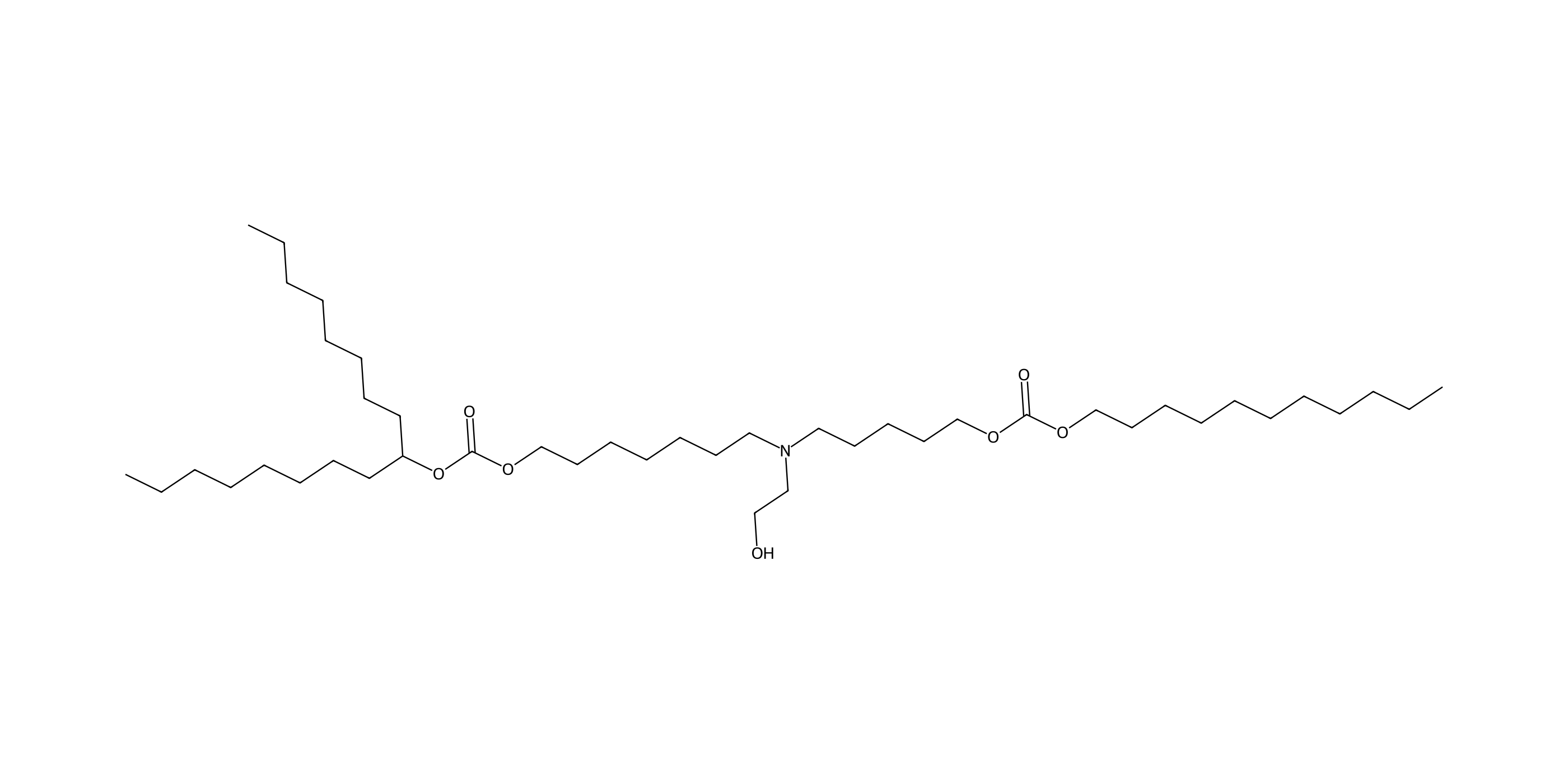
Ionizable lipid-3( SM-102 analogu) is a cationic lipid for nucleic acid delivery, with the ability to form lipid nanoparticle mRNA vaccines that exhibit in vitro stability and immunostimulatory activity.This SM-102 analogue retains the ionizable tertiary amine and asymmetric hydrophobic architecture while replacing the ester linkages with carbonate groups and repositioning the hydroxyl functionality. These modifications are designed to tune biodegradability, membrane interactions, and LNP delivery performance.
AA-T3A-C12Featured
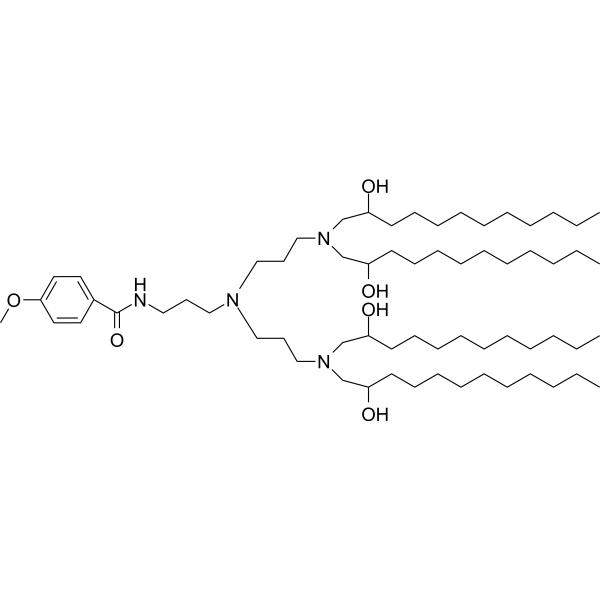
AA-T3A-C12 is a leading anisamide-tethered lipidoid (AA-lipidoid) identified through a combinatorial library screening for targeted RNA delivery to activated fibroblasts, offering a promising approach to treat liver fibrosis.AA-T3A-C12 is a leading anisamide-tethered lipidoid (AA-lipidoid) identified through a combinatorial library screening for targeted RNA delivery to activated fibroblasts, offering a promising approach to treat liver fibrosis. It is synthesized via a one-pot, two-step modular method that combines anisamide—a ligand for sigma receptors overexpressed on activated hepatic stellate cells (HSCs)—with a T3A polyamine core and C12 epoxide tails, enabling efficient siRNA encapsulation in lipid nanoparticles (LNPs). In vitro, AA-T3A-C12 LNPs exhibit enhanced cellular uptake and gene silencing in activated fibroblasts, dependent on sigma receptor binding, as confirmed by haloperidol blockade studies, and outperform non-targeted analogs and the FDA-approved MC3 LNPs in fibroblast selectivity.In a mouse model of CCl4-induced liver fibrosis, AA-T3A-C12/siHSP47 LNP achieves approximately 65% knockdown of heat shock protein 47 (HSP47), a key fibrotic target, leading to significant reduction in collagen deposition and fibrosis alleviation, with a good safety profile and no exacerbation of liver injury.
ALC-0315 analogue-2Featured
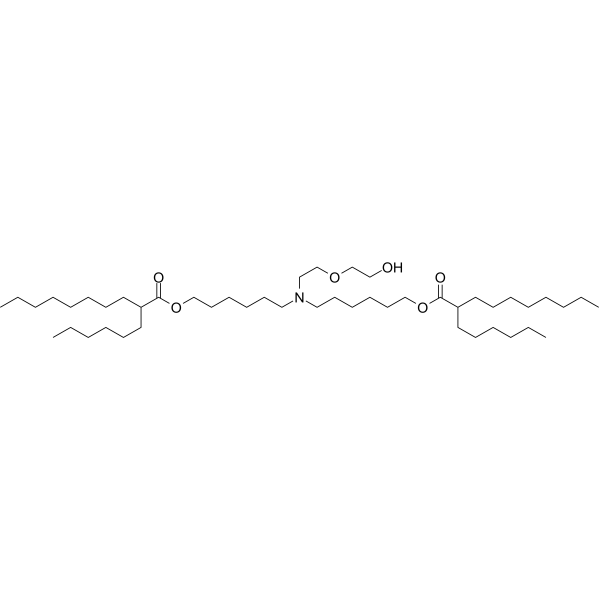
ALC-0315 analogue-2 is an analogue of ALC-0315. ALC-0315 is an ionisable aminolipid that is responsible for mRNA compaction and aids mRNA cellular delivery and its cytoplasmic release through suspected endosomal destabilization. ALC-0315 can be used to form lipid nanoparticle (LNP) delivery vehicles. Lipid-Nanoparticles have been used in the research of mRNA COVID-19 vaccine.
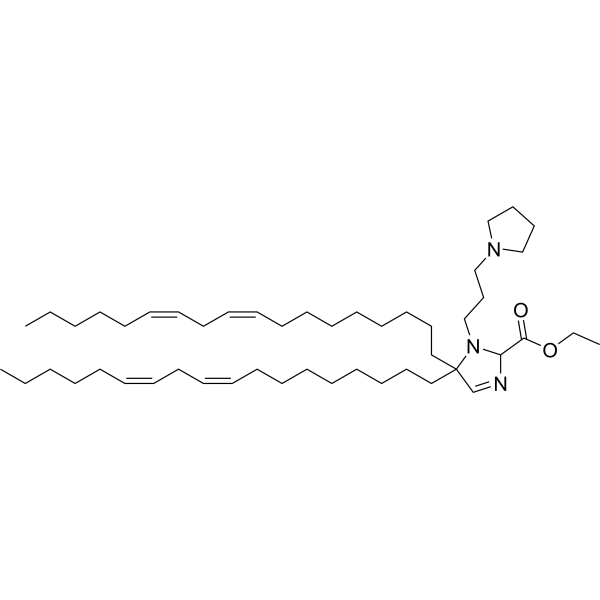
A2-Iso5-4DC19 is a lipidoid compound. A2-Iso5-4DC19 is an effective carrier for the delivery of an agent such as a polynucleotide to a cell.
Lipid 15Featured
Lipid 15 is an ionizable amino lipid used for the generation of Lipid nanoparticles .
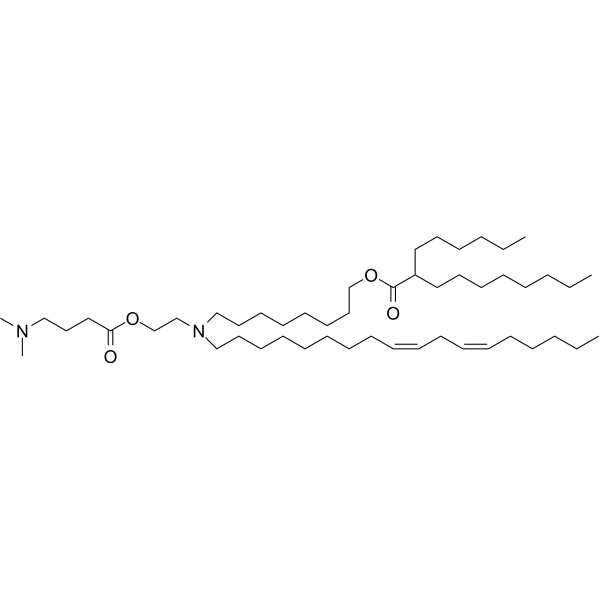
ALC-0315 analgous-3Featured
ALC-0315 analgous-3 is an butanolamine ionizable lipid with both ester bonds located adjacent to C8 relative to the amine head. The introduction of ester linkages can improve the clearance of the lipid in the liver. This compound is analgous to ALC-0315.
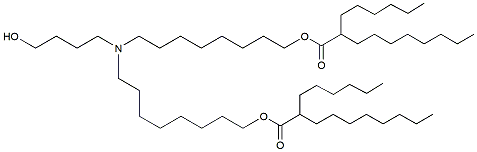
BP Lipid 114Featured
BP Lipid 114 is a well-designed ionizable lipid optimized for mRNA encapsulation and delivery. Its ethanolamine headgroup, ester bonds at the C6 and C8 positions, and 9-carbon tail contribute to efficient mRNA complexation, stability during delivery, and improved biodegradability. These properties make it a valuable component in LNPs for gene therapy and other mRNA-based therapeutic applications.
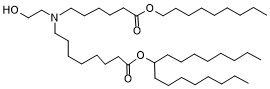
BP Lipid 135Featured
BP Lipid 135 is a well-designed ionizable lipid optimized for mRNA encapsulation and delivery. Its propanolamine headgroup, ester bonds at the C8 position, and 9-carbon tail contribute to efficient mRNA complexation, stability during delivery, and improved biodegradability. These properties make it a valuable component in LNPs for gene therapy and other mRNA-based therapeutic applications.
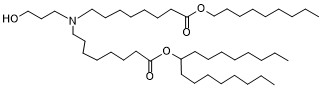
Acuitas Lipid III-2Featured
Acuitas Lipid III-2 is an ionizable amine lipid with two identical ester tails adjacent to C6 position relative to amine from patent:WO2017075531A1 with the similar activity as ALC-0315. The head of lipid is propanolamine which can effectively encapsulate mRNA used in gene therapies which depends on the availability of a safe and efficient delivery vehicle.
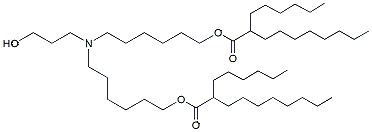
SM102 Analog 1Featured
An analog of SM-102. The ethanolamine amino lipid head enhances encapsulation of mRNA. The lipid has primary esters at C7 position relative to the amine nitrogen. The primary lipid tail has 8 carbon tail. The lipid can be used for mRNA-based therapies which depends on the availability of a safe and efficient delivery vehicle.
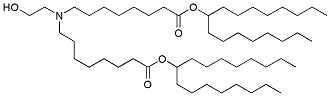
CL15F6Featured
CL15F6 is an ionizable cationic lipid (pKa = 6.75).1 It has been used in the formation of lipid nanoparticles (LNPs) for the delivery of mRNA and polymer-lipid hybrid nanoparticles for the delivery of plasmid DNA in vitro.1,2
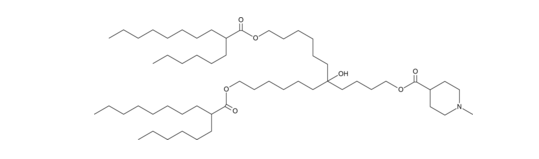
Lipid 29 analogue-2(Lipid 16)Featured
Lipid 29 analogue-2 is an ionizable lipid designed for the delivery of RNA-based therapeutics, such as mRNA or siRNA.
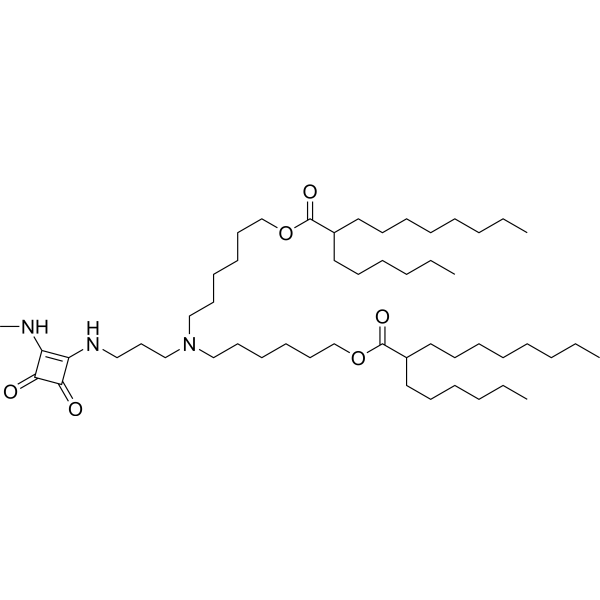
Acuitas Lipid III-25Featured
Acuitas Lipid III-25 is an novel ionizable amine lipid used for mRNA delivery from Acuitas Therapeutics patent US 10,166,298 B2, with pKa 6.22, Liver Luc 1648 for 0.3mgkg(ng luc/g liver), Liver Luc 13880 for 1mgkg(ng luc/g liver) . It is an analgous of ALC-0315, showing higher activity than ALC-0315.
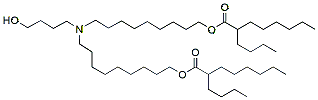
Acuitas II-12Featured
Acuitas II-12 is an novel ionizable amine lipid used for mRNA delivery from Acuitas Therapeutics patent WO2016176330A1
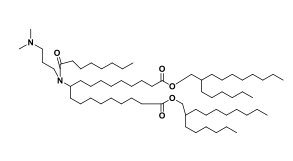
Acuitas Lipid III-7Featured
Acuitas Lipid III-7 is an novel ionizable amine lipid used for mRNA delivery from Acuitas Therapeutics patent US 10,166,298 B2.
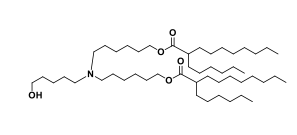
Moderna Lipid 26(Lipid M)Featured
Moderna Lipid 26(Lipid M) is an ionizable cationic lipid (pKa = 6.75) that has been used in the generation of lipid nanoparticles (LNPs) for mRNA delivery in vivo. LNPs containing lipid M and encapsulating mRNA encoding influenza virus genes increase anti-influenza virus IgG titers in cynomolgus monkeys without inducing local edema, erythema, or systemic levels of IL-6.
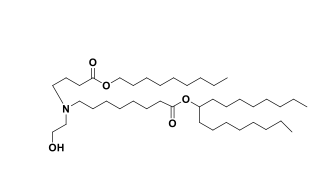
Moderna Lipid 48Featured
Moderna Lipid 48 is an novel ionizable amine lipid used for mRNA delivery from Moderna patent WO2017049245A2
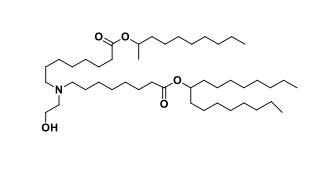
Moderna Lipid compound 182(Lipid 29 analogue-1) is a novel ionizable amine lipid developed by Moderna for the delivery of mRNA-based therapeutics. This lipid is part of Moderna's proprietary lipid nanoparticle (LNP) delivery platform, which is designed to encapsulate and protect mRNA, facilitate its cellular uptake, and enable efficient intracellular release. The ionizable nature of Lipid Compound 182 allows it to interact with mRNA at low pH (during LNP formulation) and release the payload in the neutral pH environment of the cytoplasm, making it a critical component of Moderna's mRNA delivery system.
Lipid 29 analogue-3Featured
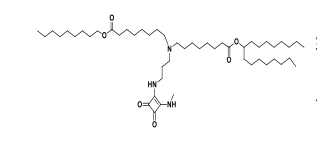
Lipid 29 analogue-3 is an ionizable lipid designed for the delivery of RNA-based therapeutics, such as mRNA or siRNA.
Lipid TG4CFeatured
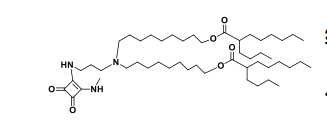
TG4C is an ionizable cationic lipid (pKa 6.71) optimized for mRNA delivery via lipid nanoparticles (LNPs). When formulated into LNPs carrying human EPO mRNA, it significantly elevates serum EPO levels in mice. Furthermore, aerosolized TG4C-based LNPs containing HGF mRNA demonstrate therapeutic potential in pulmonary emphysema models, showing reduced inflammatory cytokines (IL-1β, IL-6, TNF-α) in bronchoalveolar lavage fluid after elastase-induced lung injury.
No products match this search.
Page 151 of 184 · Browse all 3666 products