
Research lipid catalog
Ionizable Lipid Products
Explore 848 lipid and RNA delivery products. Search the full catalog or browse by research category.
Search covers product name, catalog number, synonyms, available CAS numbers and categories. Spaces, hyphens and common punctuation are ignored. Duplicate legacy records are consolidated under one canonical product result.
3666 products · Showing 2281–2300 · 20 per page
DC Chemicals lipid expertise
Built for ionizable-lipid discovery and RNA delivery research
DC Chemicals supports formulation and delivery research with a broad, searchable portfolio of cationic and ionizable lipids. The current directory brings together 848 unique research-use products, with product specifications, pricing, chemical structures and literature-linked formulation data added as each record is verified.
Our experience spans complex lipid synthesis, purification, analytical release and process development. For custom molecules or larger-scale requirements, our team can discuss route development, technical specifications and scale-up options for the intended research workflow.
Learn about cationic and ionizable lipids →Proprietary innovation · Co-development · GMP
From proprietary lipid design to GMP-grade custom synthesis
DC Chemicals has independently developed ionizable-lipid structures supported by company-owned intellectual property, and selected proprietary lipid programs have advanced to GMP-stage development.
We welcome joint development with customers—from molecular design and lipid synthesis through route and process development. We can also support custom synthesis of GMP-grade ionizable lipids to agreed technical specifications and quality requirements.
Discuss a co-development project →Proprietary ionizable-lipid structuresCollaborative molecular designCustom lipid synthesisProcess development and scale-upGMP-grade project support
Product quick links
Explore ionizable lipids
Browse specifications, pricing and literature-linked product information.
Cat. No.Product NameField of ApplicationChemical Structure
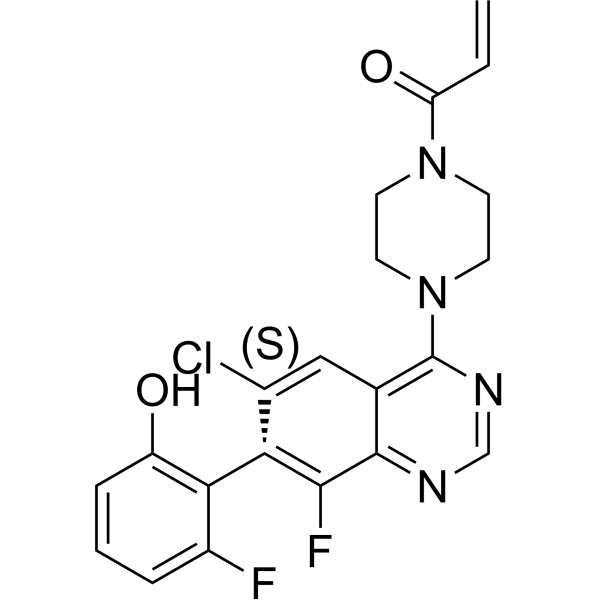
ARS-1620Featured
1g USD 2,900 · 250 mg USD 1,700 · 100 mg USD 900 · 10 mM * 1 mL in DMSO USD 220ARS-1620 is an atropisomeric selective KRASG12C inhibitor with desirable pharmacokinetics.
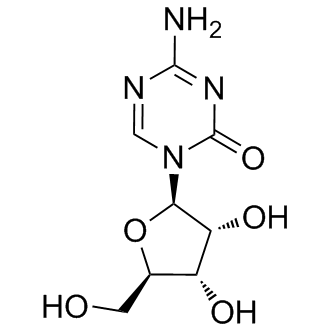
5-AzacytidineFeatured
1 g USD 200 · 10 mM * 1 mL in DMSO USD 1505-Azacytidine is a nucleoside analogue of cytidine that specifically inhibits DNA methylation by trapping DNA methyltransferases.
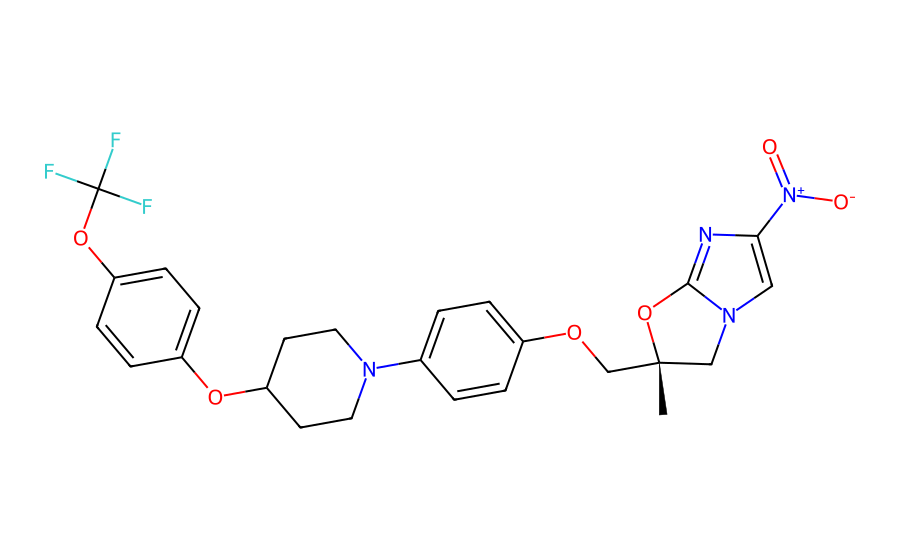
Delamanid (OPC-67683)Featured
100 mg USD 350 · 250 mg USD 600 · 1 g USD 1,350 · 10 mM * 1 mL in DMSO USD 150Delamanid, a newer mycobacterial cell wall synthesis inhibitor, inhibits the synthesisi of mucolic acids, cruciala component of the cell wall of the Mycobacterium tuberculosis complex.
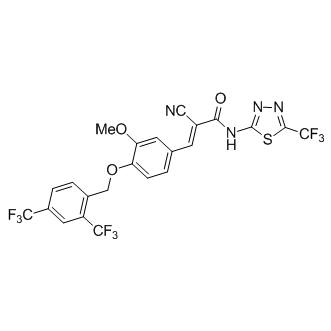
XCT790Featured
100 mg USD 450 · 250 mg USD 850 · 1 g USD 1,800 · 10 mM * 1 mL in DMSO USD 220XCT-790 is a potent, selective and inverse agonist of estrogen-related receptor alpha(ERRα); induces cell death in chemotherapeutic resistant cancer cells.XCT-790 induced cell death in HepG2 hepatocarcinoma and its multi-drug resistance (MDR) sub-line R-HepG2. Using a dye Mitotracker Green which stains mitochondrion independent of mitochondrial membrane potential (DeltaPsi(m)), XCT-790 dose-dependently decreased mitochondrial mass. Intriguingly, XCT-790 increased DeltaPsi(m) upon short term treatment but decreased DeltaPsi(m) upon longer term treatment. XCT-790 synergized with paclitaxel to induce cell death in multi-drug resistance sub-line R-HepG2 [1].XCT790 is a potent and specific inverse agonist of ERRα. XCT790 shows no significant antagonist activity on related nuclear receptors, such as ERR or ERα at concentrations below 10 μM. This also inhibits the constitutive activity of ER (Estrogen Receptor) [2].
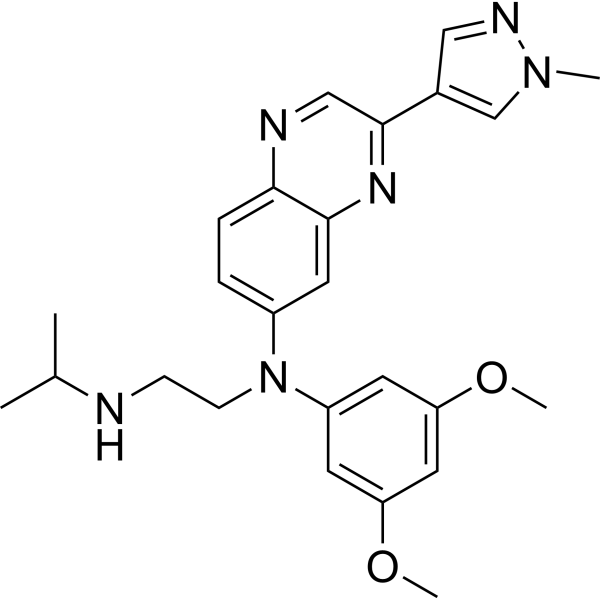
ErdafitinibFeatured
100 mg USD 400 · 250 mg USD 700 · 1 g USD 1,400 · 10 mM * 1 mL in DMSO USD 150Erdafitinib (JNJ-42756493) is a potent and orally available FGFR family inhibitor; inhibits FGFR1/2/3/4 with IC50s of 1.2, 2.5, 3.0 and 5.7 nM, respectively.
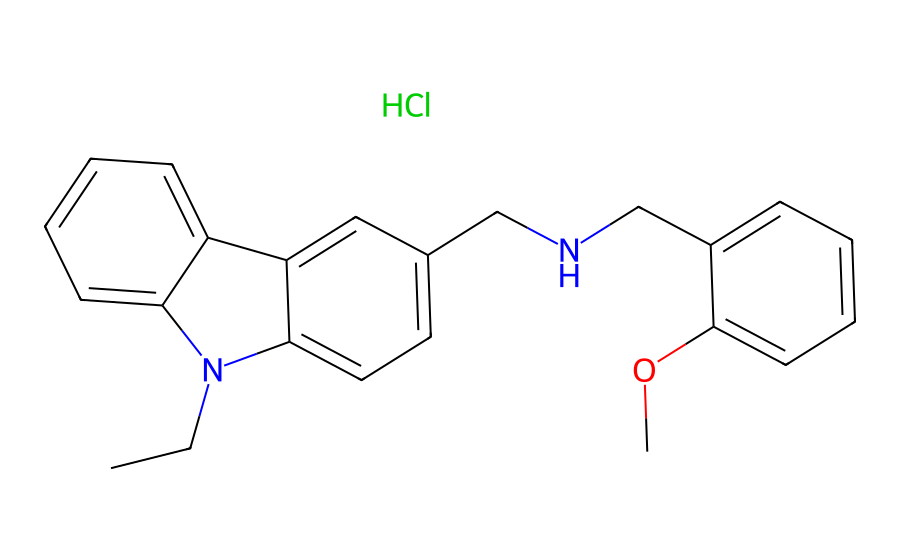
HLCL-61 hydrochlorideFeatured
100 mg USD 400 · 250 mg USD 650 · 1 g USD 1,200 · 10 mM * 1 mL in DMSO USD 150HLCL-61 hydrochloride is a first-in-class small-molecule inhibitor of PRMT5. Target: PRMT5in vitro: HLCL-61 shows effective inhibition of symmetric arginine dimethylation (me2) of histones H3 and H4 in AML samples, starting at 12 h post-treatment and persisting after 48 h. Treatment of AML cell lines (MV4-11 and THP-1) and primary blasts with HLCL-61 also resulted in a decrease of cell viability. HLCL-61 is also effective in promoting apoptosis in MV4-11 and THP-1 cells after 48 h.[1]
Ranolazine (Ranexa)Featured
100 mg USD 250 · 250 mg USD 500 · 1 g USD 1,000 · 10 mM * 1 mL in DMSO USD 150Ranolazine is an antianginal medication.Target: Sodium ChannelRanolazine is believed to have its effects via altering the transcellular late sodium current. It affects the sodium-dependent calcium channels during myocardial ischemia in rabbits by altering the intracellular sodium level [1]. Thus, ranolazine indirectly prevents the calcium overload that causes cardiac ischemia in rats [2]. The effects of ranolazine on the NaV 1.7 and NaV 1.8 sodium channels also make it potentially useful in the treatment of neuropathic pain. Ranolazine produced dose-dependant analgesia on mechanical allodynia induced by CFA injection, but had no effect on thermal hyperalgesia [3, 4].

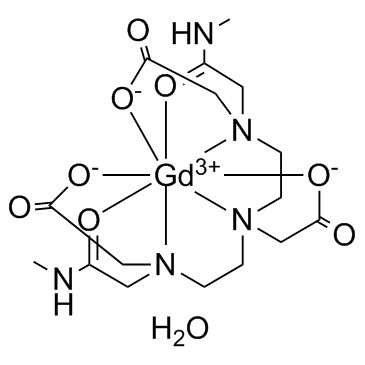
Gadodiamide (Omniscan)Featured
100 mg USD 250 · 250 mg USD 500 · 1 g USD 1,000 · 10 mM * 1 mL in DMSO USD 150For the detailed information of Gadodiamide (Omniscan), the solubility of Gadodiamide (Omniscan) in water, the solubility of Gadodiamide (Omniscan) in DMSO, the solubility of Gadodiamide (Omniscan) in PBS buffer, the animal experiment(test) (test) of Gadodiamide (Omniscan), the cell expriment (test) of Gadodiamide (Omniscan), the in vivo, in vitro and clinical trial test of Gadodiamide (Omniscan), the EC50, IC50,and Affinity of Gadodiamide (Omniscan),, please contact DC Chemicals.
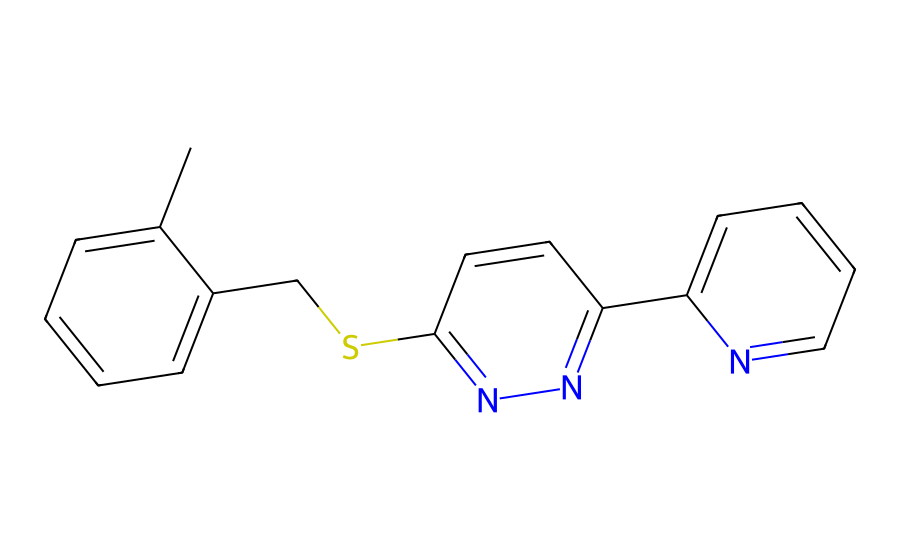
LDN-212320Featured
100 mg USD 400 · 250 mg USD 800 · 1 g USD 1,600 · 10 mM * 1 mL in DMSO USD 150LDN-212320(OSU-0212320) is a glutamate transporter EAAT2 activator; enhances EAAT2 levels by > 6 fold at concentrations < 5 μM after 24 h.IC50 value: 1.83 uM(EC50) [2]Target: EAAT2 activatorin vitro: LDN/OSU-0212320 increased EAAT2 protein levels in a dose-dependent(EC50=1.83 ± 0.27 μM) and time-dependent manner. LDN/OSU-0212320 increased EAAT2 protein levels and glutamate uptake function, but did not affect EAAT1 or EAAT3 protein levels. LDN/OSU-0212320 treatment markedly prevented neuronal loss and degeneration, as assessed by MAP2 immunostaining [2]. in vivo: After a single i.p. 40-mg/kg dose of LDN/OSU-0212320, EAAT2 protein levels and associated glutamate uptake increased by approximately 1.5- to 2-fold at 2 hours and by approximately 2- to 3-fold between 8 and 24 hours after injection. Even 72 hours after injection, an approximately 1.5-fold increase in EAAT2 protein levels could still be detected (data not shown). In addition, we found that LDN/OSU-0212320–induced EAAT2 protein levels and glutamate uptake were dose dependent [2].Small-molecule activator of glutamate transporter EAAT2 translation provides neuroprotectionBy Kong, Qiongman; Chang, Ling-Chu; Takahashi, Kou; Liu, Qibing; Schulte, Delanie A.; Lai, Liching; Ibabao, Brian; Lin, Yuchen; Stouffer, Nathan; Das Mukhopadhyay, Chitra; et alFrom Journal of Clinical Investigation (2014), 124(3), 1255-1267. Structure-activity relationship study of pyridazine derivatives as glutamate transporter EAAT2 activatorsBy Xing, Xuechao; Chang, Ling-Chu; Kong, Qiongman; Colton, Craig K.; Lai, Liching; Glicksman, Marcie A.; Lin, Chien-Liang Glenn; Cuny, Gregory D. From Bioorganic & Medicinal Chemistry Letters (2011), 21(19), 5774-5777.
PF-01247324Featured
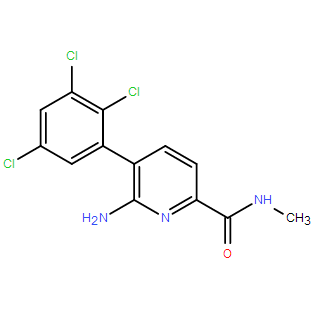
100 mg USD 450 · 250 mg USD 780 · 1 g USD 1,600 · 10 mM * 1 mL in DMSO USD 220PF-01247324 is an orally bioavailable, selective and potent NaV1.8 channel blocker that inhibits that exhibits analgesic efficacy in rodent behavioral models of pain.
B02Featured
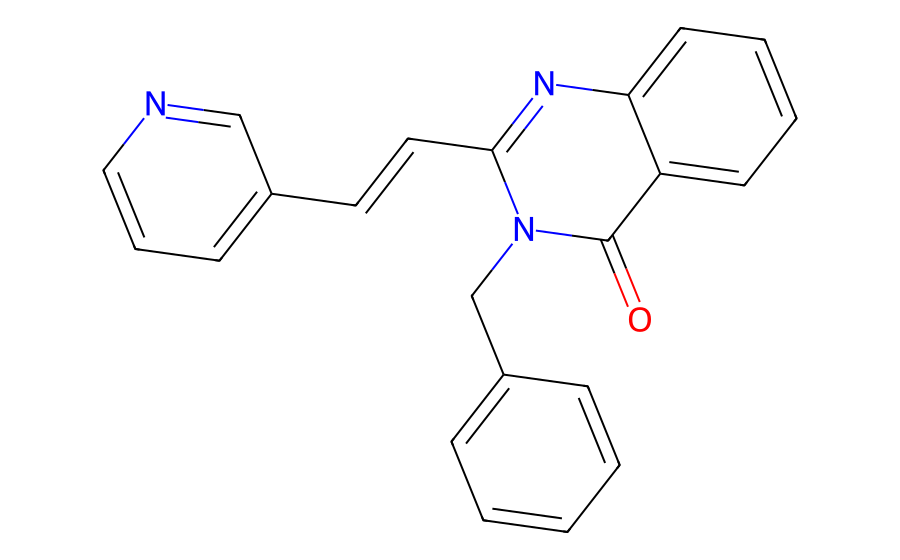
100 mg USD 400 · 250 mg USD 700 · 1 g USD 1,350 · 10 mM * 1 mL in DMSO USD 150B02 is a cell-permeable pyridinylvinyl-quinazolinone compound that is shown to specifically inhibit human RAD51 (IC50 = 27.4 µM). Does not affect RecA even at much higher concentration (~250 µM). Directly interacts with RAD51 (Kd = 5.6 µM), and disrupts its binding to DNA and nucleoprotein filament formation. Blocks double-strand break-induced homologous recombination and enhances sensitivity of cells to Cisplatin and Mitomycin C . Diminishes co-aggregate formation between RAD51-ssDNA filament.
AM966Featured
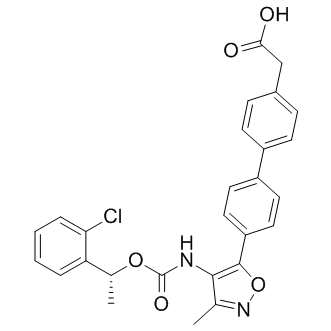
100 mg USD 550 · 250 mg USD 950 · 1 g USD 1,900 · 10 mM * 1 mL in DMSO USD 220AM966 is a high affinity, selective, oral LPA1-antagonist, inhibits LPA-stimulated intracellular calcium release (IC50=17 nM).
SenicapocFeatured
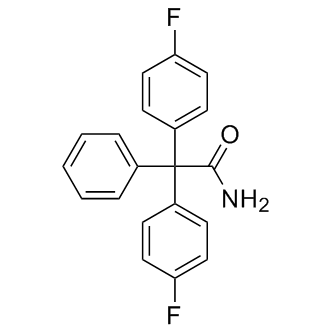
100 mg USD 150 · 250 mg USD 300 · 1 g USD 600 · 10 mM * 1 mL in DMSO USD 150Senicapoc (ICA-17043) is a potent and selective Gardos channel blocker with IC50 value of 11 nM. It blocks Ca2+-induced rubidium flux from human RBCs with an IC50 value of 11 nM and inhibits RBC dehydration with IC50 of 30 nM.
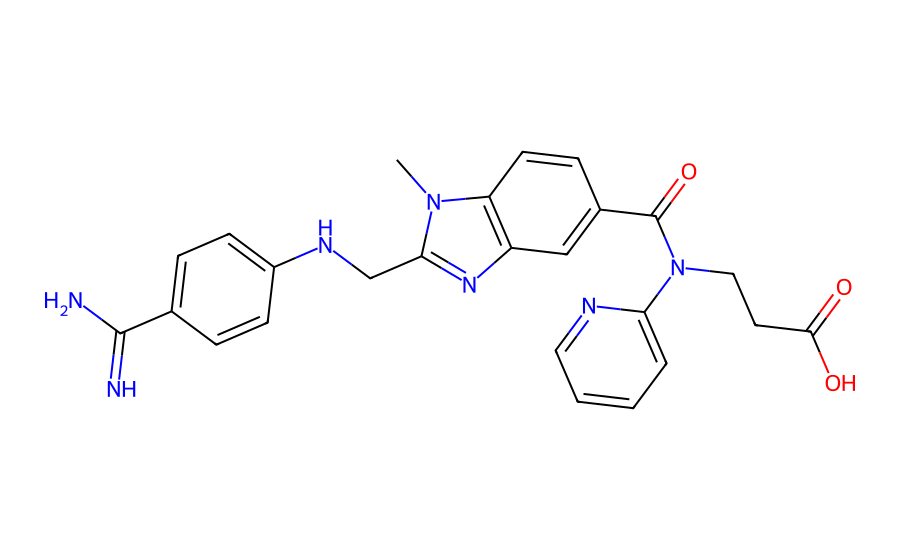
BIBR 953(Dabigatran)Featured
100 mg USD 400 · 250 mg USD 800 · 1 g USD 1,500 · 10 mM * 1 mL in DMSO USD 150Dabigatran(BIB-953; BIBR 953ZW) is a reversible and selective, direct thrombin inhibitor (DTI) with Ki value of 4.5 nM.
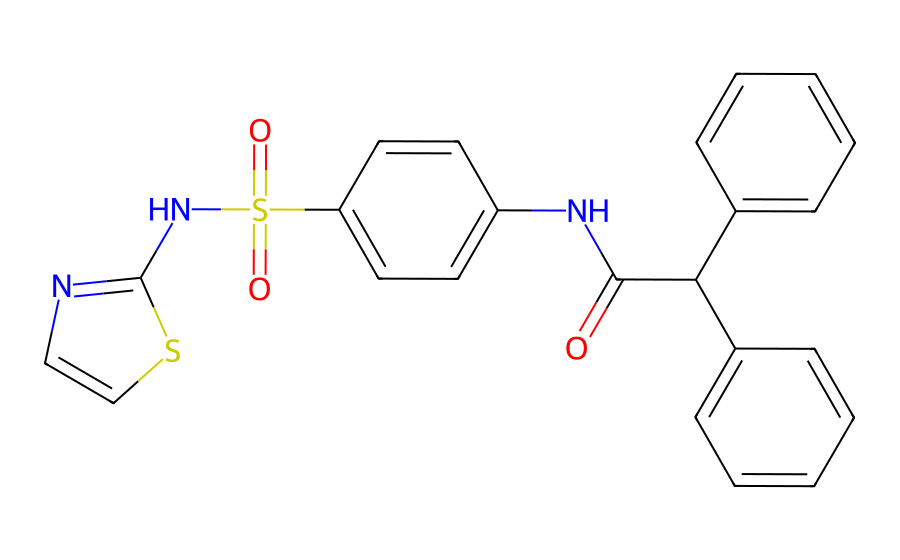
ICA-121431Featured
100 mg USD 450 · 250 mg USD 900 · 1 g USD 1,600 · 10 mM * 1 mL in DMSO USD 220ICA-121431 is a nanomolar potent small molecule Nav1.7 channel inhibitor with IC50 of 19 nM for rat Nav1.7, but no inhibition on human, monkey and dog Nav1.7.IC50 value: 19 nM (rat Nav1.7) [1]Target: rat Nav1.7 inhibitorICA-121431 exhibited a spectrum of inhibitory activity for Nav human channel subtypes; equipotent inhibition of Nav1.3 and Nav1.1, less potent inhibition of Nav1.2, and much weaker inhibition of Nav1.7, Nav1.6, Nav1.4, and the TTX-resistant human Nav1.5 and Nav1.8 channels (IC50s >10 μM). the unique subtype selective Nav channel inhibitors ICA-121431 and PF-04856264 interact with amino acid residues on an extracellular facing region of the homologous Domain 4 voltage sensor of Nav1.3 or Nav1.7, which is distinct from previously described interaction sites for TTX or local anesthetic-like Nav channel inhibitors.
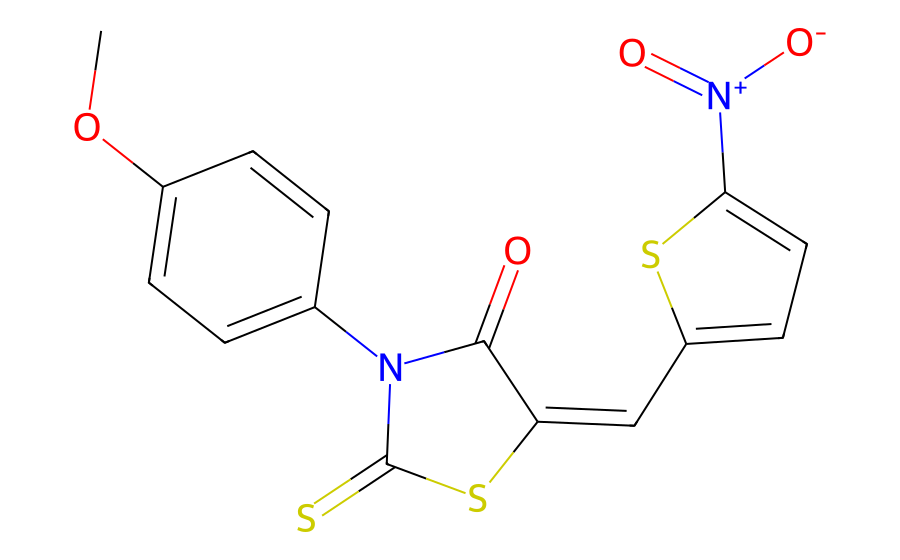
CCF642Featured
100 mg USD 600 · 250 mg USD 1,100 · 1 g USD 1,900 · 10 mM * 1 mL in DMSO USD 220CCF642 is a novel PDI-inhibiting compound with antimyeloma activity.The IC50 is 2.9 μmol/L.
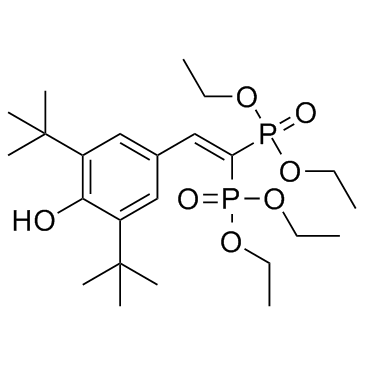
SR-12813(GW 485801)Featured
100 mg USD 250 · 250 mg USD 500 · 1 g USD 1,000 · 10 mM * 1 mL in DMSO USD 150SR12813 is an inhibitor of 3-hydroxy-3-methylglutaryl-coenzyme A (HMG-CoA) reductase, with an IC50 value of 0.85 μM.
Glutaminase C-IN-1Featured
100 mg USD 550 · 250 mg USD 900 · 1 g USD 1,800 · 10 mM * 1 mL in DMSO USD 220Glutaminase C-IN-1 (968) is an allosteric inhibitor of Glutaminase C that inhibits cancer cell growth without affecting their normal cellular counterparts.
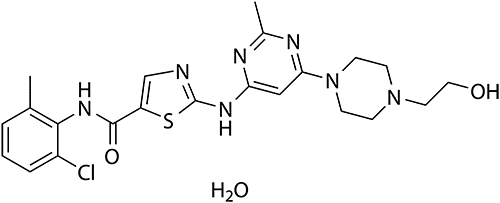
Dasatinib monohydrateFeatured
100 mg USD 200 · 250 mg USD 400 · 1 g USD 800 · 10 mM * 1 mL in DMSO USD 150Dasatinib monohydrate (BMS-354825 monohydrate) is a highly potent, ATP competitive, orally active dual Src/Bcr-Abl inhibitor with potent antitumor activity. The Ki values of 16 pM and 30 pM for Src and Bcr-Abl, respectively[1].
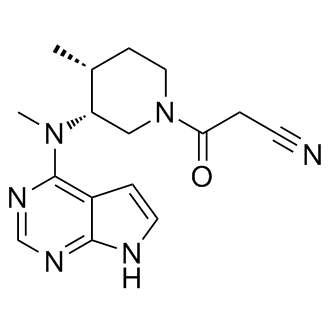
TofacitinibFeatured
100 mg USD 150 · 250 mg USD 300 · 1 g USD 700 · 10 mM * 1 mL in DMSO USD 150Tofacitinib is a JAK1/2/3 inhibitor with IC50s of 1, 20, and 112 nM, respectively.
No products match this search.
Page 115 of 184 · Browse all 3666 products