
Research lipid catalog
Ionizable Lipid Products
Explore 848 lipid and RNA delivery products. Search the full catalog or browse by research category.
Search covers product name, catalog number, synonyms, available CAS numbers and categories. Spaces, hyphens and common punctuation are ignored. Duplicate legacy records are consolidated under one canonical product result.
3666 products · Showing 1521–1540 · 20 per page
DC Chemicals lipid expertise
Built for ionizable-lipid discovery and RNA delivery research
DC Chemicals supports formulation and delivery research with a broad, searchable portfolio of cationic and ionizable lipids. The current directory brings together 848 unique research-use products, with product specifications, pricing, chemical structures and literature-linked formulation data added as each record is verified.
Our experience spans complex lipid synthesis, purification, analytical release and process development. For custom molecules or larger-scale requirements, our team can discuss route development, technical specifications and scale-up options for the intended research workflow.
Learn about cationic and ionizable lipids →Proprietary innovation · Co-development · GMP
From proprietary lipid design to GMP-grade custom synthesis
DC Chemicals has independently developed ionizable-lipid structures supported by company-owned intellectual property, and selected proprietary lipid programs have advanced to GMP-stage development.
We welcome joint development with customers—from molecular design and lipid synthesis through route and process development. We can also support custom synthesis of GMP-grade ionizable lipids to agreed technical specifications and quality requirements.
Discuss a co-development project →Proprietary ionizable-lipid structuresCollaborative molecular designCustom lipid synthesisProcess development and scale-upGMP-grade project support
Product quick links
Explore ionizable lipids
Browse specifications, pricing and literature-linked product information.
Cat. No.Product NameField of ApplicationChemical Structure
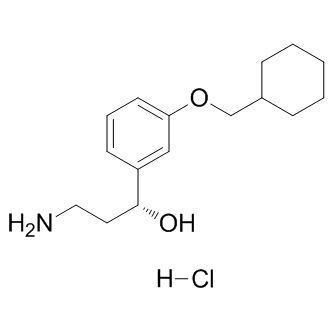
ACU4429,ACU 4429,ACU-4429Featured
100 mg USD 950 · 250 mg USD 1,700 · 1 g USD 3,500 · 10 mM * 1 mL in DMSO USD 220Emixustat hydrochloride strongly inhibits 11-cis-retinol production with IC50 values of 232 ± 3 nM.Emixustat hydrochloride is a novel visual cycle modulator, in healthy volunteers. Oral Emixustat was safe and well tolerated when administered once daily for 14 days with minimal systemic adverse events reported. Evaluation of emixustat in subjects with geographic atrophy associated with dry age-related macular degeneration.[2]
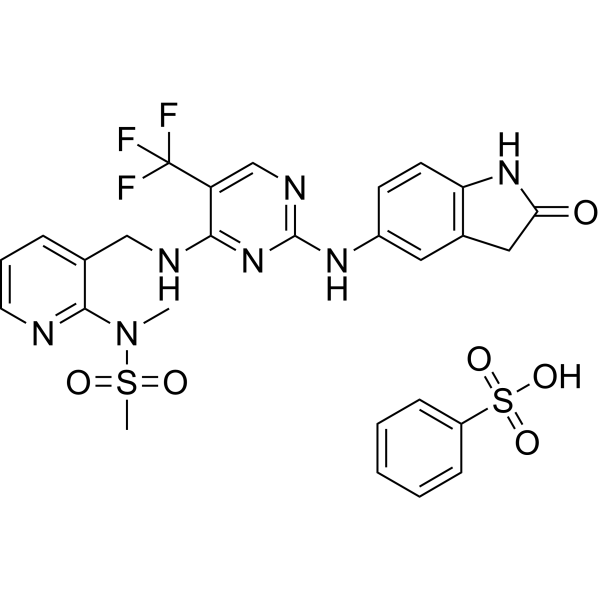
PF-562271 besylateFeatured
100 mg USD 480 · 250 mg USD 900 · 1 g USD 1,700 · 10 mM * 1 mL in DMSO USD 220PF-562271 (besylate) is a potent, ATP-competitive, reversible inhibitor of FAK and Pyk2 kinase with IC50 of 1.5 nM and 13 nM, and has > 100-fold selectivity against other protein kinases, except for some CDKs.
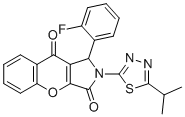
TRIF agonist AV-CFeatured
10mg USD 700TRIF agonist AV-C is a novel TRIF pathway agonist that activates innate and interferon-associated responses, strongly inhibits replication of ZIKV, CHIKV, and DENV (IC90~5 uM); activates IFNAR-mediated transcription and translation of antiviral effector genes, AV-C-mediated, IRF3-dependent innate activation occurs independently of adaptor proteins IPS-1/MAVS and STING but requires TRIF.
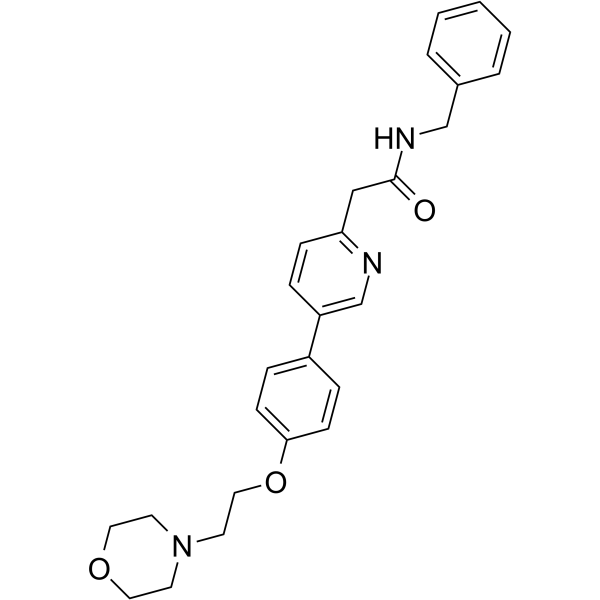
KX2-391Featured
100 mg USD 500 · 250 mg USD 900 · 1 g USD 1,750 · 10 mM * 1 mL in DMSO USD 220KX2-391 is an inhibitor of Src that targets the peptide substrate site of Src, with GI50 of 9-60 nM in cancer cell lines.
OICR9429Featured
100 mg USD 400 · 250 mg USD 700 · 1 g USD 1,450 · 10 mM * 1 mL in DMSO USD 150OICR-9429 is a novel small-molecule antagonist of the Wdr5-MLL interaction with IC50 of 5 uM. inhibit proliferation and induce differentiation
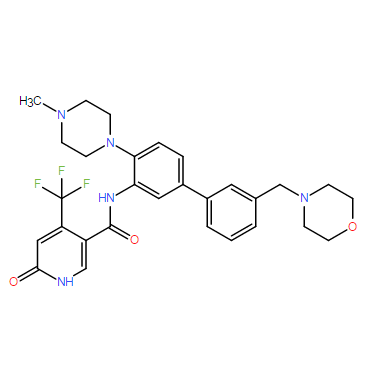
Casein Kinase inhibitor A51Featured
100mg USD 600 · 250mg USD 1,100 · 1g USD 2,200Casein Kinase inhibitor A51 (CKIα inhibitor A51) is a novel pan-specific CKI (CSNK1) inhibitor (Kd=0.5-20 nM, CKIα Kd=5.3 nM) that co-targets the transcriptional kinases CDK7 and CDK9, with hardly inhibition of CDK8, CDK13, CDK11a, CDK11b, and CDK19; target both CDK7 and CDK9 with low nM Kd values; induces leukemia cell apoptosis at <160 nM, in correlation to the capacity to stabilize p53; shows high and selective sensitivity against leukemic CFUs in colony-forming unit (CFU) assay, without effect on normal hematopoietic CFUs; blocking CKIα together with CDK7 and/or CDK9 synergistically stabilize p53, deprive leukemia cells of survival and proliferation-maintaining SE-driven oncogenes, induce apoptosis, abolishes the expression of MYC, MDM2, and the anti-apoptotic oncogene MCL1; demonstrates therapeutic efficacy with preserved hematopoiesis and leukemia cure potential in AML mouse models.
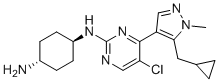
Mobocertinib(TAK-788)Featured
100mg USD 450 · 250mg USD 900 · 1g USD 1,800 · 10 mM * 1 mL in DMSO USD 220Mobocertinib is a potent epidermal growth factor receptor (EGFR) inhibitor and an antineoplastic agent, extracted from patent WO2019222093A1, compound A[1][2].
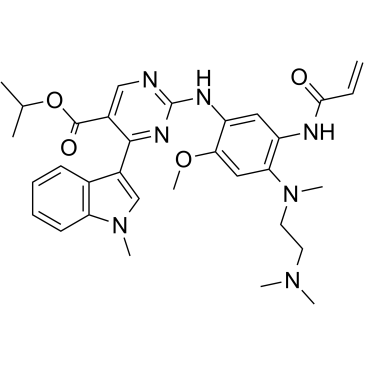
LJ 001Featured
5mg USD 350LJ 001 ((LJ-001, LJ001) is a broad-spectrum antiviral agent targeting entry of enveloped viruses, including influenza A, filoviruses, poxviruses, arenaviruses, bunyaviruses, paramyxoviruses, flaviviruses, and HIV-1; specifically intercalates into viral membranes, irreversibly inactivates virions while leaving functionally intact envelope proteins, and inhibits viral entry at a step after virus binding but before virus-cell fusion; specifically inhibits virus-cell but not cell-cell fusion
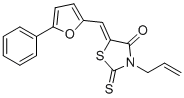
LY3023414Featured
100 mg USD 550 · 250 mg USD 950 · 1 g USD 1,900 · 10 mM * 1 mL in DMSO USD 220LY3023414 potently and selectively inhibits class I PI3K isoforms, DNA-PK, and mTORC1/2 with IC50s of 6.07 nM, 77.6 nM, 38 nM, 23.8 nM, 4.24 nM and 165 nM for PI3Kα, PI3Kβ, PI3Kδ, PI3Kγ, DNA-PK and mTOR, respectively. LY3023414 potently inhibits mTORC1/2 at low nanomolar concentrations.
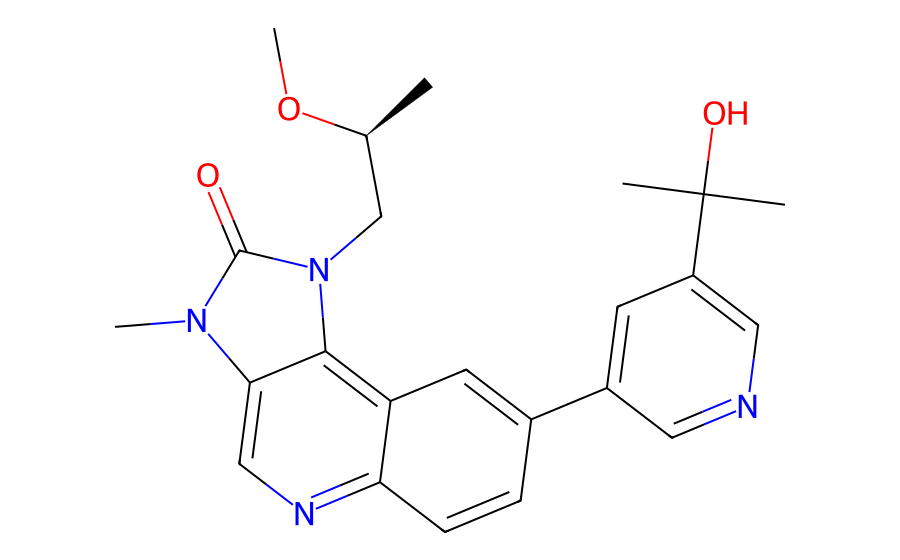
MI-2-2Featured
5mg USD 400MI-2-2 is a potent menin-MLL inhibitor. MI-2-2 binds to menin with low nanomolar affinity (Kd=22nM) and very effectively disrupts the bivalent protein-protein interaction between menin and MLL. MI-2-2 has specific and very pronounced activity in MLL leukemia cells, including inhibition of cell proliferation, down-regulation of Hoxa9 expression, and differentiation[1].
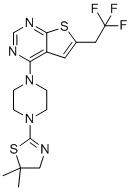
BMS813160Featured
100 mg USD 650 · 250 mg USD 1,100 · 1 g USD 2,200 · 10 mM * 1 mL in DMSO USD 220BMS-813160 is the first dual CCR2/CCR5 antagonist to enter clinical development for cardiovascular.
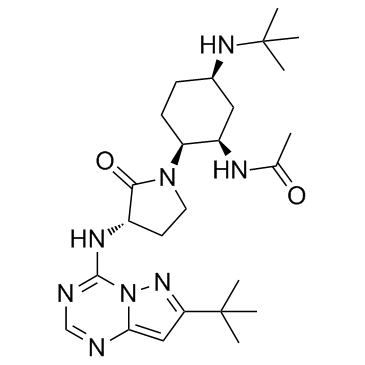
ProdigiosinFeatured
5 mg USD 550 · 10 mg USD 900 · 25mg USD 1,450Prodigiosin (Prodigiosine) is a secondary metabolite of Symbiotic bacteria, with anti-fungal and anti-cancer activity[1][2].
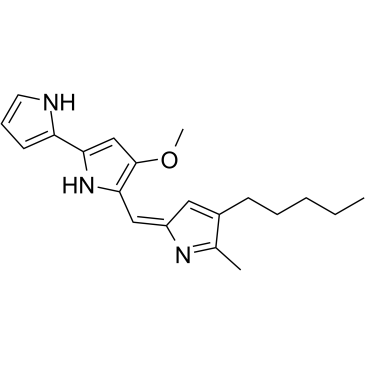
Enzastaurin (LY317615)Featured
100 mg USD 300 · 250 mg USD 600 · 1 g USD 1,500 · 10 mM * 1 mL in DMSO USD 150Enzastaurin is a potent and selective PKCβ inhibitor with an IC50 of 6 nM, showing 6- to 20-fold selectivity over PKCα, PKCγ and PKCε.
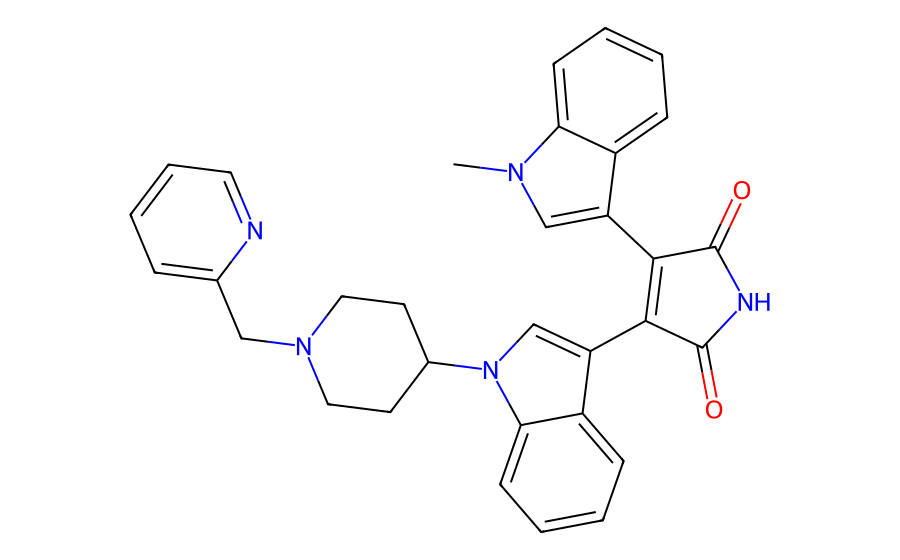
I-BRD9Featured
100 mg USD 550 · 250 mg USD 1,000 · 1 g USD 2,100 · 10 mM * 1 mL in DMSO USD 220I-BRD9 is the first selective cellular chemical probe for BRD9 (pIC50=7.3).IC50 value: 7.3 (pIC50) [1]Target: BRD9in vitro: I-BRD9 is a selective cell active chemical probe for bromodomain containing protein 9 inhibition. I-BRD9, the first selective cellular chemical probe for bromodomain-containing protein 9 (BRD9). I-BRD9 is identified through structure-based design, leading to greater than 700-fold selectivity over the BET family and 200-fold over the highly homologous bromodomain-containing protein 7 (BRD7). I-BRD9 is used to identify genes regulated by BRD9 in Kasumi-1 cells involved in oncology and immune response pathways and to the best of our knowledge, represents the first selective tool compound available to elucidate the cellular phenotype of BRD9 bromodomain inhibition.
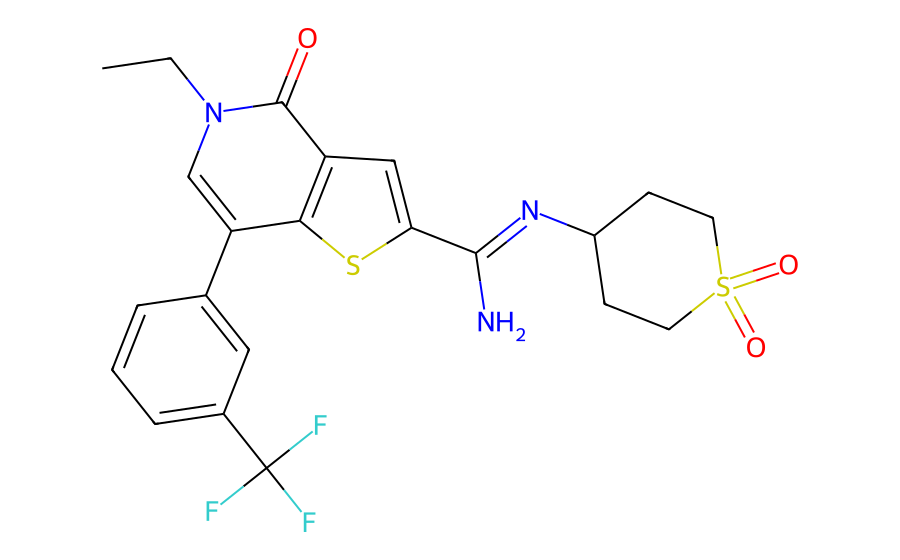
TAK-243Featured
100 mg USD 900 · 250 mg USD 1,600 · 1 g USD 3,200 · 10 mM * 1 mL in DMSO USD 220TAK-243 is a potent and selective ubiquitin-like modifier activating enzyme 1 (UBA1) inhibitor.
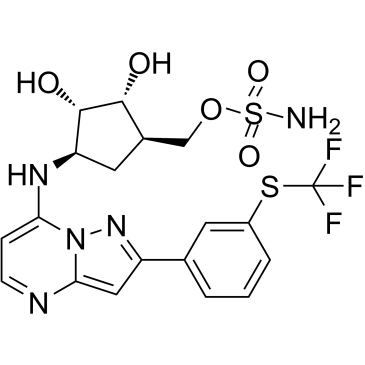
STING agonist compound 3Featured
25 mg USD 850STING agonist-3 is a selective small-molecule STING agonist. STING agonist-3 is a non-nucleotide STING agonist which has durable anti-tumor effect and tremendous potential to improve treatment of cancer[1].
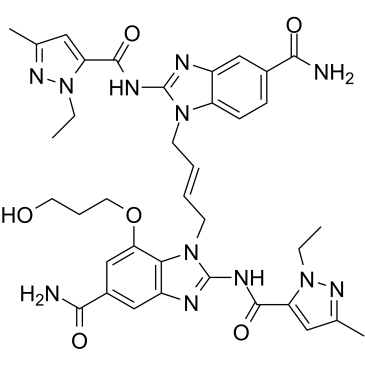
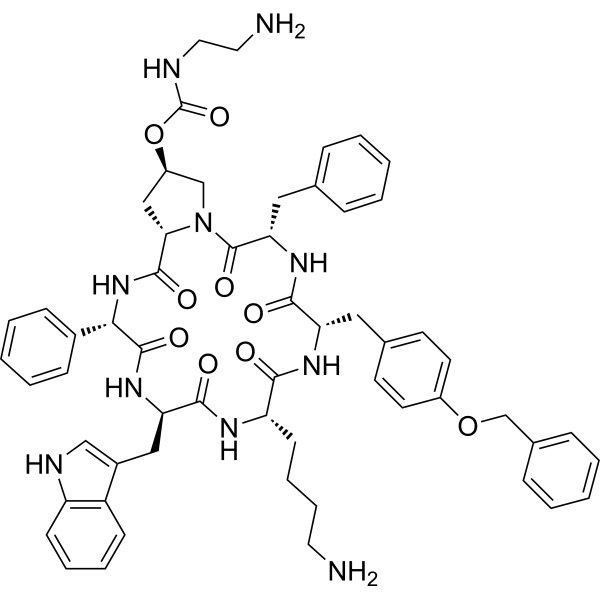
PasireotideFeatured
100mg USD 700 · 1g USD 2,600 · 250mg USD 1,300Pasireotide(SOM 230) is a stable cyclohexapeptide somatostatin mimic that exhibits unique high-affinity binding to human somatostatin receptors (subtypes sst1/2/3/4/5, pKi=8.2/9.0/9.1/<7.0/9.9 respectively).
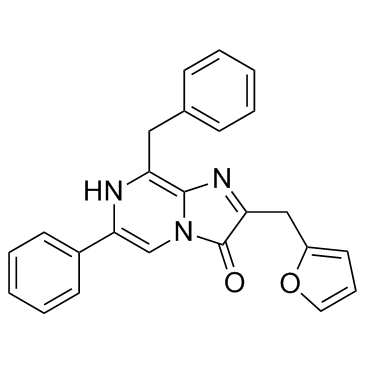
FurimazineFeatured
10 mg USD 600 · 25mg USD 900 · 50mg USD 1,300 · 100mg USD 1,900 · 250mg USD 2,700Furimazine is an imidazopyrazinone substrate. NanoLuc (Nluc) paired with Furimazine produced 2.5 million-fold brighter luminescence in mammalian cells relative to Oluc-19 with Coelenterazine.
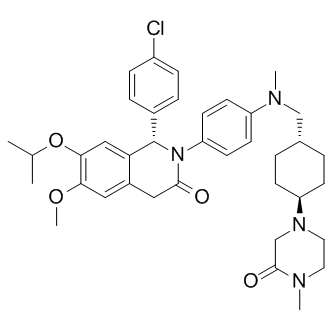
NVP-CGM097 (CGM-097)Featured
100 mg USD 750 · 250 mg USD 1,300 · 1 g USD 2,700 · 10 mM * 1 mL in DMSO USD 220NVP-CGM097 is a potent and selective MDM2 inhibitor with IC50 of 1.7±0.1 nM for hMDM2.
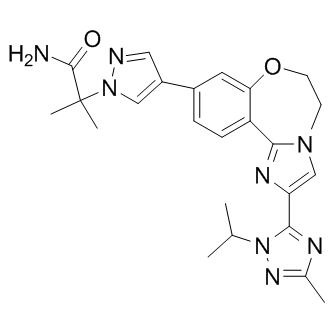
Taselisib(GDC-0032)Featured
100 mg USD 450 · 250 mg USD 800 · 1 g USD 1,600 · 10 mM * 1 mL in DMSO USD 220GDC-0032 is a potent, next-generation β iso Form-sparing PI3K inhibitor targeting PI3Kα/δ/γ with IC50 of 0.29 nM/0.12 nM/0.97nM, >10 fold selective over PI3Kβ. IC50 Value: 0.29 nM/0.12 nM /0.97 nM(PI3Kα/δ/γ) Target: PI3K in vitro: GDC-0032 is an orally bioavailable, potent, and selective inhibitor of Class I PI3Kα, δ, and γ iso Forms, with 30 fold less inhibition of the PI3K β iso Form relative to the PI3Kα iso Form. Preclinical data show that GDC-0032 has increased activity against PI3Kα iso Form (PIK3CA) mutant and HER2-amplified cancer cell lines. GDC-0032 inhibits MCF7-neo/HER2 cells proliferation with IC50 of 2.5 nM. in vivo: GDC-0032 pharmacokinetics is approximately dose proportional and time independent with a mean t1/2 of 40 hours. The combination of GDC-0032 enhances activity of fulvestrant resulting in tumor regressions and tumor growth delay (91% tumor growth inhibition (TGI)). In addition, the combination of GDC-0032 with tamoxifen enhances the efficacy of tamoxifen in vivo (102%TGI For GDC-0032) .For the detailed information of GDC-0032, the solubility of GDC-0032 in water, the solubility of GDC-0032 in DMSO, the solubility of GDC-0032 in PBS buffer, the animal experiment (test) of GDC-0032, the cell expriment (test) of GDC-0032, the in vivo, in vitro and clinical trial test of GDC-0032, the EC50, IC50,and Affinity of GDC-0032, Please contact DC Chemicals.
No products match this search.
Page 77 of 184 · Browse all 3666 products