
Research lipid catalog
Ionizable Lipid Products
Explore 848 lipid and RNA delivery products. Search the full catalog or browse by research category.
Search covers product name, catalog number, synonyms, available CAS numbers and categories. Spaces, hyphens and common punctuation are ignored. Duplicate legacy records are consolidated under one canonical product result.
3666 products · Showing 1221–1240 · 20 per page
DC Chemicals lipid expertise
Built for ionizable-lipid discovery and RNA delivery research
DC Chemicals supports formulation and delivery research with a broad, searchable portfolio of cationic and ionizable lipids. The current directory brings together 848 unique research-use products, with product specifications, pricing, chemical structures and literature-linked formulation data added as each record is verified.
Our experience spans complex lipid synthesis, purification, analytical release and process development. For custom molecules or larger-scale requirements, our team can discuss route development, technical specifications and scale-up options for the intended research workflow.
Learn about cationic and ionizable lipids →Proprietary innovation · Co-development · GMP
From proprietary lipid design to GMP-grade custom synthesis
DC Chemicals has independently developed ionizable-lipid structures supported by company-owned intellectual property, and selected proprietary lipid programs have advanced to GMP-stage development.
We welcome joint development with customers—from molecular design and lipid synthesis through route and process development. We can also support custom synthesis of GMP-grade ionizable lipids to agreed technical specifications and quality requirements.
Discuss a co-development project →Proprietary ionizable-lipid structuresCollaborative molecular designCustom lipid synthesisProcess development and scale-upGMP-grade project support
Product quick links
Explore ionizable lipids
Browse specifications, pricing and literature-linked product information.
Cat. No.Product NameField of ApplicationChemical Structure
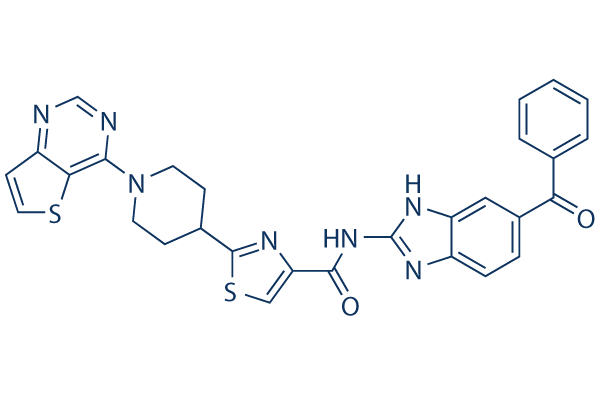
SC75741Featured
100 mg USD 600 · 250 mg USD 1,200 · 1 g USD 2,400 · 10 mM * 1 mL in DMSO USD 220SC75741 is a broad and efficient NF-κB inhibitor with an IC50 of 200 nM for p65[1]. SC75741 blocks influenza viruses (IV) replication in non-toxic concentrations. SC75741 impairs DNA binding of the NF-κB subunit p65, resulting in reduced expression of cytokines, chemokines, and pro-apoptotic factors. SC75741 subsequently inhibits caspase activation and blocks caspase-mediated nuclear export of viral ribonucleoproteins[2].
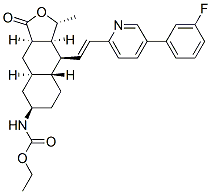
VorapaxarFeatured
100 mg USD 550 · 250 mg USD 1,000 · 1 g USD 2,000 · 10 mM * 1 mL in DMSO USD 220Vorapaxar is a protease-activated receptor (PAR-1) antagonist that inhibits thrombin-induced platelet activation.
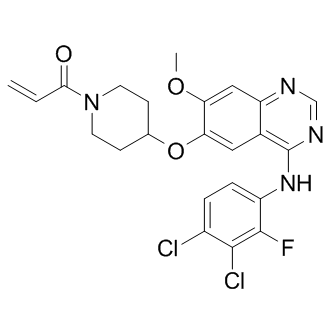
PoziotinibFeatured
100 mg USD 450 · 250 mg USD 800 · 1 g USD 1,500 · 10 mM * 1 mL in DMSO USD 220Poziotinib(NOV120101; HM781-36B) is an irreversible Pan-HER inhibitor with IC50s of 3/5/23 nM for HER1/HER2/HER4 respectively.
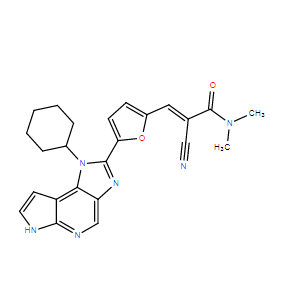
FM-381Featured
100 mg USD 650 · 250 mg USD 1,100 · 1 g USD 2,250 · 10 mM * 1 mL in DMSO USD 220FM-381 is a JAK3 specific reversible covalent inhibitor with IC50 of 127 pM for JAK3 and demonstrates 400-, 2,700- and 3,600-fold selectivity over JAK1, JAK2, and TYK2, respectively.
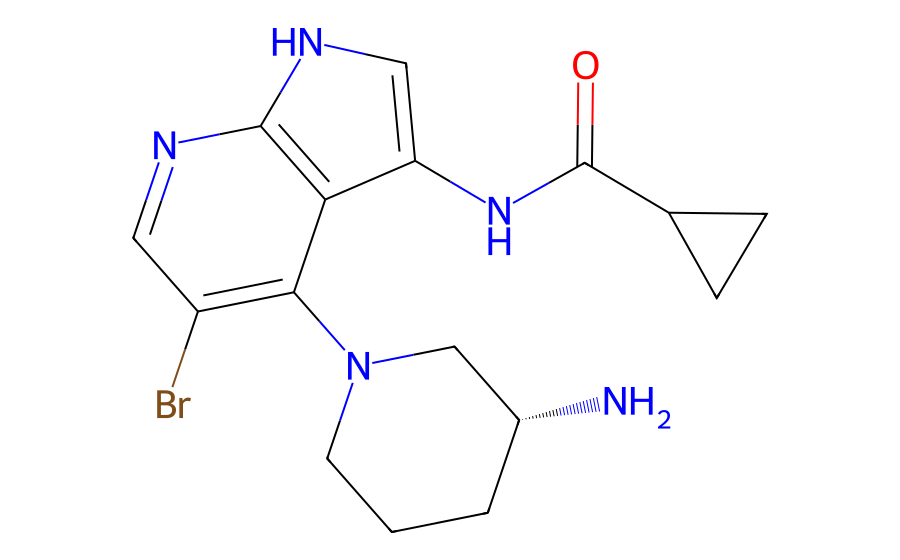
GDC0575(ARRY-575,RG7441)Featured
5 mg USD 350 · 10 mg USD 500 · 25 mg USD 750GDC-0575 (ARRY-575, RG7741) is a highly-selective oral small-molecule Chk1 inhibitor with an IC50 of 1.2 nM.
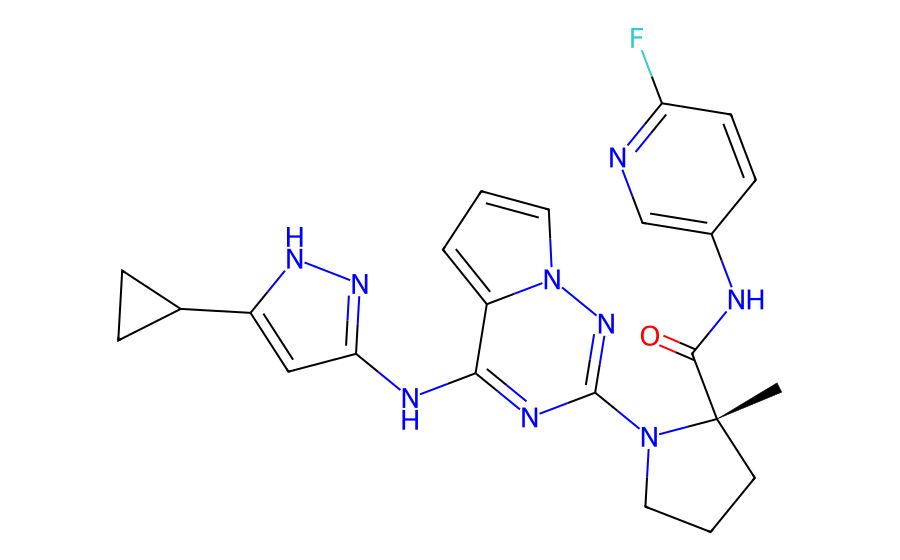
BMS754807Featured
100 mg USD 600 · 250 mg USD 1,100 · 1 g USD 2,200 · 10 mM * 1 mL in DMSO USD 220BMS-754807 is a potent and reversible inhibitor of the insulin-like growth factor 1 receptor (IGF-1R)/insulin receptor family kinases (IR) with IC50 of 1.8 and 1.7 nM, respectively and Ki of <2 nM for both, and also shows potent activities against Met, RON, TrkA, TrkB, AurA, and AurB with IC50 values of 6, 44, 7, 4, 9, and 25 nM, respectively.
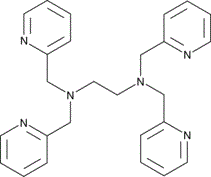
TPENFeatured
100 mg USD 250 · 250 mg USD 450 · 1 g USD 850 · 10 mM * 1 mL in DMSO USD 150TPEN is a specific cell-permeable heavy metal chelator.
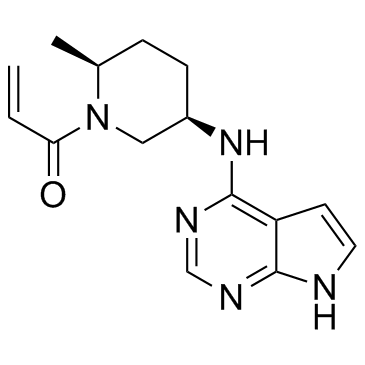
PF-06651600Featured
100 mg USD 750 · 250 mg USD 1,200 · 1 g USD 2,500 · 10 mM * 1 mL in DMSO USD 220PF-06651600 is a potent JAK3-selective inhibitor with an IC50 of 33.1 nM.
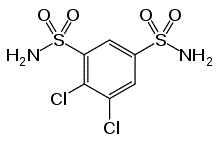
Dichlorphenamide (Diclofenamide)Featured
100 mg USD 225 · 250 mg USD 450 · 1 g USD 900 · 10 mM * 1 mL in DMSO USD 150Dichlorphenamide(Diclofenamide) is a carbonic anhydrase inhibitor that is used in the treatment of glaucoma.Dichlorphenamide is a sulfonamide and a carbonic anhydrase inhibitor of the meta-Disulfamoylbenzene class. This drug has the same side-effects as acetazolamide, for which it is a useful substitute, except for a lesser tendency to cause dermatitis, renal calculi and metabolic acidosis. It may induce a more pronounced renal loss of potassium [1]. An average daily dose of 33 mg of diclofenamide, a carbonic-anhydrase inhibitor, was added to the anti-epileptic medication already employed in 105 cases of severe epilepsy which had shown insufficient clinical improvement. A favourable action on seizures, often accompanied by an improvement in the EEG tracing, was observed in 83 cases. The effect was of long duration in 47 cases in that it lasted for more than a year. It persisted for one to twelve months in a further 17 cases, while in 19 patients, who had reacted favourably to the treatment, medication had to be suspended because of intolerance [2].
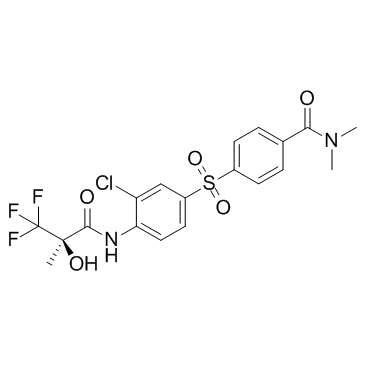
AZD-7547Featured
100 mg USD 600 · 250 mg USD 1,100 · 1 g USD 2,300 · 10 mM * 1 mL in DMSO USD 220AZD7545 is a novel, selective small-molecule inhibitor of PDHK2 (PDH kinase2) with an IC50 of 36.8 nM and 6.4 nM for PDHK1 and PDHK2 respectively.
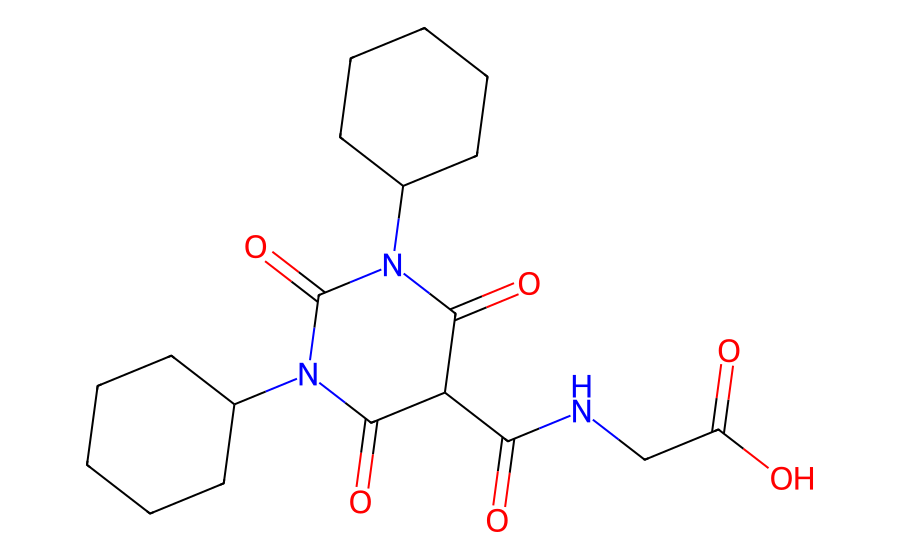
DaprodustatFeatured
100 mg USD 450 · 250 mg USD 800 · 1 g USD 1,700 · 10 mM * 1 mL in DMSO USD 220Daprodustat (GSK1278863) is an orally active hypoxia-inducible factor prolyl hydroxylase inhibitor being developed for the treatment of anemia associated with chronic kidney disease.
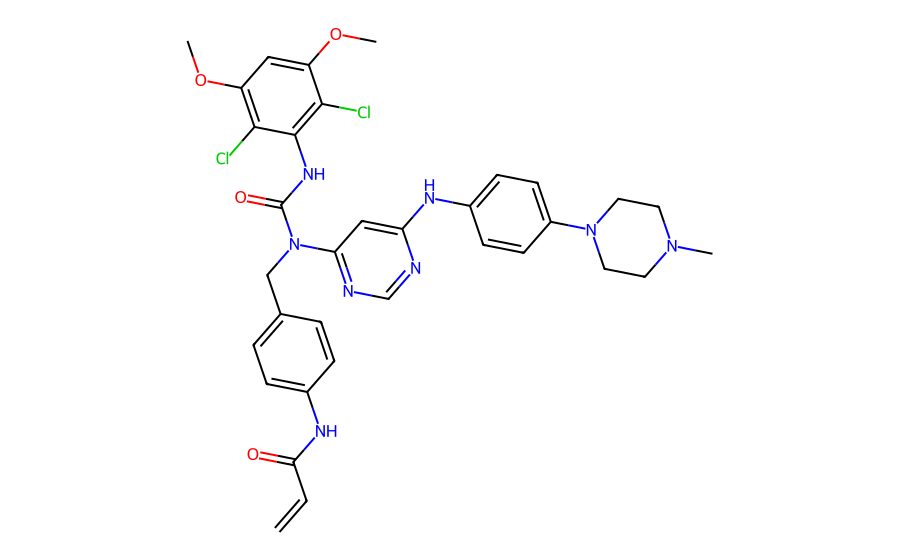
FIIN-3Featured
100 mg USD 500 · 250 mg USD 900 · 1 g USD 1,800 · 10 mM * 1 mL in DMSO USD 220FIIN-3 is an irreversible inhibitor of FGFR with an IC50 of 13.1, 21, 31.4, and 35.3 nM for FGFR1, FGFR2, FGFR3 and FGFR4, respectively.
KNK437Featured
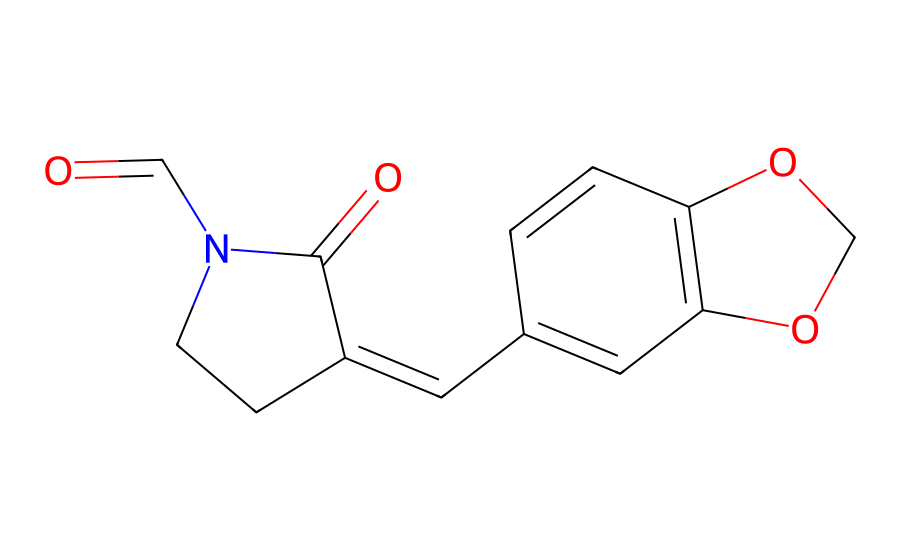
100 mg USD 450 · 250 mg USD 800 · 1 g USD 1,500 · 10 mM * 1 mL in DMSO USD 220KNK437 is a HSP inhibitor, and inhibits the induction of HSP105, HSP70, and HSP40.
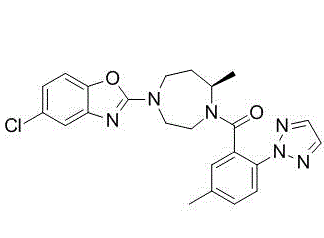
SuvorexantFeatured
100 mg USD 300 · 250 mg USD 600 · 1 g USD 1,000 · 10 mM * 1 mL in DMSO USD 150Suvorexant (MK-4305) is a potent, selective, and orally bioavailable antagonist of OX1R and OX2R currently under clinical investigation as a novel therapy for insomnia.
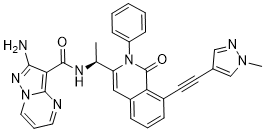
IPI-549Featured
100 mg USD 500 · 250 mg USD 950 · 1 g USD 1,900 · 10 mM * 1 mL in DMSO USD 220IPI549 is a potent and selective PI3Kγ inhibitor with an IC50 of 16 nM.
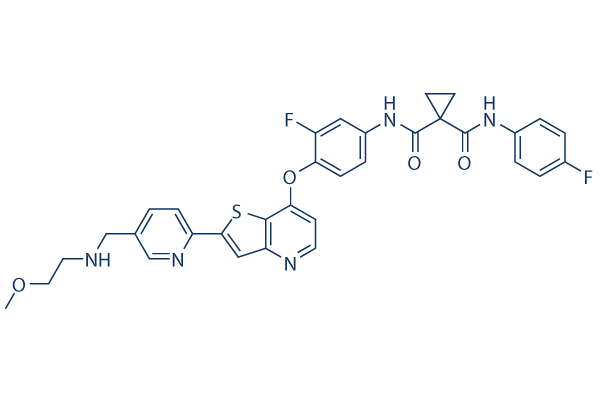
Sitravatinib (MGCD516)Featured
100 mg USD 400 · 250 mg USD 800 · 1 g USD 1,600 · 10 mM * 1 mL in DMSO USD 150Sitravatinib is a novel small molecule inhibitor targeting multiple RTKs involved in driving sarcoma cell growth with IC50 of 3980 nmol/Lin vitro: MGCD516 is superior to other multi-kinase inhibitors in inhibiting cell proliferation, RTK phosphorylation, and phosphorylation of downstream effectors. MGCD516 is unique in a way that it has broad spectrum activity against many RTKs including c-Met, c-Kit, Axl, PDGFR, and Eph receptors that are known to play a role in driving sarcoma cell growthIn vivo: MGCD516 induces significant tumor growth suppression than imatinib and crizotinib.
LiraglutideFeatured
100 mg USD 800 · 250 mg USD 1,350 · 1 g USD 2,700 · 10 mM * 1 mL in DMSO USD 220Liraglutide is a glucagon-like peptide-1 (GLP-1) receptor agonist used clinically to treat type 2 diabetes mellitus.

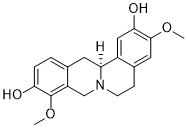
L-StepholidineFeatured
20 mg USD 280L-Stepholidine (Stepholidine), an alkaloid extract of the Chinese herb Stephania intermedia, is the first compound known to exhibit mixed dopamine D1 receptor agonist/D2 antagonist properties. L-Stepholidine (Stepholidine) has neuroprotective effect and inhibits heroin-induced reinstatement. L-Stepholidine (Stepholidine) is a potential medication for the treatment of opiate addiction[1][2][3].
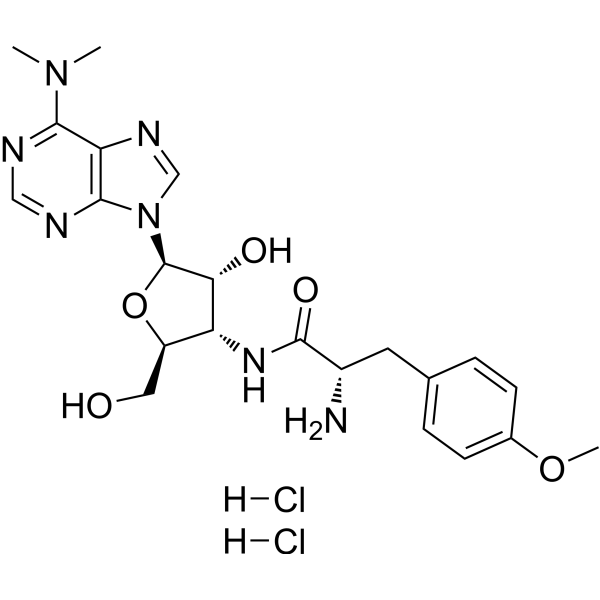
Puromycin DihydrochlorideFeatured
100 mg USD 250 · 250 mg USD 500 · 1g USD 1,000Puromycin Dihydrochloride is an antibiotic. It inhibits protein synthesis by binding to RNA. Puromycin Dihydrochloride has antimicrobial, antitrypanosomal, and antineoplastic properties.
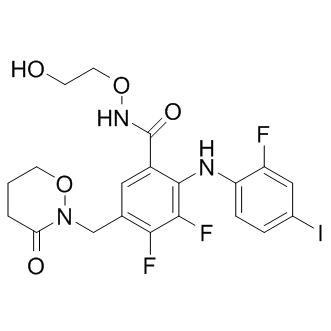
RO4987655Featured
100 mg USD 675 · 250 mg USD 1,350 · 1 g USD 2,700 · 10 mM * 1 mL in DMSO USD 220RO4987655 is an orally active and highly selective MEK inhibitor with an IC50 of 5.2 nM for inhibition of MEK1/MEK2.
No products match this search.
Page 62 of 184 · Browse all 3666 products